A codeshare flight is a single physical flight sold by two or more airlines, each using its own airline code and flight number. One airline you book with holds your reservation (the marketing carrier); the other actually flies the aircraft, crew and cabin (the operating carrier). Your itinerary shows both, usually as an “operated by” line.
That is the whole concept, and it explains most of what trips people up about codeshares. The confusion is almost never about the flying. It is about who takes your bag, which desk you queue at, and which phone number to call when the flight falls apart.
Table of Contents
- 1What Is a Codeshare Flight?
- 2How Does a Codeshare Flight Work?
- 3Which Airline Code and Flight Number Appears on the Ticket?
- 4What Does the Operating Airline Control?
- 5Does a Codeshare Flight Mean I Have to Change Planes?
- 6Can You Check In, Board, and Claim a Bag on a Codeshare?
- 7What Happens If a Codeshare Flight Is Delayed or Canceled?
- 8How to Tell Whether a Flight Is a Codeshare
- 9Frequently Asked Questions
- 10Is a codeshare flight cheaper than a regular flight?
- 11Who operates a codeshare flight: the airline that sold the ticket or the airline whose code appears on it?
- 12Do I check in with the ticketing airline or the operating airline on a codeshare?
- 13Which airline handles baggage and refunds for a codeshare ticket?
- 14Can a codeshare flight be used on two different planes during one trip?
- 15What to Do Before You Book
What Is a Codeshare Flight?
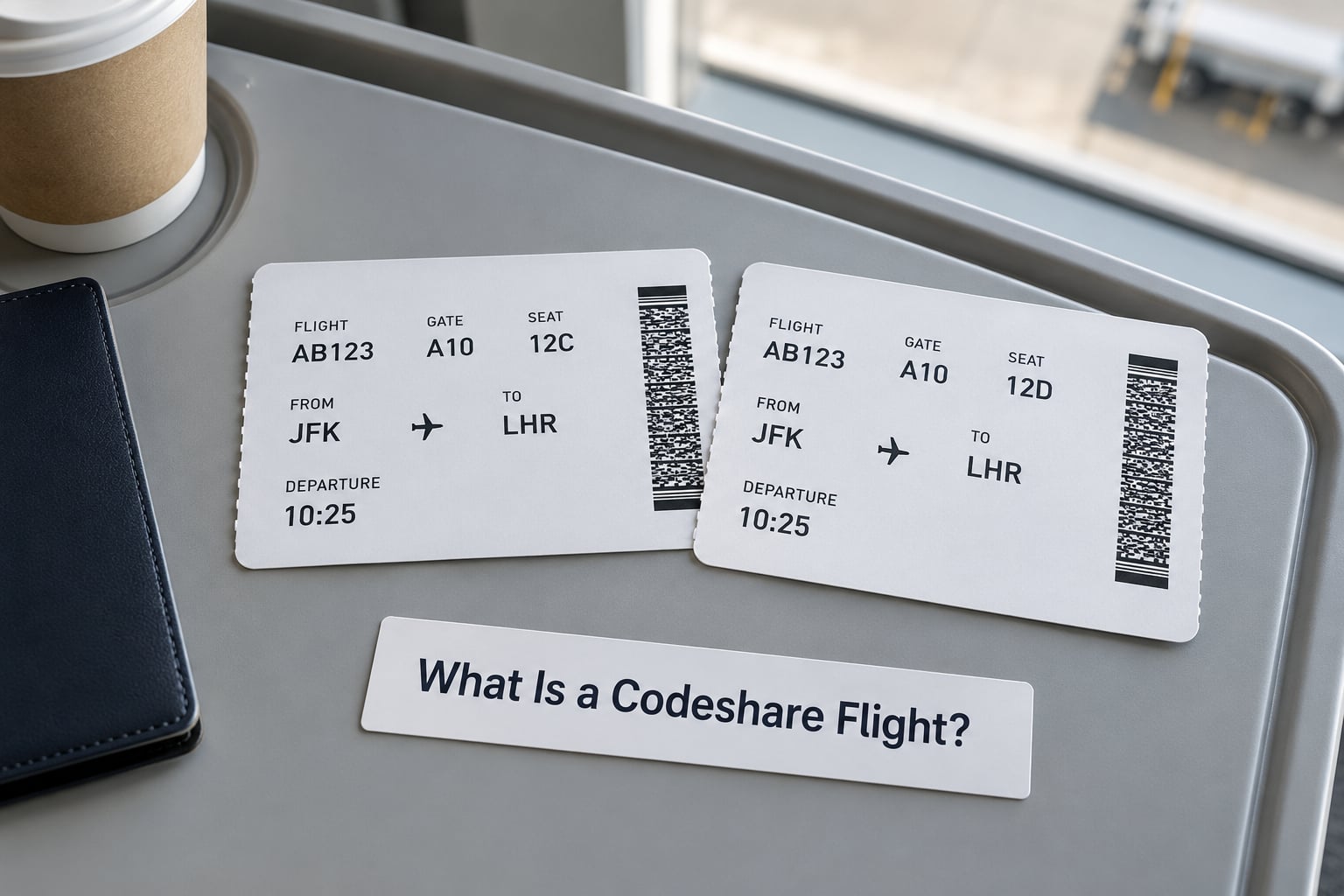
In plain terms, a codeshare flight is one flight, flown once, published for sale by two airlines. You may see Qantas flight 12 on your ticket. Qantas is the marketing carrier and takes your money. A partner airline actually flies that aircraft, and its name appears in the fine print.
Both flight numbers refer to the same plane leaving at the same time. It is not two flights, not two aircraft, and not an overnight stop. It is one departure with two identities.
Real routing makes it easier to picture. Say you book Sydney to Bengaluru to Delhi on a Qantas itinerary. The Bengaluru to Delhi leg may be operated by IndiGo, with the connection built into a single booking. One ticket, one check-in for most of it, two airlines on the aircraft details.
How Does a Codeshare Flight Work?
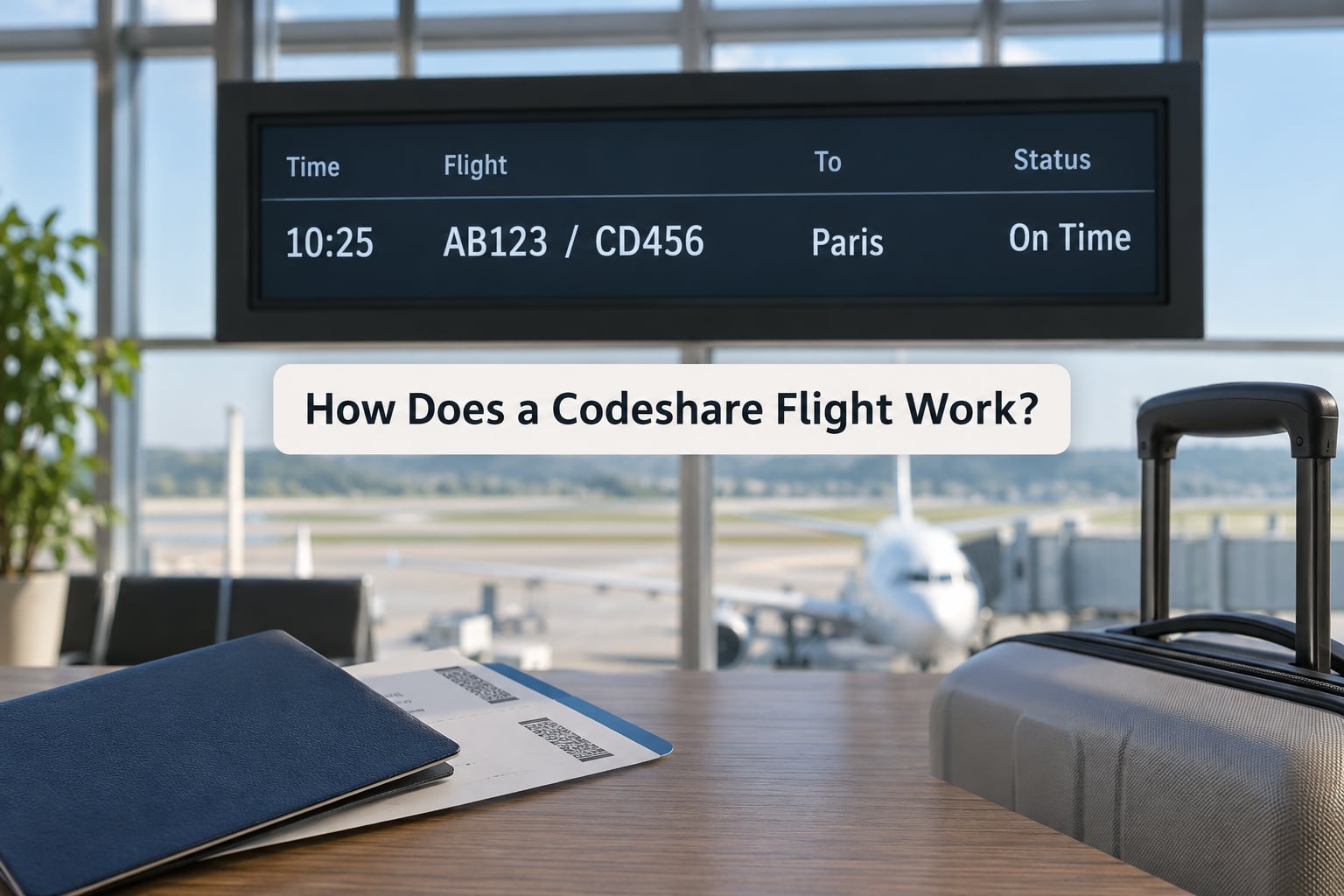
The partnership is commercial. The marketing carrier buys a block of seats on the partner’s flights, or simply resells them under its own code, and keeps the revenue. The operating carrier provides the aircraft, crew, airport slots, ground handling and onboard service, and keeps that side of the economics.
Three things follow from that split, and they explain nearly every codeshare question:
- The marketing carrier owns your reservation record. It holds your payment, your contact details and your ticket number.
- The operating carrier runs the flight. It decides the aircraft, the crew, the departure gate in many cases, and whether to delay or cancel.
- Both airlines share the passenger, but not the systems. That is where the friction lives.
The term itself is not new. The word “codeshare” was coined by Qantas and American Airlines in 1989, and the practice grew out of alliance networks. Star Alliance, Oneworld and SkyTeam members all codeshare with each other, and many also codeshare with carriers outside their own group.
Which Airline Code and Flight Number Appears on the Ticket?
The ticket carries the marketing carrier’s two-letter designator and the flight number that carrier published. Look further down and you will usually find a second line naming the carrier that operates the aircraft.
An illustrative booking record might read:
- QF 12, Sydney to Bengaluru, marketed by Qantas
- Operated by a partner airline, showing its own designator and flight number on the same departure
- 6E 6202, Bengaluru to Delhi, a separate codeshare booking with an Indian carrier as marketing carrier and IndiGo as operator
| What you see | What it means |
|---|---|
| QF 12 | The marketing carrier’s designator and flight number. This is the one on your ticket. |
| Operated by XX | The operating carrier that will actually fly the aircraft. |
| A second flight number in the same time slot | A codeshare flight number belonging to a third airline selling the same seat. |
| Flight number changes mid-itinerary | Usually a codeshare leg marketed by a different airline, not a different aircraft. |
Airport displays can look crowded for a reason. On a flight with three codeshare partners, the same departure appears under four different designators. Travelers on the same aircraft can have paid very different amounts for it, which is why a departures board sometimes produces a moment of quiet disbelief.
What Does the Operating Airline Control?
The operating airline handles the aircraft and everything attached to flying it: which plane is assigned, who crews it, the fuel and maintenance, airport slots, ground handling at both ends, and the decision to operate, delay or cancel on the day.
The marketing airline handles the transaction: the booking, the payment, name corrections, seat inventory it controls, refunds, and reissuing tickets when the operation changes.
| Task | Who normally handles it |
|---|---|
| Selling the seat and holding your payment | Marketing carrier |
| Flight number shown on your ticket | Marketing carrier |
| Aircraft, crew, slots, flight execution | Operating carrier |
| Airport counter and gate operations | Operating carrier, sometimes shared with the marketing carrier |
| Cabin product, meals, seat pitch, entertainment | Operating carrier |
| Seat map and paid seat selection | Varies by airline and airport; often the marketing carrier’s system |
| Refunds, name changes, rebooking after cancellation | Marketing carrier |
| Baggage rules on the ticket | The rules of the carrier you booked with |
| Compensation claims | Where the disruption falls, usually the operating carrier’s country rules |
So the cabin you get is the operator’s. The ticket rules you are held to are the seller’s. Travelers who book a full-service carrier and fly an operator’s aircraft sometimes notice the difference: narrower seats, no seat-back screens, fewer power outlets.
Does a Codeshare Flight Mean I Have to Change Planes?
No. A codeshare is normally one departure. You board once and land once, and the flight number on your ticket works for the whole journey.
This is where codeshares get confused with interlining. Interlining is a looser arrangement in which airlines accept each other’s tickets on connecting itineraries without formally sharing flight numbers. With a codeshare, the flight numbers are shared and displayed openly. With an interline, they usually are not.
A flight number can appear on more than one aircraft only when a schedule changes on the day. If a leg is cancelled, an airline may substitute its partner’s aircraft and reissue you on that carrier’s own number, keeping the same departure slot. That is the exception, and your ticket will show the new designator.
Can You Check In, Board, and Claim a Bag on a Codeshare?
Check-in is where most confusion happens, because the answer depends on the airport and the airline’s systems. Many carriers let you check in online with the marketing carrier for the first segment and hand your bag over at the operating carrier’s counter. Some airports run a single combined line for all partner carriers.
Airport policy can override the airline’s habit. At Paris Charles de Gaulle, travelers on codeshares operated by carriers outside SkyTeam have not been able to use Air France baggage desks, which meant finding the right counter before the queue closed.
Online check-in on a codeshare usually goes through the airline whose designator is on your boarding pass. Search the flight number on the airport screens rather than assuming the counter sits under your booking airline’s name. A traveler on a China Southern booking with Sichuan Airlines operating was turned away from the China Southern desk and sent to the Sichuan counter, which is exactly the sort of detail people learn the hard way.
On connections, ask for the bag to be tagged to your final destination at the first counter. Whether it is printed on one tag or on two depends on the alliance and the airport, and a bag tagged only to the connecting airport is where mishandling starts.
Your baggage allowance is governed by the carrier you booked with, not the one flying you. If you buy an award ticket, check whether the operating carrier’s fee schedule applies, since partner carriers often levy their own charge at check-in.
What Happens If a Codeshare Flight Is Delayed or Canceled?
Disruptions get divided in the same way the operation does. The operating carrier decides to cancel or delay and handles recovery at the airport, including meals and accommodation under the applicable rules. The marketing carrier handles your reservation, so the rebooking, refund and voucher requests go through them.
Contact the airline on your ticket first, because they hold the record. Expect to be passed to the operator for the operational details, and expect that handover to cost time. Travelers on a Japan Airlines codeshare marketed by American Airlines report exactly this loop: one call center sends you to the other, and the second queue runs well over an hour.
Whatever you do, keep paperwork. Screenshots of the cancellation message, boarding passes, delay emails and receipts for hotels or meals are what a claim needs later. In the European Union, the passenger rights rules apply to the flight based on the departure airport and the operating carrier, not on who sold you the ticket. Elsewhere the applicable rules come from the country of departure or the airline, and they differ, so check your origin’s regime rather than assuming one global standard.
How to Tell Whether a Flight Is a Codeshare
Run this list before you pay, and again before you leave for the airport.
- Open the fare details, not just the summary. Booking sites bury “operated by” several clicks down, and on mobile it is often near invisible.
- Compare the designator in the itinerary with the operating airline’s own schedule. If they differ, you have a codeshare.
- Check which alliance the operator belongs to. Partners outside your alliance sometimes mean weaker lounge and upgrade treatment.
- Read the baggage rules for the carrier you are booking with, and check whether the operator adds its own fees.
- Look up the departure terminal. Airports assign terminal by operating carrier more often than by selling carrier.
- Read the refund and change policy of the seller, not the operator. That policy governs your ticket even though someone else flies it.
Price is the one reason to look twice. The same aircraft, same seat, same departure can be sold under several codes, and each seller sets its own fare buckets. Checking the operator’s own site against the partner’s before paying is cheap and sometimes decisive. Forum advice on this point is consistent: if flexibility matters, book with the airline whose policy you trust most.
Frequently Asked Questions
Is a codeshare flight cheaper than a regular flight?
Not inherently. A codeshare is a selling arrangement, not a discount, so the fare depends on which airline’s website you use and which fare bucket the seat sits in. Because each seller prices the same aircraft independently, the partner’s site can be cheaper or much dearer. Check both before paying, and read the seller’s change and refund rules, since those govern your ticket even if another airline flies it.
Who operates a codeshare flight: the airline that sold the ticket or the airline whose code appears on it?
The airline whose code appears on your ticket sells it and holds your reservation. A different partner airline, listed as operated by on the itinerary, actually flies the aircraft, provides the crew and runs the flight on the day. The marketing carrier therefore owns your money and ticket changes, while the operating carrier owns the aircraft, the schedule decision and the onboard product.
Do I check in with the ticketing airline or the operating airline on a codeshare?
It varies by airline and airport, which is why people get redirected at the terminal. Many carriers issue the boarding pass through the marketing carrier’s app or site but hand bags over at the operating carrier’s counter. Some airports run one combined line for partner carriers. Search your flight number on the departure screens to find the assigned counter before you queue.
Which airline handles baggage and refunds for a codeshare ticket?
Baggage rules follow the carrier you booked with, so the allowance, weight limits and fees come from the marketing carrier’s schedule, though the operator may apply its own charges at the airport. Refunds, name corrections and rebooking are handled by the marketing carrier because it holds the reservation record, even when the operating carrier caused the disruption.
Can a codeshare flight be used on two different planes during one trip?
Usually not. A codeshare flight number covers one physical departure, so a given number normally identifies a single aircraft at a single time. The exception is a same-day operational change: if a leg is cancelled or the aircraft is swapped, the airline may reissue you on a partner’s flight number in the same slot. Your ticket will show the new airline designator after that happens.
What to Do Before You Book
Start with the “operated by” line, not the price. Identify the airline that will actually fly you, then verify the baggage rules and the disruption arrangements of whichever carrier you are buying from.
Once the ticket exists, every change, refund or name correction request goes to the airline on your ticket, because that is the airline holding your reservation. Knowing this one split before you travel saves most of the stress that a codeshare causes.