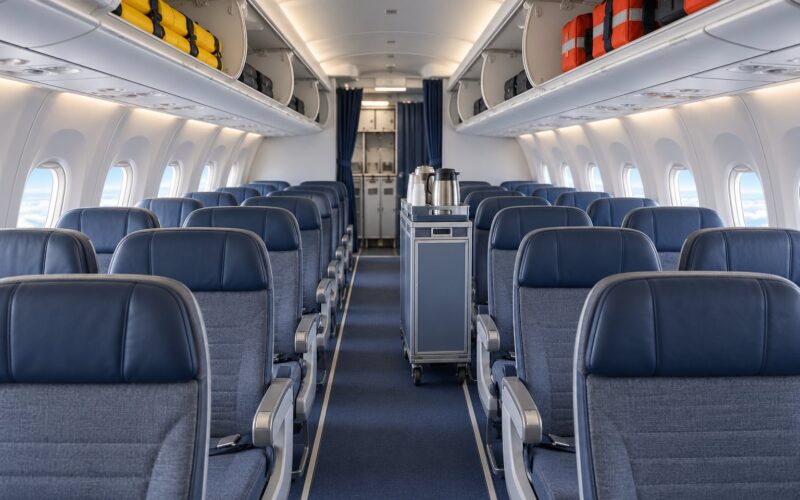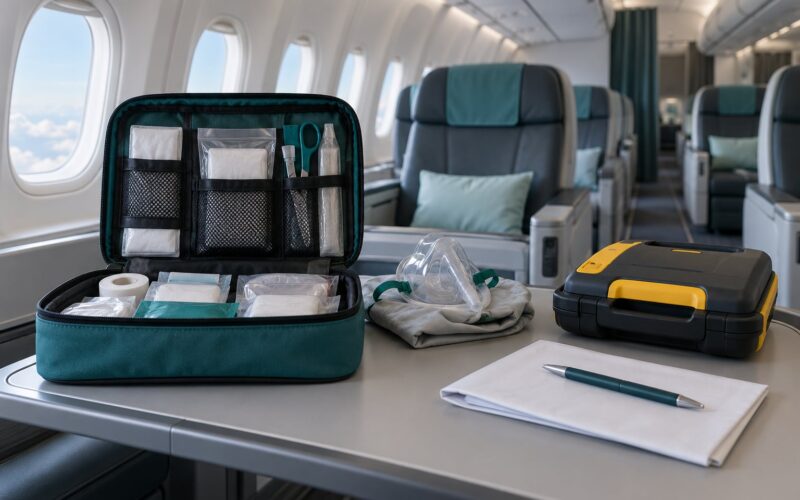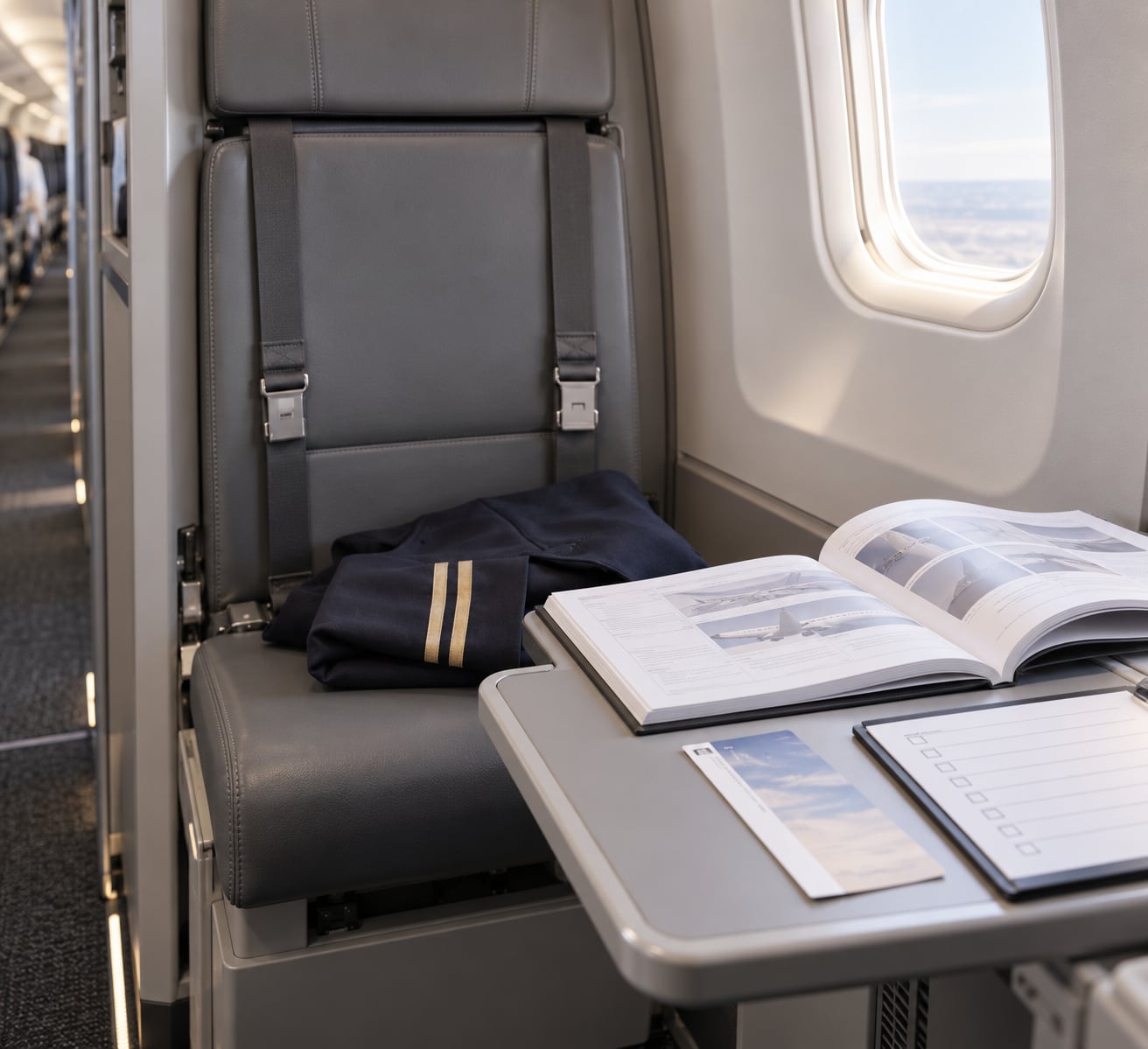
Short answer: to become a flight attendant you need a high school diploma or GED, legal work authorisation, a valid passport, a clean background and drug screening, and the physical ability to reach overhead bins and sit safely in a jump seat. You then apply, pass a structured interview, and finish the airline’s paid training programme before your first flight. No aviation experience and no college degree are required.
The whole route usually takes three to four months if everything goes well, and longer if you are waiting on callbacks. What makes it hard is rarely the qualifications. It is the volume of applications. Recruiters at a single airline can receive tens of thousands of applications for a few dozen crew seats, and the same post stays open for months.
Last updated for October 2026.
Worth knowing before you start: the job is split between two very different halves. One half is service, which is what most people picture. The other half is safety, which is the part airlines actually hire and test you on. Good grades in customer service help you pass the interview. Steady hands and a calm head in a simulated emergency decide whether you finish training.
Table of Contents
- 1What You Need to Become a Flight Attendant
- 2Age
- 3Education and experience
- 4Physical and medical standards
- 5Documents and legal status
- 6Uniform and grooming rules
- 7Availability and lifestyle fit
- 8Step-by-Step: How to Become a Flight Attendant
- 9Step 1: Start Your Research on How to Become a Flight Attendant
- 10Step 2: Check the Basic Eligibility Requirements
- 11Step 3: Gather Your Documents and Prepare Your Application
- 12Step 4: Complete Airline Training and Safety Instruction
- 13Step 5: Apply to Airlines and Track Opportunities
- 14Step 6: Prepare for the Interview and Selection Process
- 15Step 7: Accept the Offer and Prepare for Your First Flights
- 16Common Mistakes
- 17Relying on old hiring information
- 18Letting documents lapse
- 19Applying without researching the airline
- 20Skipping interview preparation
- 21Paying for a school that promises you a job
- 22Treating a conditional offer as a finished job
- 23Applying to too many airlines at once
- 24Frequently Asked Questions
- 25What is the minimum age to become a flight attendant?
- 26Do you need a college degree to be a flight attendant?
- 27What does flight attendant training involve?
- 28How long does it take to become a flight attendant?
- 29Can flight attendants have tattoos?
- 30Conclusion
What You Need to Become a Flight Attendant
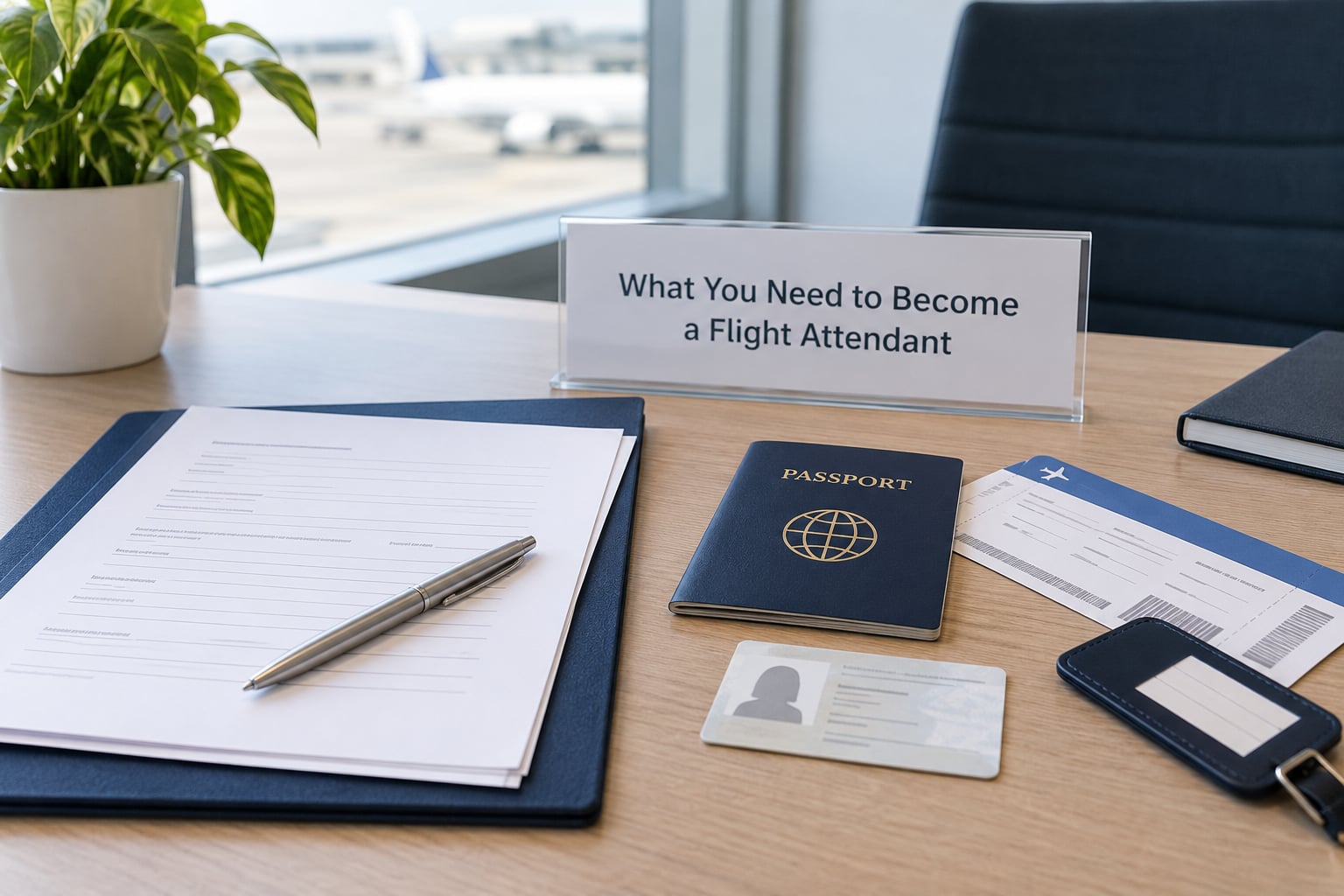
Every airline publishes its own requirements on its careers page, and those pages are the only source that matters for your application. Treat the list below as a starting point to check yourself against, not as a rule you can rely on.
Minimum age. 18, 19, 20, 21 or 23 depending on the carrier, and there is generally no maximum age.
Education. A high school diploma or GED; some carriers ask for college credits instead.
Experience. One or two years of customer service work, or an equivalent combination of education and experience.
Language. Fluent English; extra languages can earn a bilingual pay premium.
Physical standards. Reach overhead bins unaided, walk the aisle without turning sideways, and strap into a jump seat.
Legal status and travel documents. The right to work in the country where the airline is based, a valid passport, and unrestricted travel.
Appearance. Uniform and grooming standards, including hair, make-up, nails, tattoos and piercings.
Availability. Weekends, holidays, overnight away from base, and irregular hours.
Screening. Background check, fingerprinting, medical exam and DOT drug screening.
Age
Age is the requirement that catches the most people out, because the floor is not the same everywhere. Some carriers hire at 18, others at 19 or 20, and a few international airlines hold out until 23. The more demanding the aircraft and the more senior the cabin, the later the entry point tends to be.
Most regional and low-cost carriers open their doors earlier and hire more often, so if you are 18 or 19, that is the realistic market. Waiting for a mainline carrier to lower its age limit is a plan that can quietly cost you two years.
Education and experience
A high school diploma or GED is the baseline almost everywhere. Several airlines frame it as an either-or: some college credits, or a couple of years of solid customer service experience. If you have neither a degree nor a hospitality background, a year of retail, food service, childcare, hotel front desk or call centre work covers the gap nicely.
Aviation experience is not required, and second-language speakers are genuinely useful. The only thing that is hard to fake is a track record of being reliable with people, because the interview is built on past behaviour rather than hypotheticals.
Physical and medical standards
Height and reach matter more than most applicants expect. You need to reach the top of an overhead bin without stretching or standing up, walk down a narrow aisle without turning your shoulders sideways, and sit in a jump seat with the belt and shoulder harness fastened. A minimum height around four foot eleven is a common benchmark, and the reach test matters more than the number on a tape measure.
Endurance is the other half. One regional carrier’s published requirements describe working up to sixteen hours a day, including a red-eye. You are expected to lift bags, walk long terminals on compressed legs, and stay composed for the entire rotation.
Medical approval is part of the process rather than an afterthought. Expect a physical to confirm you can pass the FAA medical standards for cabin crew, and note that medical marijuana is not permitted for DOT safety-sensitive employees regardless of state law.
Documents and legal status
Keep a current passport, your work authorisation, your diploma or GED, and proof of any previous employment ready to upload. A passport is required even for applicants who never expect to fly internationally, because the airline has to confirm you can travel to every base it might assign you to. A valid passport from any country satisfies the travel-document requirement in most cases.
Unrestricted travel also rules out some situations. The same regional carrier names Canada, Mexico, the Bahamas and Cuba as places any crew member must be able to enter. If a destination on the airline’s route map is off limits to you for any reason, that is a problem worth raising before you apply.
Uniform and grooming rules
Tattoos and piercings are the most misunderstood part of the process, and policies differ so much that there is no single answer. One regional carrier allows visible tattoos when they stay inside a set size and the airline can cover them with makeup, permits a single-stud nose piercing and two piercings per ear, and bans ear gauges. Others have tightened or removed that flexibility entirely.
Check the grooming policy on the exact carrier you are applying to, and adjust before your interview rather than after. Hair colour, make-up, nail length and facial hair are usually covered, and the standard is judged at the door on the day, not during the interview.
Availability and lifestyle fit
Before you apply, sit with the schedule honestly. Junior crew members fly on reserve and can be assigned short notice, including holidays and weekends, and the first year often includes a commute to a base you did not choose. People burn out over the roster, not over the flying.
Step-by-Step: How to Become a Flight Attendant
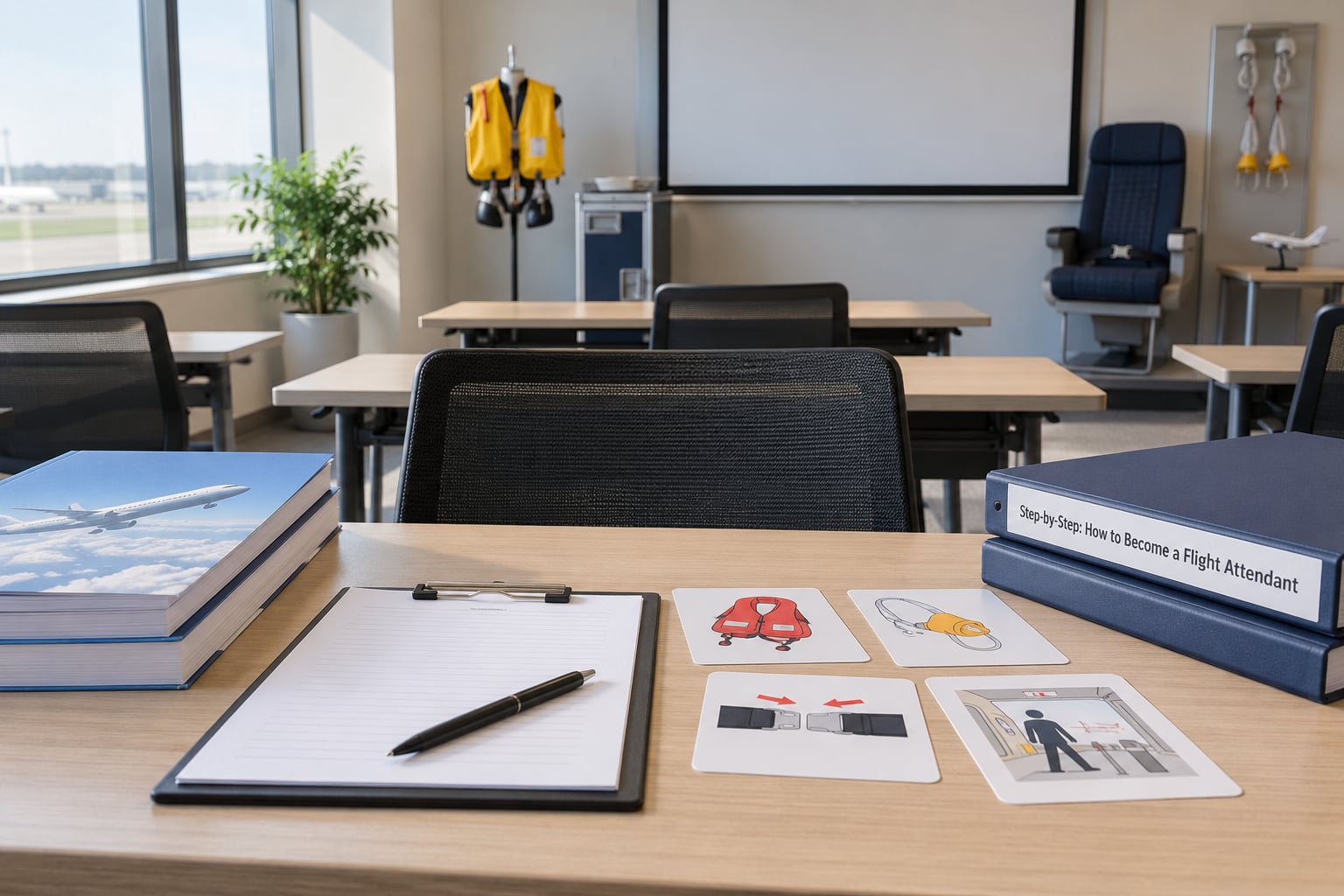
Step 1: Start Your Research on How to Become a Flight Attendant
Compare hiring models before you apply anywhere. Some airlines run their own training and hire only their own graduates, some buy graduates from an approved training partner, and some advertise entry-level seats through third-party schools. The same posting can be open for months, so check whether applications are being accepted right now rather than assuming.
You will know this stage has worked when you can name, without checking, which airlines you want, which you are willing to work for, and roughly what each one asks for. The applicants who struggle later are the ones who applied everywhere and prepared for nothing.
Step 2: Check the Basic Eligibility Requirements
Go through each airline’s requirements page line by line and score yourself honestly against age, education, reach, language, passport validity and work status. Fix what you can fix quickly. Height and reach are fixed; an expired passport is a six-week fix that can cost you a place in a training class.
Progress at this stage looks simple: a list of the airlines you qualify for today, and a short list of the documents or conditions standing between you and an application.
Step 3: Gather Your Documents and Prepare Your Application
Your resume is one or two pages and should read like a service record, not an academic one. Lead with the jobs where you handled the public, then add the skills that map onto the cabin: resolving complaints, working in a team under pressure, working a fixed shift, selling or explaining, working with people from many backgrounds. Two or three lines per role is plenty.
Be exact about dates, job titles and how long you held each position. Recruiters read quickly, and vague wording reads as padding. Do not inflate anything, including unpaid help at a family business or a certificate you have not finished.
Step 4: Complete Airline Training and Safety Instruction
Expect two to eight weeks of training depending on the carrier and the aircraft type, usually on salary after your conditional offer converts. The syllabus covers customer service and in-flight service, cabin safety and emergency procedures, first aid and defibrillation use, security awareness, dangerous goods, aircraft familiarisation and supervised practice on a mock cabin and a real aircraft.
The emergency drills are the part people underestimate. You practise locating exits, opening them, deploying slides, using extinguishers and handling a hypothetical decompression on repeat until the sequence is automatic. Physical and written assessments run throughout, and failing one is usually remediable within the programme. Finishing the syllabus is the clearest sign of progress you will get in this career.
Keep in mind that airline training is separate from the cabin crew certification issued by the FAA, which is what authorises you to perform safety duties on board. Your employer handles the paperwork; you just have to be eligible for it.
Step 5: Apply to Airlines and Track Opportunities
Apply through the airline’s own careers site. Third-party job boards are fine for finding out who is hiring, but a recruiter who is serious will move you to the employer’s own application system, and that is the one that counts.
Watch for the signs of a real posting: an official employer domain, a written description of the role, a stated minimum age and education, and no request for payment at any point. A company asking you to pay for a guaranteed seat is selling something, not hiring you.
Keep a simple tracker: airline, role, date applied, status, date of any contact. Follow up once after two to three weeks, then leave it alone. Recruiters in this field say the same thing constantly, and it matches the pattern on applicant forums such as r/cabincrewcareers: applications sit unread for weeks, and volume is not the lever. Two well-prepared applications beat twenty sprayed ones.
Step 6: Prepare for the Interview and Selection Process
Most airlines now run the first stage as a recorded or live video interview, often a few hours, and many applicants describe that step as the most stressful part of the whole route. The questions are almost entirely behavioural, and they are usually answered with the STAR method: Situation, Task, Action, Result.
Write your answers out and say them aloud. A useful one for the most-asked question, tell me about a difficult passenger:
Situation: a customer argued at my till about a charge I had no authority to change. Task: I had to resolve it without escalating and without lying. Action: I listened until he finished, apologised for the confusion, checked the policy, and offered the two options I was allowed to give. Result: he took the refund receipt and came back the following week.
Replace that with your own story, and keep the result measurable. Weak answers describe what you would do; strong ones describe what happened, what you personally did, and what came of it.
Other stages may include a group exercise where you are asked to prioritise tasks on a delayed flight, a short language or reading comprehension check for multilingual programmes, a maths or weight-and-balance calculation, and a walk-through of grooming and uniform requirements. Some recruiters simply want to see you arrive on time and be pleasant for twenty minutes. Prepare for all of it.
Step 7: Accept the Offer and Prepare for Your First Flights
A conditional job offer, usually abbreviated CJO, is not yet a job. Read what it covers: the training location, the pay rate and its start date, the probation period, the relocation or base details, and the conditions that must be met before it becomes permanent. Clear background checks, medical clearance and drug screening all sit inside that conditional period.
Ask what the first year actually looks like: how much of it is reserve, how quickly the airline assigns a home base, and how the schedule is built. Then study your aircraft. Door operation, jump seat stowage, the location of every required safety item and the exact briefing words for hand luggage are learnable before day one, and new crew who already know them finish training calmer.
Common Mistakes
Relying on old hiring information
Minimum ages, tattoo rules and application windows change without much notice. A guide written two years ago can be wrong in a way that ends your candidacy, so read the requirements on the airline’s careers page on the day you apply, not the day you decide to.
Letting documents lapse
An expired passport or a diploma name that does not match your ID will hold up a background check for weeks. Renew the passport, locate the certificate, and check exactly how the airline wants the name spelled on both.
Applying without researching the airline
The interview is a real conversation about that carrier. Knowing its fleet, its bases, its main aircraft type and its recent service changes takes an hour and shows up immediately in the answers you give.
Skipping interview preparation
Behavioural questions are not that hard, but they are unforgiving of waffle. Have three or four real stories ready that cover teamwork, conflict, pressure and a mistake you recovered from, and practise them until the numbers and outcomes come out without hesitation.
Paying for a school that promises you a job
Third-party flight attendant schools charge tuition and cannot guarantee placement, and the airline that hires you may have no formal relationship with them at all. Ask for the specific hiring numbers, the start date and the refund policy, and treat anyone evasive on those as a warning. If an airline hires you directly, it trains you and pays you during training.
Treating a conditional offer as a finished job
An offer can still fall through over screening results, medical clearance or failed training assessments. Keep working and keep your paperwork current until the contract is signed and the start date is fixed.
Applying to too many airlines at once
Spreading applications thin means preparing ten mediocre versions of the same resume and being shocked by one rejection. Four or five well-matched applications, each adjusted to the posting, is a more sensible pace.
Frequently Asked Questions
What is the minimum age to become a flight attendant?
Most airlines hire from 18, and many regional carriers recruit at 18 or 19. Larger carriers more often start at 20, 21 or even 23, depending on the fleet they operate. There is generally no maximum age, and several airlines actively recruit career changers in their fifties. Check the specific carrier, because the age floor is set by policy, not law, and it changes.
Do you need a college degree to be a flight attendant?
No. A high school diploma or GED is the standard requirement, and most carriers treat education and experience as an either-or: some college credits, or around two years of customer service work. That experience can come from retail, food service, hotels, childcare or call centres. A degree helps on a resume but rarely changes the entry bar, and it is not a condition of employment.
What does flight attendant training involve?
Training usually runs from two to eight weeks and is delivered by the airline that hires you, on pay. It covers customer service and in-flight service, cabin safety and emergency procedures, first aid, security awareness, dangerous goods, aircraft familiarisation and supervised practice on a mock cabin and a real aircraft. You are assessed throughout, and the emergency drills are repeated until the response sequence is automatic.
How long does it take to become a flight attendant?
Expect roughly three to four months from your first application to your first flight when things move quickly: a few weeks to hear back, a day or two of interviews, then two to eight weeks of training. Real timelines are longer. Recruiters and applicants on r/cabincrewcareers both describe weeks of silence before a callback, and many people apply to several airlines before one responds.
Can flight attendants have tattoos?
It depends entirely on the airline. One regional carrier allows visible tattoos when they fall inside a set size limit and can be covered with airline makeup, permits a single-stud nose piercing and two piercings per ear, and bans ear gauges. Other carriers have tightened those rules or removed that flexibility. Check the grooming page on the exact carrier you are applying to, and plan for the strictest standard you are willing to live with.
Conclusion
Start by checking the requirements on one or two airline careers pages, then work through the seven stages in order: research, eligibility, documents, training, applications, interview, offer. The path from applicant to working crew member is mostly preparation, and the people who move through it fastest are the ones who decide which airline they are targeting before they apply anywhere at all.