Most people can fly safely while pregnant, and the widely used cut-off sits at 36 weeks of gestation for a low-risk, single pregnancy. If you are working out how to fly while pregnant safely, that is the number to start from. You should not fly at 36 weeks or later, in the first week after giving birth, or at any point during pregnancy if your doctor has classified it as high-risk. Everything below turns that short answer into an actual plan.
Think of flying while pregnant as three separate checks rather than one: a medical check, an airline check, and a cabin routine. Miss any one of them and a trip that should be uneventful gets stressful. Get all three right and most flights are boring in the best way.
This guide covers what to gather before you book, the seven steps that make up the actual process, the mistakes that cause problems, and what to watch for after you land. It is general information, not medical advice — your obstetrician or midwife is the final authority on your pregnancy. Last reviewed October 2026.
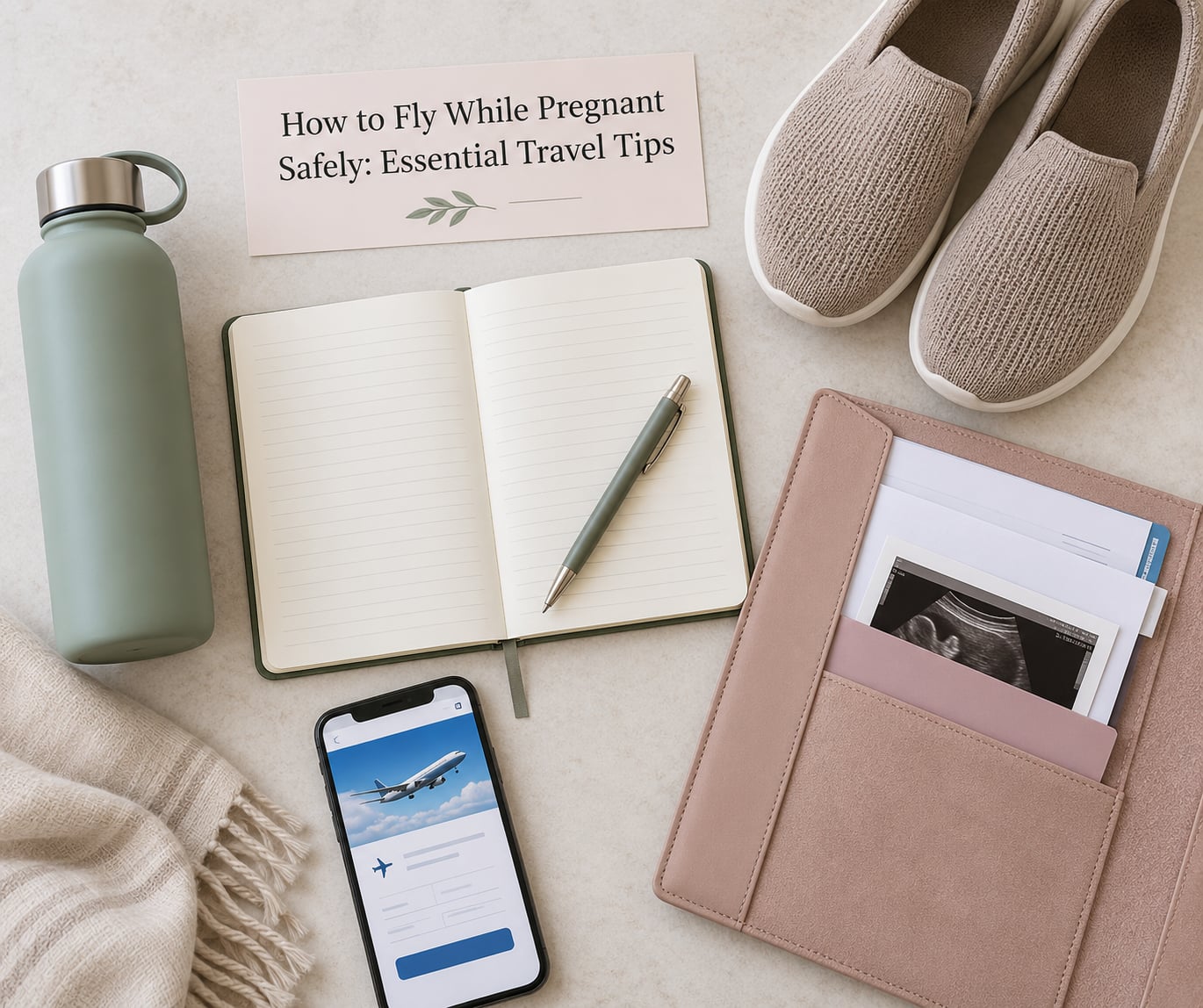
Table of Contents
- 1What You Need Before You Book
- 2Step-by-Step: How to Fly While Pregnant Safely
- 31. Get Medical Advice Before You Book
- 42. Choose the Best Time for the Trip
- 53. Check Airline Pregnancy and Medical Policies
- 64. Select a Practical Flight and Seat
- 75. Pack for Comfort, Hydration, and Emergencies
- 86. Move Regularly and Follow In-Flight Safety Guidance
- 97. Monitor Your Symptoms and Know When to Ask for Help
- 10Common Mistakes to Avoid
- 11Frequently Asked Questions
- 12Is it safe to fly during pregnancy?
- 13How many weeks into pregnancy can I fly?
- 14Do airlines require medical clearance during pregnancy?
- 15Should I wear the seat belt continuously on a flight?
- 16Can I take medication for pregnancy-related symptoms while flying?
- 17When should a pregnant traveller cancel or postpone a flight?
- 18Conclusion
What You Need Before You Book
Five things. Get these sorted and the actual flying part becomes simple.
- A clinician conversation. Book an appointment before you buy a ticket, not after. Bring your itinerary, the flight length, your destination and your due date with you.
- The airline’s written policy. Not a travel blog’s summary of it. Pull up the specific operating carrier’s page or call its medical assistance desk.
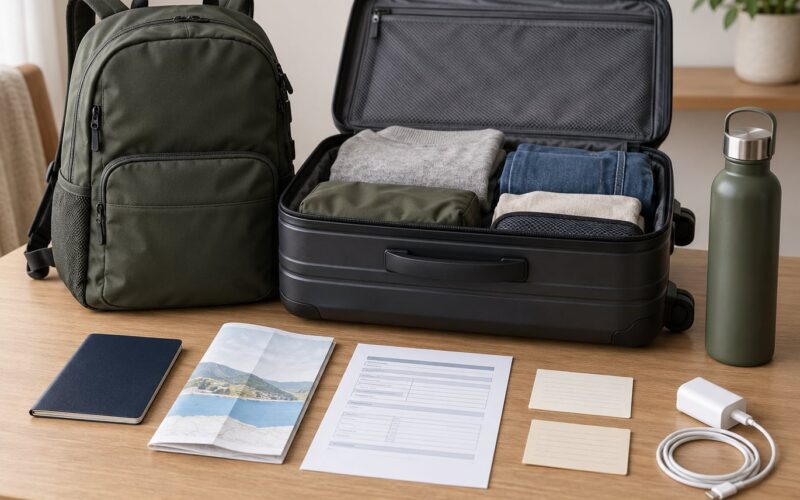
- Your documents. Photo ID, booking reference, insurance details, and a medical letter if you are near the gestational weeks where one is required.
- Insurance that actually covers pregnancy. Many standard policies treat a normal pregnancy as a pre-existing condition and exclude it. Check before you pay.
- Comfort gear. An empty water bottle that refills after security, compression socks if you have them, a pregnancy-safe pillow, and loose clothing that sits over your bump.
One more thing worth deciding early: who is travelling with you. Flying alone while heavily pregnant is a different proposition from flying with someone who can fetch water and watch your bag while you use the lavatory.
Step-by-Step: How to Fly While Pregnant Safely
1. Get Medical Advice Before You Book
Start with your midwife, obstetrician or GP, and tell them three things: how many weeks pregnant you are, where you are going, and how long the trip is. Ask specifically whether your pregnancy is low-risk, because that single answer drives most airline rules.
Guidance from bodies such as ACOG and the CDC frames flying as generally acceptable in an uncomplicated pregnancy, while listing specific conditions where travel is advised against. Your provider knows your history; this article does not.
Ask for the answer in writing. If the trip is later in pregnancy, a dated letter that names your due date, your gestational age on the travel date, and a statement that the pregnancy is low-risk prevents awkwardness at the check-in desk.
2. Choose the Best Time for the Trip
Weeks 13 to 28, the second trimester, is the window most people end up travelling in and the one most airline policies are built around. You are past the earliest weeks, past the stage where morning sickness usually dominates, and comfortably before the weight and mobility challenges of the third trimester.
First trimester travel happens and is generally considered fine in an uncomplicated pregnancy, but morning sickness, exhaustion and the anxiety of an unexpected early complication make it harder. Ask your clinician how they feel about it specifically.
Third trimester is where policy bites. Between roughly 28 weeks and your due date, airlines tighten documentation requirements and may shorten their permitted window. Plan the date against the airline’s cut-off, not just against your due date.
3. Check Airline Pregnancy and Medical Policies
Airline rules are not standardised, and this is where most trip planning goes wrong. The broad pattern is stable across carriers, but the exact weeks and paperwork vary.
| Rule area | What most airlines do | What you should do |
|---|---|---|
| Latest week to fly, low-risk single pregnancy | Around 36 weeks gestation; many carriers stop earlier on long-haul | Check the operating carrier, not the booking site |
| Medical letter requirement | Commonly from 28 weeks, sometimes earlier for long-haul or multiple pregnancies | Ask for the letter dated close to your travel date and carry it with you |
| Multiple pregnancy (twins or more) | Tighter cut-offs than a single pregnancy, often around 32 weeks | Confirm the specific limit before you book |
| Flight length | Many policies treat flights under about four hours differently from long-haul | Count your total journey time including connections |
| After delivery | Flying is generally discouraged in the first week postpartum | Wait and check with your provider on timing |
| Informing cabin crew | Commonly advised, sometimes required | Tell a flight attendant early so they know where you are seated |
Call rather than email if you can. A two-minute conversation with the airline’s special assistance team gives you the answer in writing, and it settles questions that a policy page leaves ambiguous.
4. Select a Practical Flight and Seat
Where you can, choose the nonstop option. A connection adds walking, waiting and a second take-off, and pregnancy makes all three more tiring. On a long route, the trade-off is often worth it.
For the seat, an aisle seat is the practical default: you can get up without asking a stranger to step over you, and you reach the lavatory without squeezing past a row. Extra legroom or bulkhead seats are worth paying for on flights over four hours — travellers on pregnancy forums consistently name them and bulkhead legroom as the two picks they would repeat. Check the airline’s rules on bulkhead seats with a bump, since some restrict them during later pregnancy.
A window seat is fine if you value quiet and you are comfortable asking for help to get out. Just decide before you board, not at gate.
5. Pack for Comfort, Hydration, and Emergencies
Cabin air is dry and flights are long, so water is the whole strategy. Carry an empty bottle and fill it after security, then drink steadily through the flight. Food that is bland and easy to eat matters too — airlines describe their own menus as high in salt, and gas and bloating are the discomfort pregnant flyers complain about most often and hear about least.
A small pregnancy travel kit is worth building:
- Any medication you take, in original packaging, in your hand luggage
- A note from your clinician with your due date and gestational age
- Insulin and cold packs if you use them, plus any cold-chain item in hand luggage
- Compression socks, put on before boarding if you have them
- A small pillow or cushion for your bump and lower back
- Your insurer’s contact number, written down and saved offline
- Simple snacks, and a plan for what you will eat if the meal is unappealing
Take anything you might need in your carry-on rather than checked luggage. On medical grounds, medication and monitoring supplies belong in the cabin with you, and airlines typically allow that even when the item would normally be restricted.
6. Move Regularly and Follow In-Flight Safety Guidance
Long-haul sitting raises the risk of deep vein thrombosis, a blood clot in the leg. Clinical guidance puts that risk two to three times higher than baseline for a long flight, and pregnancy already carries an elevated baseline risk of its own. That is the entire reason for the rest of this section.
Wear your seat belt low, across your bump and your hip bones, for take-off and landing — the lap belt sits below the bump rather than across it. This matters even when the bump is small and the belt feels like it fits fine at your waist.
Once the seat belt sign is off, get up and walk the cabin every hour or so. Flex your ankles and calf muscles while seated, and point your toes. This is basic venous return advice and it is the single most effective thing you control.
Wear compression socks if you have them. Travellers on r/pregnant describe them as close to universal, including people who were not pregnant themselves, and the recurring post-flight complaint is swollen feet and legs rather than any clot-related symptom.
Drink water, avoid alcohol entirely, and keep the overhead bin closed so you are not reaching and twisting. Compression garments need to be the right length and fit — ill-fitting compression is worse than none.
7. Monitor Your Symptoms and Know When to Ask for Help
Tell a flight attendant early in the flight that you are pregnant and roughly how far along you are. It takes ten seconds, and it means someone is watching for the changes you might not notice yourself.
Speak up straight away if you notice swelling or pain in one leg or calf, chest pain, sudden breathlessness, a severe headache or visual changes, heavy vaginal bleeding, abdominal pain, fluid loss, or anything that feels distinctly wrong. Severe or sudden symptoms are an emergency — press the call button and tell the crew it is urgent, because they can divert a flight or prioritise on-board medical support.
Expect some normal pregnancy discomfort: nausea, fatigue, the urge to urinate constantly, and mild breathlessness as the bump grows. That is different from the list above.
After landing, keep an eye on both legs for the next two days. A calf that is swollen, tender, warm or red on one side needs same-day medical attention, as does a cough with breathlessness or chest pain. Contact your provider before your next scheduled appointment to say that you flew, and mention it if you develop any of those symptoms.
Common Mistakes to Avoid
Booking before asking anyone. The fix: clinician first, ticket second. This is the step people skip because it delays the booking, and it is the one that carries the most weight.
Reading a blog instead of the airline’s page. A guide can tell you most airlines stop around 36 weeks. Only the carrier can tell you whether yours stops at 36, at 32, or at 28 weeks for your route length.
Assuming the medical letter is a formality. Ask what it must contain: usually your name, due date, gestational age on the travel date, and confirmation of a low-risk pregnancy. Some carriers specify a recent issue date, and a letter written months earlier can be rejected.
Sitting still the whole flight because you feel lazy. The fix: a walk every hour, calf flexes whenever you are seated for a stretch, and hydration behind both.
Overpacking clothes and underpacking information. Comfortable layers matter, but the documents, the insurance confirmation and the clinician’s letter are what actually stop problems at the gate.
Wearing the seat belt at your waist. It needs to sit low across the bump and your hip bones, from take-off to landing.
Treating a connection as no big deal. Two take-offs, two descents and a walk through a terminal is a different day for a 30-week pregnancy. If a nonstop exists, take it.
A few smaller things people regret skipping: order meals that are mild rather than relying on airline food, keep the emergency contact number on paper as well as in your phone, and agree in advance with your travel companion who handles what if you feel unwell.
Frequently Asked Questions
Is it safe to fly during pregnancy?
For most uncomplicated, low-risk pregnancies, yes. Mainstream guidance from bodies such as ACOG and the CDC treats air travel as acceptable, and a commercial flight exposes you to very little that a normal day on the ground does not. The real constraints are gestational weeks, how far you are from a full hospital, and whether your pregnancy is high-risk. Get your provider’s clearance before booking, tell a flight attendant you are pregnant, and move around hourly.
How many weeks into pregnancy can I fly?
Most airlines stop carrying low-risk, single pregnancies at around 36 weeks of gestation, and many apply tighter limits to long-haul flights and to twin or higher-order pregnancies, often around 32 weeks. Those are airline rules, not medical cut-offs. Clinically, the second trimester, weeks 13 to 28, is generally the most comfortable window. Confirm the exact limit with the operating carrier, because policies differ and change.
Do airlines require medical clearance during pregnancy?
From about 28 weeks, many carriers ask for a dated letter or medical certificate from your doctor or midwife. It normally needs your name, your due date, your gestational age on the date of travel, and a statement that the pregnancy is low-risk and fit to travel. Some airlines require it earlier, require it to be issued within a set number of days of departure, or set their own format. Ask the airline before you book, not at the gate.
Should I wear the seat belt continuously on a flight?
Keep it fastened whenever seated through take-off and landing, and position it low across your bump and your hip bones rather than around your waist. Many travellers shift it up to their waist because it feels more comfortable, which puts the strap across the bump. After landing and once the sign is off, unfasten it and get up to walk regularly, which matters more for clot risk than the belt position does.
Can I take medication for pregnancy-related symptoms while flying?
Travel with the medications your clinician has already prescribed, in original packaging and in your hand luggage, and carry the prescription or a clinician’s note. Do not add anything new for the flight without asking first, because many medicines that are routine for non-pregnant travellers are avoided in pregnancy. Your clinician or pharmacist can tell you what is safe for your stage and your specific symptoms, and can help with options for bloating, nausea or headache.
When should a pregnant traveller cancel or postpone a flight?
Postpone and speak to your provider if your pregnancy has been classified as high-risk, or if you have preeclampsia or high blood pressure, an incompetent cervix, gestational diabetes, a placenta problem, recent bleeding, an ectopic or other complicated pregnancy, or a history of a blood clot. Also postpone from 36 weeks and beyond, during the first week after delivery, and whenever a medical issue is actively being monitored. Booking refundable fares is one practical way to keep that decision reversible.
Conclusion
If you only remember the sequence, remember this: talk to a healthcare professional before you buy anything, confirm your gestational weeks against the operating airline’s written policy, then choose a nonstop and an aisle or extra-legroom seat and keep moving through the flight.
The rest is habit. Seat belt low across the bump, water bottle filled, walk the cabin each hour, and tell a flight attendant early that you are pregnant. If any symptom on the urgent list above shows up, say so immediately, and get your legs checked over the couple of days after landing.