If you want the short version: US airline pilots earn roughly USD 45,000 to USD 100,000 in their first year at a regional carrier, and roughly USD 300,000 to USD 500,000 in total compensation once they reach senior captain at a mainline airline. Regional first officers sit at the bottom of that range, senior widebody captains at the top, and almost everything in between is decided by seat, seniority, aircraft and contract.
Those numbers are typical US ranges, not quotes. Airline pay scales are negotiated by union and reset with every contract cycle, so treat everything here as a starting point for comparison rather than a promise.
Updated for 2026, the clearest way to read pilot pay is by career stage. That means ignoring the headline hourly rate floating around social media, which is usually quoted at a fixed point on the seniority scale and then multiplied by a 40-hour week that pilots never work.
Table of Contents
- 1What Airline Pilots Earn: US Pay Ranges at a Glance
- 2How Pilot Pay Works
- 3How an hourly rate becomes an annual salary
- 4The components of total compensation
- 5Out-of-base assignments and the reserve guarantee
- 6Regional Airline Pilot Pay
- 7Mainline Airline Pilot Pay
- 8What Affects What Airline Pilots Earn
- 9How Pilots Can Increase Their Earnings
- 10Frequently Asked Questions
- 11How much do airline pilots earn in the United States?
- 12Do airline pilots earn more as captains than first officers?
- 13How much do regional airline pilots make compared with mainline pilots?
- 14Are airline pilot bonuses and per diem included in their salaries?
- 15What is the most important factor when comparing airline pilot pay?
- 16Can airline pilot earnings change based on where the pilot lives?
- 17Conclusion
What Airline Pilots Earn: US Pay Ranges at a Glance
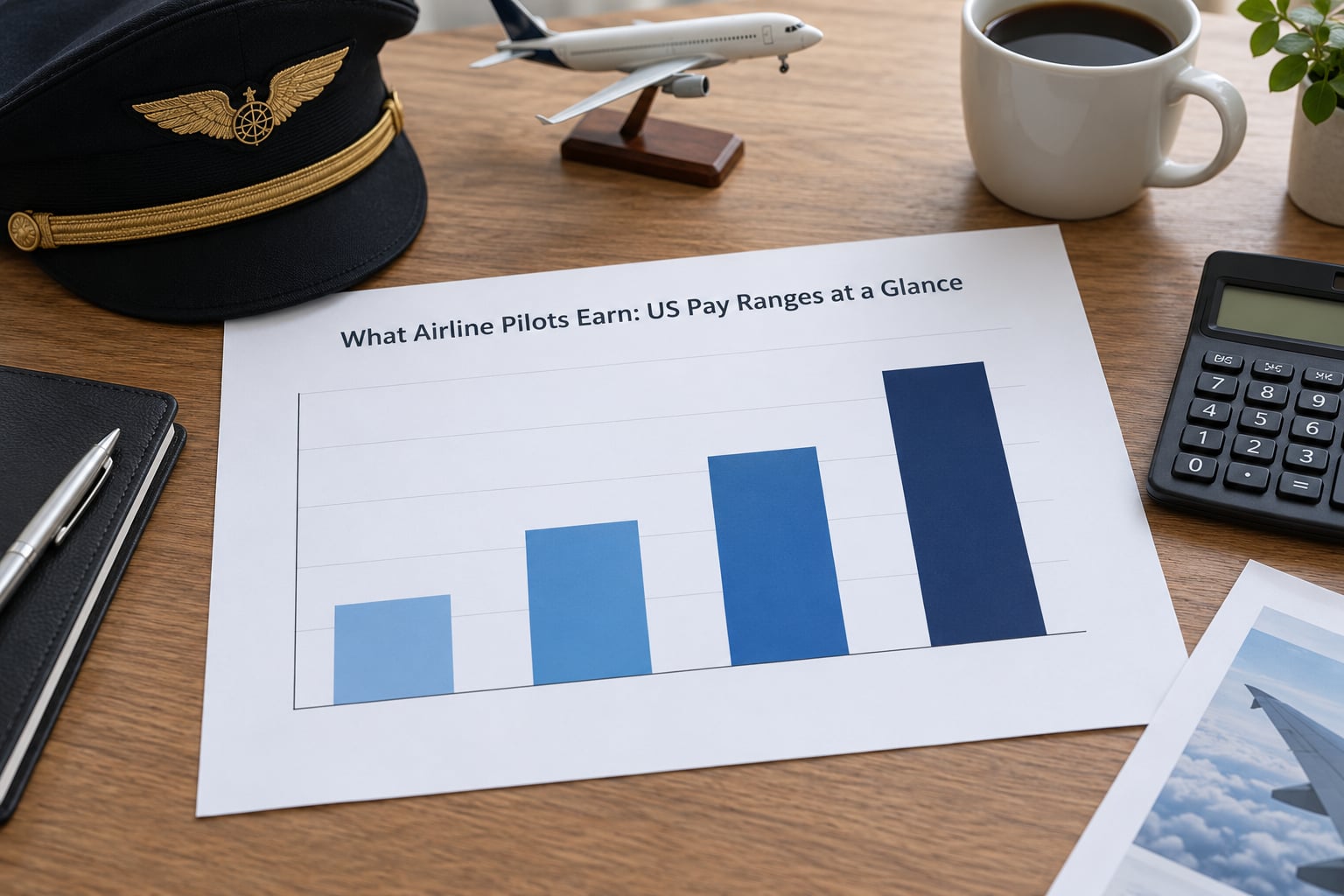
The table below groups what airline pilots earn by the four positions people ask about most. Base pay is what the contract guarantees. Total compensation adds the variable pieces that move the number up.
| Career stage | Typical annual base pay | Typical total compensation | Usual time to get there |
|---|---|---|---|
| Regional first officer, new hire | USD 42,000 to USD 60,000 | USD 45,000 to USD 65,000 | Entry level after type rating |
| Regional captain, first few years | USD 65,000 to USD 90,000 | USD 70,000 to USD 100,000 | 2 to 4 years |
| Mainline first officer, narrowbody | USD 90,000 to USD 150,000 | USD 100,000 to USD 180,000 | 1 to 6 years |
| Mainline captain, mid scale | USD 170,000 to USD 250,000 | USD 190,000 to USD 290,000 | 6 to 15 years |
| Senior captain, widebody or international | USD 250,000 to USD 350,000 | USD 300,000 to USD 500,000 and above | 15 years plus |
One anchor worth trusting: the Bureau of Labor Statistics median for pilots, copilots and flight engineers was reported at roughly USD 212,000 to USD 219,140, depending on the year of the release. That median sits well above the regional end of the table, which tells you most of the pilots counted in that figure are mainline crew partway up their ladders.
Individual pilot-forum salary survey entries land in the same territory. An AirlinePilotForums end-of-2026 survey entry lists regular earnings of USD 348,244, per diem of USD 4,911 and premium payments of USD 3,336, for total compensation of USD 397,145. That is a widebody captain near the top of a scale, not a typical first-year figure.
Careers also have a hard ceiling. A pilot flying under Part 121 must stop flying for compensation after age 65, so the top-of-scale years are the last decade of a working life, not a bonus on top of a long career.
How Pilot Pay Works
Pilots are paid by the hour, and that single fact causes most of the confusion online. The hourly rate is real, but it only becomes an annual number when you multiply it by pay-credit hours rather than by 2,000.
How an hourly rate becomes an annual salary
Pay-credit hours are a guaranteed minimum number of paid hours per month. If a pilot flies more than the guarantee, the extra hours are paid; if fewer, the difference is made up. Most US carriers credit between 70 and 90 hours a month, and Southwest pilots often credit closer to 90 than the 70 to 80 common elsewhere.
A pay-credit calculation posted by a Southwest pilot works out to 76 hours a month multiplied by an hourly rate of USD 91, times 12 months, or about USD 83,000 for a regional pilot. The viral claim that an hourly rate of several hundred dollars produces a seven-figure salary ignores this step entirely, because a pilot is rarely paid for 40 hours a week.
The components of total compensation
Six pieces make up what a pilot actually takes home:
- Base pay from the hourly rate set on the seniority scale, credited against pay-credit hours.
- Per diem, a flat allowance for each duty period away from base, paid whether or not you spend the money.
- Premium pay, paid on top of the hourly rate for irregular schedules such as red-eyes, weekends and late duty finishes.
- Overtime and credit beyond guarantee, when actual flown hours exceed the monthly minimum.
- Profit sharing, where annual earnings above a threshold share back with the crew.
- Retirement contributions, either a defined-benefit pension or an employer contribution such as a retirement security plan and 401(k) match.
That last group is why two pilots on the same airline can both be described as making USD 250,000 and mean completely different things. One number may be almost entirely taxable base. The other may include per diem, premium pay and a retirement contribution that never shows up in a salary survey.
Out-of-base assignments and the reserve guarantee
Placing a pilot temporarily at a station that is not their base is called a white slip in pilot slang, and it cuts pay while adding hours. Reserve guarantees work the other way: they set a floor so a pilot on reserve is paid a set monthly amount whether or not they are called.
Regional Airline Pilot Pay
Regional carriers are where most US pilots start, and they are where the headline range comes from. Regional first officers commonly start in the USD 42,000 to USD 60,000 range, with regional captains in the first few years landing near USD 65,000 to USD 90,000.
The low number is not a rounding error, and pilot forums keep returning to it. One poster reported roughly USD 22,000 in their first year, having paid about USD 80,000 for training. If you are weighing whether the career pays off, that combination is the hardest fact on the page.
The trade for regional work is speed. Regional fleets are small, so a first officer can sit captain, fly a revenue passenger aircraft and build seniority in a few years instead of waiting a decade at a mainline. Pilots who want command quickly often treat regional pay as a stepping stone and accept lower pay to get there.
When comparing regional offers, look past base pay at the guaranteed hours, whether the aircraft is a revenue passenger or a 50-seat mainline-configured jet, the signing bonus, paid training, and how quickly the captain list opens. Those five items tell you more about the first three years than the hourly rate does.
Mainline Airline Pilot Pay
Moving to a mainline carrier is the single biggest pay jump in the industry. Mainline narrowbody first officers typically run USD 90,000 to USD 150,000 in base, and mid-scale captains reach USD 170,000 to USD 250,000.
At the top, senior widebody and international captains sit between USD 250,000 and USD 350,000 in base, with total compensation reported from USD 300,000 up past USD 500,000. That is the tier that answers the recurring question about which pilots clear half a million a year, and pilot consensus places the bulk of mainline captains in the USD 400,000 to USD 500,000 band once high-hour totals are counted, with some going beyond USD 600,000.
The catch is that the top of the scale is competitive to reach and demanding to hold. Hub assignments and widebody flying come with heavier schedules, more duty time and strict legal limits, including a 1,000-hour annual flight time cap for domestic operations under FAA rules. Widebody international flying has its own lower limit because of longer duty periods.
What Affects What Airline Pilots Earn
Seven variables explain nearly all the difference between two pilots on the same day. Airline and contract first, then seat, seniority, aircraft, base station, hours flown and benefits.
| Carrier tier | Typical annual total compensation | Main earning pattern |
|---|---|---|
| Regional passenger | USD 45,000 to USD 100,000 | Low base, fast path to captain |
| Mainline passenger | USD 100,000 to USD 500,000 | Seniority scale plus widebody premiums |
| Cargo carriers | Comparable to passenger mainline | High hour totals, night-heavy schedules |
| International carriers | Often above US mainline | Tax-free allowances and housing benefits |
| Private, charter and Part 91 corporate | Wide range, often lower guaranteed pay | Hourly or salary with schedule flexibility |
Seat. Captains and first officers sit on different pay scales at the same airline, and the gap widens with seniority.
Seniority. Every union contract uses a step-based scale. A first-year captain is not at the same number as a 20-year captain at the identical airline.
Aircraft type. Widebody flying pays a premium per hour over narrowbody work, which is why international and long-haul assignments move the total more than the base rate suggests.
Base station. Cost of living changes what a number buys, not what it is. A pilot based in a high-cost metro earns the same contractual pay as a colleague elsewhere and spends a larger share of it.
Duty rules and hours. Duty time limits, reserve rotation and whether the carrier runs daily or seasonal schedules all shape how many credited hours a pilot actually gets in a month.
Benefits. Retirement contributions, health coverage, paid training, relocation support, standby travel and buddy passes can be worth tens of thousands a year and rarely appear in a salary figure.
Type rating matters too. Each aircraft a pilot qualifies on adds value, and bidding for the high-hour international schedules is competitive among senior crew.
How Pilots Can Increase Their Earnings
None of this is a shortcut, and none of it comes with a guarantee. These are the levers pilots actually pull.
Move up the seniority list. It is the slowest lever and the most reliable. Seniority-based pay scales mean the raise comes from time on the property, not from negotiating.
Qualify on more than one aircraft. Type ratings widen the bidding options, and the widebody bids are where the per-hour premiums sit.
Work the reserve line when it pays. Reserve guarantees create a monthly floor. On a schedule where flying extra does not replace your minimum, the floor can raise a hard month rather than lower it.
Read the contract before the offer. Pay-credit hours, per diem, duty rules, retirement contribution rate and the profit-sharing threshold are all in the agreement. Ask for the scale, not a summary.
Compare total compensation, never base alone. Two offers that differ by USD 20,000 in base can invert once retirement contributions and per diem are counted.
Budget for the training cost. With flight school running in the USD 110,000 to USD 125,000 range and first-year regional pay where it is, break-even lands somewhere in the middle of a career rather than at the end of training. Career-changers regularly describe needing seven years or more to match the salary they left.
Frequently Asked Questions
How much do airline pilots earn in the United States?
US airline pilot pay runs from about USD 45,000 in a first regional first officer year to roughly USD 500,000 or more in total compensation for a senior widebody captain. The Bureau of Labor Statistics median for pilots, copilots and flight engineers has been reported near USD 212,000. Regional new hires sit at the bottom, mainline captains at the top.
Do airline pilots earn more as captains than first officers?
Yes, consistently. Captains and first officers are paid on separate scales at the same airline, and the gap widens with each step of seniority. A mainline narrowbody first officer typically starts around USD 90,000 to USD 150,000, while a mid-scale captain reaches USD 170,000 to USD 250,000. The difference is seat, skill and seniority rather than hours worked.
How much do regional airline pilots make compared with mainline pilots?
Regional first officers usually start between USD 42,000 and USD 60,000, with early captains near USD 65,000 to USD 90,000. Mainline first officers run USD 90,000 to USD 150,000 and senior captains reach USD 300,000 to USD 500,000 in total compensation. Regional flying offers a faster route to command but a much lower floor in the early years.
Are airline pilot bonuses and per diem included in their salaries?
It depends on which figure you are reading. Base pay usually covers the hourly rate credited against pay-credit hours, and excludes per diem, premium pay, profit sharing and retirement contributions. That is why a salary survey entry can show regular earnings of USD 348,244 alongside per diem of USD 4,911 and premium payments of USD 3,336, totalling USD 397,145.
What is the most important factor when comparing airline pilot pay?
The union contract is the factor that matters most, because it sets the hourly rate scale, the guaranteed pay-credit hours, per diem rules and retirement contributions. Compare two contracts line by line rather than comparing headline rates or base salaries. Hours and benefits are large enough that a higher base can still lose on total compensation.
Can airline pilot earnings change based on where the pilot lives?
The contracted pay does not change with location, since the scale is set by airline and seniority. What changes is the cost of living and the local tax burden, which means the same number buys very different things in different metros. Base location also affects bidding opportunities, schedule stability and which aircraft and routes a pilot can work.
Conclusion
What airline pilots earn depends on seat, seniority, aircraft and contract, and any single number without that context is misleading. A new regional first officer and a senior widebody captain can both honestly be called airline pilots earning very different amounts.
Start where the comparison actually begins: read the contract, check the guaranteed hours, add up per diem, premium pay and retirement contributions, then price in what the training cost took from your early years.