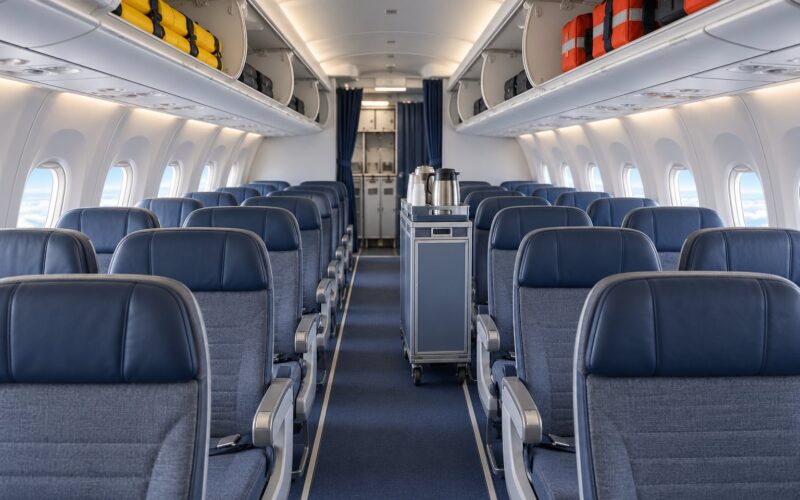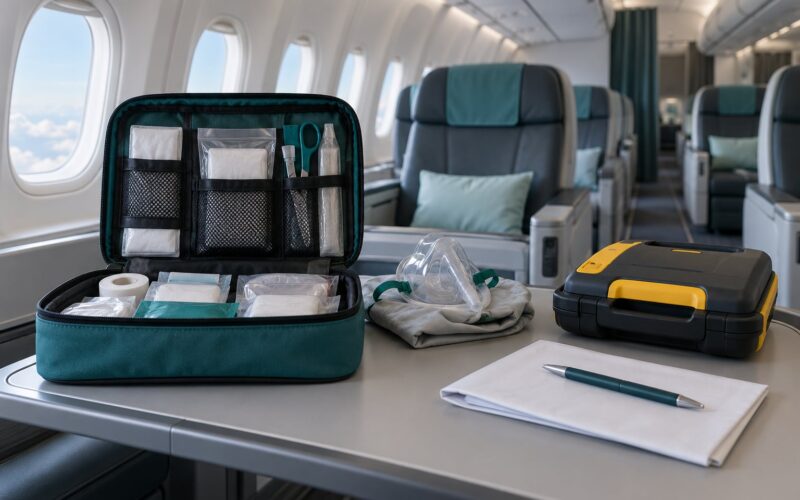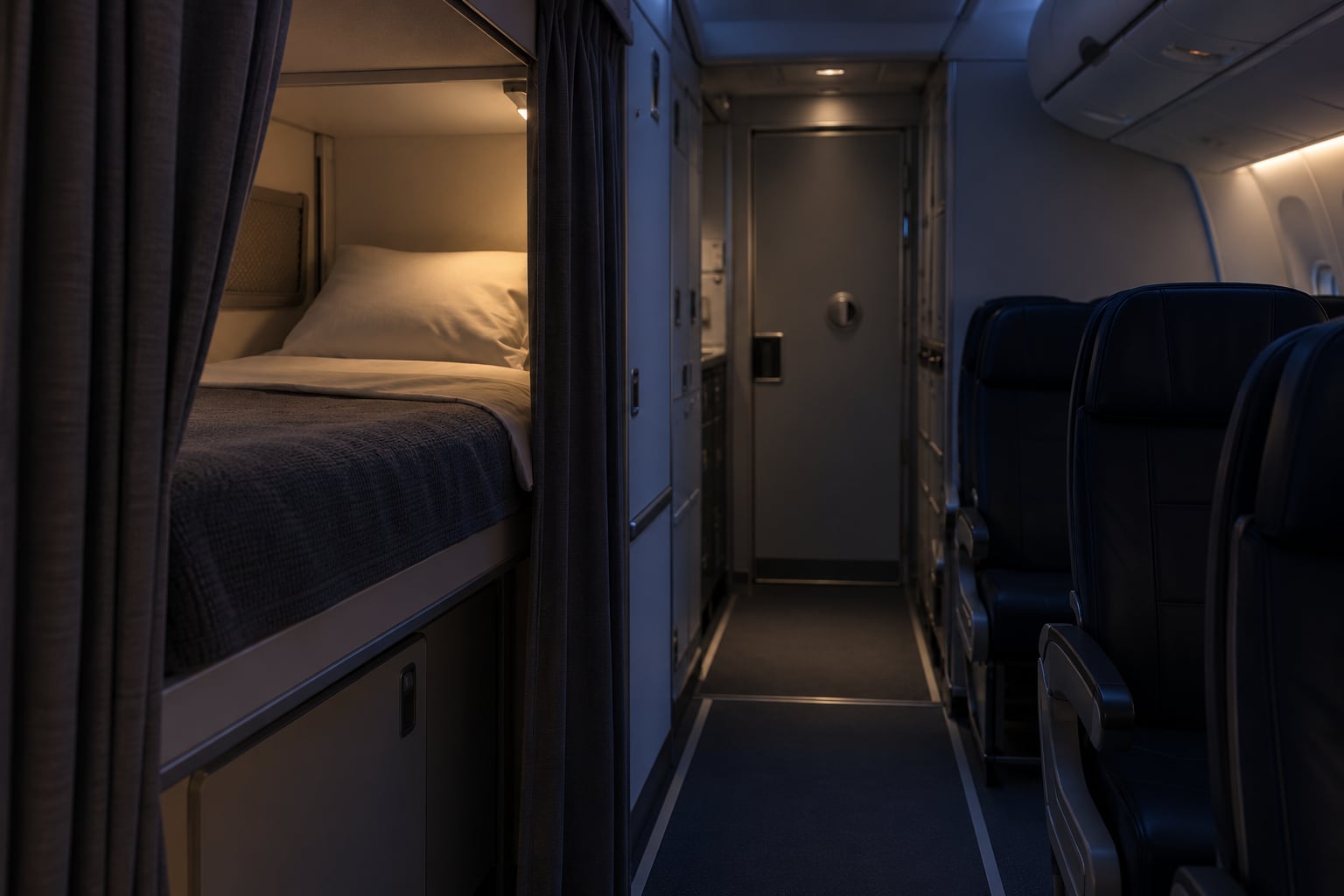
Pilot rest rules work by doing three things: they cap how long a crew can work, they guarantee a real sleep window before each duty period, and they build scheduled rest into the flight itself. In the United States, 14 CFR Part 117 requires at least 10 consecutive hours of rest before duty (including 8 uninterrupted hours for sleep) plus two consecutive hours of in-flight rest in the second half of a long duty period. Elsewhere, EASA and ICAO rules aim at the same thing with different numbers.
The rest of this guide unpacks how that works on a 17-hour flight, why the rosters change by country, and what you can see from your seat. Rules last checked October 2026.
Table of Contents
- 1What Are Pilot Rest Rules?
- 2How Pilot Rest Rules Work on Long Flights
- 3Flight time is not the same as duty time
- 4How augmented crews create the rest windows
- 5What Happens During a Long Flight?
- 6How Much Rest Do Pilots Get?
- 7Who Enforces the Rules?
- 8Why Do Rules Differ by Country and Airline?
- 9Can Passengers Affect Pilot Rest?
- 10Frequently Asked Questions
- 11How long does a pilot need to rest?
- 12Do pilots take naps on long haul flights?
- 13Where do pilots sleep on long flights?
- 14How many pilots are on a long haul flight?
- 15What is the 3 to 1 rule for flight attendants?
- 16What happens if a pilot exceeds duty time limits?
- 17Conclusion
What Are Pilot Rest Rules?
Pilot rest rules are the regulations that limit how long flight crew may work, how long they must be free of duty beforehand, and how much rest they must be given during a flight. In the US they sit in 14 CFR Part 117; in Europe and most of the rest of the world the equivalent is EASA ORO.FTL and the UK CAA’s own flight time limitation scheme, with ICAO setting the underlying international standards.
They exist because a tired cockpit is genuinely dangerous, not just theoretically so. Research cited by NASA puts impairment after 17 hours awake at roughly the same level as driving over a 0.05% blood alcohol limit, and fatigue features in something close to a quarter of major aviation accidents. Long-haul flights are where that gets serious, because the duty outlasts the night.
What the rules are not is a promise that somebody sleeps. They regulate opportunity, not sleep itself, and the difference between those two words explains most of the confusion people have about crews napping in the cockpit.
How Pilot Rest Rules Work on Long Flights
How pilot rest rules work on long flights comes down to one mechanism: more pilots. A short-haul flight has two pilots who both fly and both stay awake. A long flight adds pilots to the crew so that while one is resting in a bunk, another two are flying the aircraft and handling the workload, and the rotation can repeat several times before anyone lands.
Flight time is not the same as duty time
Flight time is the time the aircraft is in motion. The flight duty period is broader: it starts with preflight duties and ends after postflight duties, and it includes the turnaround. That is the number the rest rules protect, because a pilot can be working hard for five hours without the aircraft ever moving. Under Part 117 an unaugmented crew’s flight duty period tops out at 14 hours.
How augmented crews create the rest windows
Each extra pilot buys flight time. Under Part 117 the maximum flight time scales with the size of the augmentation, and the crew complement is chosen so that at least two pilots are on duty and never on rest at the same time.
| Crew size | Maximum flight time | What the extra pilot buys |
|---|---|---|
| 2 pilots (unaugmented) | 9 hours | No scheduled in-flight rest. The crew flies through and lands, which is why long sectors need augmentation. |
| 3 pilots | 13 hours | One rest window per pilot, and a cockpit that is never left with fewer than two awake pilots. |
| 4 pilots | 17 hours | Two rest windows each, which is the standard complement on a 16 to 17 hour ultra-long-haul sector. |
The rest itself has to be protected, not just scheduled. On an aircraft large enough to carry a crew rest area, at least two consecutive hours of in-flight rest must fall in the second half of the duty period, and the flight deck door to a rest area is designed to lock from the outside so a resting pilot is genuinely undisturbed. If the rest cannot be built into the plan, the operation does not fly that sector the way it wanted to.
Around the flight time limits sit the rolling cumulative limits, which cap how much a crew can work over weeks and months so that a bad week cannot become a bad career.
| Cumulative limit under Part 117 | Cap |
|---|---|
| Flight time | 1,000 hours in 365 consecutive days |
| Flight time | 500 hours in two consecutive 365-day periods, 800 in three, 1,400 in five |
| Flight duty periods | 60 hours in 168 consecutive hours, 200 hours in 672 hours, 1,200 hours in 672 hours |
| Rest | At least 30 hours of rest in 168 consecutive hours |
| Rest before duty | 10 consecutive hours, including at least 8 uninterrupted hours for sleep |
A commander can, in limited circumstances, extend a duty period beyond its limit by up to three hours for safety or operational necessity. It is an exception, it has to be planned for, and it triggers extra rest requirements afterwards. It is not a routine scheduling tool.
What Happens During a Long Flight?
A 17-hour sector runs to a rhythm that most passengers never see, because the interesting parts happen behind closed doors. The sequence below is the normal shape of an ultra-long-haul flight; exact procedures differ by airline and by aircraft type.
- Preflight and boarding. The crew arrives rested from the required window, signs on, briefs, runs the flight deck setup and the checklists. Crew rest seats are blocked out of the booking inventory at this point, which is why row 1A on many 777s never appears in the seat map.
- Early cruise, first rest block. Once the aircraft is stable and above the weather, one pilot moves to the rest area. Cabin lights drop, the meal service is timed to finish early so the cabin is quiet during the rest window.
- The circadian problem. Long-haul night sectors often push the hardest work into the small hours. Fatigue researchers talk about the Window of Circadian Low, the period when the body is trying hardest to sleep, and they put red-eye segments among the riskiest flying there is.
- Middle of the flight, crew swap. The resting pilot returns, the pilot on duty goes into the bunk, and the handover happens with checklists and a proper briefing. Passengers sometimes notice the cabin getting warmer, quieter, or the meal carts running at odd hours, because the rotation drives the timing.
- Landing and the technical stop. Very long routes sometimes land for a crew change rather than a technical reason. A fresh inbound crew takes over and the outbound crew flies home, which is why a Singapore to New York routing may stop somewhere unexpected.
That last point has a recent illustration. In a case reported in September 2026, an Air New Zealand replacement first officer was unable to take control of the aircraft because the mandatory crew rest had not been completed. The safety system worked: it refused an unsafe hand-over rather than papering over it.
On FlyerTalk, users point out that rest practices are actively changing rather than frozen in place. One reported change in June 2026 was British Airways letting long-haul crew use vacant passenger seats for rest breaks when the dedicated rest area was busy.
How Much Rest Do Pilots Get?
How much rest pilots get is best answered by separating three things that get mixed up constantly: the rest window the rules require, the sleep opportunity inside it, and the sleep that actually happens. Only the first two are regulated.
| Layer | What it means | Who controls it |
|---|---|---|
| Scheduled rest window | The block of time set aside in the roster, 10 consecutive hours before duty in the US | Regulation and airline rostering |
| Sleep opportunity | At least 8 of those hours uninterrupted, so the body can actually sleep rather than drift | Regulation |
| In-flight rest | Two consecutive hours in the second half of a long duty period, taken in a bunk or a reclining rest seat | Regulation, then crew discretion |
| Actual sleep | Whatever the pilot manages, and it varies with take-off time, jet lag, noise and personal sleep habits | The individual |
None of that schedule is visible to passengers, and the published duty time on a site selling the ticket is not the same thing as the crew’s real time on duty. It also depends heavily on where the crew is based: a crew flying home can fly a duty that ends far from the base, which is why airline rosters track time away from home as carefully as hours flown.
Who Enforces the Rules?
Four groups share the job, and each one catches what the others miss. The regulator sets the limits and investigates breaches. The airline’s operations department builds legal rosters, checks fatigue risk, and decides crew pairing, aircraft assignment and whether a sector is flown at all.
Dispatchers work the day of the flight. They are the ones who notice the missed connection eating into rest, who call in a replacement crew, and who decide whether to divert or delay rather than press on past a limit.
The pilots themselves hold the final say on fitness for duty. A crew member who judges themselves unfit can report so before departure, and that is a safety mechanism rather than an admission of weakness. Crew rest is also enforced mechanically: the rest seats are blocked in the reservation system ahead of schedule, so they are not quietly sold to paying passengers.
Why Do Rules Differ by Country and Airline?
Rules differ because the safety goal is identical everywhere and the way of measuring it is not. Each authority defines a duty period, a rest period and a night differently, sets its own tables for crew size, and decides whether to work from fixed hour limits or from a risk-based scheme. That produces genuinely different numbers for the same 15-hour flight.
| Rule set | Rest before duty | In-flight rest | Approach |
|---|---|---|---|
| US FAA Part 117 | 10 consecutive hours, including 8 uninterrupted for sleep | 2 consecutive hours in the second half of the duty period where a rest facility is required | Prescriptive hour limits, with limited commander extension |
| EASA ORO.FTL and UK CAA | 10 hours, with a defined reduction where a controlled rest period is taken | Typically at least 45 minutes for cockpit crew on flights of six hours or more | Prescriptive limits, plus fatigue risk management options |
| ICAO standards | Set by states through Annex 6 | Varied by state implementation | Allows a Fatigue Risk Management Scheme instead of fixed limits where a state approves one |
Airlines add their own layer on top, and the two frameworks can coexist on the same airline. Most carriers blend home regulations with international rules, so a crew flying a New York to Tokyo rotation may finish their duty under one set of limits and fly the sector under another. US rules have also been moving: the FAA Reauthorization Act of 2024 adjusted parts of the flight time framework, and a Part 135 safety management system final rule published in 2024 carries a compliance date in 2027.
Can Passengers Affect Pilot Rest?
Not directly. Pilots do not get a message from seat 34A saying the cabin has calmed down. What passengers do affect is workload on the flight deck, and workload is one of the reasons rest exists in the first place.
Wearing a seatbelt when the sign comes on, keeping noise down during the quiet overnight hours, and not making a fuss about a delayed meal all reduce the interruptions that pull a rested pilot back into duty mode. That is genuinely useful, and it is also the honest ceiling on what any passenger can do.
Frequently Asked Questions
How long does a pilot need to rest?
Under US FAA rules, a pilot needs at least 10 consecutive hours of rest before a flight duty period, and at least 8 of those hours must be uninterrupted so real sleep is possible. In addition, a crew must be given at least 30 hours of rest in any 168 consecutive hours. Other countries set similar minima with slightly different definitions of what counts as a rest period.
Do pilots take naps on long haul flights?
Yes, and it is planned rather than improvised. On flights long enough to need a crew rest area, rules require at least two consecutive hours of in-flight rest in the second half of the duty period, taken in a bunk or rest seat, with the flight deck door lockable from outside so the pilot is not disturbed. Pilots on shorter rotations still use controlled rest in position, and what they actually sleep varies a lot.
Where do pilots sleep on long flights?
Mostly in the aircraft. Widebodies such as 777, 787 and A350 types carry a dedicated crew rest compartment, usually behind the cabin or above the main deck, with bunks, reading lights and temperature control. Smaller aircraft and shorter sectors use reclining crew seats or rest in position in the cockpit. Airlines with newer fatigue management rules may also let crew use vacant passenger seats when the rest area is full.
How many pilots are on a long haul flight?
Two pilots fly a typical transatlantic sector of eight to ten hours. Longer sectors are augmented: three pilots cover up to about 13 hours of flight time and four pilots up to about 17 hours. Threads on r/AskAPilot and r/aviation come back to this constantly, because most passengers assume every flight still has only two pilots up front.
What is the 3 to 1 rule for flight attendants?
The 3 to 1 rule is a cabin crew rest rule, not a pilot rule. It requires one hour of rest for every three consecutive hours of duty, taken in a supplemental seat or bunks when one is fitted. It sits alongside the 35-in-7 rule, which caps a flight attendant at 35 hours of duty in seven consecutive days. Both exist because cabin crew work a different kind of duty from the flight deck.
What happens if a pilot exceeds duty time limits?
An unplanned exceedance is a reportable event. The airline investigates, and a deliberate breach can lead to certificate action against the pilot, and the operator can face penalties for failing to build a legal roster. Commanders may extend a duty period by up to three hours in defined circumstances, but that has to be planned and it triggers additional rest requirements afterwards.
Conclusion
Pilot rest rules are not a sleep schedule. They are a fatigue control system built from three pieces: a guaranteed rest window before duty, protected rest during the flight, and rolling cumulative limits over weeks and months.
If you remember one thing, make it the first. On a long flight, more pilots fly than you expect, and they are up there on rotation so that nobody lands a 17-hour sector on their last block. The exact numbers come from the regulator your flight operates under, which is why the answer to how pilot rest rules work on long flights changes a little between carriers, and why the rules keep being updated as 2026 fatigue research catches up with the schedules.