Flying with a toddler goes calmly when the trip is built around your child’s body clock instead of the airline timetable. If you want to know how to fly with a toddler without stress, the answer is boringly simple: pick a flight that lines up with nap or bedtime, pack one small kit rather than ten bags, and reach the airport early enough that a slow queue never turns into a crisis. Almost all of the stress on a flight day comes from the adult’s rushed state, not from the child’s noise.
That sounds simple, but a two-year-old has no concept of a boarding group, a three-hour delay, or why the tray table will not open. So the work happens before you leave the house.
Table of Contents
- 1What You Need for How to Fly With a Toddler Without Stress
- 2Documents and identification
- 3A confirmed seating and boarding plan
- 4Comfort items from home
- 5Snacks, drinks, and backups
- 6Health basics and a fallback
- 7A check of the current rules
- 8Step-by-Step
- 91. Before the Trip: Choose the Flight That Fits Your Child
- 102. Pack a Simple Toddler Travel Kit
- 113. Build a Low-Stress Airport Routine
- 124. Board and Settle Without Rushing
- 135. Keep the Flight Predictable
- 146. Handle Delays, Cancellations, and Tantrums
- 157. Land and Recover Afterward
- 16Common Mistakes
- 17Frequently Asked Questions
- 18Can a toddler fly in a lap seat?
- 19What snacks are easiest for a toddler on a plane?
- 20How can I help a toddler with ear pressure during a flight?
- 21Should I keep my toddler awake for the whole flight?
- 22What should I do if my toddler has a tantrum during a delay?
- 23Can I bring a stroller and toddler car seat on the airplane?
- 24Conclusion: Start With the First Three Steps
What You Need for How to Fly With a Toddler Without Stress
Preparation is the whole trick. If the day is already half-solved when you reach the car, the parts you cannot control stop to feel like a threat.
Documents and identification
Carry the passport or ID required for every adult and child, plus the birth certificate and any consent letter a solo parent might need for a child flying without them. International trips to and from Spain and Latin America often ask for the birth certificate in the original language, with a translation. Check the destination’s entry rules yourself rather than trusting a secondhand summary.
A confirmed seating and boarding plan
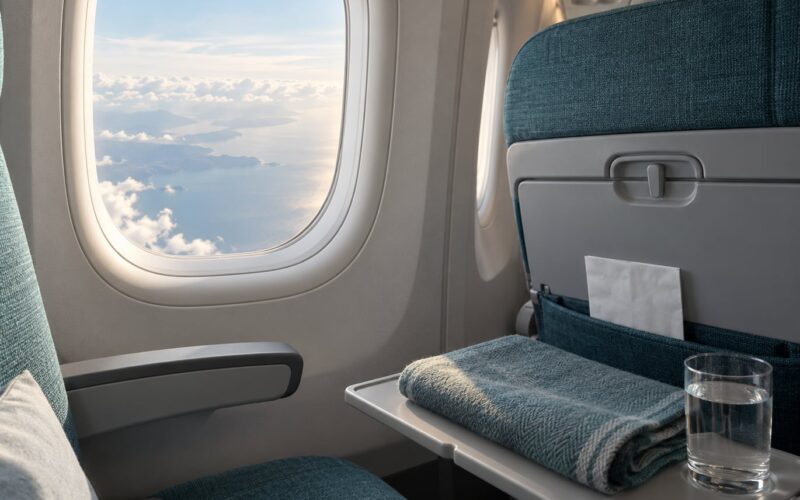
Most airlines require a child under two to travel on a lap, and most require anyone aged two or older to occupy a seat. Aisle seats make bathroom breaks easier; window seats make a sleeping toddler easier. Ask for the seating assignment early, because a full flight can leave you with the two middle seats and no choice at all.
Comfort items from home
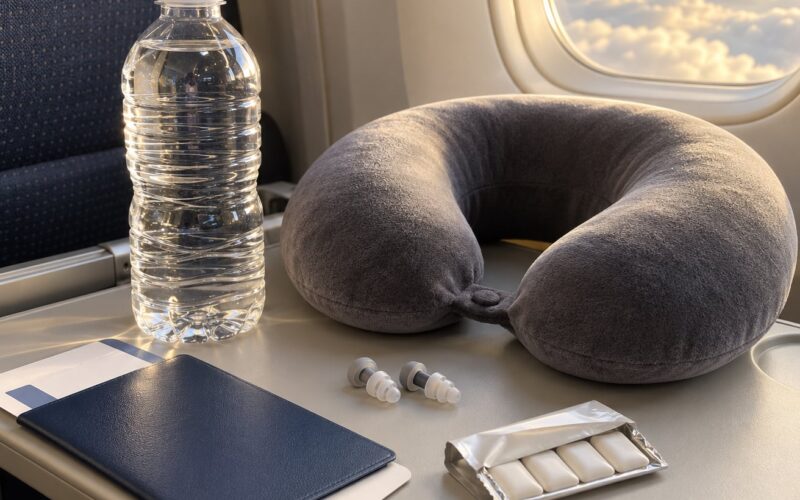
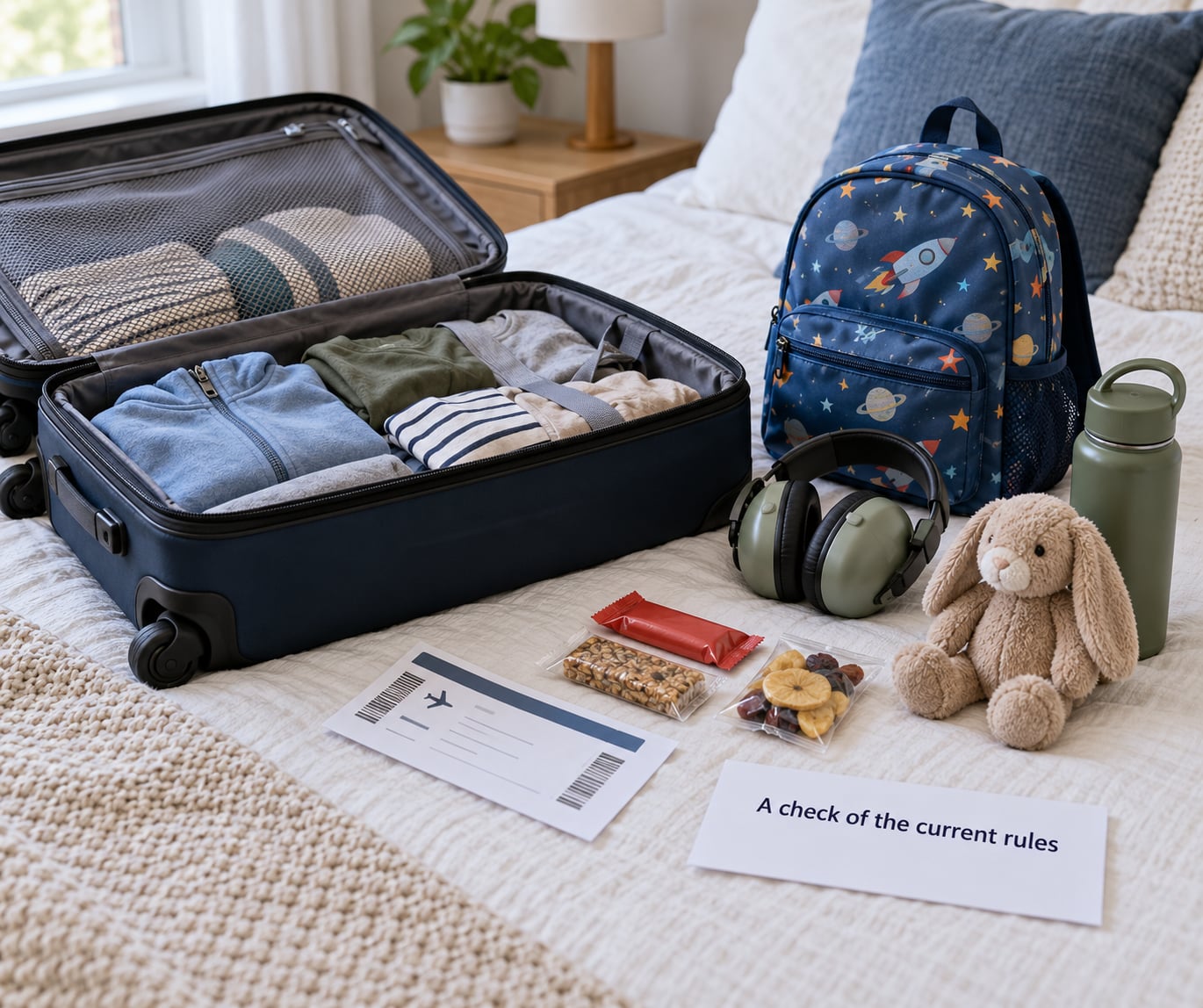
Bring the same sleep sack, lovey, or night-light routine item your child knows at home. A familiar object does more for a nervous toddler than a new toy will. Noise-blocking headphones sized for small ears help during the loudest stretches.
Snacks, drinks, and backups
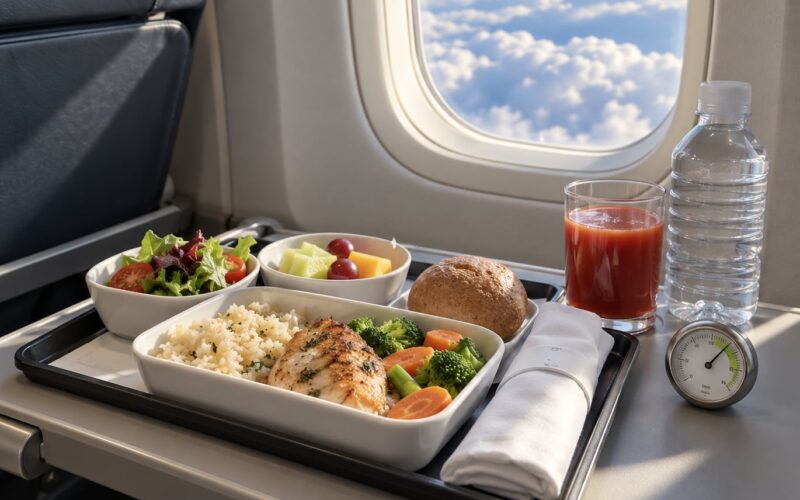
Pack more food than the flight length suggests. Airlines with full service usually offer a child meal, but low-cost carriers often sell nothing worth eating to a two-year-old, and onboard ovens are limited. Choose snacks that are soft, low-mess, and easy to eat one-handed: sliced fruit, crackers, small sandwiches, pouches, and a bottle of water that empties easily at security.
Health basics and a fallback
Pack regular medication, spare nappies or pull-ups, wipes, a change of clothes, and anything your pediatrician has already recommended. Bring pain relief your doctor has approved for your child, and follow the dosing instructions rather than guessing mid-flight. Talk to your pediatrician before flying if your child has ear infections, a recent illness, or a condition affected by pressure change.
A check of the current rules
Baggage allowances, stroller and car seat rules, liquids rules at security, and boarding groups all change. Confirm the current policy with the airline and the airport authority for every flight in your itinerary, especially on connecting itineraries that cross countries. Two hours before a domestic flight and three before an international one is a reasonable baseline, and families often add more.
Step-by-Step
Seven stages, in the order they actually happen.
1. Before the Trip: Choose the Flight That Fits Your Child
Flight choice does more for calm than any toy in the bag. Look for a nonstop route and a departure time that lands on the nap or the early bedtime, not one that promises a red-eye landing at 2am for a child who has never slept outside his own bed. If you have two adults, split the trip: one handles the bags, the other never lets go of the toddler.
Talk about the trip in plain words a two-year-old can hold on to. Say you will go to the airport, ride in a big room with lots of people, get on a plane, and sleep in a new bed. That is the whole story, and repeating it for a few days beforehand reduces the surprise on the day.
How to fly with a toddler without stress really starts here. If your child can repeat the sequence back to you roughly correctly and the comfort items are already in the bag, the planning stage is done.
2. Pack a Simple Toddler Travel Kit
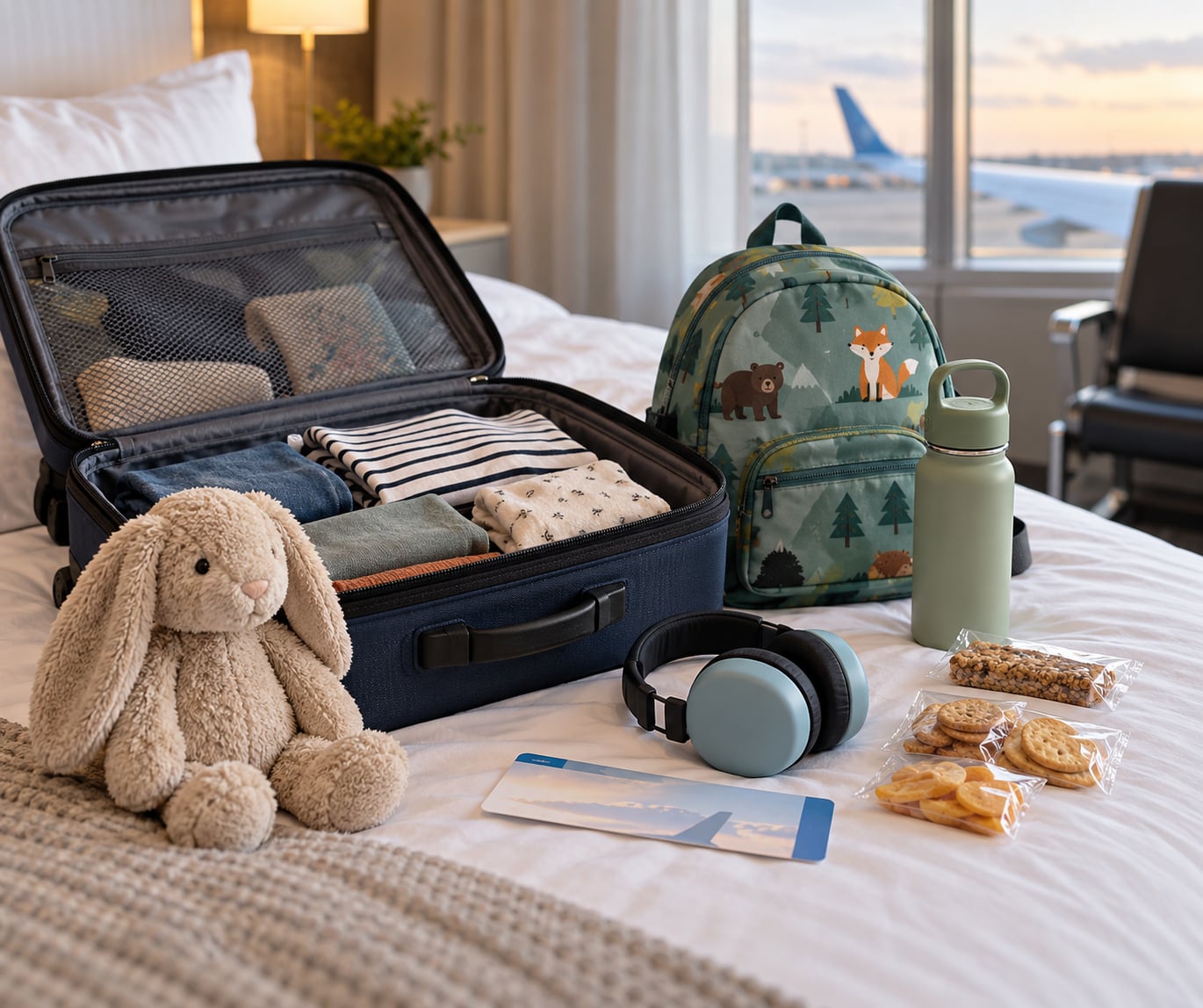
Sort the carry-on into three pouches so you are not unpacking everything at the gate. The first pouch is for the airport: ID, boarding pass, snacks, a change of clothes, and one activity. The second is for the flight: the lovey, headphones, sleep sack, quiet toys, and a second outfit. The third is the emergency pouch: nappies or pull-ups, wipes, spare clothes, medication, and a comfort item.
Travel light. A bag you can manage alone on a moving walkway is worth more than a well-organised bag you cannot lift. Most airlines publish a carry-on weight and size limit that includes your child’s bag, and gate agents weigh things, so check the current number before you pack.
3. Build a Low-Stress Airport Routine
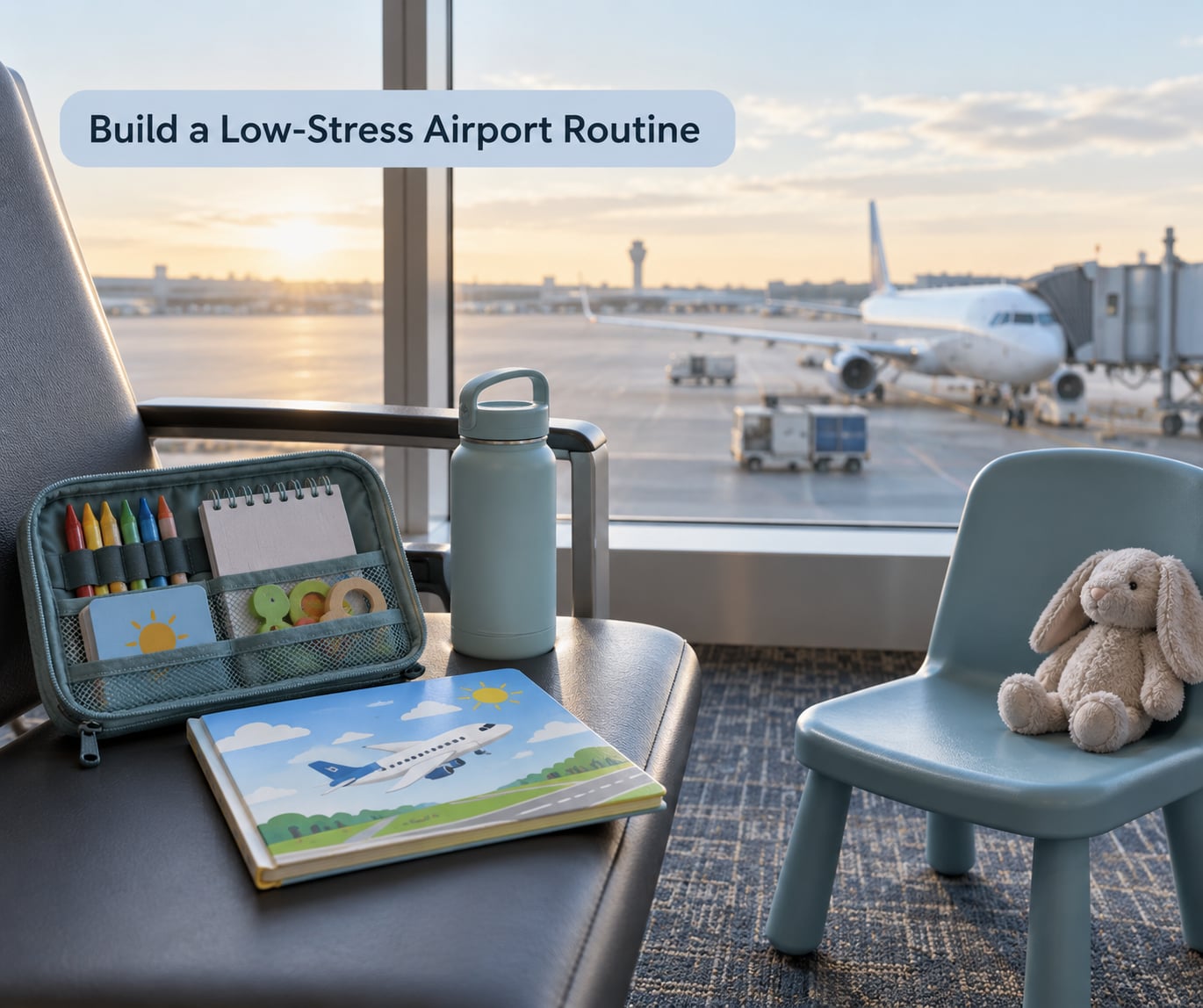
Security is where most family trips fall apart. Feed the toddler before the line, not in it, and use a bottle or cup if that helps. Liquids, nappies, comfort toys, and laptops usually come out into separate bins, so keep the essentials together in one pouch and expect to reassemble it with a toddler on your hip.
After security, find a bathroom, then a seat near a wall rather than a moving walkway. Airports with a play area can be a real reset, but a quiet corner with a simple picture book and a small cup of snacks often works just as well. Keep the activities rotating rather than stacked: one thing at a time, and change it before it bores them.
Leave your gate buffer generous. Missing a connection with a toddler in tow is the fear that shows up in almost every parent forum, and the cheapest insurance is a slow, boring wait at the gate instead of a run.
4. Board and Settle Without Rushing
Families with small children often board early or board last, and both work for different reasons. Boarding early means more space and a calmer cabin. Boarding last means less time sitting still before departure, and plenty of parents treat it as their single best trick, because the toddler gets to move around until the very end.
Decide before you reach the jet bridge. On board, get the car seat or belt secured first, then the bag stowed, then the child settled. Introduce the seat belt, the tray table, and the window shade as things that are part of the ride rather than as restrictions.
This is the moment where knowing how to fly with a toddler without stress pays off: the goal is a settled routine, not immediate happiness. A quiet child looking out of the window counts as a good boarding.
5. Keep the Flight Predictable
Roughly every two to three hours, run the same small cycle: snack, drink, bathroom, a few minutes of movement, then quiet play. Predictable beats varied, because your child knows what comes next. Exact times, onboard facilities, and meal service differ by airline, so treat this as a rhythm rather than a schedule.
Have a backup for restless stretches: a snack that takes ten minutes to eat, a sticker book, an audio story on a device, or spotting clouds and wings out of the window. Screens are the tool most parents reach for, and that is fine, but devices must be stowed or switched to airplane mode for takeoff, so never make a screen the only thing keeping a child calm.
For sleep, keep the routine from home: same order, same words, same lovey. Many families deliberately keep the toddler awake until the destination so the new bed feels normal, then let the jet lag settle over the following days.
6. Handle Delays, Cancellations, and Tantrums
When a flight is disrupted, the first ten minutes decide everything. Check the airline’s app or the gate screens for the actual status, then protect the essentials: food, water, nappies, medication, and the comfort item. Do not unpack the whole bag in the terminal.
If the meltdown starts, lower yourself to their eye level and use a slow, flat voice. Say what you see and offer two choices: snack or drink, sticker book or headphones. Do not reason with a crying toddler, and do not apologise to strangers. The loud shame of public crying is real, and the useful reframe is simple: a distressed two-year-old on a delayed flight is a normal, boring event that flight crews see several times a day. Flight attendants can and often do help, and asking one directly is easier than bracing for the aisle.
Move to a quieter spot only if you can do it without a second struggle, such as an empty row or a gate area away from the crowd. Hunger and fatigue imitate each other, so check both before deciding it is a full meltdown.
7. Land and Recover Afterward
Before landing, gather everything that is not secured: headphones, cups, the second outfit, and the small pouch. Expect the descent to be the hardest ten minutes of the flight, with ears and patience both under pressure.
Then plan the first hour. Arrange the car seat before bags are collected, because a toddler and a suitcase and an empty car seat make one-hand work impossible. Keep the ride from the airport short and predictable, get into the accommodation, and aim for the child’s normal bedtime even if the local clock says otherwise.
For the first hour after arrival, keep it simple: water, a small snack, a bath, and the familiar bed. You will be tired too, and lowering the bar for yourself helps the whole evening go better.
Common Mistakes
Almost every difficult flight traces back to one of these.
- Overpacking. Heavy bags slow everything and make you choose between the stroller and the toiletries. Fix: three small pouches, and check your bag in if the airline allows it.
- Screens as the only plan. If the tablet is the whole strategy, the five minutes at takeoff break it. Fix: one screen item, plus three non-screen options ready in the pouch.
- Skipping the rules check. Boarding groups, stroller policy, and car seat approval differ by carrier and airport. Fix: read the airline’s family-travel page the night before.
- Scheduling the nap for the wrong time. A child who sleeps through boarding and takeoff wakes up over the Atlantic. Fix: pick the flight that matches their rhythm rather than the one with the best departure time.
- Loose snacks and buried supplies. A spilled cracker in a moving cabin is worse than no snack. Fix: sealed, one-handed food within reach of the adult, not in the overhead bin.
- Too many connections. Every connection is a fresh airport, a fresh security line, and a fresh risk. Fix: one connection maximum, long enough to change a nappy, and a second plan if you can afford it.
- Medication used as a shortcut. Sedating a toddler to force sleep is not something a flight day should decide. Fix: use comfort techniques first, and ask your pediatrician about any medication before the trip.
Three habits from experienced flying parents are worth stealing. Board last when you have help. Run around right before boarding, and tell your child it is sillies time. And keep a small bag of earplugs, snacks, and a short note for nearby passengers, which some families say turns an awkward moment into a friendly one.
Frequently Asked Questions
Can a toddler fly in a lap seat?
Most airlines allow a child under two on a lap, and from age two a child must occupy a seat with its own restraint or harness. Rules vary by carrier and by country, and some airlines cap the number of lap infants per flight. Confirm the current policy with your airline, book a seat if you can afford it, and if you do travel with a lap child check the weight limits some carriers apply.
What snacks are easiest for a toddler on a plane?
Choose soft, low-mess food that can be eaten with one hand: sliced fruit, crackers, small sandwiches, pouches, and cheese cubes. Put them in a sealed container within the adult’s reach rather than the overhead bin. Avoid anything that needs cutting, anything sticky, and anything that stains. Pack more than the flight length suggests, since a delay can stretch a two-hour trip into five.
How can I help a toddler with ear pressure during a flight?
Toddlers cannot clear their ears on their own, so the pressure has to be managed with swallowing. Offer water, a snack, or a pacifier during the climb, and again through the descent, which is usually the worse of the two. A cold or blocked nose makes it harder, so ask your pediatrician about relief approved for your child’s age. Persistent pain after landing deserves a call to your doctor.
Should I keep my toddler awake for the whole flight?
It depends on the schedule. If the flight lands near bedtime at the destination, keeping your child awake helps the new body clock line up, and it works best when you do not fight it all day. If the flight is overnight, let the normal bedtime happen. Trying to force sleep at unusual hours often produces an overtired, crying child and a poor night on arrival.
What should I do if my toddler has a tantrum during a delay?
Get low, slow your voice, name what is happening, and offer two choices. Do not reason with a crying child and do not apologise to other passengers; a meltdown on a delayed flight is ordinary and the crew has seen it all day. Ask a flight attendant for help if you can. If you are still stuck in the terminal, use the time for a snack and a bathroom, which resolve more tantrums than any toy.
Can I bring a stroller and toddler car seat on the airplane?
Most airlines allow a stroller and an approved child seat to travel free in the cabin, though a stroller may be gate-checked at boarding and returned at the jet bridge or the baggage belt, which varies by airport. A car seat that has been installed on the aircraft is usually easier. If you want the stroller in the cabin, fold it before the size limit in the overhead bin. Check the current rules for your airline.
Conclusion: Start With the First Three Steps
If you only do three things, do these. Confirm the current rules with your airline and airport for every flight in the itinerary. Choose a manageable itinerary with one connection at most, timed around your toddler’s nap or bedtime. Then pack one small kit, in three pouches, that you can carry alone.
Everything else on the day is a reaction, and reactions are manageable when the plan is already half done. A calm, flexible routine helps more than trying to prevent every outburst, because there will be one eventually. Talk to your pediatrician about any health concerns, check the airline’s rules close to departure, and go enjoy the trip.