Learning how to plan a trip on a budget comes down to three things: a realistic ceiling for what you can spend, research on the true cost of a specific destination and date, and a daily plan that leaves room for surprises. Most budget trips come together in one focused weekend of planning, and the work splits neatly into a few hours of research, one afternoon of booking, and a short checklist before you leave.
The order matters more than the speed. People get into trouble when they pick the destination first and look at the numbers afterwards, or when they compare the cheapest flight and forget that the cheapest flight rarely produces the cheapest trip. Decide what you can spend, choose a place that genuinely fits inside that number, and only then look at the details.
Table of Contents
- 1What You Need
- 2Step-by-Step
- 31. Set a Realistic Total Budget
- 42. Choose a Destination That Fits Your Budget
- 53. Find Flexible Flights at the Right Time
- 64. Choose Affordable but Comfortable Accommodation
- 75. Build a Daily Budget and Free-Time Plan
- 86. Book, Verify, and Prepare for Changes
- 9Common Mistakes
- 10Frequently Asked Questions
- 11How can I plan a trip on a budget without making it stressful?
- 12What is the best way to save money on travel transportation?
- 13Should I book flights or accommodation first?
- 14How much should I leave as an emergency fund for a trip?
- 15Are budget airlines cheaper after adding bags and seat fees?
- 16How can I reduce food and activity expenses while traveling?
What You Need
Before you open a single booking site, gather a handful of basics. Without these you are not planning a trip, you are gambling with one.
A destination shortlist. Three to five options rather than one. Having alternatives is what lets you react to airfare, and airfare is the line item that moves most.
A fixed date window. Exact dates or a two-week range. Flexibility inside that range is the cheapest lever you have, and it only works if you have named the window already.
A total ceiling. The maximum you can spend without borrowing, including money set aside separately. This number is the constraint everything else bends around.
Passport and entry information. Check the validity window on your passport, whether a visa or an electronic travel authorization applies, and any vaccination or health documentation rules for your nationality and destination. These rules change, so read them on an official government or embassy page rather than a blog or a forum answer.
A spreadsheet or budgeting app. Anything that gives you per-category rows and a running total. A free spreadsheet is enough, and most travelers in travel forums say they prefer it to an app for exactly that reason.
A contingency margin. Somewhere between 10 and 15 percent of your ceiling that you do not plan to spend. Treat it as a reserve, not as money to allocate to activities.
Comparison tools. A flight search that supports multi-airport and multi-city searches, a lodging search that shows the total with fees, and a currency reference for your destination. Free versions of the major flight tools are fine for a single trip.
Step-by-Step
Six steps, in this order. Skipping ahead to booking is the most common reason a budget plan fails, because the cheap options only reveal themselves after the real constraints are known.
1. Set a Realistic Total Budget
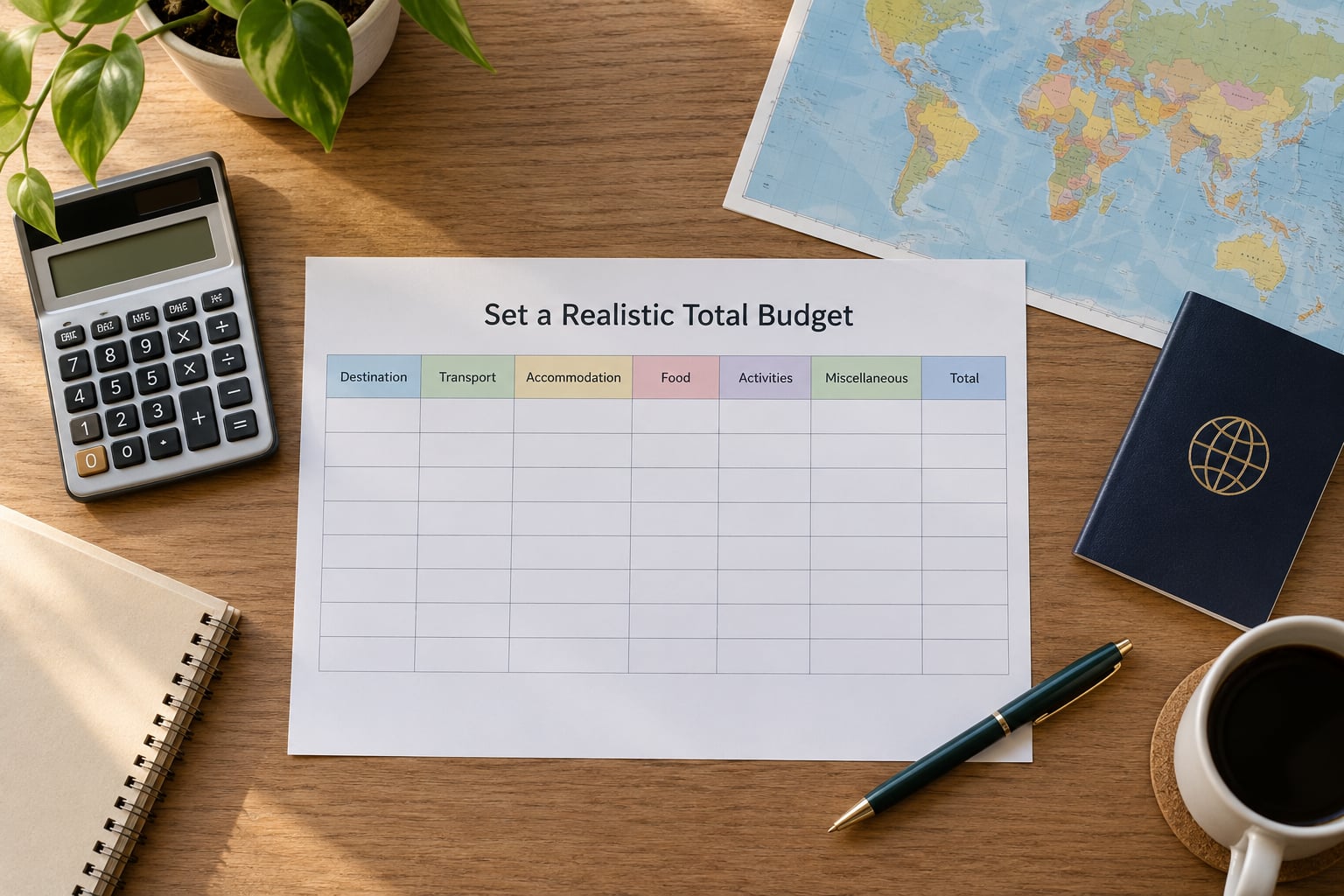
Start with the number you can actually spend, not the number you wish you could. Look at your savings and your available cash, and choose a figure low enough that missing a flight home would not damage your finances.
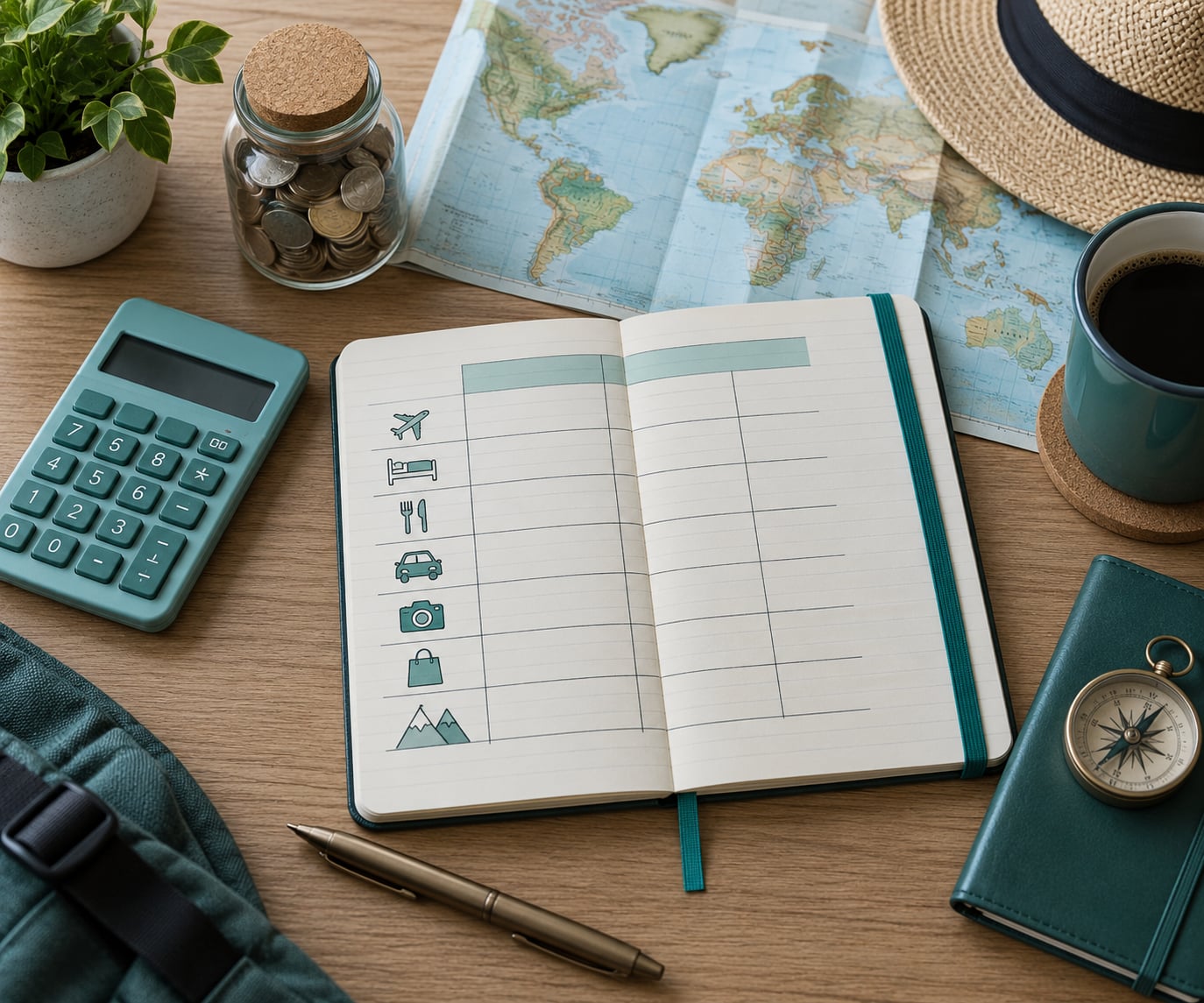
Then split that figure into categories rather than one lump. A workable starting split for most trips is roughly a quarter for transport to and from the destination, a quarter for accommodation, a fifth for food, and the remainder for local transport, activities, insurance, entry paperwork, and the reserve. Two people sharing a room shift that balance noticeably, and a long trip amortizes the flights across more days, so adjust the split to your shape of trip instead of forcing it onto the template.
Separate the costs that cannot move from the ones you control. Flights, entry authorizations, and travel insurance are fixed the moment you book. Accommodation, meals, and activities are the levers you can pull later, usually by being flexible rather than by being cheap.
You also know the step worked when you can say, out loud, what the trip costs per day without doing arithmetic on the spot. If the daily figure looks uncomfortable, change the trip now, not on the last page of a booking flow.
2. Choose a Destination That Fits Your Budget
Compare destinations on the full picture, not the headline flight. A faraway place with a cheap flight can cost more once you add a longer stay, a visa fee, an insurance policy, and an internal connection.
Run the same six checks on every candidate: round-trip transport, typical nightly lodging in the season you would travel, a realistic daily food allowance, local transport between the airport and your neighborhood, the cost of the two or three things you actually want to do, and the entry paperwork. If the number still feels optimistic, price a shoulder-season month instead of the peak one.
Shoulder season is where most of the savings hide, and experienced budget travelers consistently point to it. Depending on the region, the weeks just after the summer rush and just before winter arrivals often cut both airfare and lodging by 30 to 50 percent, while keeping the weather workable. Weather is the real constraint in a few destinations, so check the climate before you chase the cheaper month.
Two price-driven search tools are worth the ten minutes they cost. A flight search with an everywhere or explore mode will show you the cheapest destinations departing from your home airports right now, which is useful when you have money but no destination. A cost-of-living reference by city gives you a second opinion on daily prices that does not come from a travel article. The step is complete when one candidate survives all six checks with a margin under your ceiling.
3. Find Flexible Flights at the Right Time
Airfare is usually the biggest single line and the one you control least, so spend your research hours here. Search several months of dates at once rather than one date, and include the airports around you instead of only the closest one. A short train or drive to a secondary airport routinely produces a saving that beats every other trick in this guide.
Timing matters. For domestic trips, the best window is generally one to three months ahead, and for international trips two to eight months. That is an average pattern, not a rule, and the weeks around holidays and school breaks run the other way. If a fare looks unusually good, check whether the savings come from a fare family that excludes a checked bag, a seat assignment, or any change at all.
Low-cost carriers publish a base fare and then add for everything else, so a ticket can end up costing well beyond its headline number once you add a bag on each leg, a seat for a long-haul flight, and a change fee. Budget travelers on forums make the same point repeatedly: compare the total, not the fare. The same applies to overnight connections, which cut the price and cost you a hotel night, and to self-transfer itineraries, which are cheaper and less forgiving if a delay goes bad.
Before paying, confirm the baggage allowance by weight and number of pieces, the seat and change fees, the cancellation and credit rules, and the name on the ticket matching your travel document exactly. You have this step right when you know the all-in cost and can reach every connection comfortably.
4. Choose Affordable but Comfortable Accommodation
Lodging is the line where budget trips get uncomfortable, and the cheapest room is rarely the best deal. Compare options on total cost: nightly rate, cleaning fee, resort fee, tourist tax, parking, and breakfast add up, and two cheaper nights in a well-reviewed place often beat five cramped ones.
Sort what is available into four buckets. Hostels and guesthouses with private rooms give the lowest cost and the most social atmosphere. Vacation rentals spread the cleaning fee across a longer stay and often include a kitchen, which cuts meals. Hotels vary enormously by neighborhood, with the biggest differences coming from location rather than brand. Home and pet sitting swaps a stay for a few hours of work, which experienced travelers treat as the one option that removes accommodation cost instead of trimming it.
Location is the part you cannot ignore. Staying twenty minutes outside a city center can save a lot and then cost it back in daily transit fares and lost evenings, so price the neighborhood, not just the room. Check the cancellation terms too, and prefer a refundable rate for the first night of a longer stay, because it lets you rebook when a better price appears.
Read recent reviews specifically for noise, stairs, hot water, and the walk from the building to a transport stop. Those four details predict whether a cheap room becomes a bad trip, and they cost you five minutes to check.
5. Build a Daily Budget and Free-Time Plan
Turn your total into a daily allowance by subtracting the fixed costs you already paid, then dividing what remains by the number of days. That number is your real spending limit on the ground, and it is much lower than most people guess on their first attempt.
Work out a daily shape instead of a daily total. Breakfast from a grocery shop or a bakery rather than a hotel restaurant, one inexpensive sit-down meal, and street food or a market lunch keeps food spending roughly at half of a restaurant-only plan. Add the small stuff that quietly adds up: city tourist taxes, tips in places where they are expected, coffee, water, luggage storage, and admission fees you assumed were free.
Now pair paid activities with free ones. Every city has free walking tours, public squares, parks, markets, neighborhoods to walk, viewpoints, museums with free or reduced hours, and trails that cost nothing and take half a day. A simple pattern works well: one paid anchor each day, one free activity, and a block of unplanned time. Travelers who cram five paid things into a day usually come home tired and over budget, and the cramped itinerary is also what causes the surprise spending.
Write the plan somewhere you will actually see it, and know your pace before you land. Know how you will get from the airport to your accommodation, roughly what a bus or metro day pass costs versus single tickets, and which two things you would pay for if the day went badly. Deciding in advance is what keeps a bad day from turning into a credit card one.
6. Book, Verify, and Prepare for Changes
Book in the order that protects your flexibility: transport first, because it fixes the dates, then accommodation, then anything non-refundable. If your arrival time shifts, a refundable first night or a flexible rate absorbs it without costing you the trip.
Then run a verification pass. Confirm every reservation by email or in the booking app, save confirmations offline, save the property address in local script as well as in letters, and write down the phone number of each booking. Add the embassy’s contact details and your insurer’s claims line to the same file, plus the details of a person at home who knows where you are.
Handle money before departure. Tell your bank the dates and destination so a card is not frozen, choose a debit or travel card with no foreign transaction fee, and decline the terminal’s offer to convert charges into your home currency when a machine offers it, since that rate is consistently worse than letting your bank do the conversion. Withdraw a small amount of local cash on arrival and keep the rest on the card.
Finally, build backups. Screenshot your documents, keep a card and a little cash somewhere separate from your phone, and know your two backup plans for accommodation and transport. People planning a trip on a budget fail on contingencies far more often than on the base budget, and the reserve you set aside at step one exists for exactly this.
Common Mistakes
Comparing incomplete prices. The cheapest headline number is rarely the cheapest total. Fix: compare the all-in cost including bags, seats, fees, cleaning charges, and tourist taxes, and write that total into the spreadsheet.
Choosing the destination before the budget. Pick a place and you will justify every cost afterwards. Fix: set the ceiling first, and treat any destination that breaks it as off the list until a cheaper season changes the maths.
Booking transport before accommodation costs are known. Fix: price the whole trip at the candidate stage, and only commit to a flight once the trip adds up inside your ceiling with the reserve still intact.
Filling every hour with paid activities. Fix: cap the plan at one paid anchor per day and let the rest stay open. Free sights and downtime are the cheapest part of a trip and the part travelers remember.
Not keeping receipts. Fix: photograph or note every expense the same day. Without a record you cannot tell which category is bleeding money, and you will repeat the mistake on the next trip.
Ignoring entry paperwork until late. Fix: read the official requirements in the first session, note any lead time, and treat that lead time as part of the schedule rather than an afterthought.
Skipping the reserve. Fix: keep 10 to 15 percent untouched and treat spending it as a decision, not a habit.
A few short budget travel tips that cost nothing: travel with a week of clothes, use compression packing and a carry-on to dodge bag fees on several legs, walk instead of paying for every short hop, and check whether your credit card already covers rental cars, which can remove that line entirely. Do a quick post-trip review within a week, comparing the plan to what you actually spent, and keep that file for the next trip. Budget planning is a skill that improves with repetition, and the second trip is where it starts to feel natural.
Frequently Asked Questions
How can I plan a trip on a budget without making it stressful?
Treat budgeting as three separate sessions rather than one long night. Session one sets the ceiling and checks entry paperwork, session two compares destinations and dates, session three books and verifies. Each session has a clear end point, so the planning stops when the work is done instead of when you run out of energy. Most of the stress comes from trying to decide everything at once.
What is the best way to save money on travel transportation?
Search a wide date range at once, include the secondary airports near you, and compare the all-in cost rather than the headline fare. Shoulder-season travel is where the biggest savings sit, often 30 to 50 percent on both airfare and lodging. On the ground, walking, a multi-day transit pass, and one or two anchor rides per day cut local transport spending more than a rental car does.
Should I book flights or accommodation first?
Usually flights first, because they fix the dates and every other cost hangs off them. The exception is a long stay in one place: book flexible or refundable accommodation first so a delayed flight cannot leave you paying for a night you never used. Never buy a non-refundable flight before you have confirmed that somewhere is available on the other end.
How much should I leave as an emergency fund for a trip?
Keep between 10 and 15 percent of your total budget untouched, and hold it in a separate account or card so spending it feels like a decision. A second layer sits in your emergency savings, untouched at home, which covers a cancelled trip, a medical bill, or a flight home. Forum travelers who carry cash split it in small amounts across two places rather than one.
Are budget airlines cheaper after adding bags and seat fees?
Sometimes, but not always. Low-cost carriers separate the fare from the bag allowance, the seat assignment, and any change, so a base fare can grow substantially across a multi-leg trip. Compare the complete total for your exact itinerary, including the bag you know you will check and a seat you may want on a long leg. Booking several separate tickets can also be cheaper than one protected through-ticket.
How can I reduce food and activity expenses while traveling?
Eat one inexpensive sit-down meal a day and cover the rest with a market, a bakery, or street food, which typically halves food spending. For activities, pair one paid anchor per day with free walking tours, parks, viewpoints, markets, and neighborhoods. Decide before you arrive which experiences matter, because that is what stops a free afternoon from turning into an expensive one.
If you do one thing this week, open a spreadsheet, write down the maximum you can spend, and split it across the six categories above. Everything after that is research, and research is much easier once the ceiling is on the page. Knowing how to plan a trip on a budget is not about finding a magic discount; it is about deciding your limit first and then building a trip that respects it.