To request a special meal on a flight, add the meal to your reservation during checkout, add it later in Manage Booking on the airline site or app, and confirm it with the airline before you leave for the airport. Make the request at least 24 hours before departure, and 48 hours ahead for kosher meals and anything allergy-related.
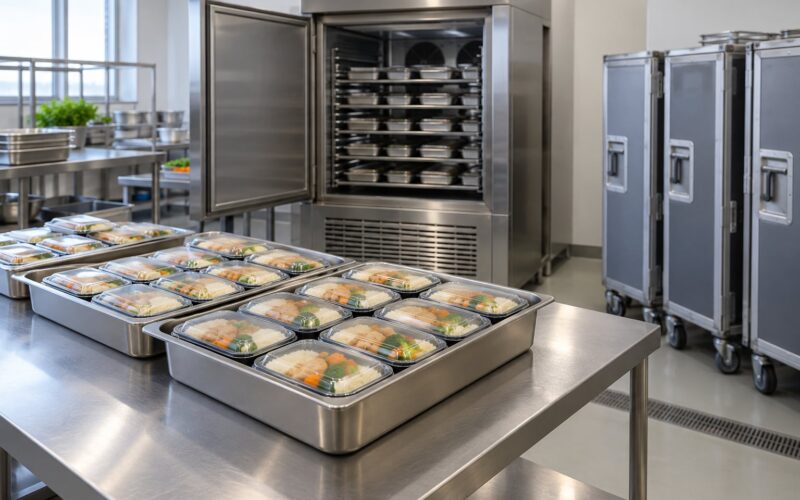
That deadline is the whole game. Standard in-flight food is cooked in batches weeks in advance by a catering company at your departure airport, then loaded onto the plane before anyone boards. There is no kitchen at the gate. Once the trays are on board, a request means nothing.
So the process in short:
- Request it at checkout — nearly every airline booking flow has a meals or special requests field on the passenger details step.
- Add it afterwards in Manage Booking — if you forgot, open your trip and add the meal to the specific passenger on the specific flight segment.
- Confirm it in writing — check the reservation shows the meal, save the reference number, and email or message the airline if it does not.
I checked the airline pages and the passenger forums behind this, because the online advice on this topic is thin and often wrong. What follows is the process, the codes, the deadlines, and what to do when things go wrong.
Table of Contents
- 1What You Need
- 2Step-by-Step: How to Request a Special Meal on a Flight
- 3How to request a special meal on a flight: choose the right option
- 4Enter the request while booking or through Manage Booking
- 5Meet the airline’s request deadline
- 6Confirm the request before departure
- 7Bring a backup plan for the flight
- 8Common Mistakes
- 9Frequently Asked Questions
- 10How long before a flight can I request a special meal?
- 11Are airline special meals free?
- 12Can airline meals handle a severe food allergy?
- 13What do I do if my special meal never arrives?
- 14Do airlines serve special meals on short flights?
- 15Can I bring my own food on a plane?
- 16Conclusion
What You Need
Four things, and one of them is the one people skip.
- Your booking reference — the six-character code from your confirmation email.
- The passenger name exactly as it appears on the ticket, not the nickname you use. The meal is attached to a name record, and a mismatch is a common reason a request does not attach to anything.
- The specific requirement, in the airline’s own words if you can find them. “Vegan” and “lacto-ovo vegetarian” are different meals. “Gluten-free” and “celiac-safe” are not the same request either.
- Departure date, time and airport. Deadlines run from departure, not from when you book, and several carriers measure from their hub rather than your origin.
- The airline’s published cut-off, which you should look up yourself. Treat any number below as a starting point.
If the request is medical rather than a preference, write down the diagnosis and what you actually need to avoid. Cabin crews can often do more with “celiac disease, cannot eat any wheat or barley” than with a code.
Step-by-Step: How to Request a Special Meal on a Flight
How to request a special meal on a flight: choose the right option
A special meal is any in-flight meal requested in advance instead of the standard one. It exists for dietary restrictions, food allergies, medical conditions, religious practice, or simply because you would rather not eat the default tray on a long-haul flight.
Every carrier publishes its own list on a “special meals” or “meals” page, and the selection differs by cabin, route and aircraft. Long-haul international flights carry the widest range. Short domestic hops frequently carry no special meals at all.
Air catering systems speak a common language: four-letter IATA codes ending in ML, short for meal. You will see these on your reservation record and sometimes in the booking flow, so it helps to know what the common ones mean.
| Code | Meal | Who requests it |
|---|---|---|
| VGML | Vegetarian | Standard lacto-ovo, includes dairy and eggs |
| VLML | Vegetarian lacto-ovo | Listed separately by some airlines |
| VVML | Vegan (some carriers show VRML) | No meat, fish, dairy or egg |
| GFML | Gluten-free | Celiac, wheat allergy, gluten intolerance |
| KSML | Kosher | Observant Jewish passengers; longest lead time |
| MOML / MOSL | Muslim or halal | Halal dietary observance |
| HNML | Hindu non-vegetarian | Hindu dietary observance |
| VJML | Jain vegetarian | Jain dietary observance |
| LSML | Low sodium | Blood pressure and heart conditions |
| LFML | Low fat | Cholesterol and heart health advice |
| DBML | Diabetic | Diabetes management |
| BLML | Bland / soft diet | Recovery from surgery, pregnancy nausea, mouth pain |
| PFML | Peanut-free | Nut allergy; read the cross-contamination note below |
| NLML | Non-lactose | Lactose intolerance or milk allergy |
| HFML | High fiber | General dietary preference |
| FPML | Fruit platter | Light option, often used on shorter flights |
| CHML | Child meal | Ages roughly 2 to 11 |
| BBML | Baby meal | Infants, usually requested with a bassinet |
Not every airline carries every code. A carrier that does not offer Jain food will simply not show the option, and no amount of persistence will conjure one.
Enter the request while booking or through Manage Booking
Booking first is the reliable route. On the passenger details step of almost every airline site there is a meals field, a special requests field, or both. Pick the meal, and it is attached to the ticket from the moment the reservation is created.
If you have already booked, Manage Booking is your second chance. Sign in with your confirmation number and last name, open the specific flight, and look for meals, special requests, or a dietary option in the passenger details panel. Add the meal to that passenger on that segment, then save.
Three airlines come up constantly in searches, so here is where to start.
United Airlines. Meal selection sits in the traveler’s menu inside My Trips, on both the website and the app. Travelers on r/unitedairlines note that United increasingly pushes pre-ordering through the app, and that on codeshare flights you should confirm with the operating partner, since the marketing carrier’s system may not pass the request along.
Delta. Open Manage My Trips, select the flight, and edit the passenger to add a meal. Delta also allows special meal requests by phone, which is worth knowing if you are dealing with a medical diet that needs explaining.
American Airlines. Add the meal through Manage My Trips or the app under the passenger’s reservation details, or call Reservations and ask for the meal to be added to the booking. American pre-ordering is not the same thing as a special meal request — pre-order is the paid à la carte menu on eligible routes, and the two do not combine.
On European and Gulf carriers the path is similar. Lufthansa, British Airways, KLM and Emirates all publish a special meals page, all attach requests through the booking or My Trip area, and all expect you to use the code list from their own menu rather than the generic table above.
On a codeshare flight, find out who is actually operating the aircraft. The operating carrier’s catering crew loads the meal, and it may be the operating carrier’s menu and deadline that applies, not the one you bought from.
Meet the airline’s request deadline
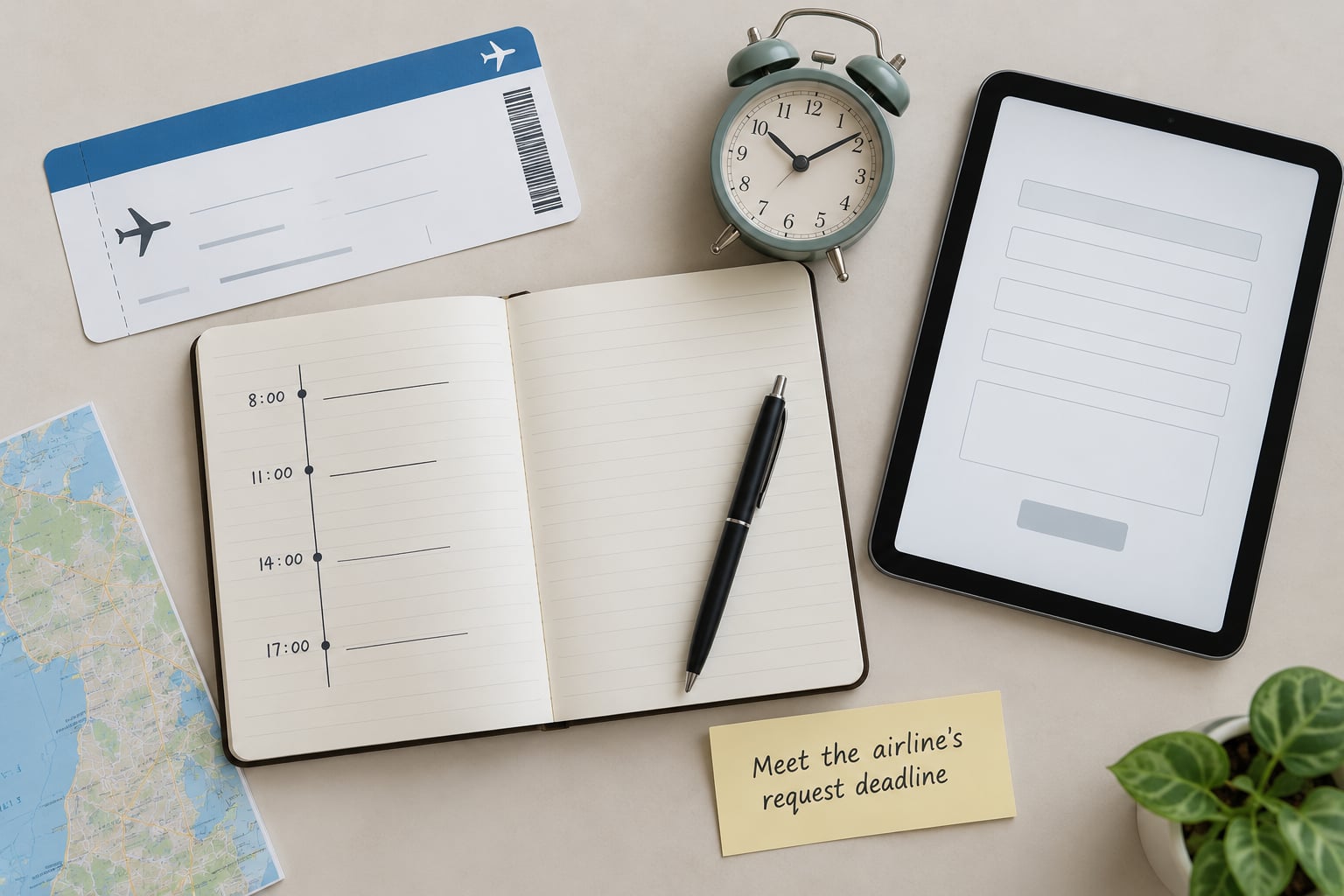
Twenty-four hours before departure is the baseline most carriers work to. Forty-eight hours is the safe number for kosher, halal and allergy-related meals, because those often need a separate clearance step rather than just a code on the booking.
KLM publishes one of the clearer versions: requests are possible up to 24 hours before departure on flights leaving Amsterdam, and up to 36 hours before departure for flights from outstations. That pattern — a hub deadline and a shorter outstation deadline — is common across European carriers.
Requests made inside the cut-off are not rejected loudly. They are silently dropped, and the reservation can still display the meal option afterwards. Passengers report exactly this on r/americanairlines: the meal appeared in the app, and nothing was served onboard.
So if you are inside 24 hours, do not assume you are finished. Ask the airline directly, and set a reminder to check again.
Confirm the request before departure
Open your reservation 48 hours out and one more time the day before. Confirm the meal code shows against the right passenger name on the right flight segment. A screenshot or the confirmation email is worth keeping; travellers treat that written record as their main protection when something goes wrong.
Recheck after any change. A schedule adjustment, a seat change or a rebooking can drop a meal request without telling you. If you are moved to a different flight, treat the meal as gone and request it again.
If the code does not appear, contact the airline before you travel and ask them to confirm it in writing. Do it early enough that there is still time for catering to act.
Bring a backup plan for the flight
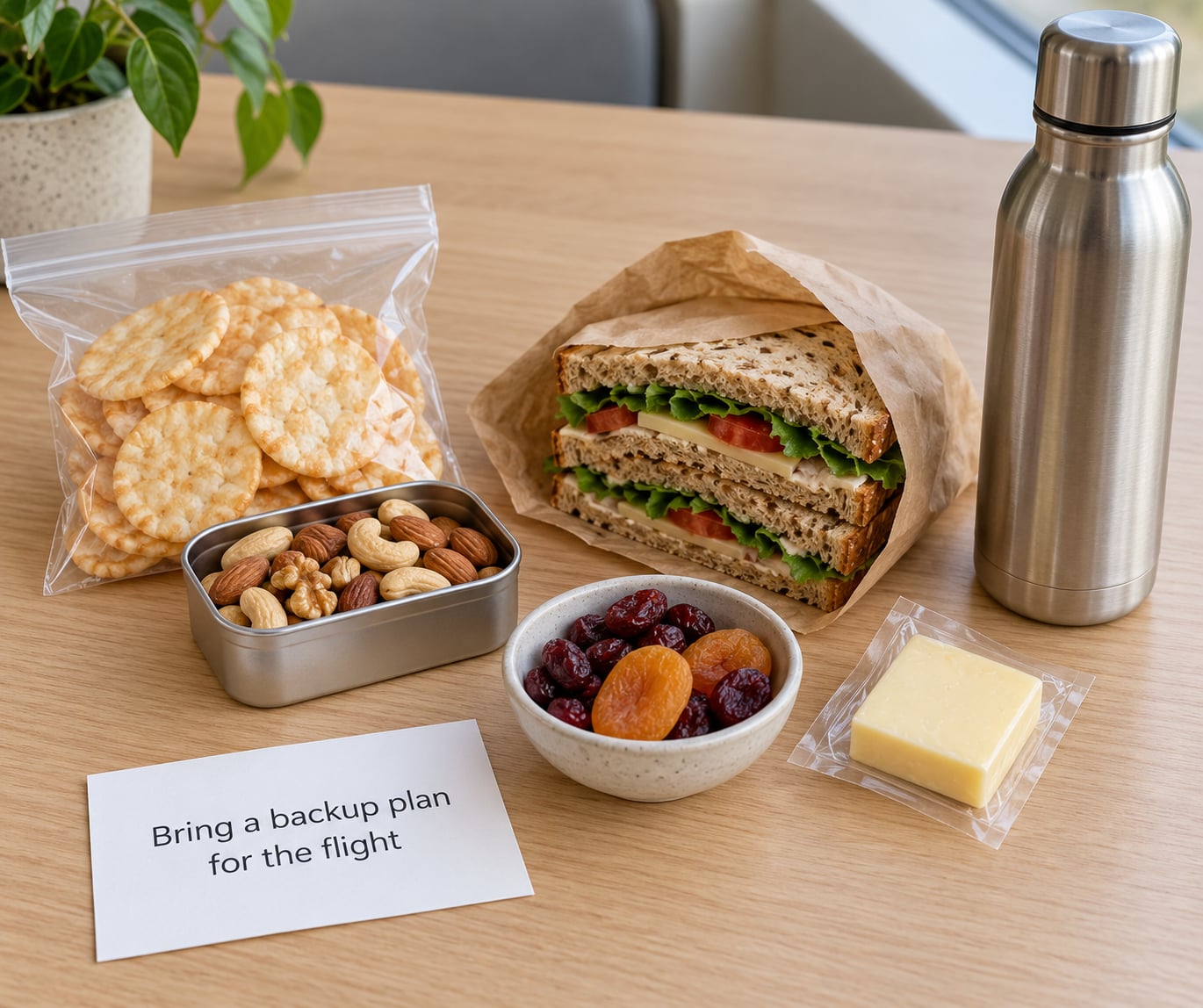
Special meals are best effort. Carriers say so in their own terms, and travellers confirm it in practice — small portions, labelling that does not always match the description, and meals that occasionally never arrive. If a mistake puts you in hospital at 35,000 feet, planning matters more than optimism.
For anyone with a severe allergy or celiac disease, treat the onboard meal as a backup rather than the plan. Bring food you already know is safe: sealed crackers, dried fruit, nut-free protein bars, shelf-stable options that do not need refrigeration. Cabin crew will usually warm or store what you bring if you ask politely, though it is a courtesy rather than a right.
On security, solid food is generally fine through airport screening in the United States. Liquids, gels and creams follow the standard 3.4 ounce rule, which rules out most sauces and dressings. On the international side, customs and agriculture rules at your destination may restrict what you can bring in, and fresh fruit, meat and dairy are commonly prohibited. Check the destination country’s rules before you pack.
If you cannot eat the meal when it arrives, ask the cabin crew. On most long-haul flights there is usually something in the galley they can offer, and on a multi-hour flight they will often bring you the standard meal as a fallback. It is not exciting, but it is dinner.
Common Mistakes
Waiting until the last minute. The single biggest cause of a missed meal. Twenty-four hours is not a guideline, it is the point after which catering has already ordered and produced.
Adding the meal to the wrong passenger. Family bookings and multi-segment itineraries make this easy. A child added to the wrong segment gets the child’s meal on the wrong leg.
Requesting a code without knowing its description. Some airlines show a code rather than a label, and some booking tools default to a meal plan nobody chose. Read what the record actually says.
Forgetting after a schedule change. Rebooking drops meal requests more often than anyone admits. Assume it is gone and re-request it.
Assuming every airline offers every meal. Availability depends on route, cabin and aircraft. Short domestic flights may have no special meals at all, and a vegan meal on a regional jet is genuinely not possible.
Confusing dietary meals with paid meals. Dietary special meals are usually included, sometimes free. Premium à la carte meals on routes that have them cost extra and generally cannot be combined with a dietary meal — KLM’s terms state this outright.
Treating peanut-free as an allergy guarantee. A peanut-free meal is not a nut-free kitchen. Caterers commonly prepare these in a shared facility, and cross-contamination is a real risk for a severe allergy. That is the point where carrying your own food stops being optional.
Frequently Asked Questions
How long before a flight can I request a special meal?
Most airlines set 24 hours before departure as the minimum, and 48 hours is the safer figure for kosher, halal and allergy-related meals because those may need a clearance step. Some carriers use different deadlines depending on the departure airport, so check the airline’s own special meals page. Requests made after the cut-off are often dropped without notice, so confirm rather than assume.
Are airline special meals free?
Dietary special meals are usually included in your ticket at no extra charge on international and long-haul services, though the cheapest fares on some routes do not include a meal at all. Premium a la carte meals on certain routes are paid and often cannot be combined with a dietary meal. Check your booking to see whether a meal is included for your cabin and fare.
Can airline meals handle a severe food allergy?
Partly. A meal labelled gluten-free, nut-free or allergen-free is made under standard catering procedures, which often means shared equipment and a shared kitchen. That is not a guarantee of a safe environment for a severe allergy. Tell the airline in detail, carry an antihistamine or epinephrine as your doctor advises, and bring your own safe food as the primary option.
What do I do if my special meal never arrives?
Tell a flight attendant early, ideally as soon as you board and before the first service, so there is time to fetch something from the galley. On long-haul flights crew will usually offer the standard meal or an alternative if there is one. If the request was confirmed in writing and never served, keep the confirmation and raise it with the airline afterwards, because that record is what makes a complaint actionable.
Do airlines serve special meals on short flights?
On many domestic and short-haul routes, no. Complimentary catering and special meals are mostly limited to long-haul and international services, and regional aircraft often carry only a snack. Passengers report options appearing in the app for short segments with no food arriving at all. If a dietary requirement makes the flight risky, check the route’s meal service before booking and plan to bring your own food.
Can I bring my own food on a plane?
Yes, with limits. Solid foods such as crackers, nuts, dried fruit and sandwiches usually pass airport security, while liquids, gels and sauces are restricted to 3.4 ounces or less in the United States. On international routes, customs and agriculture rules at your destination may block meat, dairy or fresh produce. Cabin crew will often warm or store your food if you ask, though it remains a courtesy.
Conclusion
Do one thing before you do anything else: open the airline’s special meals page and read its cut-off time. Then request the meal during checkout or in Manage Booking, attach it to the correct passenger on the correct segment, and confirm it appears in your reservation at least a day before departure.
If you have a severe allergy or celiac disease, pack your own food and treat the onboard meal as the backup. Airline special meals are helpful when they arrive and genuinely good when they do, but they are a catering service running on a schedule, not a promise. Policies and cut-offs change, so the airline’s own page is the only source worth trusting over anything you read online, including this page. Checked against carrier pages for 2026.