Staying hydrated on a plane comes down to one number: about 8 ounces (240 ml) of water for every hour you are in the air, sipped steadily rather than chugged. Cabin humidity sits somewhere between 10 and 20 percent, far drier than most deserts, and the ventilation system keeps recirculating that air across the cabin for the whole flight, so you lose fluid through your breath and skin without ever feeling properly thirsty.
The rest of this guide is the routine built around that rule: what to pack, what to drink, and when. It takes about two minutes to set up and costs nothing but a little planning at the water fountain past security.
Most people land a long flight complaining of dryness, a headache and fatigue, then blame the altitude. What usually happened is they boarded with an empty bottle, waited for thirst, and spent nine hours breathing desert air without a single deliberate sip.
Table of Contents
- 1What You Need
- 2Step-by-Step: How to Stay Hydrated on a Plane
- 3Step 1: Hydrate Before You Leave for the Airport
- 4Step 2: Drink Water at the Airport and Gate
- 5Step 3: Ask for Water During the Flight
- 6Step 4: Adjust Your Drinks for Flight Length and Conditions
- 7Step 5: Rehydrate After Landing
- 8Common Mistakes
- 9Frequently Asked Questions
- 10How much water do you need to drink on a flight?
- 11Why is it important to stay hydrated on a flight?
- 12Should you drink electrolytes on a long haul flight?
- 13What are two warning signs of dehydration?
- 14How do you stay hydrated without going to the bathroom constantly?
- 15Can I bring a water bottle or hydration pack through airport security?
- 16Conclusion
What You Need
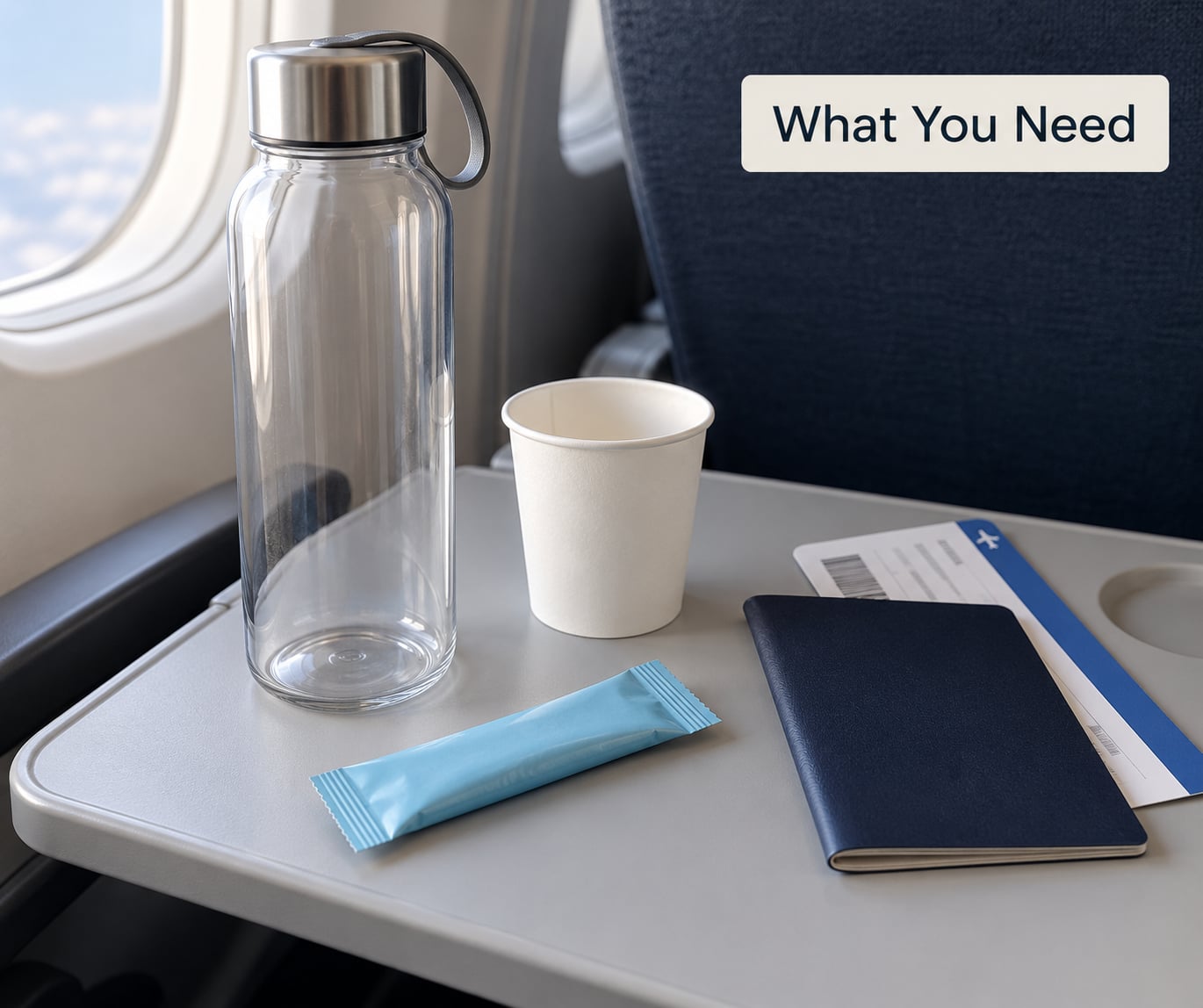
The whole setup fits in one personal item, and almost every piece of it costs nothing to carry.
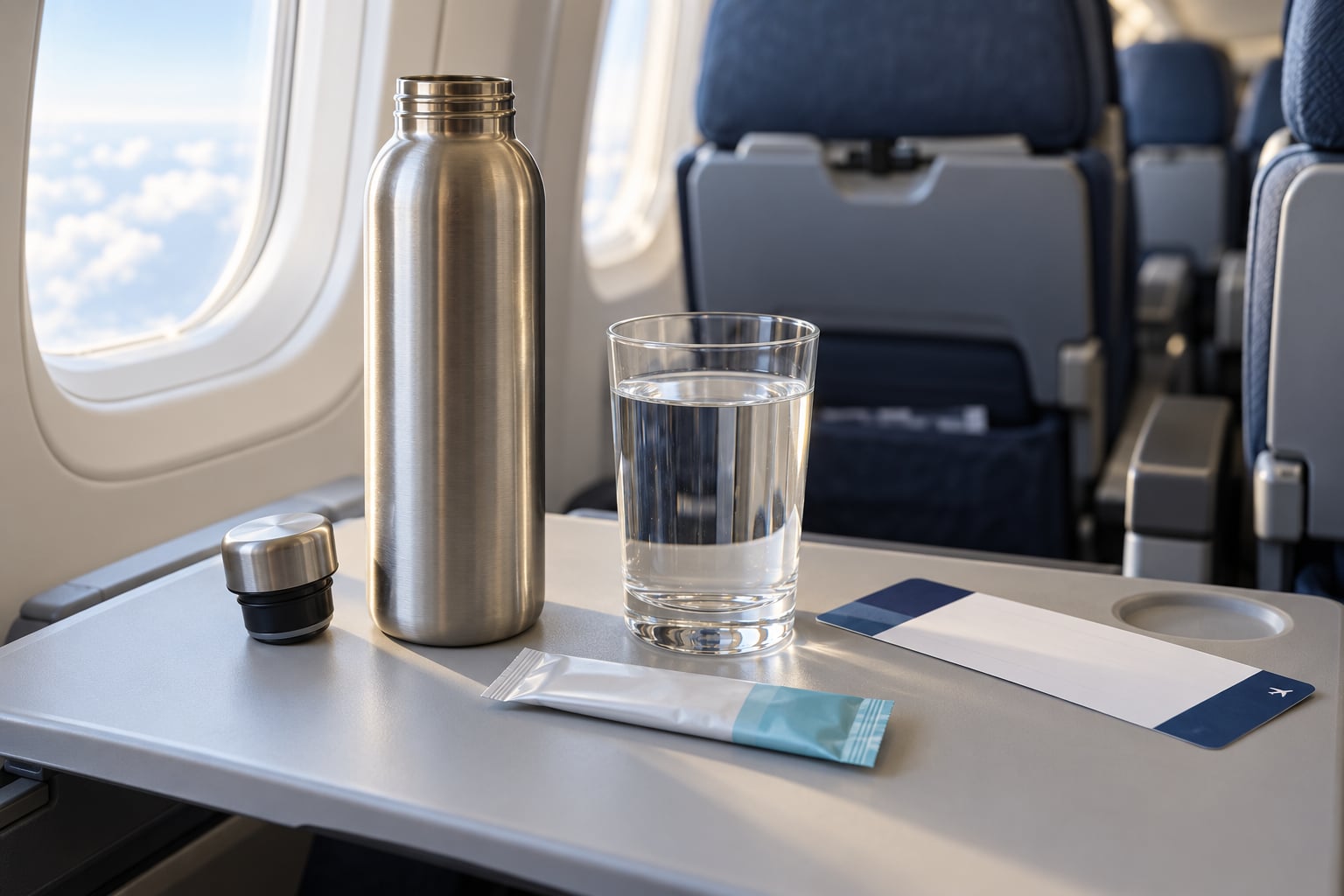
- An empty reusable bottle. Roughly 500 ml (17 oz) is the sweet spot: it fits under the seat in front of you, holds enough for about two hours of drinking, and is light enough that you will actually pick it up.
- One or two electrolyte sachets or tablets for anything longer than four hours. Powder sticks dissolve in water and take up no room; effervescent tablets do the same in a glass.
- Lip balm, a saline nasal spray and preservative-free eye drops. These do nothing for your fluid balance, but dry lips and sinuses are the part of the cabin you feel most, and they cost very little to fix.
- A salty snack. Pretzels or salted nuts pair well with water and sodium, which helps you retain what you drink. A bag of dried fruit is mostly sugar by weight and does very little.
- Your flight duration and your health context. Check both before you pack. A three-hour hop and an eleven-hour overnight need completely different routines, and anyone with heart or kidney conditions, or who takes diuretic medication, should ask a doctor before changing how much they drink.
Bottle size and starting time decide whether any of this works. Everything else is a bonus.
Step-by-Step: How to Stay Hydrated on a Plane
Here is how to stay hydrated on a plane in five stages, from the night before to the moment you land.
Step 1: Hydrate Before You Leave for the Airport
Start 24 to 48 hours ahead at your normal drinking pace, not as a challenge. If you normally drink two litres a day, drink two litres a day on travel day too. A normal evening sets up a normal morning.
What helps more than volume is a little salt: a salty dinner the night before, or a salty breakfast the morning of the flight. Alcohol the night before works against you on both fronts, since it adds to fluid loss and fragments sleep.
Do not try to catch up by downing a litre of water right before you leave. You will simply be crossing the terminal with full bladder and empty bottle, and it buys nothing.
Step 2: Drink Water at the Airport and Gate
Bring your bottle through the checkpoint empty. Most security authorities allow an empty reusable container, and the restriction applies to liquids, not to the bottle itself, so you walk through with nothing in it and fill up on the other side at a fountain, a bottle-filling station or a café tap.
That single habit is the most repeated trick among frequent flyers, and it is the reason they never board thirsty.
Then use the waiting time. Drink steadily through the security queue, the walk to the gate and the boarding queue, rather than in one go once you are sitting down. Aim to have finished most of your first hour’s water by the time the door closes. Drink early while the lavatories are empty, and resist the temptation to chug on the tarmac because of nerves.
Step 3: Ask for Water During the Flight
Ask for water when you board, then ask again roughly every hour after that. Cabin crew will usually top you up without fuss, and it works better than waiting for a full-service round because it puts water in your hand at the moment you might actually drink it.
Keep the bottle where you can see it: on the tray table, in the seat pocket or on the floor by your feet. A bottle you cannot see is a bottle you forget.
Set a mental cue rather than a timer. Every time the seatbelt sign switches off or the crew does a service pass, take two or three sips. That gives you a steady background intake across ten hours without ever drinking a glass in one go.
About the lavatory. This is the objection almost every reader has, and it is worth solving directly. Drink most of your water in the first two hours, when the queue is short or absent, then settle into a slow rhythm. A middle seat makes every trip harder, so if a free aisle seat is available, take it even if you rarely use it. Walking the aisle once an hour doubles as a fluid reminder and a circulation break, and it is the cheapest way to get both.
Step 4: Adjust Your Drinks for Flight Length and Conditions
Eight ounces an hour is an average, not a command. Longer flights, overnight flights and flights where you sweat more than usual all push the number up.
| Flight length | Water goal in the air | Electrolytes | Note |
|---|---|---|---|
| Short haul, 2 to 4 hours | 500 to 750 ml (about 17 to 25 oz) | Not needed | Water alone is fine for a single hop |
| Long haul, 6 to 8 hours | About 1 to 1.2 litres (34 to 40 oz) | Worth one sachet | Sodium helps you hold onto what you drink |
| Ultra long haul or red-eye, 10 hours and up | About 1.2 to 1.5 litres, plus water at each meal | One sachet at two points in the flight | Pair with a walk every hour or two |
Not everything in the drink cart counts. Coffee, tea and cola are mild diuretics, so a cup is fine at altitude and a stack of them works against you. Alcohol is worse, because it suppresses the thirst signal you would normally use as a gauge. Sugary sodas fill a stomach with fluid that your body handles slowly, so they are a poor substitute for water.
Tomato juice is the sleeper choice on most beverage carts. It is salty, low in sugar and comes with a small amount of potassium, which is exactly the profile you want on a long flight. Coconut water is a reasonable stand-in when plain water gets boring. Skip the fizzy mixers and anything heavily sweetened.
Step 5: Rehydrate After Landing
Dehydration on a plane usually shows up after touchdown rather than during it, because you spent hours suppressing the urge to drink. Have water or an electrolyte drink within the first hour after you land, then eat a proper meal with some salt in it.
Do this before you chase the coffee or the alcohol. Both feel like a reward after a long flight and both undo the work you just did.
Keep drinking at a normal pace for the rest of the day. Arriving already dry makes jet lag feel heavier than it needs to, and it is much easier to reset your body clock when you are not also fighting a headache.
Common Mistakes
Almost every hydration problem on a flight traces back to one of these.
- Waiting until you feel thirsty. In a cool, still cabin your thirst signal arrives late. Fix: sip on cues, not on thirst.
- Drinking too much in a short window. A litre before the security queue does nothing except force a lavatory stop. Fix: spread intake evenly across the hour.
- Leaving the water bottle at home. Boarding with nothing means paying the cabin price for water or going without. Fix: empty bottle through the checkpoint, filled after it.
- Treating coffee as hydration. It is water plus a mild diuretic. Fix: one cup is fine, four is a net loss.
- Having a drink on the flight as a reward. Alcohol adds to fluid loss and dulls the thirst signal, which is the exact feedback loop you need in a dry cabin.
- Ignoring sodium on long flights. Drinking a large volume of plain water and still feeling parched afterwards is common, and it is why some travellers say they drank three litres and felt no better. Fix: add electrolytes so your body retains the fluid.
- Forcing extreme water intake. If you are drinking far more than you need, you are washing sodium out of your body rather than hydrating. Fix: aim for the per-hour target, not for a record.
Warning signs. Two warning signs of dehydration to check for before boarding are dark yellow urine and thirst that does not go away after a full glass. Others include a headache that builds through the flight, dry mouth, tiredness out of proportion to the length of the trip, dizziness on standing and puffiness in your ankles.
One note on the science: the idea that flying strips your body of water faster than a normal day is more contested than the marketing suggests. Studies have found that mild dehydration on short flights is common, and that on longer flights the real effects are more about comfort, circulation and how you feel than about dangerous fluid loss. Drinking well anyway is sensible, but the panic is out of proportion to the evidence.
Where the general advice stops applying: children, older travellers and pregnant passengers have their own needs, and anyone with heart or kidney disease, or taking diuretic medication, should get individual guidance from a doctor before adjusting their fluid intake for a flight.
Frequently Asked Questions
How much water do you need to drink on a flight?
Aim for roughly 8 ounces (240 ml) of water per hour in the air, which is the figure commonly attributed to the Aerospace Medical Association. That works out to about half a litre on a two to four hour hop and around a litre on an eight hour flight. Start drinking at normal pace the day before, and spread intake evenly rather than saving it all for one long glass.
Why is it important to stay hydrated on a flight?
Cabin humidity often sits between 10 and 20 percent, drier than most deserts, and that air is recirculated across the cabin the whole flight. You lose fluid through breathing and skin without feeling thirsty. Staying hydrated reduces headaches, fatigue, dry skin and bloating, helps your body retain the fluid you drink, and makes jet lag easier to shake off after landing.
Should you drink electrolytes on a long haul flight?
On anything over four to five hours, yes. Sodium helps your gut absorb water and helps your body hold onto it, which is why some travellers drink a litre of plain water and still feel parched. One sachet mixed into a bottle of water at the midpoint is enough for most long flights. On a short hop, plain water does the same job for less fuss.
What are two warning signs of dehydration?
Dark yellow urine and a thirst that a full glass does not fix. Other signs worth noticing mid-flight are a headache that builds hour by hour, a dry mouth, dizziness when you stand up and puffiness around the ankles. If any of these persist after you land, drink steadily and seek medical advice rather than pushing more water on your own.
How do you stay hydrated without going to the bathroom constantly?
Drink most of your water in the first two hours, when the lavatory queue is shortest or empty, then slow down to a background sip. Ask for a refill at the start of the flight rather than waiting for a service round, keep your bottle where you can see it, and use the hourly aisle walk as both a fluid and a circulation break. An aisle seat makes all of this much easier.
Can I bring a water bottle or hydration pack through airport security?
Most airport security authorities let you carry an empty reusable bottle or hydration pack through the checkpoint, because the restriction applies to liquids rather than to the container. Fill it on the far side at a drinking fountain, a bottle-filling station or a café. Dry electrolyte powder and tablets normally travel fine in your cabin bag; check the specific rules for your departure airport before you fly.
Conclusion
If you do one thing, start hydrating before you leave for the airport and walk through security with an empty bottle you can fill on the other side. After that it is simple: about 8 ounces an hour in the air, sipped steadily, with electrolytes added once a flight passes four hours.
Do it before you get thirsty rather than after, and if symptoms such as dizziness, a persistent headache or dark urine carry on after landing, ask a doctor rather than just drinking more water.