How long does it take to get a passport? Routine processing runs 4 to 6 weeks and expedited processing runs 2 to 3 weeks, plus roughly two weeks of mailing time in each direction, so a routine book can take up to about 10 weeks from the day you mail it to the day it lands in your mailbox. Those figures are the U.S. Department of State estimates as of October 2026, and they change.
Here is the part most summaries skip. The published processing clock starts the day the National Passport Information Center receives your application, not the day you drop it in the mailbox. Every day your envelope spends in transit is dead time you control partially but cannot compress.
That single fact is why experienced travelers count backwards from their departure date and apply far earlier than the official estimate suggests. This guide walks through what you need, how to apply, and what to do when an application stalls.
Table of Contents
- 1What You Need
- 2Step-by-Step
- 3Step 1: Check Whether You Can Apply and When You Need It
- 4Step 2: Gather the Required Documents
- 5Step 3: Choose the Right Application Method
- 6Step 4: Submit the Application and Pay the Fee
- 7Step 5: Track the Application
- 8Step 6: Receive the Passport and Check It
- 9Common Mistakes That Cause Passport Delays
- 10Frequently Asked Questions
- 11Can I get a U.S. passport quickly for an international trip?
- 12How early should I apply for a passport before traveling?
- 13Does passport renewal take less time than a first-time application?
- 14Can I apply online to renew my U.S. passport?
- 15What happens if my passport is arriving after my flight?
- 16How do I check the status of my passport application?
- 17Conclusion
What You Need
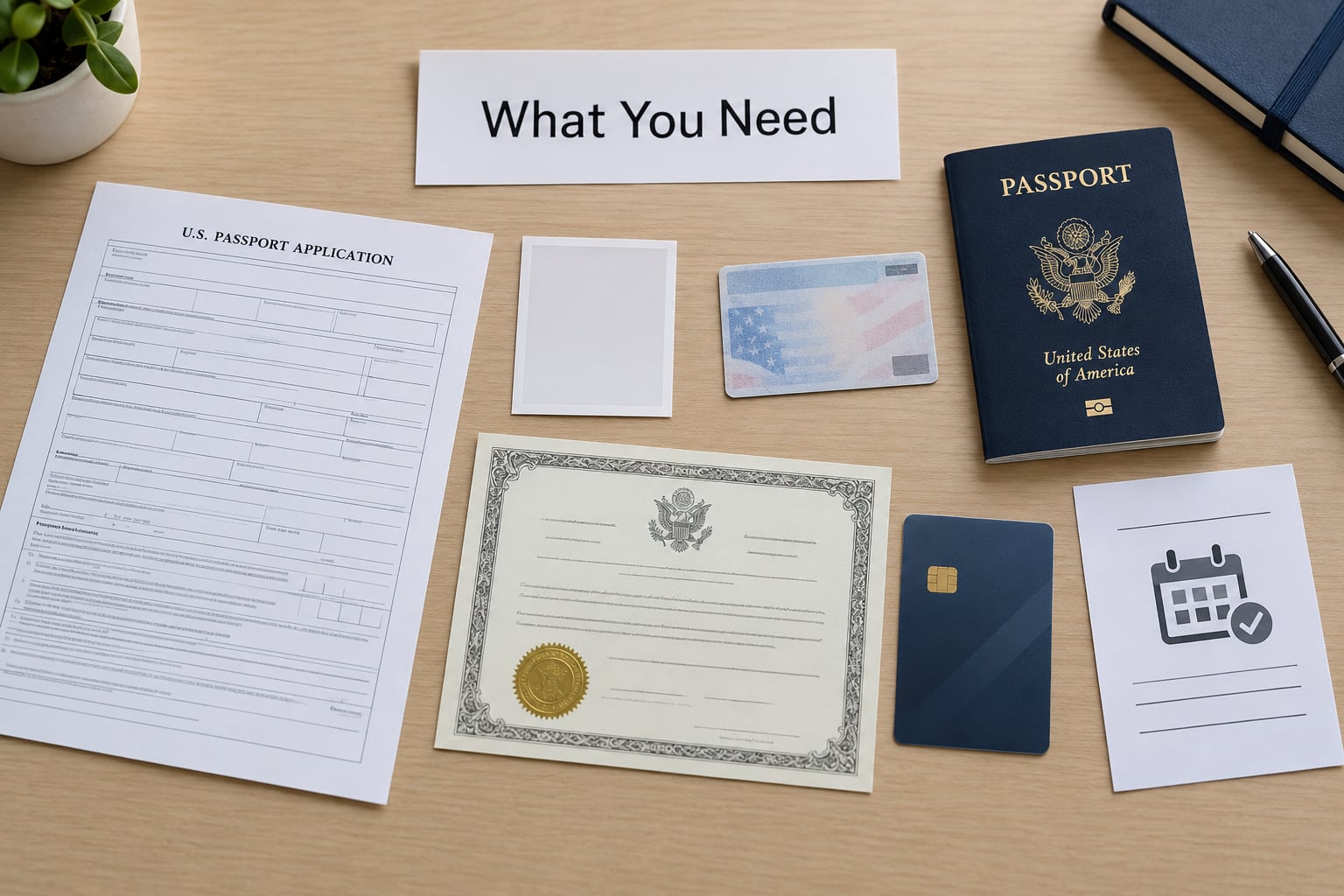
Requirements depend on whether you are applying for the first time, renewing, or replacing a lost passport, and the official Department of State guidance always takes priority over anything written here.
- Proof of U.S. citizenship. An undamaged U.S. passport issued within the last 15 years, your original birth certificate, or a certified naturalization or citizenship certificate. Photocopies are not accepted in place of originals.
- Valid photo ID. A government-issued driver’s license, state ID or military ID that shows your face, with your current name.
- A compliant passport photo. Taken within the last six months, in color, 2 by 2 inches, with a white or off-white background and no glasses in most cases. Many people pay to have it checked twice rather than once.
- Name-change documents, if applicable. A marriage certificate or court order linking your old name to your current one.
- Parental consent for applicants under 16. Both parents or legal guardians generally appear in person, or you supply a notarized statement explaining why one cannot attend.
- Payment. Accepted methods differ by application route, and the amounts change with periodic fee adjustments, so confirm the current figures on travel.state.gov before you go.
- Your current or most recent passport. Needed for a renewal, and returned to you separately once your new book is issued.
Applications for children under 16 are valid for five years, and 16- and 17-year-olds receive a ten-year book. Those shorter validity periods mean a family can need a replacement sooner than expected.
Step-by-Step
Step 1: Check Whether You Can Apply and When You Need It
You need a new passport rather than a renewal if you are applying for the first time, your previous passport was issued when you were under 16, it was lost or stolen, it was issued more than 15 years ago, or it has been damaged beyond normal wear.
Otherwise you qualify to renew, and renewal is faster and cheaper because the agency already holds your identity and citizenship records. Travelers renewing online skip the inbound mail leg entirely, which removes the part of the timeline people find most frustrating.
Apply early for one more reason: many countries require six months of remaining passport validity beyond your arrival date. That requirement is why travelers with perfectly valid books still renew before long trips.
Step 2: Gather the Required Documents
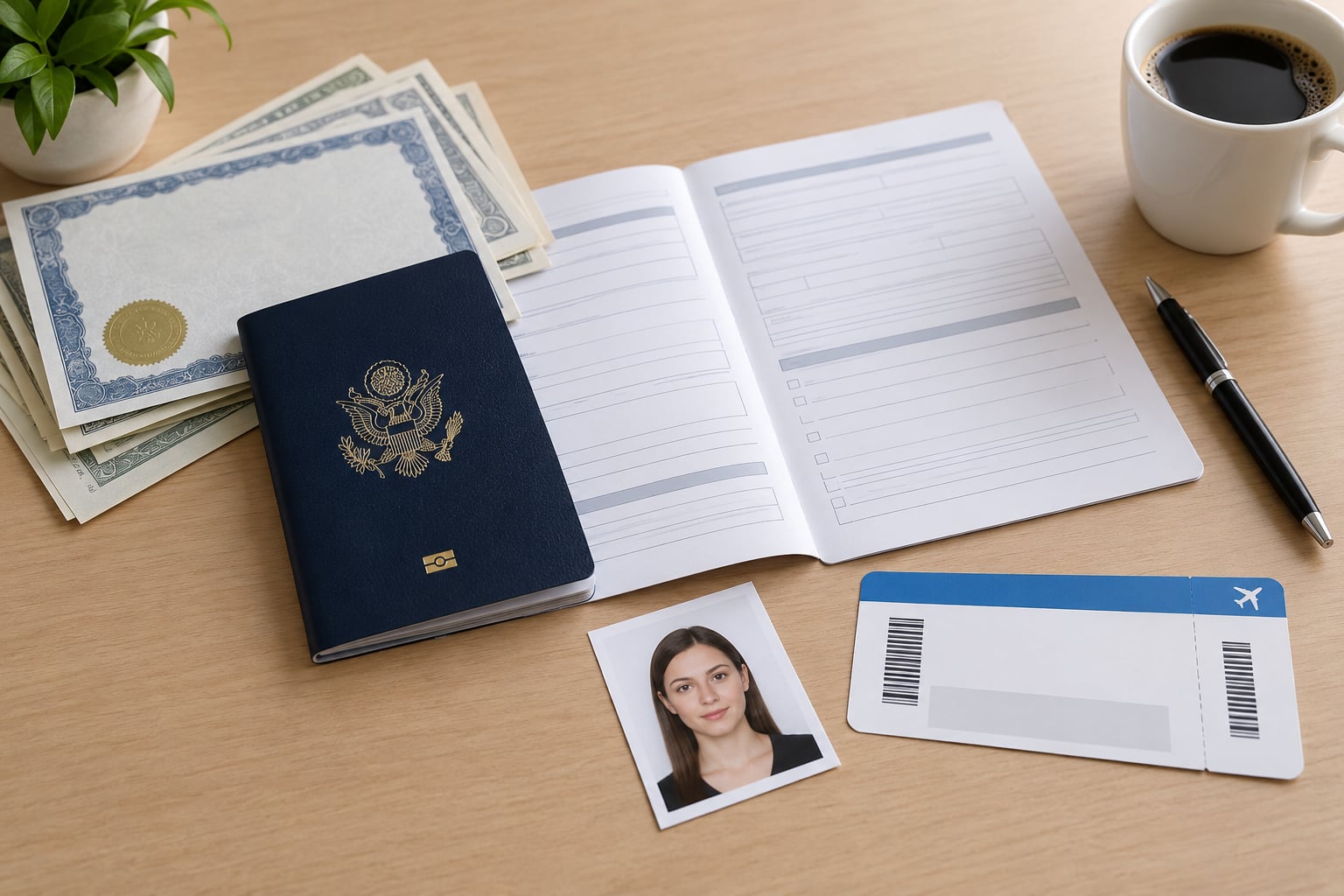
Assemble everything on one surface before you start filling in a form. Missing citizenship evidence is the most common reason an application comes back rejected, and a rejection restarts the clock from zero.
Check the name on your citizenship document, your photo ID and your passport application. If those names do not match exactly, the agency may request secondary evidence, which adds weeks.
Order certified copies rather than hospital souvenir certificates. If your birth certificate needs to come from a vital records office in another state, request it early, because that request can itself take days.
Step 3: Choose the Right Application Method
Your realistic options for how long does it take to get a passport come down to four routes, and each one trades time against money and flexibility.
- Routine service, 4 to 6 weeks of processing. The default choice for anyone traveling more than two months out. No extra government fee.
- Expedited processing, 2 to 3 weeks. Adds a government expedite fee on top of the base fee. Worth it when your trip falls inside eight weeks.
- Urgent travel service. An appointment at one of 26 U.S. passport agencies, which can issue a passport the same day. You must have international travel booked within 14 days, or need a visa issued within 28 days. Appointments are released on a short cycle and disappear quickly.
- Life-or-death emergency service. For cases such as a dying relative abroad. The Department of State aims to complete this in under three business days, and it requires a death certificate or medical record.
Courier companies cannot make the government process faster. A private service can only make sure your documents are correct and your envelope moves quickly. Paying an agency for a speed it cannot deliver is one of the most common regrets applicants report in travel forums.
Step 4: Submit the Application and Pay the Fee
First-time applicants and children under 16 sign the DS-11 in front of the acceptance agent, and you never sign it yourself beforehand. Renewals use form DS-82, either mailed on paper or completed through the online renewal portal.
Use a trackable delivery method on the envelope going to the agency. Stamps and unmarked envelopes are the least defensible part of the whole process if something goes missing.
Keep your receipt and your application reference number. The reference is how support staff locate your file, and losing it turns a routine phone call into a long one.
Step 5: Track the Application
Official status tools show a small number of stages, and knowing what each one means saves you from calling the hotline every few days.
- Application Received at Acceptance Facility means your application entered the system. Nothing has been reviewed yet.
- Application Received means the NPIC has logged it. Clock starts here.
- In Process means a passport specialist is reviewing it. This is where applications sit while they wait for an image to clear or for a name discrepancy to be investigated.
- Approved and Printed means it is on its way back to you.
- Mailed to Applicant means you should have delivery tracking.
Individual timelines on r/Passports and similar travel forums vary far more than the official ranges suggest. Some applicants describe routine renewals finishing in under two weeks end to end, while older threads report routine waits stretching eight to eighteen weeks during heavy backlogs. Treat the official estimate as a mid-range figure, not a guarantee, and check the current published estimate before you commit to travel dates.
Step 6: Receive the Passport and Check It
Open the package immediately and check the personal page for spelling, date of birth and validity dates. A data-entry mistake on a passport takes a second application to correct, and the process is not quick.
Check that the pages move freely, the photo is clear and the cover shows no damage. Minor scuffs on the data page can cause trouble at a border, and a damaged book may need replacing before you travel.
Your old passport, citizenship documents and any photo ID you submitted are returned separately and often arrive weeks after your new book. If you submitted your only valid citizenship evidence, note the date it left your hands and mention it when you next apply.
Common Mistakes That Cause Passport Delays
Almost every long delay traces back to one of a handful of avoidable errors.
- An outdated or non-compliant photo. A photo taken more than six months ago is the single most common rejection. Fix: check it against the current State Department photo guide, or pay for a second opinion at a pharmacy photo counter.
- A name mismatch between documents. If your marriage certificate is missing, the agency cannot verify your legal name change. Fix: request a certified copy before applying rather than after.
- Missing citizenship evidence. A photocopy gets returned as not sufficient. Fix: send the certified original, not a photocopy or a photocopy of a photocopy.
- An unsigned or pre-signed DS-11. Signing it yourself invalidates an in-person application. Fix: sign only in front of the acceptance agent.
- Wrong payment method for the chosen route. Mail renewals and agency appointments do not accept the same methods. Fix: read the payment instructions for your specific application type on travel.state.gov.
- Mailing to the wrong address. Renewals for different reasons and separate-society applications go to different addresses. Fix: read the address line carefully; the acceptance facility never mails your application for you.
- Assuming expedited means faster delivery. The expedite fee shortens processing inside the agency. Getting it into your hands sooner is a separate choice about shipping.
- Booking non-refundable travel too early. If you have a non-refundable flight and no passport, one rejected photo becomes a lost deposit. Fix: use refundable fares until the book is in your hands.
Leave a real buffer. Eight weeks of lead time is comfortable for routine service. Six weeks leaves no room for a rejection. Below three weeks, look for a passport agency appointment the same day you decide to travel.
Frequently Asked Questions
Can I get a U.S. passport quickly for an international trip?
Yes, if you have international travel booked within 14 days or need a visa issued within 28 days, you qualify for urgent travel service at a U.S. passport agency. Some agencies issue a passport the same day. Appointments are released on a short cycle and go quickly, so search the agency appointment calendar daily and be ready to book the moment a slot near you opens.
How early should I apply for a passport before traveling?
Most travelers apply eight to ten weeks before departure for routine service, which covers 4 to 6 weeks of processing plus mailing time in both directions. Add more if you are renewing for the first time, replacing a lost passport, or traveling during a busy summer period. Remember that many countries require six months of remaining validity beyond your arrival date.
Does passport renewal take less time than a first-time application?
Renewals are usually quicker because the agency already holds your citizenship and identity records, so there is nothing to verify from originals. A first-time applicant goes through a fuller review and may face additional requests. Both routes share the same published routine and expedited processing ranges once the application reaches the agency.
Can I apply online to renew my U.S. passport?
Yes, eligible adults can renew through the official online portal, which removes the inbound mail leg of the timeline. You need a passport issued within the last 15 years, issued when you were 16 or older, not damaged, and not reported lost or stolen. You must also have been issued in the same name, or be able to document a marriage or divorce name change.
What happens if my passport is arriving after my flight?
Call the agency hotline as soon as you know the date will not work and give them your travel dates. Ask whether an urgent travel appointment is available. Change your flight or book a refundable fare, and note that a passport card works for land crossings and some Mexico and Canada travel but not for international flights.
How do I check the status of my passport application?
Use the official Department of State status tool with your application reference number. It shows whether the application has been received, is in process, or has been approved and printed. In process is the longest stage and does not indicate a problem. If your status has not moved for well beyond the published window, call the National Passport Information Center with your reference in hand.
Conclusion
Start by pulling up the current official processing estimate on travel.state.gov and comparing it with your departure date, not with a number you remember from a year ago. If the dates are close, choose the faster route now rather than later.
Then gather your documents carefully, apply through the method that fits your situation, and leave a safety margin of at least eight weeks whenever your plans allow it. The applicants who get a passport in time are almost never the ones who applied the latest.
Last updated: October 2026. Processing times and fees change without notice, so verify every figure on the official Department of State site before you book.