Packing for a beach vacation comes down to two bags with two jobs. Your suitcase holds clothes, toiletries and documents, while a separate beach bag carries sunscreen, a towel, water and toys from the car to the sand. Work backwards from your trip length and what your accommodation already provides, and the load stops being a guessing game.
The order matters more than the list. Check your flight times and the weather first, count clothing around a small set of mix-and-match outfits, add sun protection and water gear, then pack documents and valuables last so nothing important ends up in a checked case. Most overpacking happens because people fill a bag top to bottom before deciding what the trip actually needs.
Below is the sequence I use, with quantities worked out for short trips and week-long stays. Last updated for 2026.
Table of Contents
- 1What You Need
- 2Step-by-Step: How to Pack for a Beach Vacation
- 31. Check Your Itinerary, Weather, and Luggage Rules
- 42. Build a Capsule Wardrobe for the Beach
- 53. Pack Swimwear, Beach Essentials, and Sun Protection
- 64. Protect Valuables and Organize Travel Documents
- 75. Pack Toiletries and Medications for the Trip
- 86. Do a Final Carry-On and Checked-Bag Review
- 9Common Mistakes
- 10Frequently Asked Questions
- 11What should I put in a carry-on for a beach vacation?
- 12How many pairs of shoes and outfits do I need for a week at the beach?
- 13Can I bring sunscreen and full-size toiletries in my carry-on?
- 14Should I pack beach towels in my suitcase?
- 15What should I do if my beach vacation includes a flight or cruise?
- 16Conclusion
What You Need
You do not need much to start, but you do need the right information. Gathering it first is what keeps the packing list short.
- Trip details — confirmation numbers, flight times, transfer length, arrival and departure days, and how many nights you are away.
- Accommodation details — the property address, check-in time, whether towels, beach chairs, umbrellas, toiletries or hair dryers are provided, and whether there is a washer.
- Weather and water conditions — the forecast for your arrival window, the usual sea temperature, and whether the shore is sandy, rocky or reef-fringed.
- Luggage rules — the carry-on size allowance and any checked-bag fee for your airline, plus the security rules on liquids and batteries.
- A written checklist — on paper or in your phone. Working from a list is the single thing that most reliably stops the “just in case” pile-up.
- Travel documents — passport, visas if required, insurance details, and emergency contacts, all accessible offline.
That is the whole setup. Everything below is a decision made with this information in hand.
Step-by-Step: How to Pack for a Beach Vacation
Six steps, in this order. Skipping ahead to the clothing section is how people end up with eight outfits for a weekend.
1. Check Your Itinerary, Weather, and Luggage Rules
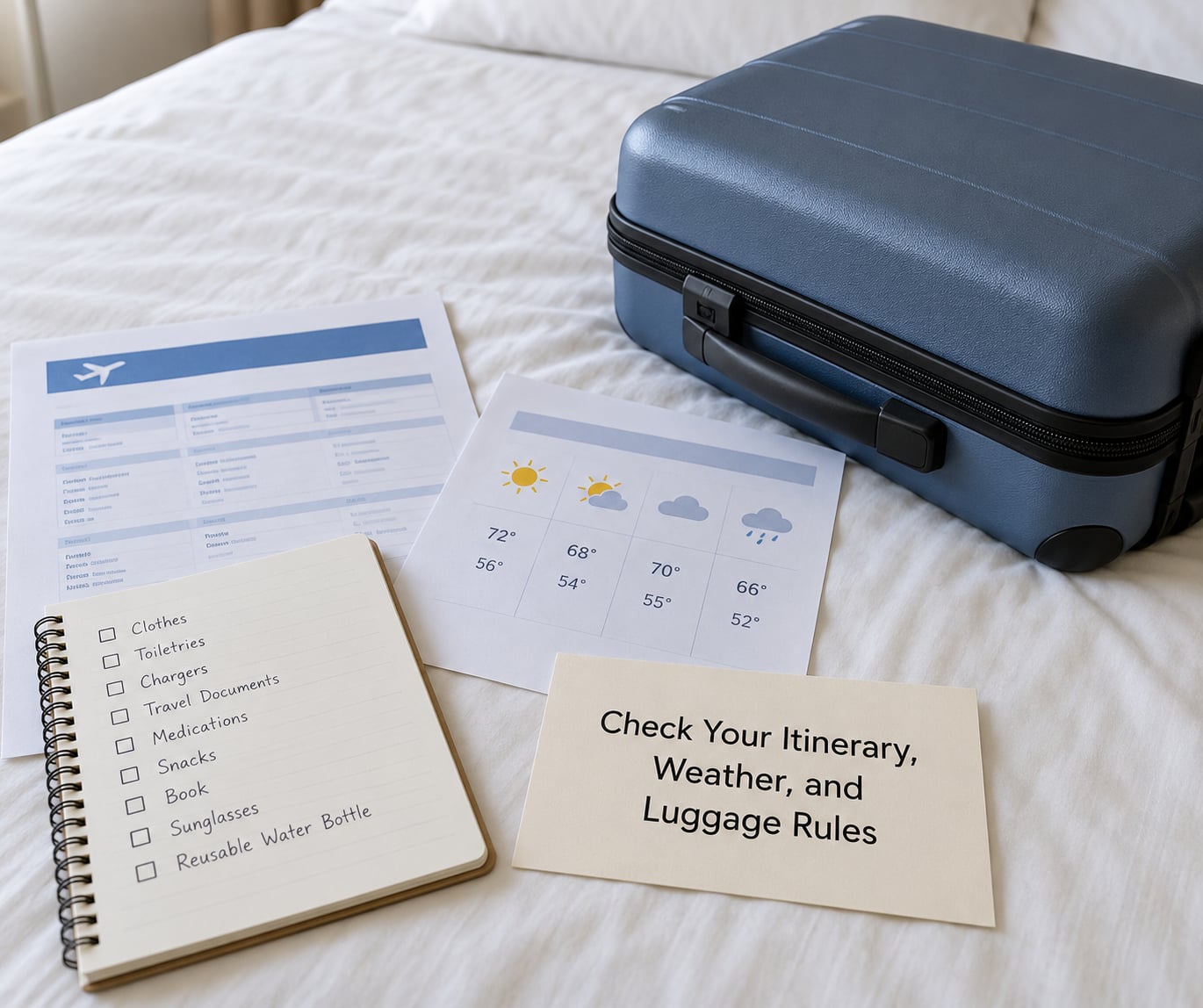
Your flight times shape the load before anything else does. A long overnight journey means the outfit you wear travels with you, so you pack one fewer. A redeye with a cold connection at 6 a.m. means a light layer in your carry-on, because beach weather tells you nothing about the departure lounge.
Check the forecast for your actual dates, not the seasonal average. Shoulder season brings rain, a windbreaker matters, and a coastal wind at night can drop the temperature more than you expect.
Then read your airline’s baggage page. Most US carriers allow a carry-on of about 45 linear inches, which is length plus width plus height, and anything larger gets checked at the gate. Note the checked-bag fee before you decide how many cases to bring, because that decision is easier to make now than at the counter.
2. Build a Capsule Wardrobe for the Beach
Choose pieces that work with each other and count outfits, not garments. Three neutral bottoms, four tops and one dress give you far more combinations than five matched sets.
For a week at the beach, most people need six to eight tops, three or four bottoms, one dress or jumpsuit for dinner, one light cover-up layer for air conditioning and breezy evenings, and sleepwear. Two pairs of shoes is the sensible ceiling: sandals for the sand and something with a strap for walking.
Fabric matters more than style in heat. Linen, cotton and other loose weaves breathe far better than polyester, which traps sweat and smells by hour three.
3. Pack Swimwear, Beach Essentials, and Sun Protection
Pack one swimsuit per two days and add one spare. Wet swimsuits need a full night to dry, so two suits for four days is realistic, and three for a week keeps you rotating without owning a laundry line.
Bring at least one lightweight cover-up: a kaftan, sarong or open shirt that goes over a wet swimsuit without touching damp skin. Add a pair of water shoes if the beach is rocky, since unfamiliar ground plus hot sand is an easy way to end a day early.
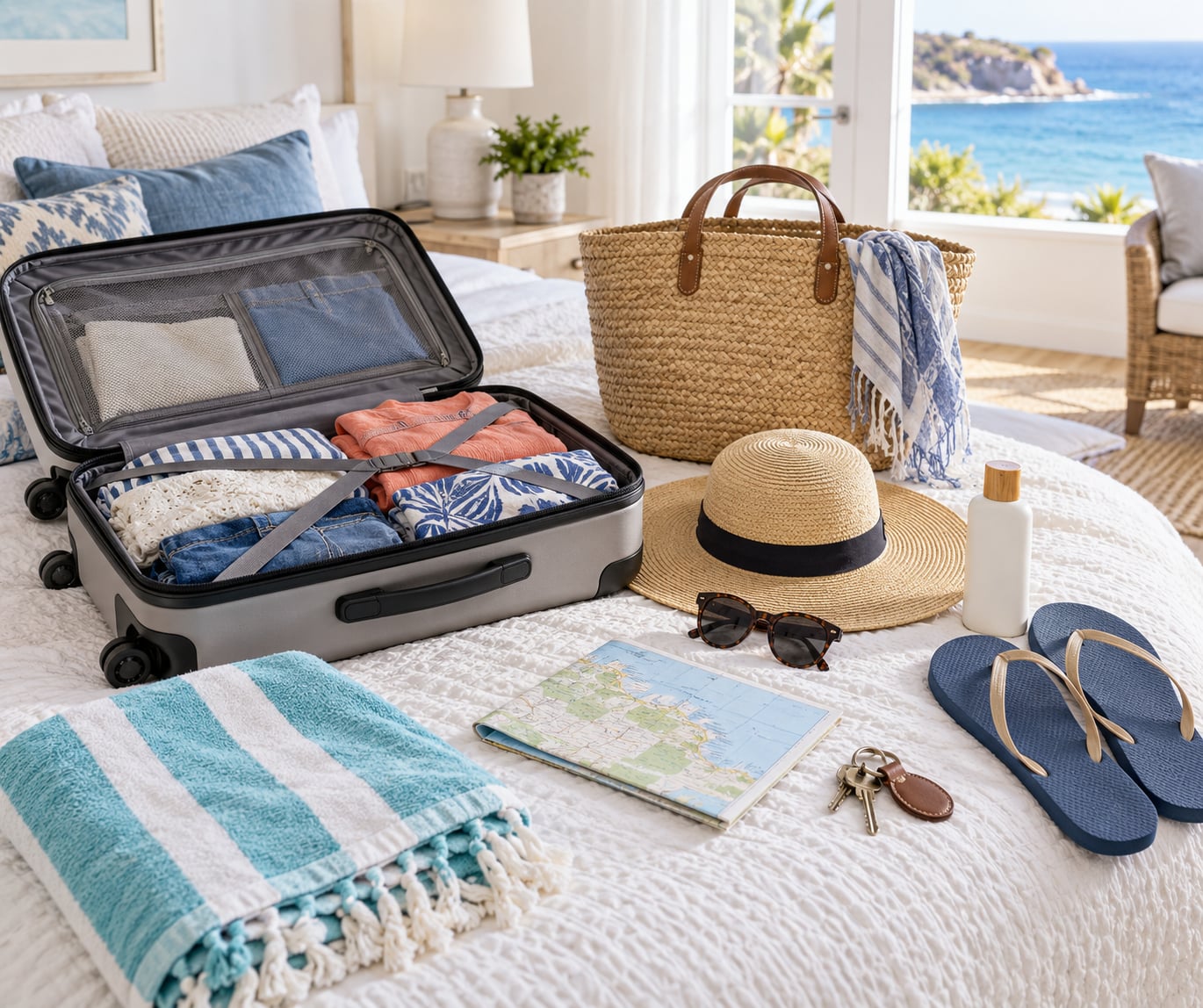
For sun protection, pack broad-spectrum SPF 50 sunscreen, SPF lip balm, a wide-brim hat that folds flat, and polarized sunglasses to cut glare off the water. A rash guard in UPF fabric covers the shoulders and back, which are the areas most people burn without noticing.
Check whether your destination restricts sunscreen. Hawaii, for example, bans formulas containing oxybenzone and octinoxate, so a reef-safe or mineral sunscreen avoids a purchase you did not plan for.
For the beach bag itself, bring a sand-resistant tote or backpack, a quick-dry microfiber towel, a reusable water bottle, a waterproof phone pouch, a dry bag for wet clothes, and a small first aid kit. Renting chairs and umbrellas at the beach costs less than the trunk space they take, and most resort beaches have both available.
4. Protect Valuables and Organize Travel Documents
Keep documents in one flat folder, not the bottom of a case. Passport, boarding passes, insurance details, hotel confirmation, emergency contacts and two payment cards in different pockets. Save confirmations as screenshots on your phone so a dead battery or a spot with no signal does not strand you.
Check your passport validity and blank-page count against your destination’s entry rules well before departure, since renewal can take weeks.
Electronics stay in your carry-on: phone, charger, power bank, headphones, e-reader. Sunscreen reflects so hard off sand and water that screens take a beating, so a small microfiber cloth is worth more than another cable. Power banks belong in cabin baggage, not in a checked case.
5. Pack Toiletries and Medications for the Trip
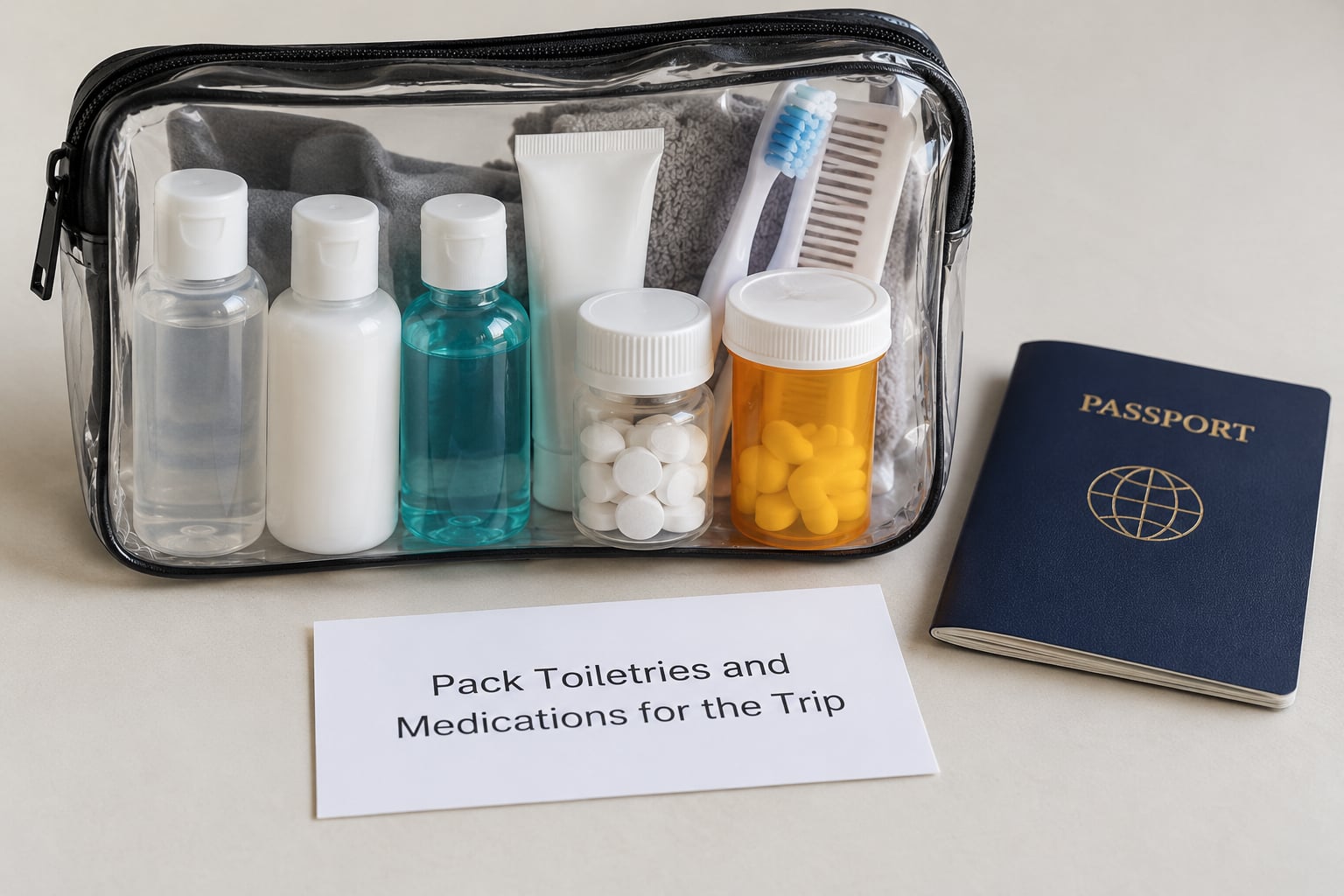
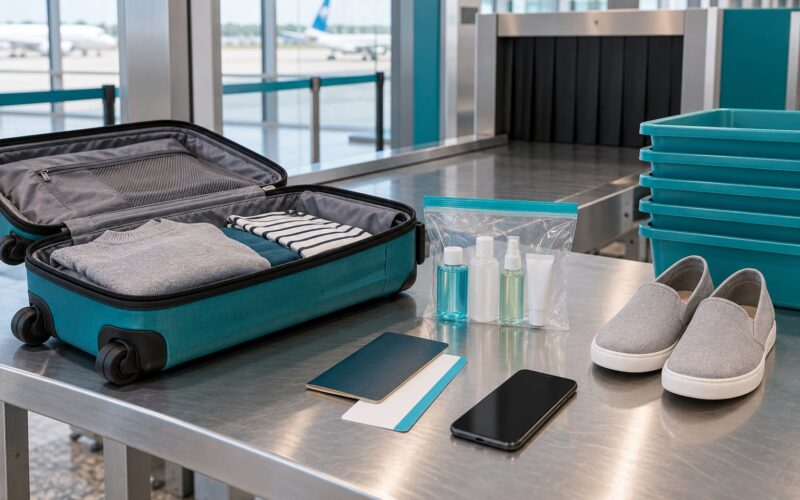
Liquid rules catch people out. In US airport security, containers of 100 ml or less fit in a single quart-sized bag, and that applies to sunscreen, after-sun lotion, shower gel and liquid sunscreen. Stick formats sidestep the limit entirely, which is why they travel well in a hot car.
Pack prescriptions in their labelled original containers with enough supply for the trip plus a couple of days. A beach trip still involves long flights, missed connections and pharmacies that do not stock your medication.
Beach-specific care is easy to forget: after-sun lotion or aloe gel, a hydrating conditioner for salt-damaged hair, insect repellent, waterproof sunscreen, blister plasters, and any allergy medication you normally take. Health and safety guidance changes, so check current advice from your own doctor or a public health source for anything specific to your health.
6. Do a Final Carry-On and Checked-Bag Review
Run the bags in reverse order of importance. Documents, medication, valuables, electronics and chargers first, then liquids in the correct bag, then wet or salty items packed separately so they do not soak your clothes.
Check that anything you need in flight, especially over a long or overnight segment, is in the cabin rather than buried. Put your swimsuit, a cover-up and a change of clothes in the carry-on too, since a delayed suitcase should not mean a day without them.
Finally, weigh or measure each case against your airline’s allowance and remove one item you are not sure about. That single deletion fixes most packing problems.
Common Mistakes
These are the errors that show up repeatedly, and each one has a straightforward correction.
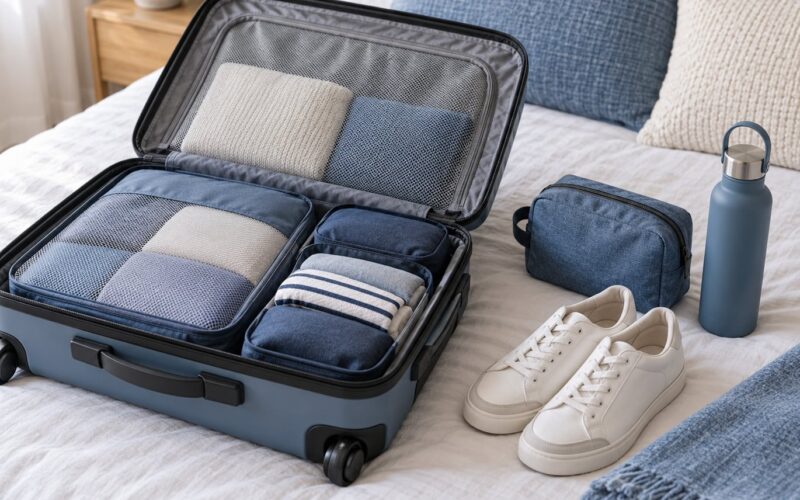
- Packing by day instead of by category. You end up with a bag that only works one way. Pack by category into cubes, and you can rebuild the bag for any day of the trip.
- Bringing a backup outfit for a what-if. Forum discussions on travel packing threads are full of bags that never got worn. If it only exists for a scenario that has not happened, it stays home.
- Ignoring the liquid limit. Full-size sunscreen gets confiscated, and the replacement at the destination costs more and takes time. Travel sizes and sticks avoid the whole problem.
- Packing more shoes than two. Shoes are the bulkiest thing in any case. Two pairs cover sand, walking and dinner.
- Forgetting shade and hydration gear. A hat, a lightweight cover-up and a full bottle matter more than an extra outfit on a hot afternoon.
- Packing toiletries your hotel already provides. Shampoo, conditioner and towels are standard in most hotels and rentals. Check the property page before you pack them.
- Letting wet items touch everything else. A dry bag and a mesh laundry pouch for damp swimsuits keep salt and sand out of your clothes.
A few habits help more than any single item. Roll soft pieces instead of folding them to save space, place heavy things near the wheel end of the case, keep frequently used items on top, and test-pack a week out so you can cut the list when you see how little room sundries take up.
Frequently Asked Questions
What should I put in a carry-on for a beach vacation?
Keep one complete day of essentials in the cabin: a swimsuit and cover-up, one change of clothes, sandals, all medication, your passport, cards and phone chargers. Add sunscreen in stick format, a wide-brim hat, a power bank and a light layer for the plane. That way a delayed checked bag does not ruin the first day.
How many pairs of shoes and outfits do I need for a week at the beach?
Two pairs of shoes is plenty: sandals for sand and walking, plus one pair with a strap for dinner or a day trip. For outfits, plan six to eight mix-and-match tops, three or four bottoms, one dress and a light evening layer. Most people pack the outfit they travel in as one of those sets, so it does not cost extra bag space.
Can I bring sunscreen and full-size toiletries in my carry-on?
You can bring them in containers of 100 ml or less, and in US airport security all of those containers must fit in a single clear quart-sized bag. Full-size sunscreen usually breaks that limit. A solid or stick sunscreen counts as a non-liquid item and travels far more easily, which is why it is the first choice for a hot trip.
Should I pack beach towels in my suitcase?
Check what your accommodation provides first, since most hotels and rentals supply them. If you want your own, a quick-dry microfiber or Turkish towel packs down to the size of a paperback and dries in about an hour, unlike a heavy cotton towel. One per person is enough. Renting towels or chairs at the beach often works out cheaper than the trunk space.
What should I do if my beach vacation includes a flight or cruise?
Split the load. Carry documents, medication, valuables, electronics, a power bank, one swimsuit and a change of clothes in your cabin bag, and check the rest. On a cruise, bring a light sweater because indoor spaces run cold and air conditioning, and confirm whether the line supplies towels, chairs or toiletries. Reserve an automatic terminal door if a beach excursion comes with your sailing.
Conclusion
The method is simple: research first, then pack by category, then review. Check the itinerary, the weather and your airline’s baggage rules, write a short list, and fill the gaps that actually matter, sun protection, swimwear that dries, a beach bag, water and shade.
Start tonight with the itinerary and the forecast. Everything after that gets much faster.