Most people can fly after surgery, but not on the schedule most people expect. The real minimum wait is set by your procedure and your surgeon, not by a generic recovery chart, and it ranges from a day or two after a minor operation to 4 to 12 weeks after a joint replacement.
Get your surgeon’s clearance first, then book. Everything after that, from airline assistance to which seat you pick, is detail you can control yourself.
Table of Contents
- 1What You Need Before You Book
- 2Step-by-Step: How to Fly After Surgery the Safe Way
- 3Step 1: Confirm Your Clearance and How Long After Surgery You Can Fly
- 4Step 2: Ask the Airline About Assistance and Restrictions
- 5Step 3: Plan Medication, Swelling, and Movement
- 6Step 4: Travel With a Safer Airport and Flight Strategy
- 7Step 5: Know When to Postpone or Seek Urgent Help
- 8Common Mistakes Travellers Make After Surgery
- 9Flying too soon because the flight is already booked
- 10Packing medication in checked baggage
- 11Sitting still for ten hours because the seat belt is on
- 12Underestimating the airport
- 13Not telling the airline about the surgery
- 14Booking a red-eye flight to save a hotel night
- 15Frequently Asked Questions
- 16How close to surgery can you fly?
- 17Can I fly with stitches after surgery?
- 18Is there a risk of blood clots when flying after surgery?
- 19How do I avoid blood clots on a long flight after surgery?
- 20Is it worth wearing compression socks on a plane, and who should not?
- 21Can I fly with a cast or sling after surgery?
- 22Conclusion
What You Need Before You Book
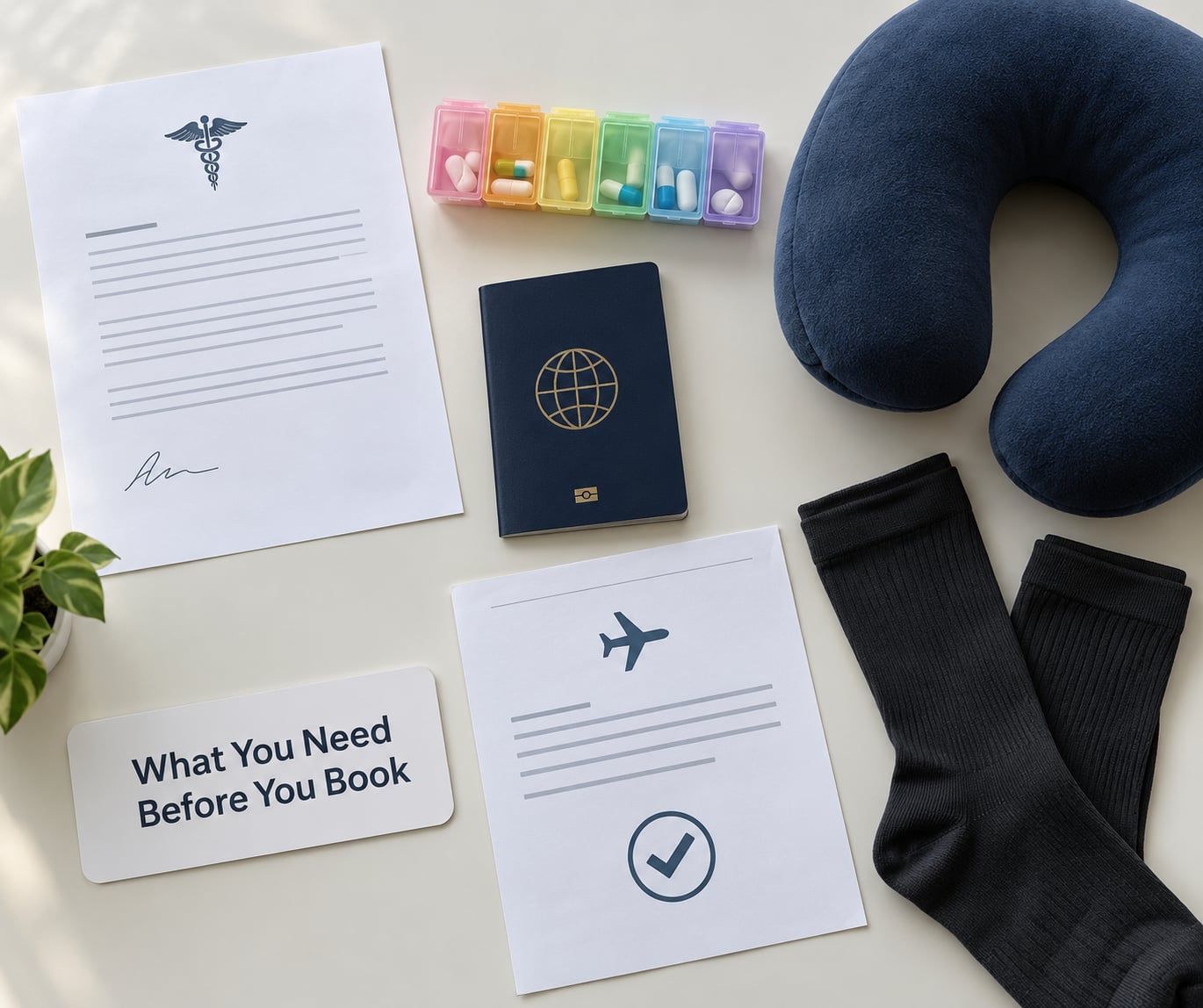
Sorting this list before you book prevents most of the problems people hit at check-in. Put it together in one session a couple of weeks before departure.
- Written medical clearance. A letter from your surgeon or the clinician managing your recovery stating the procedure, the date, and that you are cleared to fly. Keep it on your phone and a paper copy.
- Your itinerary documents. Passport or ID, visa where required, insurance documents, and the surgical team’s phone number plus an after-hours number.
- Enough medication for the whole trip, plus buffer. Bring the full supply in your carry-on, including any blood thinners, in original labelled packaging.
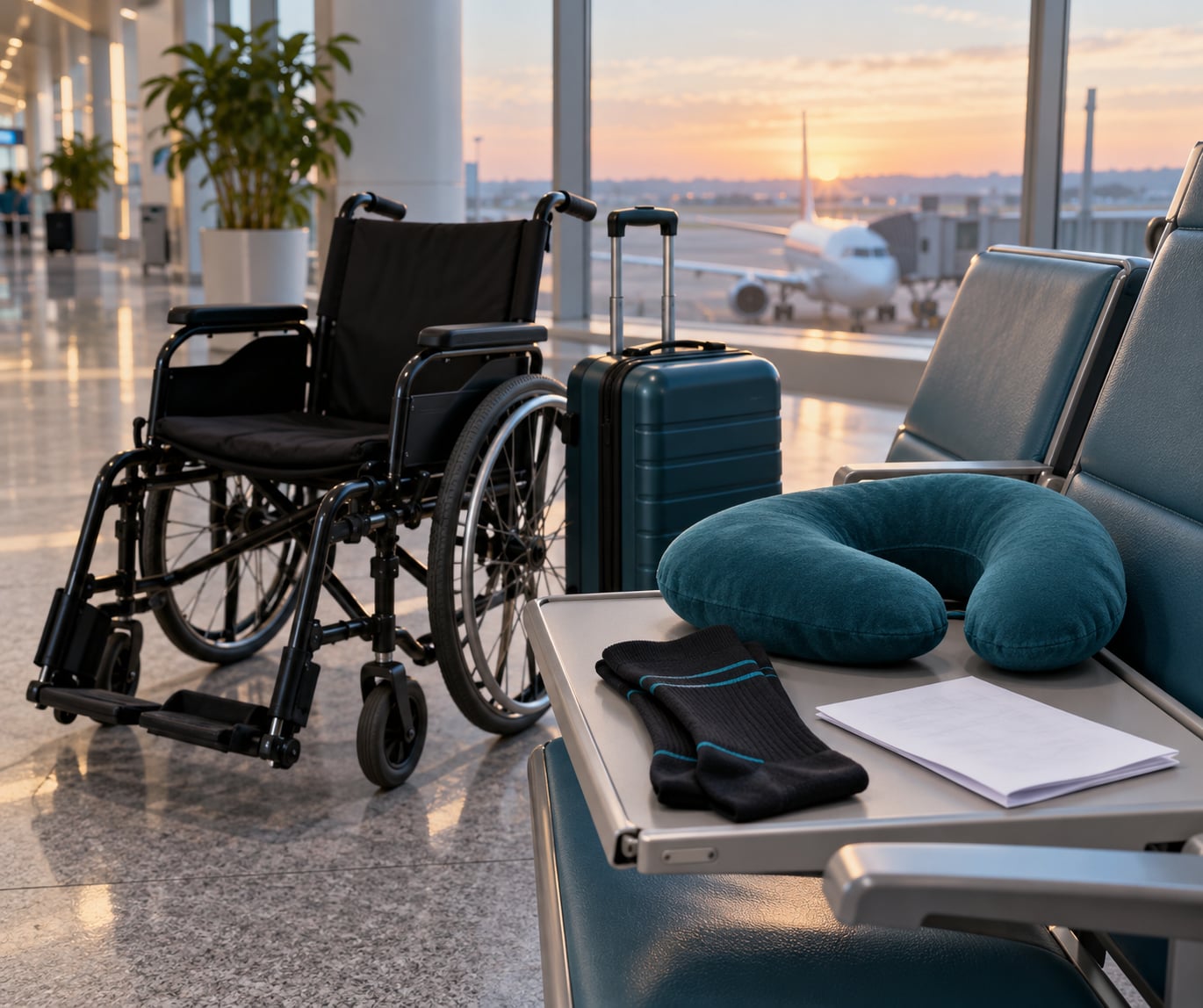
- Mobility equipment. Crutches, a walking frame, a folding wheelchair, or a wheelchair booked through the airline’s special assistance desk.
- Supportive clothing. Loose clothing that sits over the surgical site, and graduated compression stockings in the 15 to 30 mmHg range if your clinician has approved them.
- Written airline arrangements. Confirmation of assistance requests, so you are not explaining a sling to a gate agent at 6am.
Step-by-Step: How to Fly After Surgery the Safe Way
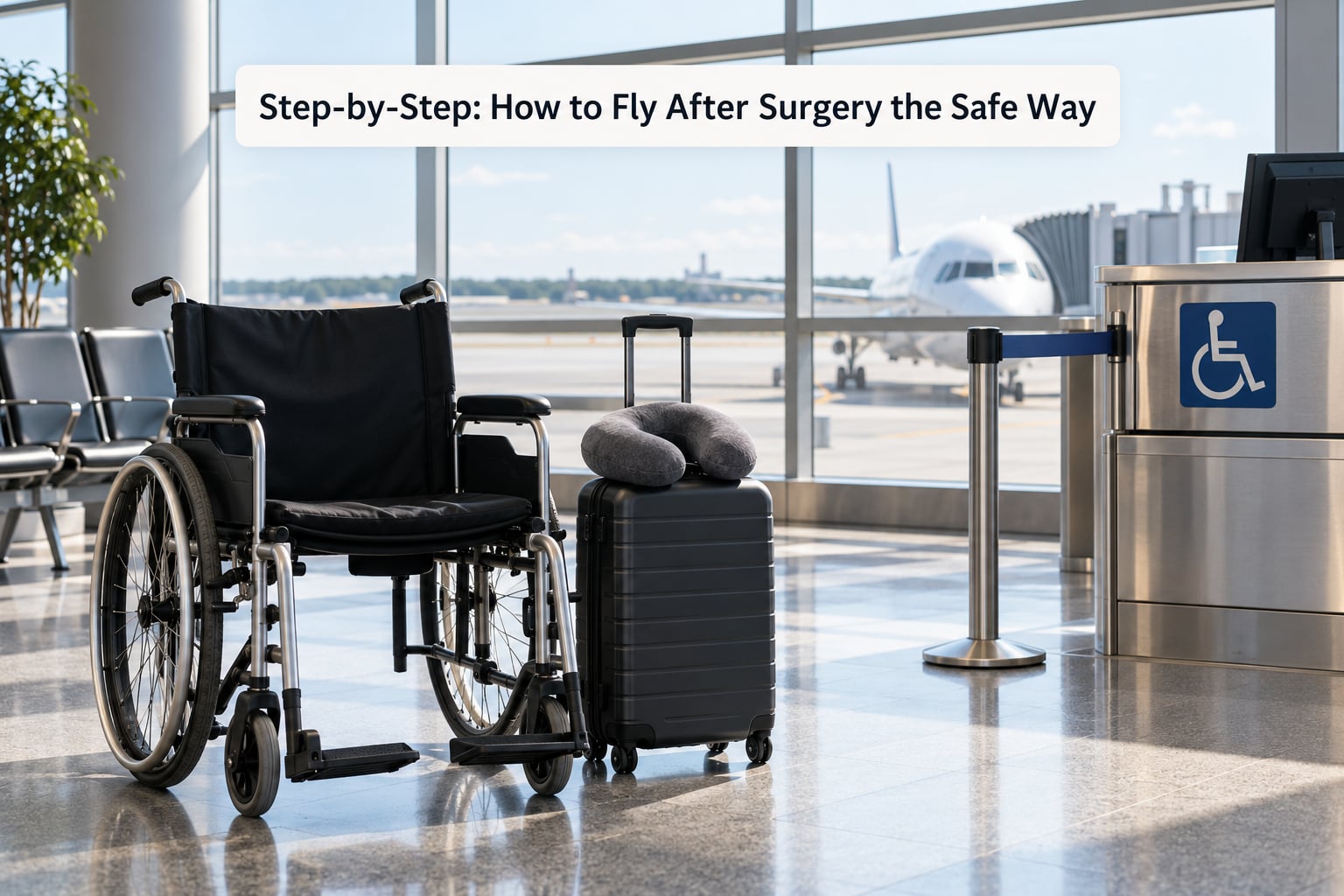
Step 1: Confirm Your Clearance and How Long After Surgery You Can Fly
Your surgeon, not a search result, decides whether and when you can fly. They weigh the procedure, the anesthesia used, how the incision is healing, your clot risk, and whether the destination has adequate care if something goes wrong.
There is no single universal recovery period, and the ranges below are starting points for a conversation, not permission to book. Post-operative clearance is a genuine decision with factors only your team can assess.
| Procedure type | Typical minimum wait | Main caution |
|---|---|---|
| Minor or surface procedures (many done under local anaesthetic) | 1 to 2 days | Anaesthetic and sedation can outlast the procedure; most guidance sets a four-hour floor before flying |
| Day-case procedure with sedation or general anaesthetic | 1 to 2 days, longer if you had sedation | Do not fly on the day of surgery or while sedatives remain active |
| Laparoscopic or keyhole abdominal surgery | 2 to 10 days | Abdominal surgery carries a higher clot risk from reduced mobility |
| Major open abdominal or chest surgery | 10 days to 2 weeks | Breathing, coughing and deep vein thrombosis risk all matter here |
| Orthopaedic joint replacement or major orthopaedic surgery | 4 to 12 weeks | Long-haul waits are usually pushed to the later end of the range |
| Neurosurgery, eye surgery involving a gas bubble, or surgery involving the retina | 2 to 6 weeks or longer | Cabin pressure changes can affect a gas bubble in the eye |
Some surgical teams ask patients to stay near the hospital for several days after major procedures, so a flight home on day three is often simply not practical. Ask about staying locally instead of booking too early.
Step 2: Ask the Airline About Assistance and Restrictions
Airlines set their own rules for post-operative passengers, and the guidance most clinics point to is simply to check with the specific carrier. Call the special assistance line rather than relying on the booking site, and ask for the request to be added to the reservation.
Tell them the operation and its date, whether you are using crutches, a frame, a cast or a sling, whether you can walk unaided, and how far to a toilet. A national NHS patient leaflet on surgery and travel makes the same point: always check with the individual airline, because each one has its own guidance.
Also confirm wheelchair availability at the aircraft door, early boarding, whether a mobility device or oxygen concentrator is permitted in the cabin, cabin baggage allowances for any medical equipment, and how long your connections need to be.
Step 3: Plan Medication, Swelling, and Movement
Everything you need during the flight goes in your carry-on, never in checked baggage. Include prescriptions in original packaging, plus a copy of the prescription or a doctor’s letter, since security officers and airline staff may ask.
Ask your surgical team in advance what to do if a dose falls during a long travel day, and how to handle refrigerated medication if you are flying to a hot country. Follow their dosing instructions rather than adjusting on your own.
Compression stockings, ice, or a cold pack can help with swelling after many procedures, but only use them if your clinician has said they are appropriate for your surgery. Unapproved compression over a fresh wound or a new joint is a bad idea.
Build movement into the plan instead of hoping you remember it. Stand and walk the aisle at least once an hour on flights over four hours, and do seated ankle pumps and calf raises whenever you are parked.
Step 4: Travel With a Safer Airport and Flight Strategy
Allow far more time than you normally would. Airports are long walks with queues, and post-operative walking distance is the thing most people underestimate.
Book a direct flight if you can, and avoid tight connections. Each extra movement between gates is another chance to tire an incision you have barely tested on stairs.
Choose an aisle seat so you can get up without disturbing anyone, and request extra legroom or a seat near the wings where the ride is smoothest. Keep medication, the clearance letter, chargers and sunglasses in an easily reachable pocket, not in a bag under the seat in front.
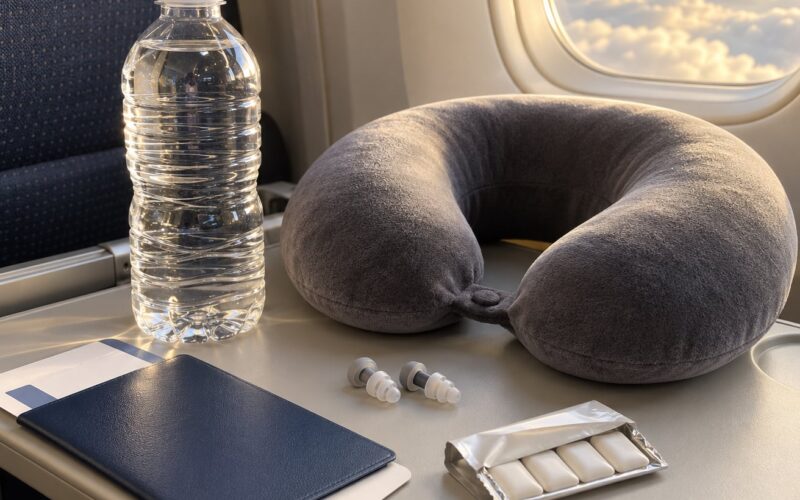
One last thing. Do not cross your legs, stay hydrated with six to eight glasses of water across the day, and skip the alcohol. Dehydration and alcohol both make clot formation more likely.
Step 5: Know When to Postpone or Seek Urgent Help
Do not fly if any of these are true, and contact your surgical team first.
- You have an active infection, a fever, or pus or spreading redness at the incision site.
- You have unexplained swelling, tenderness or warmth in one leg.
- You are still taking sedatives or painkillers strong enough to affect your judgement.
- You have an active bleeding problem, or a blood clot that has not been treated and cleared by your doctor.
- You are breathless or have chest pain at rest before you even reach the airport.
- Your surgeon has not given clearance, or your destination has no appropriate medical care.
If a clot forms in flight, the warning signs are a leg that suddenly aches, swells, feels warm or turns red, and chest pain that is worse when you breathe in, plus sudden breathlessness. Tell a flight attendant immediately and ask for the medical kit. The crew knows where the defibrillator and oxygen are, and the flight can be diverted.
Recovering from surgery already carries some clotting risk on its own. If you have ever had a venous thromboembolism, or if you are on blood thinners, tell your surgical team before you book. Patients on anticoagulants are often told they are among the safest travellers in the cabin when it comes to clots.
Common Mistakes Travellers Make After Surgery
Flying too soon because the flight is already booked
The most common and most expensive mistake. A paid ticket is not a medical reason to travel. Ask the airline about changing dates, and ask your surgeon what staying locally for extra days would cost you.
Packing medication in checked baggage
Checked bags get delayed, lost, and held at temperature. If the bag lands in another country and you have no painkillers or blood thinners, the trip is over. Everything goes in the cabin with you.
Sitting still for ten hours because the seat belt is on
Long-haul cabins are designed for sitting, not for clotting prevention. Set an hourly reminder for the aisle. The people who report the worst leg pain and calf swelling after surgery are almost always the ones who did not move.
Underestimating the airport
Post-operative stamina is not the same as post-operative endurance. Add generous connection times, skip the exercise in the terminal, and request a wheelchair for the long stretches even if you can technically walk.
Not telling the airline about the surgery
Assistance is usually offered rather than granted automatically. Book it, then tell the agent about the operation, the date, and any sling, cast or crutches. Requests made days ahead cost nothing.
Booking a red-eye flight to save a hotel night
Overnight flights trap you sitting still in a dim cabin with pain medication and no chance to walk. A daytime flight, even a later one, lets you move, eat properly and deal with a problem in a staffed airport.
Frequently Asked Questions
How close to surgery can you fly?
It depends entirely on the procedure and your surgical team. Many minor procedures allow flying after 1 to 2 days, laparoscopic abdominal work usually needs 2 to 10 days, major open abdominal or chest surgery 10 days to 2 weeks, joint replacements 4 to 12 weeks, and eye or brain surgery 2 to 6 weeks or longer. Always wait for written clearance from your surgeon before booking.
Can I fly with stitches after surgery?
Usually yes, once your surgeon clears you, and stitches themselves are not usually the reason to delay. The reason to wait is the healing tissue underneath them. Fresh incisions can swell and bleed, and cabin dryness and reduced circulation are harder on a wound that has not closed. If you also have a drain, a fresh dressing or an open area, ask your team how to manage it during the flight.
Is there a risk of blood clots when flying after surgery?
There is a real but small risk, and it comes from two things at once: sitting still for hours, and the partly immobile, higher-clotting state that comes with recent surgery. The WHO WRIGHT project figures, repeated in the r/ClotSurvivors travel wiki, put the risk of venous thromboembolism at roughly 1 in 6,000 after four hours of immobility in otherwise healthy travellers, and about 5 pulmonary embolisms per million flights over 12 hours.
How do I avoid blood clots on a long flight after surgery?
Walk the aisle at least once an hour, do seated ankle pumps and calf raises whenever you sit down, and never cross your legs. Drink six to eight glasses of water during the travel day and skip alcohol. Wear graduated compression stockings in the 15 to 30 mmHg range if your clinician approves them. Ask your surgeon whether preventive medication is worth discussing for your particular operation.
Is it worth wearing compression socks on a plane, and who should not?
For most travellers on flights over four hours, properly fitted graduated compression stockings in the 15 to 30 mmHg range are a reasonable low-cost precaution, and patients often find them comfortable. Skip them or ask first if you have poor circulation or peripheral arterial disease, fragile or damaged skin, an active leg infection, or a new surgical site in the leg. Never wear a pair that fits badly, and put them on before boarding.
Can I fly with a cast or sling after surgery?
Yes, airlines generally carry passengers with casts and slings, but you should book it in advance. Tell the airline what the cast or sling is, which limb it covers, and whether you can walk unaided or need crutches. Ask about wheelchair service to the aircraft door and early boarding. Expect security to examine the item, and keep your clearance letter with you to explain it quickly.
Conclusion
Learning how to fly after surgery comes down to four things in order: get written clearance from your surgical team, book the flight and the airline assistance around their recommended window, keep every medicine and document in your carry-on, and treat movement during the flight as part of the plan rather than an optional extra.
If your clinician advises waiting, wait. The same goes if you develop fever, worsening pain, heavy bleeding, breathlessness or chest pain before you travel, because none of those belong on an aircraft. Updated for October 2026.