How to use ATMs abroad safely comes down to three habits: use a machine inside a bank during opening hours, always choose the local currency, and inspect the card slot before you insert anything. Each withdrawal takes about five minutes once you know the routine, and the whole trip is easier when your card is never declined.
The risk is real but manageable. What usually goes wrong abroad is not dramatic fraud, it is ordinary stuff: a machine that quietly converts to your home currency at a bad rate, a card eaten by a temperamental machine in a small town, a bank that blocks your card because nobody told them you were leaving the country.
Here is the routine I follow. It covers what to do before departure, what to look for at the machine, how to keep fees down, and what to do when something goes sideways.
Table of Contents
- 1What You Need
- 2Step-by-Step
- 3How to Use ATMs Abroad Safely Before You Leave
- 4How to Use ATMs Abroad Safely at the Right Bank
- 5How to Use ATMs Abroad Safely During the Withdrawal
- 6How to Use ATMs Abroad Safely After the Transaction
- 7What to Do If a Foreign ATM Seems Suspicious
- 8How to Avoid Common ATM Fees Abroad
- 9How to Handle ATM Problems in a Foreign Country
- 10Common Mistakes
- 11Frequently Asked Questions
- 12Are bank-owned ATMs safer than standalone ATMs abroad?
- 13Why did my card get declined even though I had enough money?
- 14Should I choose the local currency or my home currency at an ATM?
- 15What should I do if an ATM abroad keeps my card?
- 16How can I avoid foreign ATM fees?
- 17What is the safest way to carry money when traveling internationally?
- 18Conclusion
What You Need
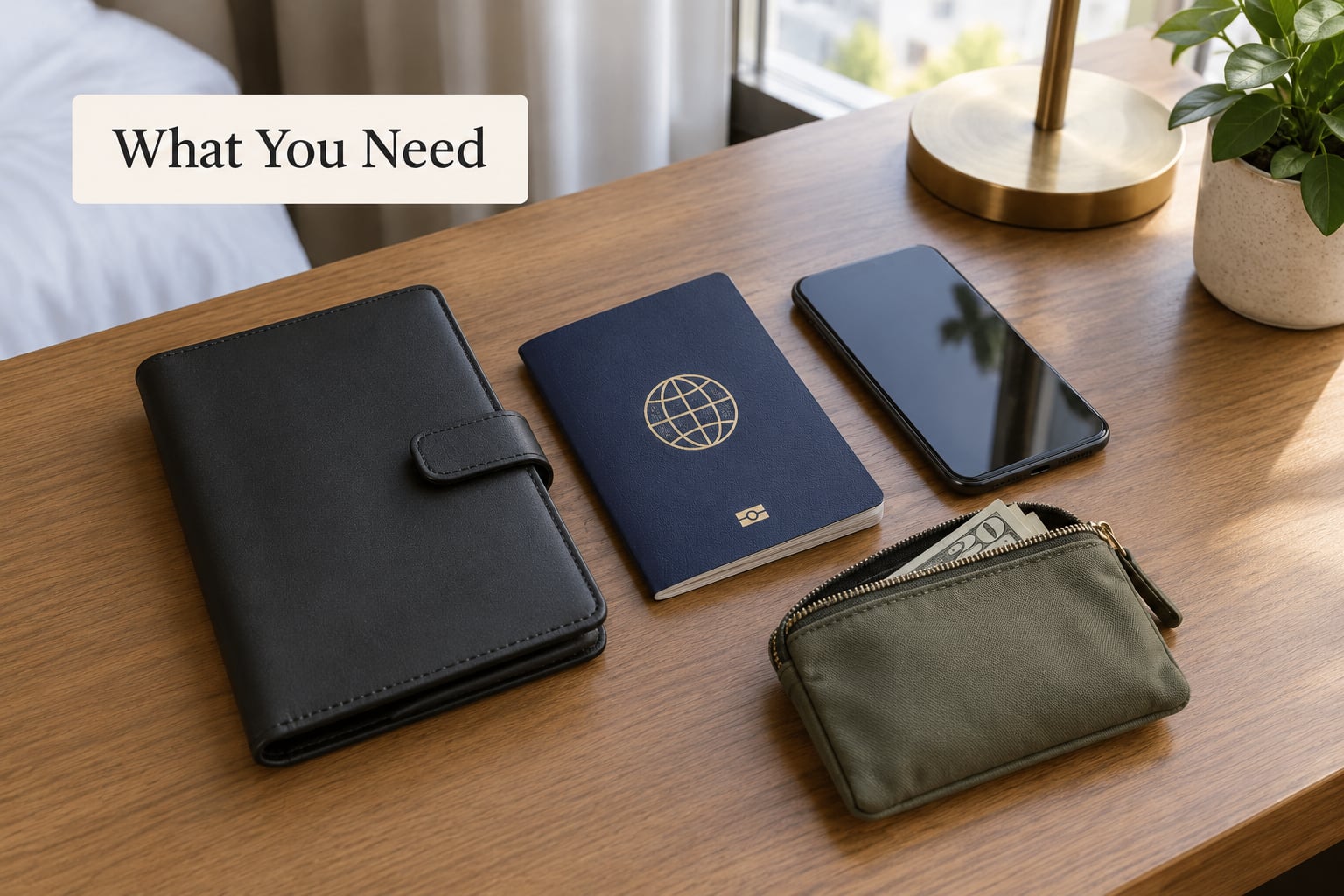
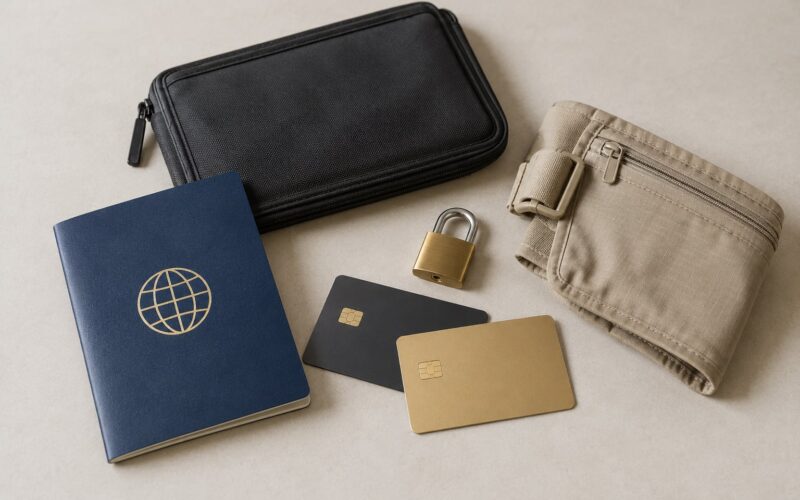
Two cards from different networks. A single card leaves you with nothing if it is swallowed, retained or frozen, so carry a debit card and a credit card issued on a separate network, and keep them in different places rather than the same wallet slot.
A travel notice in the banking app, plus a note of the international support number. The number on the back of your card is often the one that does not work outside your home country, so save the international one in your phone before you fly.
A few notes in the local currency for the first day. Arriving with zero cash and a card that gets declined is the single worst combination, so arrive with enough to cover transport and one meal until you can reach a bank.
A phone photo of the front and back of your card, with the number to cancel it. Photograph the back, but cover the signature strip when you store the image, and keep it somewhere you can reach without unlocking your main wallet.
Transaction alerts switched on in the app. These are the fastest way to catch a skimmed card, a double debit, or a withdrawal you did not make.
Step-by-Step
How to Use ATMs Abroad Safely Before You Leave
Tell your bank where you are going and when you are coming back. Most major banks set a travel notice from the app or the online banking site in under two minutes, and without one, a fraud system may freeze your card on a purchase in a country it has never seen you visit. This is the single most-repeated piece of advice in travel forums, and it costs nothing.
Set a low daily withdrawal limit while you are away. Limits commonly sit somewhere between a few hundred and a thousand in your home currency, and lowering yours caps the damage if the card is cloned. You can raise it again from the app if a big purchase genuinely needs it.
Ask the bank two questions before you go: what is the international withdrawal fee, and is there a separate foreign transaction fee on top? Knowing the answer stops you from guessing at the airport counter and lets you plan how much cash to take.
Finally, download the banking app. Wi-Fi abroad is unreliable and roaming data gets expensive, but the app is what lets you check a transaction, freeze a card and raise a dispute from a hotel room at midnight.
How to Use ATMs Abroad Safely at the Right Bank
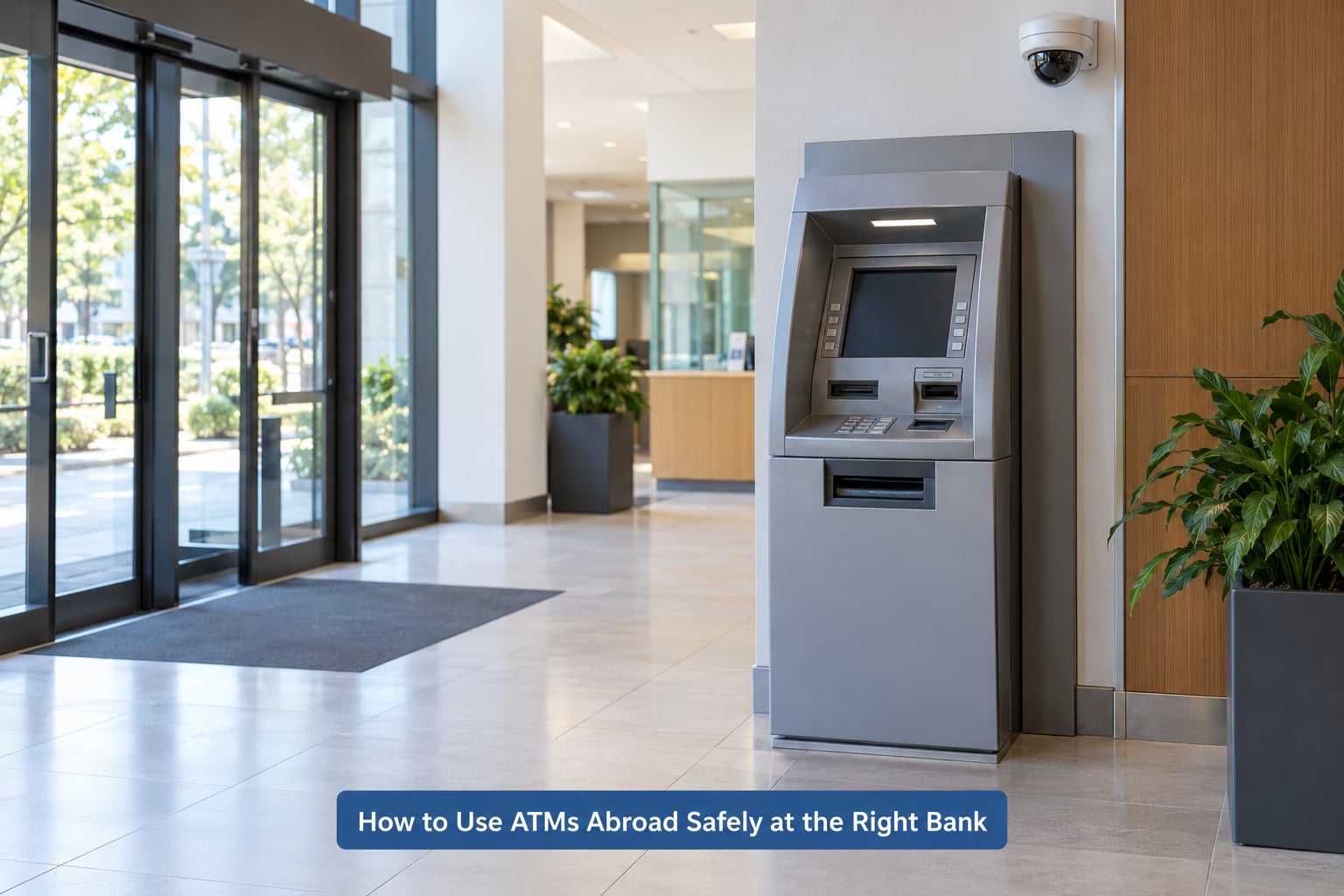
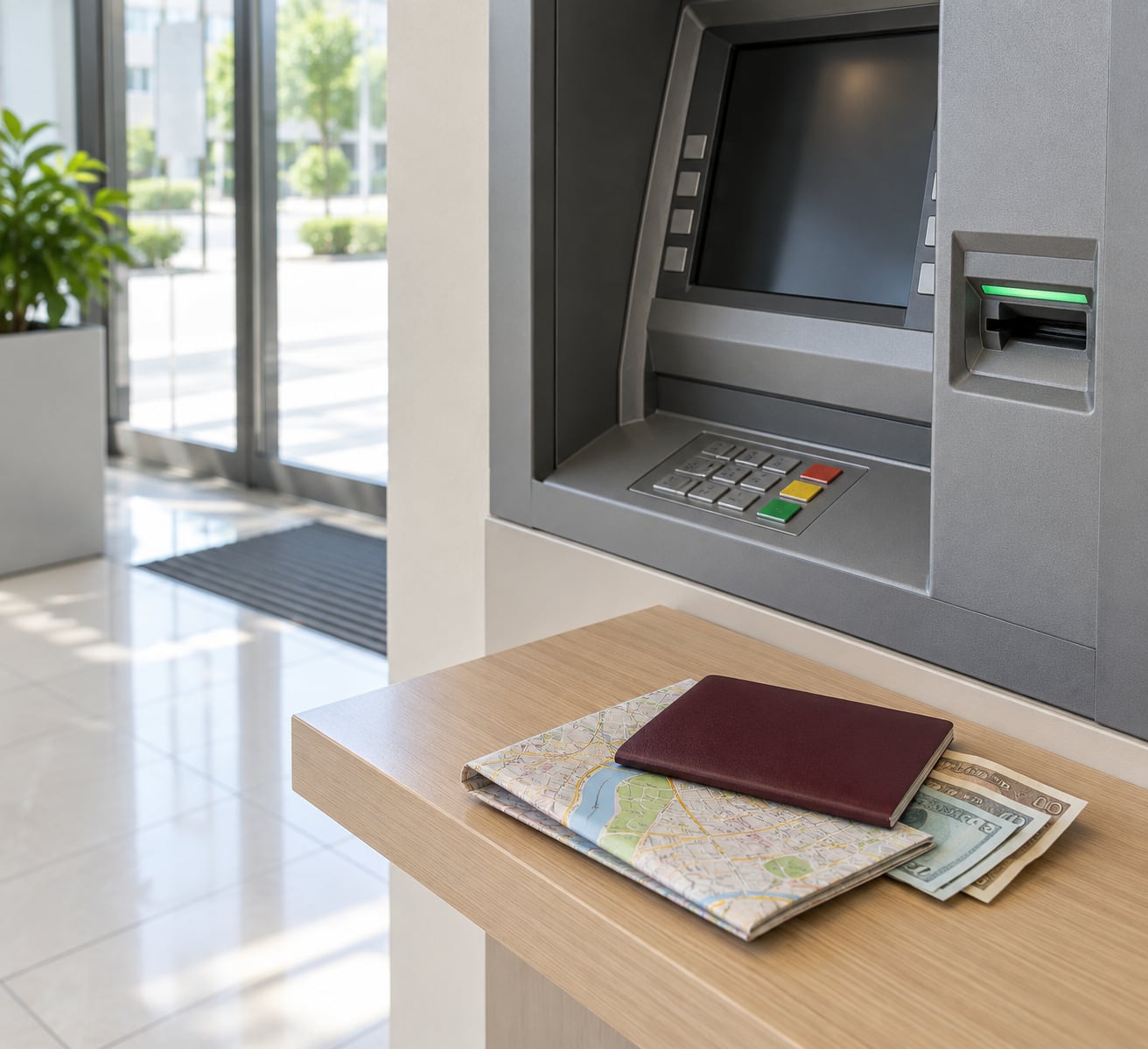
Prefer a machine inside a bank, ideally through a security lobby with a door. Outside banking hours the lobby is often closed, which is still better than a street kiosk. Anything built into the wall of a bank branch, or immediately beside one, is a reasonable second choice.
Steer clear of independent operators such as Travelex, Euronet, Cardpoint, Your Cash and Cashzone. They charge more, they set their own exchange rate, and a growing number sit a few metres from a bank ATM precisely so tourists grab the wrong one. Airport arrival halls are the most expensive place of all to withdraw.
Stand at the machine for ten seconds before you touch it. Check that the card slot is flush with the faceplate and not sitting loose or sitting proud of it, that the keypad has no raised plastic film or overlay, and that there are no odd stickers telling you to call a number or scan a code to continue. A skimming device is usually a cheap plastic sleeve fitted over the slot or a thin film stuck to the keypad.
Look at who else is using the machine. If someone is lingering, watching your hands, or repeatedly inserting a card that fails, walk away and find another. If the machine looks tampered with, report it to the bank branch inside rather than using it and hoping for the best.
How to Use ATMs Abroad Safely During the Withdrawal
Shield the keypad with your hand as you type your PIN. Shoulder surfing is the oldest attack there is and it costs an attacker nothing to memorise four digits. Turn your body slightly away from anyone standing close, and if the machine has a privacy hood, use it.
When the screen asks whether you want the amount in your home currency or in local currency, always choose local currency. The home-currency option is dynamic currency conversion, and the machine is offering to do the conversion itself at a rate it sets, usually three to eight percent worse than the rate your card network gives you. Decline it every single time.
Take only what you asked for and count it while you are still at the machine, in your hand, away from the screen. Shortchanging at street ATMs happens more often than card theft in many countries, and it is much harder to prove if you leave first.
Put the cash away before you pocket the card and before you walk off. Skimmers capture card data during the transaction, but an open wallet on a busy street is a far easier target than a card that never leaves your hand.
One more trick worth knowing: ask for an odd amount. In some countries machines dispense large notes, and a 200 note in a small town or a market that cannot break it is effectively unusable.
How to Use ATMs Abroad Safely After the Transaction
Wait for the cash and the receipt before leaving the screen. Some machines take a minute to settle the balance and show the rate applied.
Keep the receipt until you have checked your account. It shows the exchange rate, the amount withdrawn and the machine identifier, and that information is exactly what you need if a charge looks wrong.
Check the transaction in your app within a few hours, not at the end of the day. Double debits show up quickly, and reporting one the same afternoon is far easier than arguing with a statement a week later when you are home.
Note the rate if you plan to withdraw again. If the machine converted your money badly, you know not to go back to that operator, and you can decide whether to take more or less cash next time.
What to Do If a Foreign ATM Seems Suspicious
Stop and walk away if the card slot resists, the keypad feels sticky or springy, or the screen asks for a PIN twice in a row. Do not force the card out. Prying at a slot is how cards get torn and left half inside a machine.
Do not walk away from a machine that says it has retained your card, even for thirty seconds. A false message about being out of network or out of cash is a known trick to get you to leave your card unattended. Call the number printed on the machine, in person, or go into the branch next door.
If you do lose a card to a machine, keep the receipt and get the machine’s identifier and address before you leave. Photograph the machine, the terminal number and the surrounding area while you are still standing there.
Call your bank’s international number straight away and ask for the card to be blocked. Then contact the branch that owns the ATM and ask them to confirm the card is inside. If you suspect cloning, file a report with local police as well, because your bank will usually ask for it.
How to Avoid Common ATM Fees Abroad
There are four separate costs, and travellers usually only notice one of them. Understanding who charges each is the fastest way to cut the cost of a withdrawal.
| Fee | Who charges it | Typical amount | How to reduce it |
|---|---|---|---|
| Foreign transaction fee | Your bank | 0 to 3 percent of the amount | Use a card with no foreign transaction fee |
| International withdrawal fee | Your bank | Flat fee per transaction, sometimes plus a percentage | Fewer, larger withdrawals instead of many small ones |
| ATM operator surcharge | The owner of the machine | Low single-digit amount, higher at kiosks and airports | Use a machine inside a bank |
| Currency conversion markup | The ATM operator, if you accept it | 3 to 8 percent above the interbank rate | Always choose local currency |
The markup on dynamic currency conversion is the one that hurts most, and it is entirely optional. Ask for a larger amount in local currency and the card network converts it at the interbank rate, then your bank adds only its own fee.
Withdraw in the morning when you are alert and the bank is open, then stop for the day. Fewer withdrawals means fewer flat fees, and one bigger withdrawal beats three small ones.
Use your card’s network locator in the banking app to find machines before you need them. Machines run by a partner of your own bank usually cost you the least.
Use ATMs abroad for cash only, and pay with the card for everything else. Card payments avoid the withdrawal fee entirely, though the foreign transaction fee still applies unless the card is one of the no-fee travel products.
How to Handle ATM Problems in a Foreign Country
If your card is declined, stop after one attempt. Repeated retries can trip a fraud block, and that turns a small problem into a locked account in another time zone.
Check the most common causes in order: a daily limit quoted in your home currency that may be lower than the local amount the machine is asking for, an expired card, a PIN the machine will not accept, or a machine that has simply run out of cash and will not say so.
If the bank blocks the card, call the international number with your card number, your full name, your date of birth and the dates and countries of your trip. That is normally enough for a human to lift a block, and it takes less time than most travellers expect.
If the machine runs out of cash mid-session or loses power, press cancel, wait for the screen to reset and take your card before leaving. A machine that has not returned your card while still powered is not a power failure, it is a problem you should resolve on the spot.
Never leave a declined card attempt unresolved with cash already taken. If the money came out and the receipt did not print, photograph the machine and contact the bank the same day.
Common Mistakes
Using the first ATM you see. The nearest machine is usually the one charging you the most. Walk two extra minutes to a bank lobby or a branch-attached machine and the surcharge usually disappears.
Accepting the home-currency option. The screen is usually pre-set to the more expensive choice. Press the local currency option every time, even when the amount you want is already shown in your own money.
Sharing or writing down your PIN. Nobody who works in a café, hotel or taxi needs it, and no bank ever asks for it. If you cannot remember a four-digit PIN, get it changed before you leave.
Withdrawing a large amount in one go. One big withdrawal carries all the risk of a lost or cloned card. Take what you need for two or three days, and add more when you are ready to handle the risk again.
Ignoring transaction alerts. An alert on a withdrawal you did not make is the earliest warning you will get. Respond the same day, not when you get home.
Walking away from a machine that kept the card. Stay, call the number on the machine, and go into the branch next door if there is one. A card left unattended can be cloned before you reach the next street.
Trying again and again after a decline. Two failed attempts are enough to trigger a fraud block in most systems. One attempt, then call the bank.
The safest single habit is this: treat the machine, not just the cash, as the thing you are being careful about. The fee you overpay is annoying, but a skimmed card is a problem that follows you home.
Frequently Asked Questions
Are bank-owned ATMs safer than standalone ATMs abroad?
Yes, generally. Machines inside a bank lobby or built into a branch wall are maintained by the bank, sit in a staffed area, and usually charge the cardholder nothing beyond their own bank’s fee. Independent operators such as Travelex, Euronet, Cardpoint and Your Cash set their own surcharges and exchange rates, and are far more likely to sit on a busy street. The one exception is when the bank foyer is locked after hours.
Why did my card get declined even though I had enough money?
Most often it is a daily withdrawal limit quoted in your home currency. If your limit is 300 and the machine asks for 300 euros, the local amount exceeds what the bank authorises and the machine reads that as insufficient funds. Other causes include an expired card, a PIN the machine will not accept, an uncounted cash advance block, or a machine that is out of cash. Stop after one failed attempt and call your bank.
Should I choose the local currency or my home currency at an ATM?
Always choose the local currency. The home-currency option is dynamic currency conversion, where the machine converts the money itself at a rate it sets, typically three to eight percent worse than the interbank rate your card network offers. If you choose local currency, the network converts it and you pay only your bank’s own fee. The only reason to accept the conversion is convenience, and even then the difference on a few hundred units is real money.
What should I do if an ATM abroad keeps my card?
Do not walk away. Call the number printed on the machine in person, or go into the branch next door and ask them to open it. Photograph the machine, its terminal number and the address before you leave. Then call your bank’s international line and have the card blocked. If cloning is suspected, file a local police report, because most banks ask for the reference before they will investigate.
How can I avoid foreign ATM fees?
Use a card with no foreign transaction fee, withdraw from a machine inside a bank, and always choose local currency. Withdraw less often and in larger amounts so the flat per-transaction fee is charged fewer times. Check your bank’s international fee and daily limit before you leave, and use the app’s ATM locator to find partner machines. Paying by card instead of cash avoids the withdrawal fee, though the foreign transaction fee may still apply.
What is the safest way to carry money when traveling internationally?
Split it across three places: most of your money on a card, some as a small amount of local cash for the first day, and a backup card on a different network in a separate bag. Carry no more cash than you would be comfortable losing in one moment, and pickpocket risk rises sharply around stations, festival crowds and late-night bars. Avoid carrying everything on one card, because one declined transaction then becomes a travel emergency.
Conclusion
The safest sequence is short enough to memorise: notify your bank, carry a backup card on a different network, use a machine inside a bank, inspect the card slot, shield the PIN, choose local currency, count the cash before you step away, and check the transaction the same day.
Start with the bank. A two-minute travel notice and a lowered daily limit cost you nothing, and they remove the two failures that strand travellers most often. Everything after that is habit at the machine, and habit is easier to build at home than in a foreign queue with people behind you.