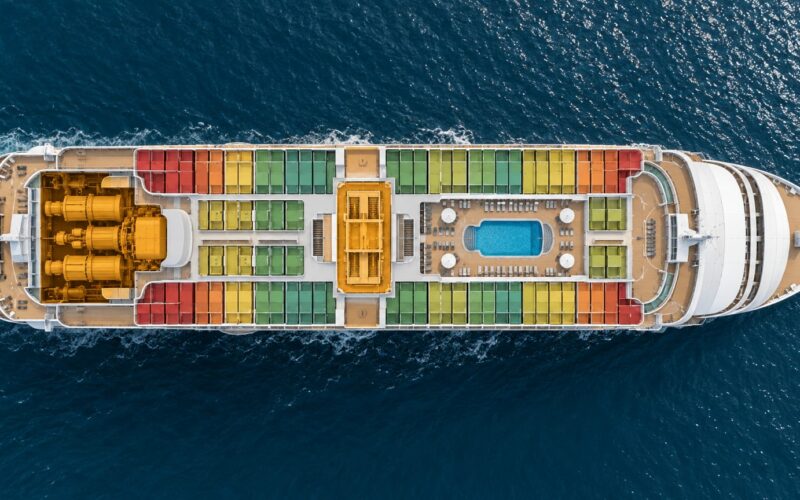
What is included in a cruise fare is the practical core of the trip: your stateroom, meals in the main dining room and buffet, non-alcoholic drinks such as water, coffee, tea and juice, onboard entertainment, pools and hot tubs, the fitness center, kids clubs and most daytime activities. Everything beyond that — gratuities, taxes and port fees, drink packages, specialty dining, shore excursions, Wi-Fi and travel to the port — is charged separately.
That split is why two people can book the same cabin and come home with wildly different bills. The fare you see advertised is a starting number, not a total. This guide walks through what each cruise line includes, how cabin category changes the deal, and what to check before you hand over any money.
Table of Contents
- 1What Is Included in a Cruise Fare at a Glance
- 2What Is Included in a Cruise Fare by Cruise Line and Cabin Type
- 3What Is Usually Not Included in a Cruise Fare
- 4How Cruise Fare Pricing and Final Bills Work
- 5How to Check What Is Included Before You Pay
- 6Frequently Asked Questions
- 7Is the cruise fare the final price I will pay?
- 8Are drinks and gratuities included in a cruise fare?
- 9Does a cruise fare include airfare or transportation to the port?
- 10Are shore excursions included in the price of a cruise?
- 11Can I add drinks, Wi-Fi, or other packages before sailing?
- 12Why do two cruise fares for the same itinerary differ?
- 13Conclusion: Review the Total Cost Before Booking
What Is Included in a Cruise Fare at a Glance
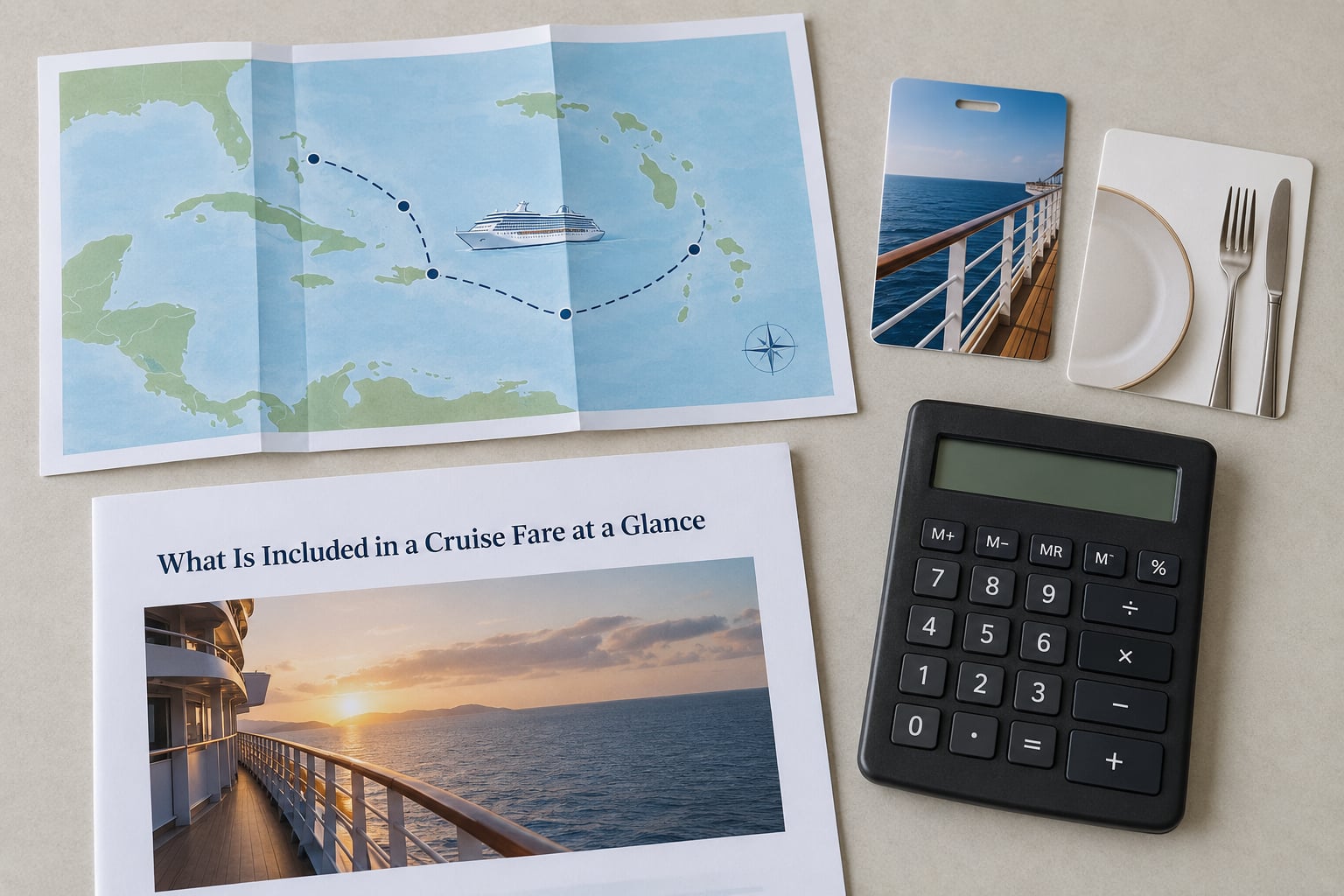
A cruise fare is built in two layers. The base layer bundles the things nearly every sailing gives you without an extra charge, because the line needs you fed, housed and entertained for a week. The second layer holds everything optional, which is where most first-time surprises live.
| Usually included in the fare | Usually costs extra |
|---|---|
| Stateroom for the length of the sailing | Gratuities added daily to your onboard account |
| Government taxes and port fees | Airfare and flights to the departure port |
| Main dining room meals, breakfast and dinner | Room service delivery, often with a flat fee per order |
| Buffet and casual dining venues | Specialty restaurant cover charges |
| Tap water, iced tea, lemonade, juice and coffee | Soda, bottled water and premium coffee drinks |
| Theater shows and most live music | Alcohol by the glass or a drink package |
| Pools, hot tubs and public sun decks | Private cabanas and reserved lounge areas |
| Fitness center and basic group classes | Personal training and paid classes such as yoga or boxing |
| Kids and teen clubs during posted hours | Nursery care and private babysitting after hours |
| Shipboard activities such as trivia and game shows | Casino tables, arcade games and paid bingo |
| Port-to-port itinerary stops | Shore excursions booked at each port |
| Use of the ship itself, from embarkation to disembarkation | Pre- and post-cruise hotels, transfers and parking |
| Some shipboard credit applied to your account | Spa treatments, salon services and thermal suites |
| Access to the ship’s public spaces and observation decks | Shipboard photos, shopping and internet purchases |
| Standard entertainment at no charge | Internet access and streaming packages |
| Kids eat free at many specialty venues | Guests eating at those same specialty venues |
| Daily activity schedule and printed or app guides | Premium add-ons bought before you sail |
Read that table as a pattern rather than a contract. Every line words its inclusions slightly differently, and a specific sailing can change what is offered. The daily activity schedule delivered to your cabin each morning is the most reliable answer to what is free that day.
What Is Included in a Cruise Fare by Cruise Line and Cabin Type
Mainstream lines give you the full base package described above. Premium, adults-only and luxury lines fold more into the fare, and they also charge more for the privilege. Cabin category matters almost as much as the line itself.
| Cruise line type | Adds to the base fare | Still charged separately |
|---|---|---|
| Mainstream (Carnival, Royal Caribbean, Norwegian, MSC) | Buffet, main dining room, kids clubs, entertainment, fitness center | Specialty dining cover, alcohol, excursions, Wi-Fi, gratuities |
| Premium (Princess, Holland America, Celebrity) | Some premium coffee, more specialty dining access, better spa facilities | Alcohol, excursions, premium spa treatments |
| Adults-only (Virgin Voyages, some lines’ adults decks) | All dining venues, more included drinks, sometimes a basic Wi-Fi tier | Shore excursions, spa treatments, port transfers |
| Luxury (Regent, Seabourn, Oceania) | Prepaid gratuities, unlimited alcohol, all dining, sometimes unlimited excursions | Flights to the ship, visas, and shore excursions on lines that limit them |
| Family-focused (Disney) | Soda fountain, extended kids club hours, more included character dining | Adult-only areas, some character meals, excursions |
Cabin category changes the inclusions more than most people expect. An interior cabin gets the same food, pools and entertainment as an oceanview cabin; what you lose is light and a window, not access.
A balcony or suite adds space and often adds perks: priority seating in the main dining room, extra onboard credit, lounge access, free laundry on many lines, and sometimes a dedicated restaurant. Suite guests on several mainstream lines get club-level benefits that stateroom guests do not, including separate dining rooms and expanded drink benefits during certain hours.
Loyalty status is the other lever. Repeat cruisers on major programs often receive credit applied to the onboard account, priority embarkation, or drink packages at reduced rates. That value is real but it belongs to the second sailing, not the first.
What Is Usually Not Included in a Cruise Fare
These are the charges that catch people out, listed roughly in the order they surprise them.
- Getting to the ship. Airfare, trains, taxis, airport parking, and the pre-cruise hotel night many itineraries require you to buy.
- Travel insurance and visa or passport fees. Neither appears in the fare, and both are cheaper to arrange before you sail than after.
- Alcohol. Beer, wine and cocktails are extra unless you buy a package or your fare includes unlimited pours.
- Soda, bottled water and specialty coffee. Tap water, iced tea, lemonade, juice and standard coffee stay free, which is the single most common complaint on cruise forums.
- Specialty dining. Cover charges apply per visit on most lines, and some venues price by the course rather than the night.
- Shore excursions. Independent tours in port are separate purchases either way.
- Spa and salon services. Even a short thermal suite pass is a paid amenity, and an automatic gratuity is added on top of treatments.
- Wi-Fi. Ships sell connectivity by device and by day, and the packages range from message-only to full streaming.
- Late-night room service. Delivered food after the dining rooms close carries a flat service fee per order, charged whether you order two items or five.
- Casino, arcade and paid activities. Game tables, bingo sessions, escape rooms and similar events charge per play or per session.
- Shipboard photography and shopping. The photographer, the photo package and the boutique are all paid purchases, never bundled.
- Childcare outside club hours. Group clubs are usually free while posted; nursery care and evening babysitting are not.
One practical note from cruisers planning their first trip: a small set of prepaid purchases usually beats adding everything onboard. Prepaid gratuities, a couple of excursions and one or two dinners in a specialty restaurant are the common middle ground, and it keeps the final bill predictable.
How Cruise Fare Pricing and Final Bills Work
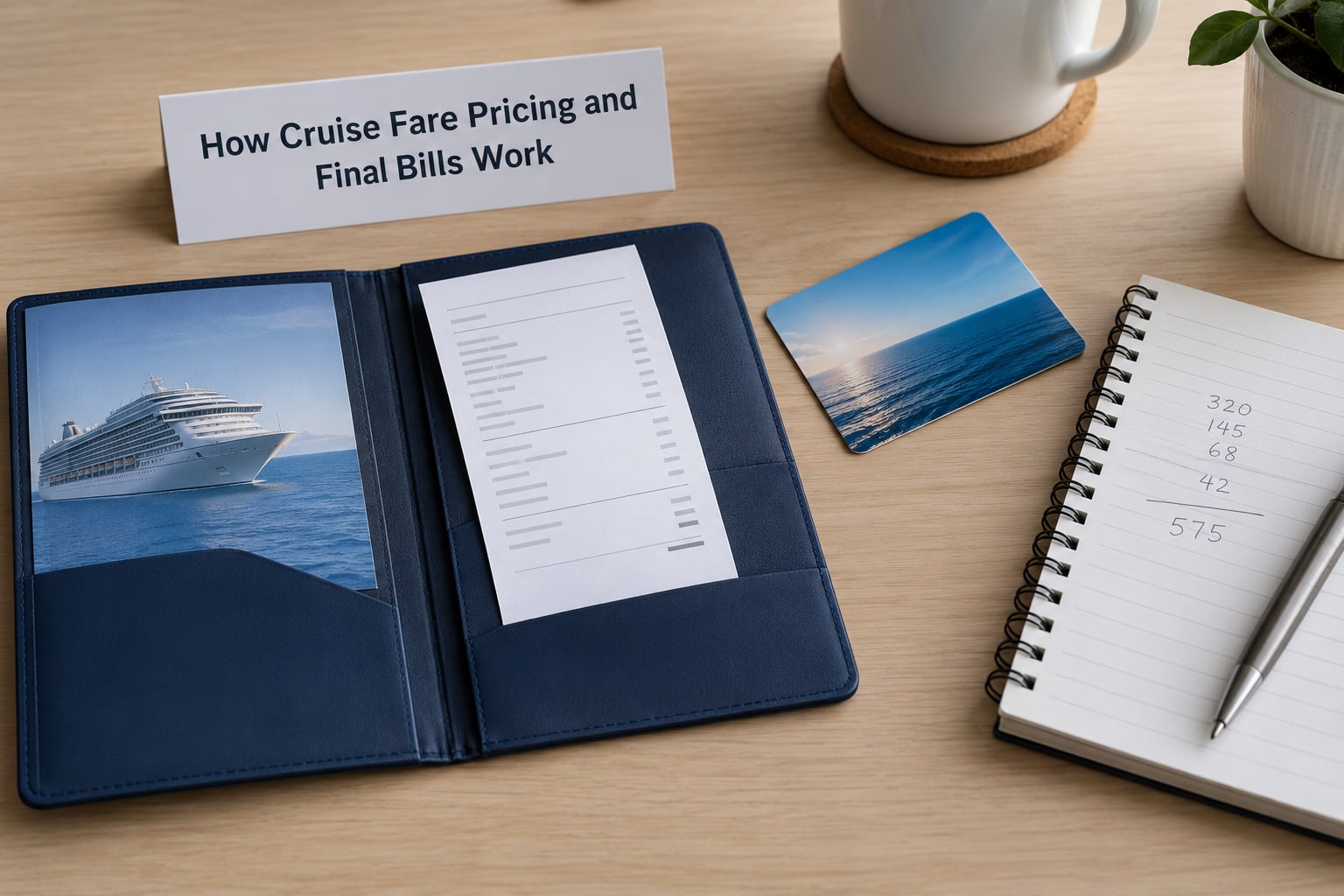
Your final bill is the sum of four separate things, and the gap between them is where surprises live.
The advertised fare is the headline number per passenger, usually quoted for an interior cabin and often for a second passenger in the same cabin. It usually already contains government taxes and port fees, which is why a quote looks higher than a bare hotel rate does.
Gratuities appear as a daily charge per passenger rather than one lump. Mainstream lines typically add a rate in the mid-teens per person per day, premium and luxury lines sit higher, and some lines prepay the whole amount at booking with no daily line item at all. Day one and the final night are usually prorated, which is why the first and last entries look different from the middle ones.
Prepaid packages for drinks, Wi-Fi, specialty dining and excursions are charged when you buy them, days before you board. That timing matters: money committed before sailing shows up on your statement, while anything you add onboard appears daily on your onboard account.
Onboard charges are the ones that produce the end-of-trip bill. Every room service order, drink, spa visit, photo purchase, casino chip and internet session is rung against your stateroom card. The line prints that running total on your account screen, and most people check it once a day. Checking it nightly is the difference between a surprise and a small correction.
Worked through simply, a seven-night sailing for two usually comes to an advertised fare for the pair, plus a day-one and last-day gratuity entry, plus any package you bought ahead of sailing, plus whatever the onboard account accumulated during the week. Taxes and port fees are normally already inside the advertised figure. The exact numbers move constantly by line, ship and sailing, so treat any range you see quoted as a snapshot rather than a quote.
Drinks packages have their own arithmetic worth doing before you board. Count the alcoholic drinks each of you would otherwise buy per day, compare that with the package rate, and remember that non-alcoholic drinks are already free. Many cruisers buy a package for one partner and pay as they go for the other, which is a common middle path.
How to Check What Is Included Before You Pay
Work through this list before you book, not after.
- Find the line’s official inclusions page for the specific ship, not just the line. Ships within one line differ more than ships from different lines do.
- Read the fare breakdown on the quote, which separates the base fare from taxes, port fees and any package you added.
- Confirm your cabin number and category, then check what that category alone adds: dining priority, lounge access, credit, laundry.
- Look up the gratuity rule for your sailing, whether it is daily, prepaid or optional, and how the first and last nights are handled.
- Check the beverage and Wi-Fi package terms, including refund deadlines, since most can only be cancelled before a cut-off date.
- Read the promotion fine print for deposit terms, refundability and any “non-refundable” language before you confirm.
- Ask the cruise line directly about anything unclear, in writing, and keep the reply.
If you only do one thing, open the line’s inclusions page for your exact ship and write the base fare and the not-included list side by side. That single comparison turns an opaque price into a budget you can plan against.
Frequently Asked Questions
Is the cruise fare the final price I will pay?
Usually not. The advertised fare covers your stateroom, most meals, entertainment and standard activities, plus government taxes and port fees. Gratuities, drink packages, specialty dining, shore excursions, Wi-Fi, spa visits and anything you buy onboard are added afterwards. Lines quote fares per passenger, and a second guest in the same cabin sometimes carries a different rate.
Are drinks and gratuities included in a cruise fare?
Non-alcoholic drinks generally are. Tap water, iced tea, lemonade, juice and standard coffee and tea stay free all voyage. Soda, bottled water, premium coffee drinks and alcohol are extra unless your fare includes them or you buy a package. Gratuities are a separate charge, usually per person per day, and some lines prepay them at booking instead.
Does a cruise fare include airfare or transportation to the port?
Almost never. Flights, trains, taxis, airport parking and port transfers sit entirely outside the fare, as do pre- and post-cruise hotels and travel insurance. Many itineraries depart from a home port early in the morning, which makes a flight the night before risky and a hotel night a common, sensible choice. Budget for these separately from the moment you start comparing fares.
Are shore excursions included in the price of a cruise?
The ship still visits the port, but tours are not part of the fare. You can book them through the cruise line, through an independent local operator, or skip them and explore the port on your own. Cruise-line excursions cost more but include the guarantee of returning in time to sail. Independent tours are cheaper and less protected. Lines like Regent include unlimited excursions on some sailings.
Can I add drinks, Wi-Fi, or other packages before sailing?
Yes, and most people should. Drink packages, Wi-Fi plans, specialty dining credits and excursions can all be attached to your booking well in advance, usually at the same cost as buying them later. Prepaid items also reduce the daily charges that appear on your onboard account. Check each package’s cancellation deadline, since most cannot be refunded once the sailing approaches.
Why do two cruise fares for the same itinerary differ?
Cabin category, cabin number, booking date and promotion terms all move the number. A mid-ship balcony sold early sits well below the same cabin sold weeks later. Third and fourth passengers in one room are often priced differently, promotions come and go, and loyalty status can add onboard credit. Compare fares for the same cabin number, not just the same itinerary label.
Conclusion: Review the Total Cost Before Booking
A cruise fare reliably covers your cabin, your meals in the main dining rooms and buffet, non-alcoholic drinks, entertainment, pools, the fitness center, kids clubs and the itinerary itself. What sits outside that number, and by how much, depends on the cruise line, the cabin you pick and the packages you attach to the booking.
Before you pay, open the inclusions page for your exact ship, note the fare breakdown and the gratuity rule, then add flights, a hotel night and insurance to the total yourself. Do that on the first comparison and the final bill stops being a shock.