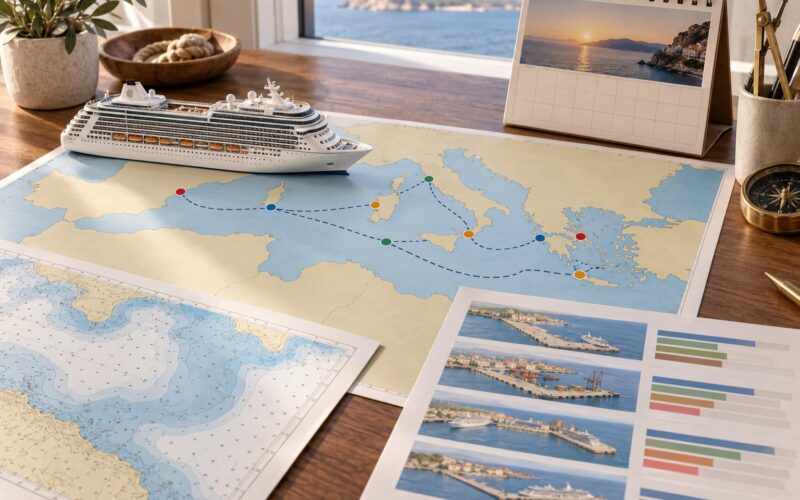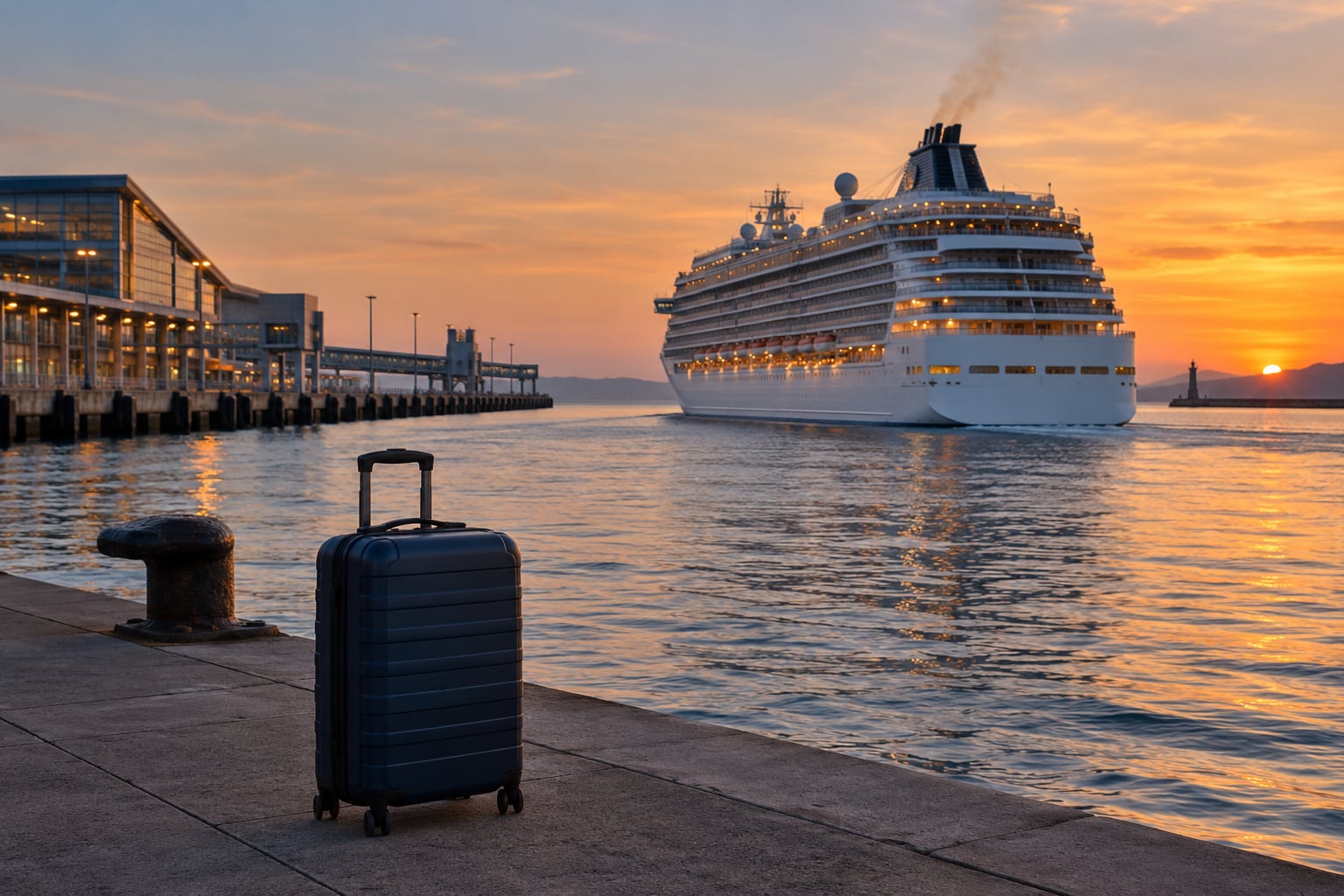
If you miss the ship at a port, the gangway lifts at all-aboard time and the vessel sails on schedule without you. The cruise line’s port agent becomes your one official contact, and you either buy your own transport to the next port of call or fly home. You pay for that, in almost every case.
Updated for 2026. This guide covers the recovery steps, the money side, and the habits that stop it happening at all.
Table of Contents
- 1What Happens If You Miss the Ship at a Port?
- 2Why the ship leaves on time
- 3Do You Lose Your Cruise If You Miss the Ship?
- 4What happens if you miss the ship at a port on the final day
- 5What Should You Do Immediately After Missing the Ship?
- 6Can You Board a Later Port and Rejoin the Cruise?
- 7How Does Missing a Port Differ From Missing the Ship?
- 8What Costs Can You Owe After Missing the Ship?
- 9Will the Cruise Line Help You Get Back on Board?
- 10Habits that stop this happening
- 11Frequently Asked Questions
- 12Can I rejoin a cruise ship at the next port after missing it?
- 13What happens if I return to the port after the ship has left?
- 14Do I get a refund if I miss the ship during a cruise?
- 15What if my passport is still in my cabin when I am left behind?
- 16Will the cruise line pay for a hotel and transportation after I miss the ship?
- 17Is missing a port excursion the same as missing the cruise ship?
- 18What to Do First If You Miss Your Ship
What Happens If You Miss the Ship at a Port?
Ships do not wait. There are thousands of passengers on board, a berth to vacate, and a fixed arrival window at the next port, so a vessel that lingers for one straggler costs the schedule for everyone else.
Why the ship leaves on time
Three things make the deadline real. The port charges by the hour, the captain is working around tide and berth windows, and the next port’s berth is booked for a specific arrival. CruiseCritic forum regulars put it plainly: the time the ship sails and the time you need to be aboard can be two different things, and only the second one matters.
All-aboard time is the deadline printed on your daily programme, usually 30 to 60 minutes before the scheduled departure. Ship time is the clock the crew use, and it does not always match the local time in the port town. A one-hour difference is enough to turn a relaxed lunch into a missed gangway.
Cruise people who get left behind at a port are sometimes called pier runners. You will also hear the term used for the local transport workers who race cruise guests to the terminal for a fee. Either way, the situation is the same: the ship is gone and you are ashore.
Do You Lose Your Cruise If You Miss the Ship?
Usually not in the sense of losing the booking on paper. What you lose is the sailing, and the fare refund is a separate question that the cruise line decides case by case based on the contract terms and the cause of the delay.
Three situations get blurred together constantly, and they lead to very different outcomes.
- You miss the initial departure. You are flying into the embarkation port and your flight is delayed. Nothing has started yet, so a rebooking is often possible, though not always free.
- You miss the ship after going ashore mid-cruise. This is the common case. Your stateroom is still aboard, your passport and medication are in a safe in that cabin, and the ship is somewhere ahead of you.
- You miss a shore excursion return. If you are simply late back to the pier, you have usually missed the ship. There is no grace period at the gangway.
What happens if you miss the ship at a port on the final day
This is the harshest version, because there is no next port. The ship completes its voyage, your stateroom is emptied, and getting your belongings back means dealing with the line’s home office rather than a port agent. CruiseCritic boards fill with exactly these stories: luggage forwarded, passports returned by courier, a fare credit offered as a goodwill gesture rather than a refund.
What Should You Do Immediately After Missing the Ship?
Work through this in order. The first hour decides whether you rejoin the ship or start booking flights home.
- Find the port agent, not the ship’s phone booth. Every cruise line with a US or Canadian port office keeps a local representative, usually reachable from the terminal or through the cruise line’s 24-hour number. This person is your official link to the ship.
- Hand over anything that is not yours to carry. The agent will often hold your passport, cruise card, medication and phone, and can get them to the ship or courier them to you. Do this early, while the vessel is still within reach of the port.
- Ask what the next port of call is and when it arrives. You need the exact date, time and berth, and whether the line will authorise you to board there. Get the answer in writing by email before you spend anything.
- Call the cruise line yourself as well. Ports where the ship is not calling, or itineraries that skip a port because of weather, can leave you with no way to rejoin at all. A TripAdvisor poster who missed a Scottish sailing after an airline delay was caught up by the line, but only because the airline had been booked through the cruise line in the first place.
- Arrange your own transport. Independent tours, ferries, domestic flights or an open-jaw ticket home. Travellers chase last-minute inter-island seats and describe the quotes they are given as brutal.
- Photograph everything and keep every receipt. Hotel, transport, meals. If the delay was caused by the line, those receipts are the basis for a claim later.
Have these ready: your booking number, the ship’s name and sailing date, the port agent’s direct number, the ship’s phone number, a copy of your travel insurance policy and its 24-hour hotline, and the address of your nearest embassy or consulate. If your passport is in a shore excursion locker or a taxi, say so early because it changes the plan completely.
Can You Board a Later Port and Rejoin the Cruise?
Often yes, but it is permission, not a right. The cruise line has to approve you onto the manifest, and the port and the ship’s national registration both have to accept the paperwork.
US reboarding rules are the part most guides gloss over. US-flagged passenger vessels have federal limits on carrying passengers who joined outside the United States, and the count of non-US citizens carried at any moment is capped. If your ship is a US-flag vessel and the booking balance is already at the cap, boarding again at a later port can be blocked on legal grounds, not policy. This is a real risk on Caribbean itineraries that start outside the US.
There is also immigration formalities. Leaving a country you entered on a cruise can count as a departure that starts a new admission clock, and some ports will want to see a visa you do not hold because you never planned to set foot there. Ask the line, not a forum.
Tender ports complicate everything. When the ship anchors offshore and ferries guests in, missing the tender is worse than missing the ship: the last tender usually leaves well before the vessel does, and there may be no second one that evening. Grand Cayman and the private islands are the classic cases.
How Does Missing a Port Differ From Missing the Ship?
| Situation | What happens | What to do next |
|---|---|---|
| Late back from a ship-sponsored excursion | The ship waits, or the operator puts you on the next tender and covers the cost | Nothing urgent. Note it and stay later next time |
| Late back from independent touring | No guarantee at all. The ship sails at all-aboard | Port agent, next port, self-arranged transport |
| You return to the pier as the gangway lifts | You are ashore and the ship is departing | Call the cruise line number from the terminal |
| Passport left in your cabin safe | You cannot board anywhere without it | Port agent pulls it and sends it to the next port or your hotel |
| Missed the final day of the cruise | No next port, stateroom is emptied | Port agent, then the cruise line’s home office for belongings |
| Flight delay before embarkation day | Voyage not started, rebooking usually possible | Cruise line immediately, keep airline rebooking documents |
What Costs Can You Owe After Missing the Ship?
Assume you pay. The costs fall into a few buckets, and only some of them are ever reimbursed.
- Transport to the next port of call. Inter-island flights, ferries or overland travel, often at short notice and at peak pricing.
- Accommodation. A night near the port, sometimes two if the next port is more than a day away.
- Meals and incidentals for the stranded day.
- Visa, port fees and immigration charges where a later reboarding triggers an entry you did not plan for.
- Flights home, plus a change fee on any onward ticket.
- An administrative or service charge if the cruise contract allows one when a guest is removed from a sailing.
Who reimburses? CruiseCritic forum members report hotel nights and short-hop flights being covered when the cause sits on the line’s side, such as a delayed port call or a line-arranged flight that misfired. Ordinary lateness is treated as the guest’s problem. Travel insurance usually responds to documented causes, not to a taxi running late, so check the wording before you assume coverage.
Will the Cruise Line Help You Get Back on Board?
Yes, and no. The help is real but it is mostly coordination rather than payment.
The port agent can hold your documents and medication, contact the ship, confirm the next port and berth, tell you whether you may reboard there, and explain what immigration paperwork the port needs. What the agent will not do is book and pay for your hotel, your flight to the next island or your ticket home. A TripAdvisor user who chased all three was told the line would look into reimbursement rather than commit to it.
Lines differ in tone more than in policy. Carnival, Royal Caribbean, Norwegian, MSC and Disney all publish late-passenger procedures with the same bones: contact the port agent, arrange your own travel, follow up in writing. Individual outcomes reported on cruise forums range from genuinely helpful to dismissive, which is another reason to keep every confirmation as an email.
Habits that stop this happening
- Set your watch to ship time the moment you dock, and treat all-aboard as the deadline rather than the sailing time.
- Photograph your passport, driver’s licence front and back, insurance card and the ship’s phone number before you go ashore.
- Carry your passport ashore even where a driver’s licence and birth certificate would satisfy the boarding requirements.
- Book ship-sponsored excursions when you care about the return guarantee; you pay more for the promise that someone knows where you are.
- Build a real buffer into an independent tour. Operators who work cruise ports generally treat four hours as the usable window, not the full port call.
- Fly into your embarkation city a day early if the flight is anything less than guaranteed.
- Keep your passport, medication and a spare card split between your bag and the cabin safe, so one lost wallet is not a lost cruise.
Forum posters describe the same root causes again and again: confusing a five o’clock sailing with a four o’clock all-aboard, booking a cheap third-party tour with no return promise, and getting caught by a one-hour time difference on a route that crosses zones. Norwegian itineraries in particular have drawn complaints for scheduling arrival barely 20 minutes before all-aboard, which leaves no slack at all.
Frequently Asked Questions
Can I rejoin a cruise ship at the next port after missing it?
Often yes, but it needs the cruise line’s approval. They must add you back to the manifest, and the port has to accept your immigration paperwork. On US-flagged ships, federal passenger limits on non-US citizens carried can block reboarding outright. Ask the port agent to confirm in writing before you buy any transport.
What happens if I return to the port after the ship has left?
The gangway lifts at all-aboard time, so you are ashore with the ship moving to the next port of call. Find the cruise line’s port agent straight away. They can contact the ship, hold your passport, medication and phone, and tell you where to go next. You arrange and pay for your own transport to rejoin, or for a flight home.
Do I get a refund if I miss the ship during a cruise?
Rarely, and it is never automatic. The cruise line looks at your contract terms and the cause of the delay. If the line caused the miss, such as a port call cut short or a line-arranged flight that failed, reimbursement or a fare credit is more plausible. If you simply ran late, you are out of pocket. Keep every receipt and put the request in writing.
What if my passport is still in my cabin when I am left behind?
You cannot board the ship again without it, and you may not be able to fly home either. Tell the port agent immediately. They will usually arrange to pull it from your stateroom safe and either send it to the next port of call, courier it to your hotel, or release it to your embassy for an emergency travel document.
Will the cruise line pay for a hotel and transportation after I miss the ship?
In most cases no. The port agent coordinates, but the guest books and pays for the hotel, the transport to the next port and the flight home. Cruise line reimbursement is reported mainly when the delay was the line’s own doing. Keep receipts and claim through the cruise line and your travel insurance, which typically responds only to documented causes.
Is missing a port excursion the same as missing the cruise ship?
Not quite, and the difference matters. If you are late back from a ship-sponsored excursion, the ship usually waits or the operator puts you on the next tender at their cost. An independent shore excursion carries no such promise, so a late return there can leave you ashore for the whole day. Booking through the ship is buying that guarantee.
What to Do First If You Miss Your Ship
Call the cruise line before you do anything else, then find the port agent in the terminal. Stay reachable on the number they give you, because the ship can be reached for a limited window once it clears the berth.
Protect your documents, medication and payment cards, and photograph them where you stand. Before you book a single ticket or room, get written confirmation of the next port of call and whether you are approved to board there. Then book, keep the receipts, and claim costs later if the cause was the line’s.