To do laundry while traveling you have three real options: hand wash a small load in a hotel sink or basin, use a self-service laundromat for anything bigger, or hand the bag to the hotel laundry desk or a wash-and-fold shop. Sink washing takes about 45 minutes and dries overnight; a laundromat takes an hour and comes out fully dry. Most trips need one of the first two, not both.
Updated for 2026. I’ve washed clothes in hotel rooms in about fifteen countries, in hostels in three, and once in a glacier-fed stream at 4,000 metres while waiting out a weather hold. The methods never really change. What changes is how much space you have, how much time, and how damp the air is.
Travel laundry only matters once you’re past about five days. Before that, repeating outfits beats carrying more clothes. After that, a clean base layer changes the whole feel of a trip, and so does not having it.
Table of Contents
- 1What You Need
- 2Step-by-Step: How to Do Laundry While Traveling
- 31. How to Do Laundry While Traveling at a Laundromat
- 42. Use the Hotel Laundry Service When Available
- 53. How to Do Laundry While Traveling by Hand
- 64. Dry Clothes Without a Full-Size Dryer
- 75. Treat Stains and Problem Fabrics
- 86. Pack Clean Laundry for the Rest of the Trip
- 9Common Mistakes
- 10Frequently Asked Questions
- 11Can I wash clothes in a hotel sink while traveling?
- 12How can I prevent travel clothes from getting musty?
- 13Are dryer sheets safe to use in hotel washers and dryers?
- 14What is the easiest way to hand-wash underwear while traveling?
- 15Can I use regular laundry detergent during an international trip?
- 16Conclusion
What You Need
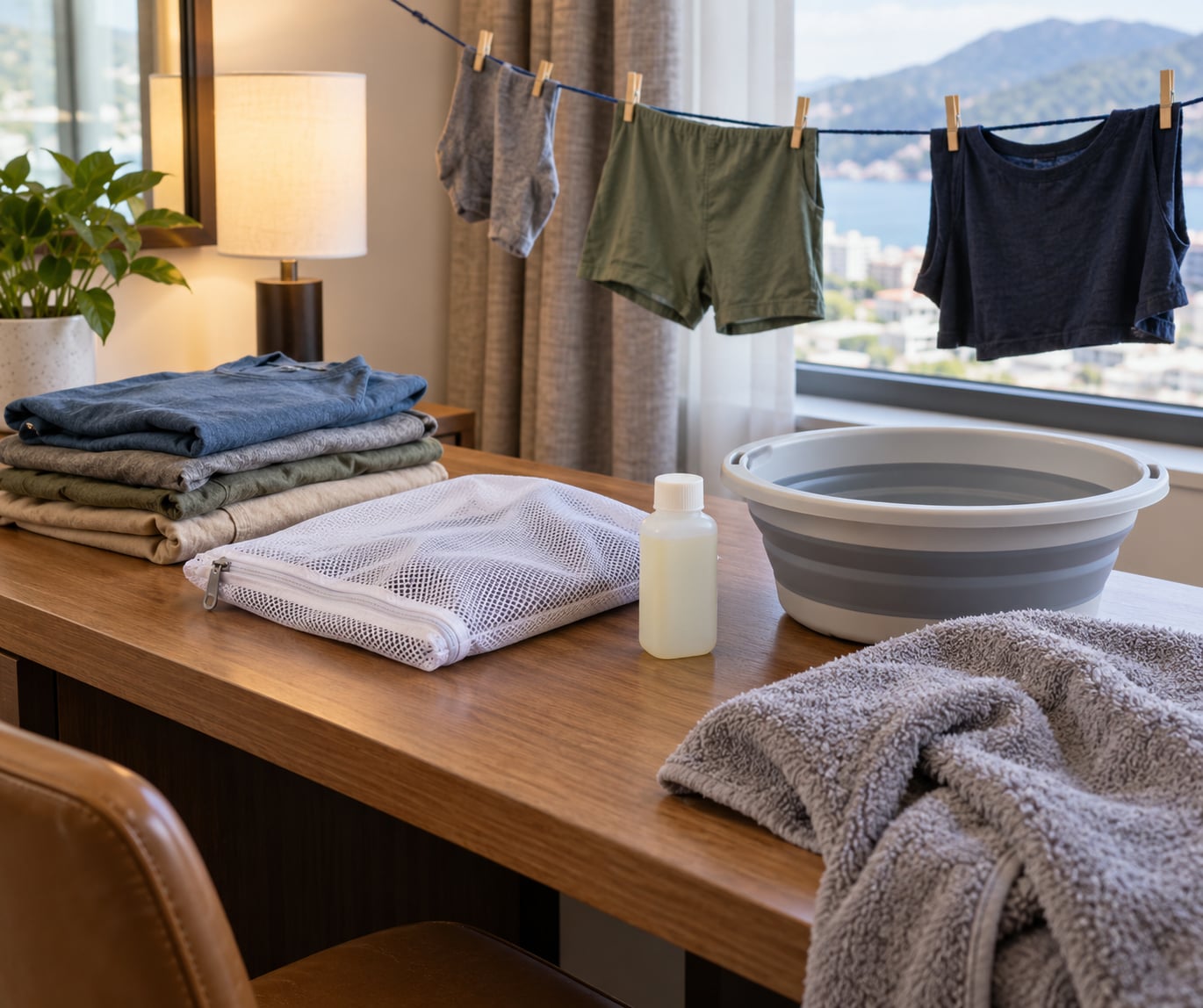
You need very little, and most of it weighs nothing. The essentials are a detergent, something to hold water if your sink lacks a plug, and a way to dry without a full-size machine.
- Travel detergent — liquid in a small bottle or detergent sheets. Sheets win on planes because liquid leaks and single-use pods split and leave powder in your bag.
- A drain plug or basin — a rubber sink stopper, or a foldable bowl if your room has no plug or no sink at all.
- A mesh laundry bag or wash bag — keeps synthetics from tangling, doubles as your dirty-clothes bag, and lets you air out a load.
- Microfiber towel — the single most useful drying tool you can pack. Roll wet clothes into it and squeeze; it pulls out a surprising amount of water.
- A travel clothesline with pegs — a short cord with a few clothespins that fits in a coat pocket.
- A payment method for the laundromat — coins, a contactless card, or a local laundry app, depending on the country. Not every machine takes the same thing.
- Optional: a scrub brush for collars and cuffs, a small spray bottle for diluting detergent, a stain stick or bar of soap, and a dry bag for damp items that are still travelling.
The microfiber towel and the clothesline do the most work per gram. Everything else you can borrow from a bathroom.
Step-by-Step: How to Do Laundry While Traveling
The sequence is the same whichever method you pick, and it runs in this order: choose the method, check the care labels, sort the load, wash it, dry it properly, then repack. Rushing the sort is what makes travelers wash the wrong things, and rushing the dry is what makes them smell worse than before.
1. How to Do Laundry While Traveling at a Laundromat
A laundromat is the right call for anything heavier than underwear, socks and one top — jeans, towels, a week’s worth of tees, anything bulky. Sorting and loading go like this:
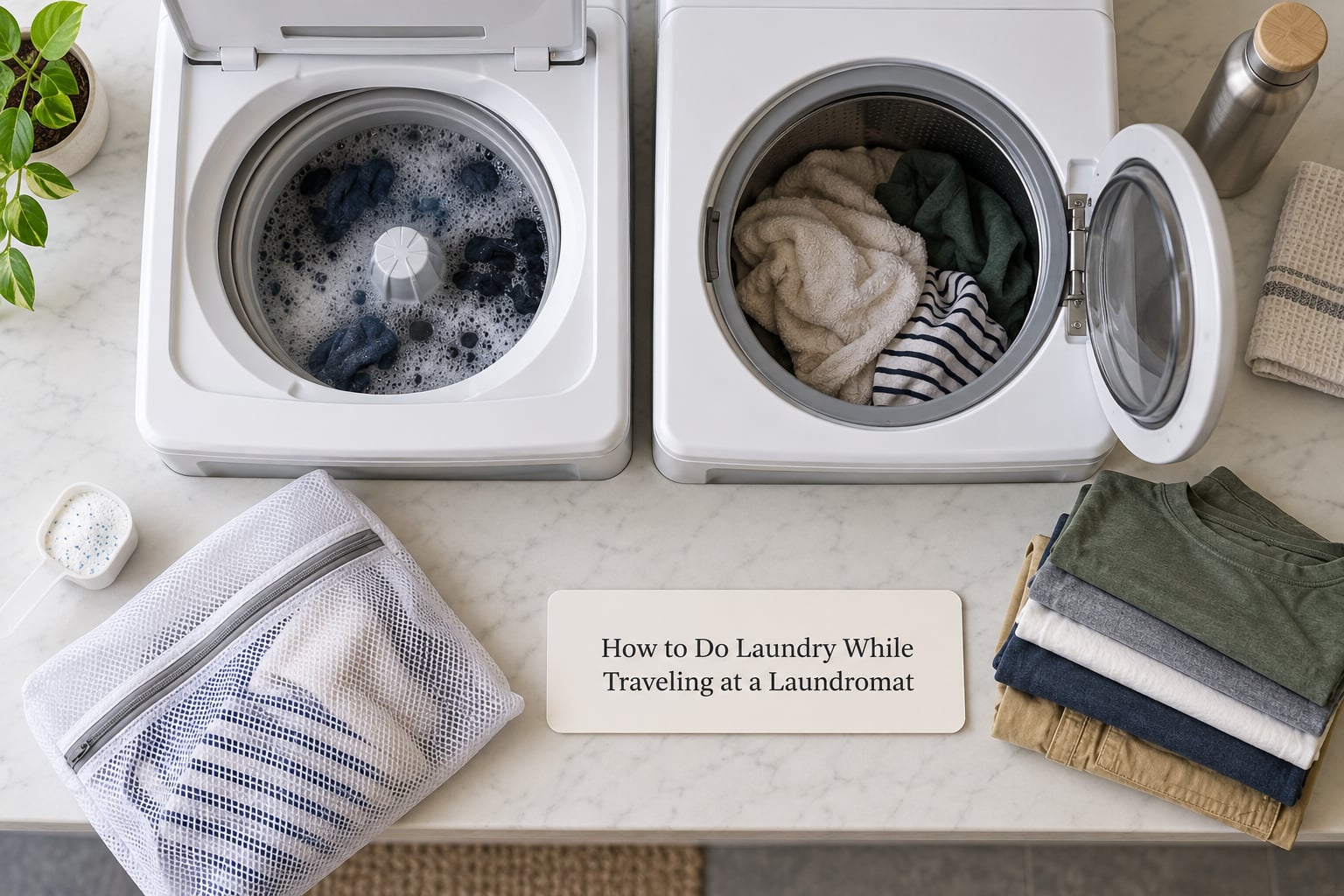
- Sort before you walk in. Pull out anything marked dry clean only, anything that says hand wash, and anything wool. Pull anything that bleeds — new dark denim, red or blue — and wash it alone.
- Check the payment before you load up. Machines in different countries take coins, a contactless card, an app, or a specific local token. A laundromat with one dead reader will not help you.
- Pick the machine by load size, not by price. An oversized drum wastes water and takes longer to heat and to dry. Fill it about two-thirds full.
- Add detergent before the clothes go in. Dissolve it in the water if you can reach the drum, or run a short pre-rinse with the soap in it. Roughly a scoop for a full machine; guessing high leaves residue that irritates skin.
- Choose the cycle from the coldest label you see. Most modern travel clothing is fine at 20 to 30 degrees. If a machine only offers cold, that is fine for synthetics. Set the highest spin you can so the load comes out as close to dry as possible.
- Pay, start it, and time it. Most machines run 25 to 45 minutes. Set a phone alarm, because a finished machine in a hot laundromat starts smelling within the hour.
- Add an extra rinse on synthetics. Detergent residue holds odour and makes fabric feel stiff. One extra rinse costs nothing and prevents the smell problem later.
- Carry your wet load in the bag. Bring a waterproof laundry bag or a large dry bag to the machines. Dripping across a bus stop to your hotel is the least appealing part of the whole process.
- Dry fully before you leave. If the dryer finishes and something still feels cool or heavy, that item gets ten more minutes alone. Packing a damp load is worse than not washing at all.
One more thing about machines abroad: many European and Asian units default to 60 degrees, which will shrink cotton and fade colour. Set the number yourself every single time rather than trusting the default.
2. Use the Hotel Laundry Service When Available
The hotel laundry service is worth it when you’re short on time, short on drying space, or carrying something that genuinely cannot survive a sink wash. Here is how to use one without surprises:
- Call the front desk or check the room folder first. Most hotels list the service, whether it’s same-day or next-morning, and how items are priced.
- Ask about the pricing model before you hand anything over. Many charge per item, which makes a seven-item load surprisingly expensive. Some charge by weight, some have a flat bag rate. Ask which applies.
- Confirm the turnaround and the collection cut-off. Evening drop-off usually means next-morning return. Midday drop-off may get you same-day.
- List the items on the bag tag. Write “one shirt, two socks” rather than nothing, so the desk can tell your load from the twenty others in the queue.
- Flag stains and delicates separately. Say plainly that a mark is a red wine stain, or that a garment needs a gentle cycle. Services differ on whether they attempt spot removal at all.
- Ask about pressed items as a separate line item. If you need a shirt flat for a meeting, request pressing rather than expecting it.
The practical downside people complain about most is price, not quality. Per-item pricing on a load of socks is a poor deal, so send small items to a sink instead and use the hotel for jackets, dresses, suits and anything you’d rather not risk.
3. How to Do Laundry While Traveling by Hand
Hand washing handles two to four days of small items in about 45 minutes, most of which is drying time rather than washing time. The method that works:
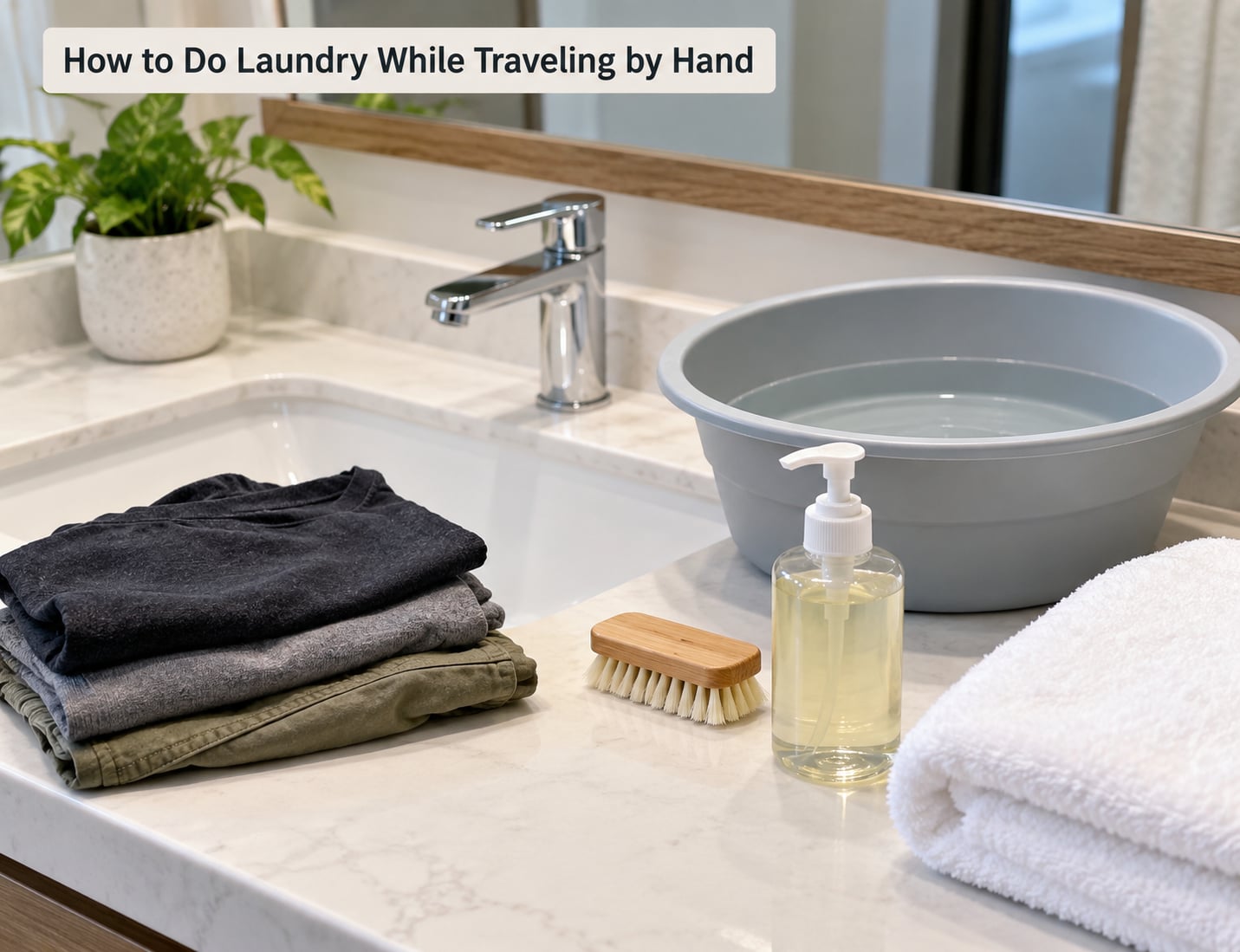
- Clear and scrub the sink first. Rinse it out, wipe it down, and check the drain. You would not drink from last night’s basin water.
- Plug it and fill it with lukewarm water. Hotter is not better. Warm water opens the fibres enough for a decent clean without shrinking or fading anything.
- Add a measured amount of mild soap. About a teaspoon for a small basin of water, or one sheet dissolved first. More soap does not mean cleaner clothes.
- Submerge and soak for 10 to 15 minutes. Longer soaking on wool or synthetics can work against you.
- Agitate gently by hand. Rub each piece between your palms a few times, or work a stain with a soft brush. No scrubbing hard, no wringing hard.
- Rinse until the water runs clear and no suds remain. A second rinse is worth it. Leftover detergent is the usual cause of that irritated-skin feeling.
- Remove the water without wringing. Press the water out against the basin, then roll the clothes into a dry towel and squeeze. Do not twist synthetics; it damages the fibres.
- Hang and leave alone. On the clothesline, over a shower rod, on a rack. Give it hours, not minutes.
Hand washing typically needs six to ten hours of air drying for light items and up to a full day for jeans or towels. In humid coastal air, assume the slow end and start in the morning so it dries before you sleep.
If there’s no sink at all — shower-only rooms, basin with no drain, a hostel with a bathroom down the hall — you can still do it. Fill a bucket or the basin you carried and wash in place. Failing that, the shower floor works: lay your clothes down, add a little water and soap, stomp them a few times, then stand under the flow for a rinse. Many experienced travelers do exactly this.
4. Dry Clothes Without a Full-Size Dryer
Drying is where most travel laundry goes wrong, because travelers treat it as the automatic final step. It isn’t. Pick your method deliberately and check the result by touch before you pack.
- Air drying on a clothesline is the default and it works for anything synthetic or quick-dry. Shake each item out first, hang from the hem or inside out, and space items so air moves between them.
- The towel roll method is the most reliable trick travelers use. Lay a towel flat, spread the damp clothes on it, roll it up, then squeeze the roll along its length. Do it twice with a dry towel and you remove most of the water.
- Fan and hair dryer on cool are the answer to humidity. Hang the load, aim a portable fan at it, and use a hair dryer on the cool setting only, held at a distance. Never use heat on synthetics or wool; it can scorch or shrink.
- Low-temperature tumble drying is fine for cotton towels and sturdy shirts. Keep it low, pull items out while still slightly damp, and finish them on a line.
- A dry bag overnight works when you are on the move. Put damp clothes in a dry bag, leave it open or loosely closed so air passes, and flip the clothes over a chair or the top of a bag. Check them in the morning.
Mildew happens when damp fabric sits enclosed. If anything gets put away damp, hang it again immediately and give it hours. Mildew smell in a closed backpack is very hard to remove and easy to avoid.
To check dryness properly, hold the fabric to light, feel the seams and waistbands, and press a dry palm flat against the garment for ten seconds. Cool or heavy means not yet done.
5. Treat Stains and Problem Fabrics
Treat a stain before it sets, not after a full wash. Scratching the mark with a stiff brush later only spreads it.
- Pretreat with something mild. A bar of hotel soap, hand soap, or a dab of diluted laundry detergent rubbed into the mark. Work from the outside edge inward so you do not push the stain further in.
- Rinse with cold water first for grass, wine, sauce and anything protein-based like blood or food. Warm water sets protein stains permanently.
- Test any cleaning product on a hidden seam before it touches the whole garment. Hotel products are not labeled for fabrics and can bleach or dye-transfer.
- Skip what cannot be hand washed. Wool, silk marked dry clean only, anything lined, trimmed or embellished, and structured jackets do not belong in a sink or a dryer.
- Know when to hand it over. Old, set, oil or dye stains, anything valuable, and anything with a dry-clean-only label go to a professional cleaner. A hotel laundry desk or a local dry cleaner can handle what you cannot.
A practical rule: if a garment would hurt if the wrong thing happened to it, it goes to someone else.
6. Pack Clean Laundry for the Rest of the Trip
Packing clean laundry well is what stops you repeating the same clean t-shirt three days in a row.
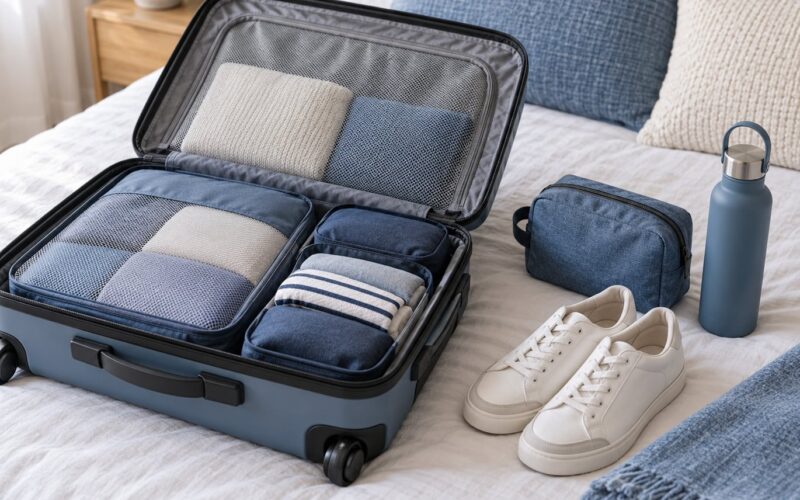
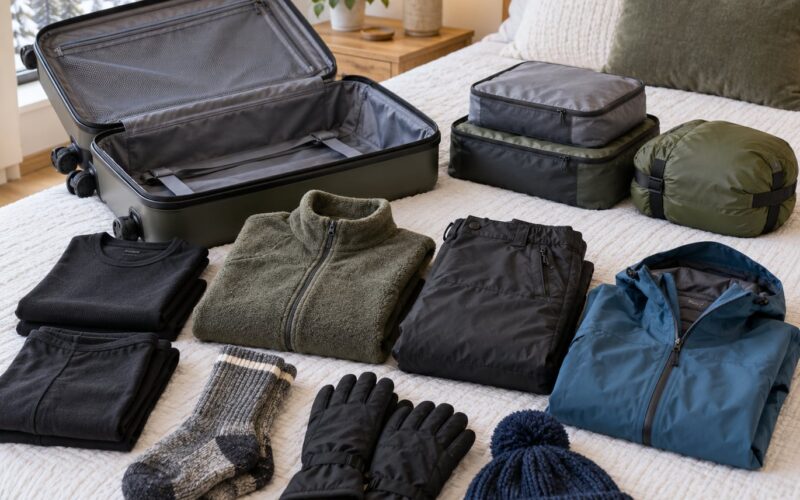
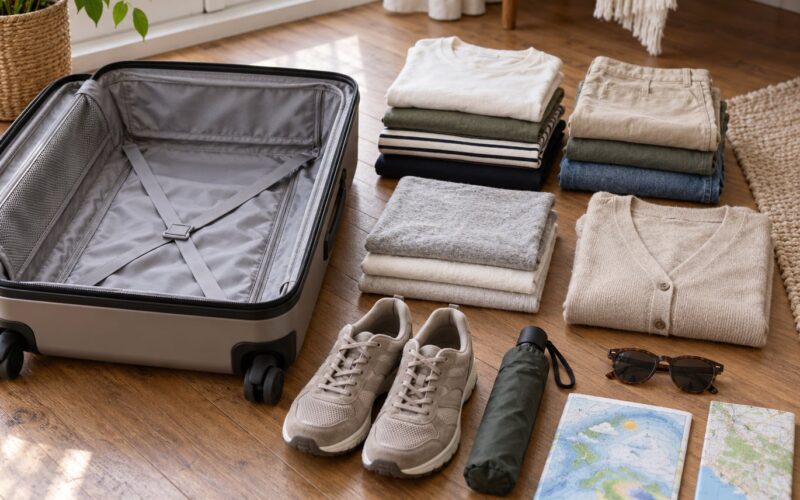
- Roll soft items — t-shirts, underwear, socks, leggings. Rolling saves space and stops deep creases. Fold anything with structure: shirts, trousers, jackets, anything that looks flat when folded.
- Never pack a damp item into a closed bag. Give it more air time first.
- Pack damp items in a dry bag if you absolutely must move them. Loosely closed, never sealed.
- Reorganize the bag on the spot. Fold the clean load into a packing cube, put it in the top so it is reachable, and put the empty laundry bag somewhere you will actually see it.
- Protect clean clothes from leaks. Double-bag anything wet or grimy, and keep the dirty bag separate from underwear and socks.
- Air out the dirty bag whenever you unpack. A bag left zipped for a week is what makes a load smell before it is even dirty.
Common Mistakes
Almost every ruined travel load comes down to one of seven mistakes, and each has a simple fix.
- Over-dosing the detergent. Fix: use less than you think. Half a scoop in a machine, a teaspoon in a sink. Extra residue is the main cause of smelly synthetic fabrics and irritated skin.
- Using too much heat. Fix: wash cool and dry low. Hot water plus a dryer is the fastest route to shrinkage, fading and melted elastic.
- Cramming the washer. Fix: fill it about two-thirds. Clothes need room to move, and an overfull load will not rinse properly.
- Ignoring the care label. Fix: read it before sorting, not after. One glance catches dry-clean-only items and separates cold-wash from warm-wash.
- Washing fabrics that cannot handle it. Fix: wool, silk, linen and embellished pieces get skipped or go to a service.
- Packing damp clothes. Fix: palm test before the bag closes. When in doubt, hang it for another two hours.
- Assuming the hotel service is cheap or quick. Fix: ask the price and the cut-off time before you hand over the bag. Per-item pricing punishes small loads.
A few method-choice rules that make decisions easier. Under a week, do nothing and repeat outfits. On a hotel-heavy trip with a sink, hand wash on the evening you arrive rather than the morning you leave, so drying happens while you sleep. On a road trip, treat the laundromat as a scheduled stop rather than a detour, because finding one in a small town at 6pm is the hard part. On a cruise or in a humid climate, start earlier and expect longer. And if your accommodation has a washing machine, book the room for it — that single amenity removes most of the problems on this entire page.
Frequently Asked Questions
Can I wash clothes in a hotel sink while traveling?
Yes, and it is the standard method for small loads. Clear and scrub the sink, plug it, fill it with lukewarm water, add about a teaspoon of mild detergent, soak your clothes for 10 to 15 minutes, agitate gently, rinse until no suds remain, then squeeze out water in a towel. Check the drain and clean up after yourself. If there is no plug, use a bucket or basin you carried, or wash in the shower.
How can I prevent travel clothes from getting musty?
Ventilate rather than seal. Use a mesh laundry bag so damp clothes can breathe, hang wet items as soon as you unpack, and never zip a closed bag around damp fabric for more than a few hours. Air the dirty bag out every morning. Wash synthetic tops more often than you think you need to, since residue and trapped sweat smell first. A splash of vinegar in the rinse water of your next load helps, but prevention beats treatment.
Are dryer sheets safe to use in hotel washers and dryers?
They are safe in most machines, but read the drum label first, because heat-sensitive fabrics sometimes warn against them. A dryer sheet left in a machine that will not be run blocks airflow and dries slowly. Drop them in the drum rather than the gap between the door seal and the glass, where they often end up. If you have sensitive skin, skip them and rinse your clothes an extra time instead.
What is the easiest way to hand-wash underwear while traveling?
Wash it in the shower rather than a sink. Wet the underwear under the flow, add a small amount of soap or body wash, rub it between your palms for a minute, then rinse it thoroughly under running water. Wring it out by pressing it flat against the wall of the shower, and hang it on the shower rail or over a hanger. Do not bundle it in the wash bag with heavier clothes, because it will not dry in time.
Can I use regular laundry detergent during an international trip?
Yes, a small bottle of your usual detergent works nearly everywhere. The real differences are practical, not chemical: some countries dose machines by weight rather than by scoop, some machines run water much hotter, and some regions use a lot more powdered or concentrated product per load, so use less. Check the label for litres or kilograms, and never transfer a large box through airport security or across a border.
Conclusion
Start by choosing your method. A week or less of hotel stays needs nothing; a longer trip needs one sink wash in the first three days and one laundromat visit later. Check the care labels before you sort, and build the drying time into the plan before you start, because that is the step people rush.
If your trip is tight on time, the hotel desk is the right answer. If it is tight on money, the sink is. If you have neither problem, do it yourself at a laundromat and it comes out dry, folded and packed before you get back to the room.