Packing for a winter destination comes down to three things: thin layers instead of one heavy coat, outerwear that blocks wind and wet, and footwear that keeps your feet dry. Most people do the opposite and come home with a checked bag they can barely lift. The whole system takes about 45 minutes once you have done it twice.
What follows is the method I use, in the order I use it. No brand names, no shopping list of forty items. Just what goes in the bag and why.
Table of Contents
- 1What You Need
- 2Step-by-Step
- 31. Check the Forecast and Build a Layering Plan
- 42. How to Pack for Cold, Wind, and Rain
- 53. Pack Shoes and Accessories for Changing Conditions
- 64. Make the Most of Your Luggage
- 75. Protect Clothes and Documents in Transit
- 86. Do a Final Cold-Weather Check Before Leaving
- 9Common Mistakes
- 10Frequently Asked Questions
- 11What is the best way to stay warm while traveling in winter?
- 12How many layers should I pack for a cold-weather trip?
- 13Do I need waterproof boots for a winter destination?
- 14How can I pack winter clothes without wrinkles?
- 15What should I do if my luggage is delayed while traveling in winter?
- 16How much luggage space do winter clothes usually require?
- 17Conclusion
What You Need
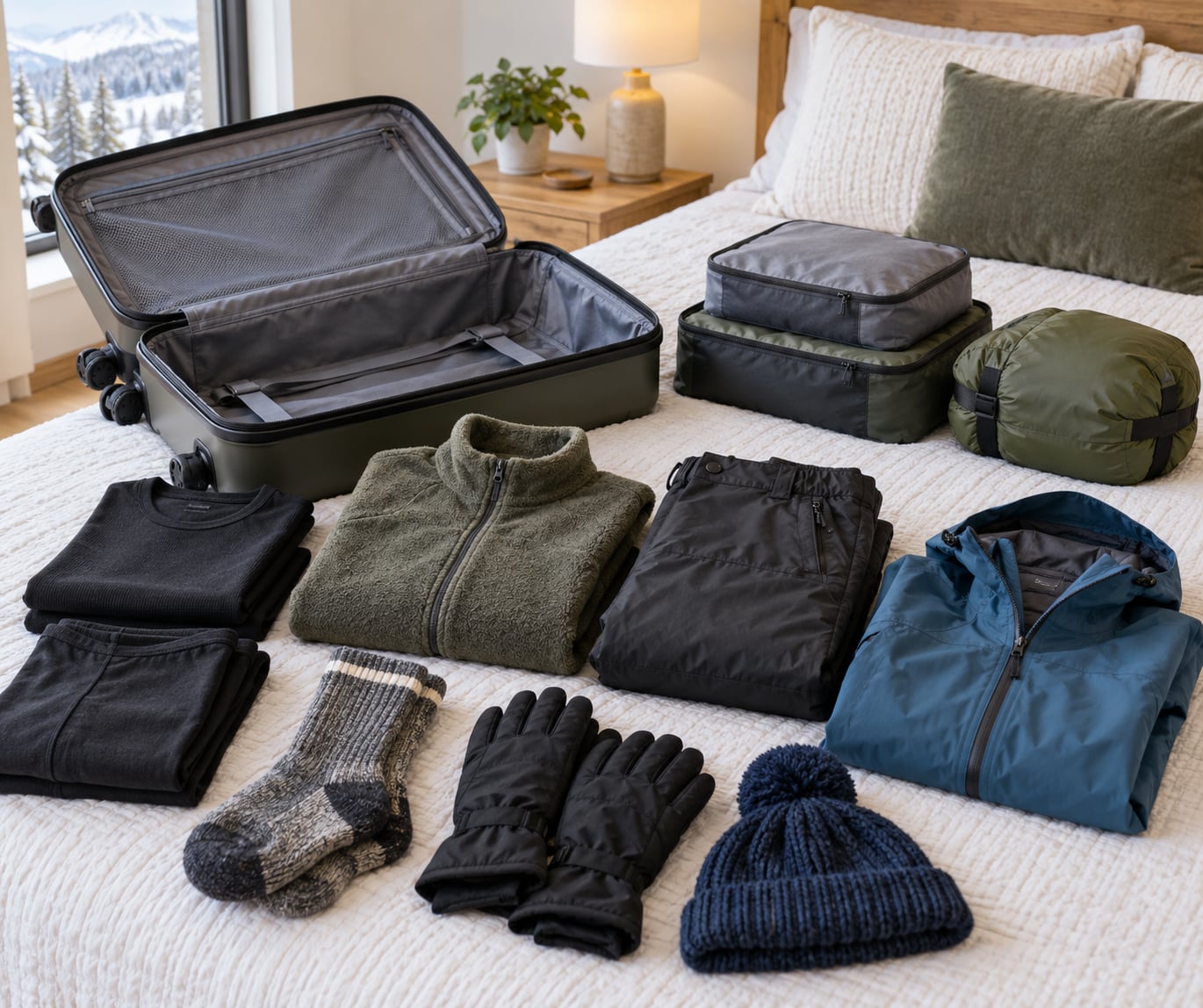
Before anything goes in a suitcase, gather seven things. Miss one and the whole plan gets built on a bad assumption.
- Trip details: the destination, trip length, average daytime and nighttime temperatures, and whether you will have access to laundry. A city break and a ski week need different bags.
- Base layers: two or three moisture-wicking tops and one pair of thermal bottoms. Merino wool or a synthetic blend, never cotton.
- Insulating mid layer: one fleece or one packable down jacket. One is enough if your outer shell is properly rated.
- Weatherproof outerwear: a shell jacket with a hood, windproof at minimum and waterproof if the forecast shows snow or rain.
- Lower body: one pair of insulated or lined pants, plus a lighter pair for warmer indoor days and long flights.
- Footwear and socks: waterproof insulated boots with a lug sole, a comfortable lighter backup pair, and two or three pairs of wool or wool-blend socks.
- Accessories: knit hat, neck gaiter, mittens with liners, sunglasses, and sunscreen.
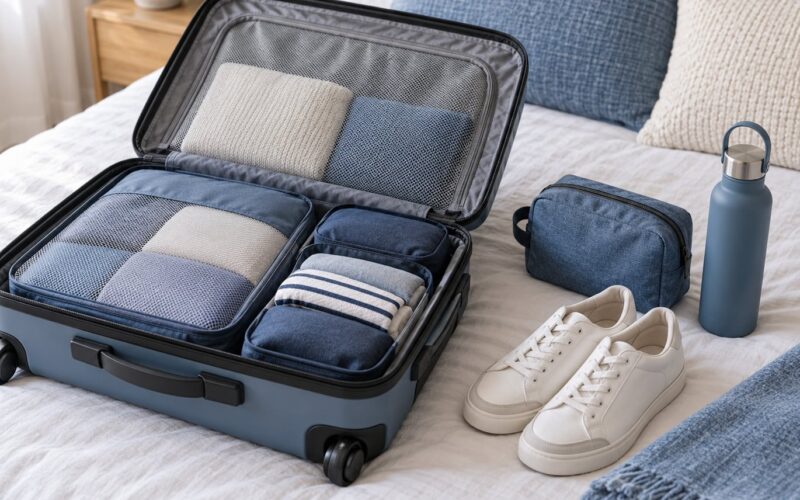
Two packing tools make the difference between fitting and not fitting: compression bags for bulky outerwear, and a set of packing cubes so clothing categories stay separated instead of turning into one pile.
Step-by-Step
1. Check the Forecast and Build a Layering Plan
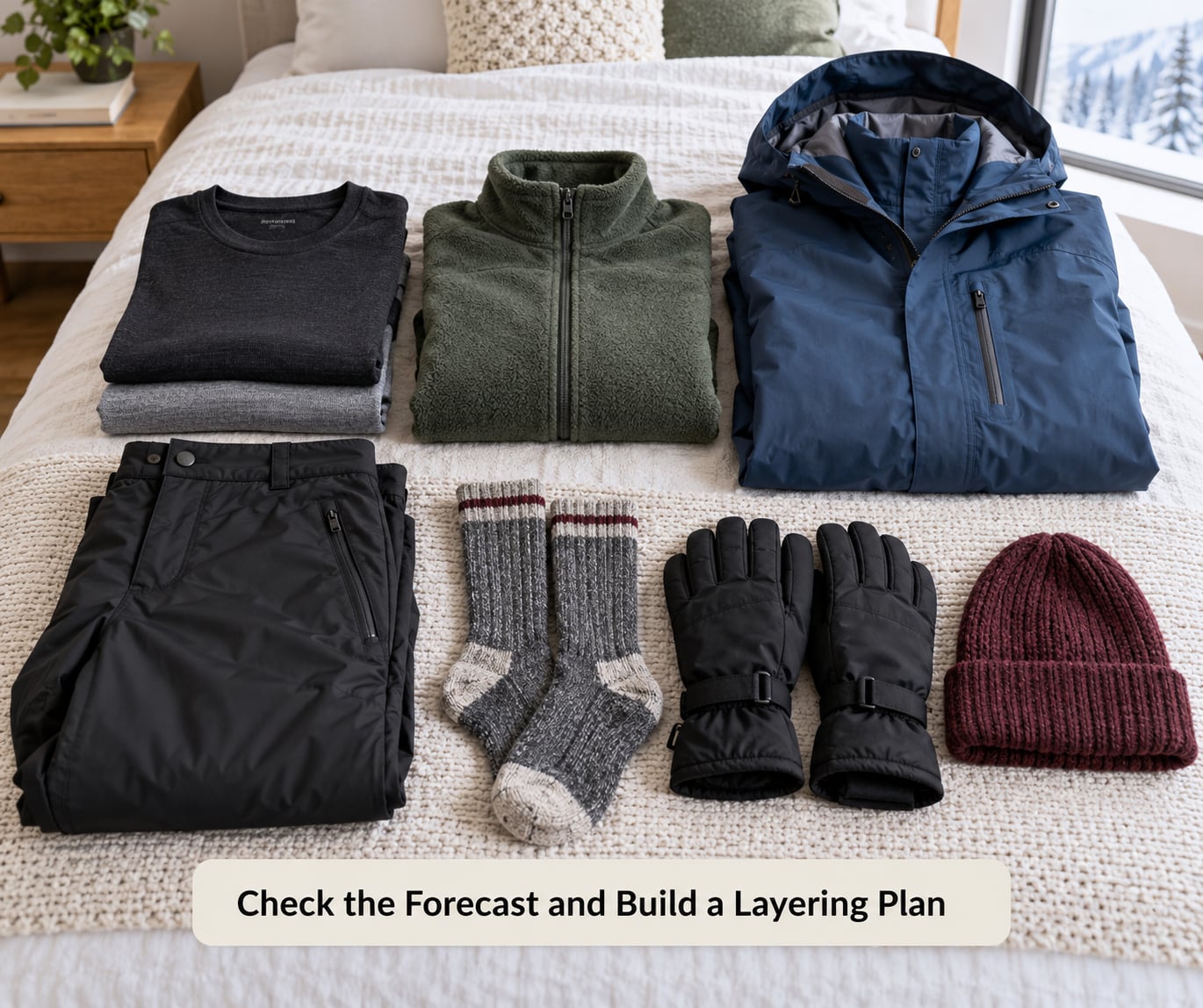
Look at the average high and low for your actual dates, not the annual average, and check whether precipitation falls as snow or rain. Also look at wind. Wind is what makes 30°F feel like 20°F, and it is the reason a fleece mid layer matters more than an extra heavy sweater.
Write your plan in three lines before you open a drawer: what goes on your skin, what goes in the middle, what goes on the outside. Every item you pack should belong to one of those three lines. Anything that does not is something to leave behind.
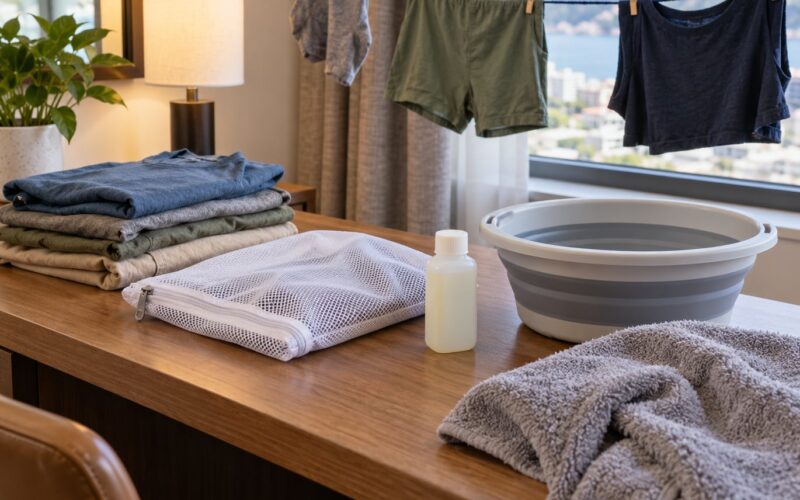
Count your days and set a base layer formula: roughly one set per three days, plus one extra. Seven days means three sets of thermal bottoms and three or four tops. Base layers are the one category worth washing and reusing in a carry-on, since a damp cotton shirt in a cold cabin is misery.
2. How to Pack for Cold, Wind, and Rain
Choose fabrics that manage moisture instead of holding it. Merino wool and modern synthetics wick sweat away from skin and dry quickly; cotton stays wet and steals warmth the moment it does. That is the whole reason cotton base layers are a mistake, and it is worth repeating because most packing guides still recommend them.
For the outer layer, down packs down and synthetic insulation keeps working when damp, so wet climates lean synthetic and dry cold leans down. Whatever you choose, check that it compresses into its own pocket. A coat that cannot fit in a compression bag will eat half your carry-on.
Dry cold and wet snow need different plans. Dry cold wants loft and a windproof face fabric. Wet snow wants a waterproof shell with taped seams and a mid layer that survives getting damp. Skiers and snowboarders already get rental jackets and pants at most resorts, so packing your own is wasted bag space unless you ride cold and hard.
3. Pack Shoes and Accessories for Changing Conditions
Boots are where winter trips are won or lost, and the failure point is never the toe. It is the ankle gap where your sock slides down and cold air walks straight in. Overlap your socks with the boot collar, pull the socks up after you lace up, and carry a spare pair in your day bag.
Wear your lug-sole waterproof boots in transit if you can stand them, and pack the lighter pair. That swap covers you if the forecast turns warmer than predicted or if you spend a day on polished indoor floors.
For hands and head, mittens beat gloves because they share warmth across fingers. Thin gloves are fine for a fifteen-minute walk from the hotel, useless for an hour of standing still watching the Northern Lights. If you are mostly sightseeing, gloves plus a pair of merino liners is the versatile option.
Do not skip sunglasses and sunscreen. Snow reflects a lot of light, and altitude makes it worse. Unglamorous, but a sunburn on your face ruins a trip.
4. Make the Most of Your Luggage
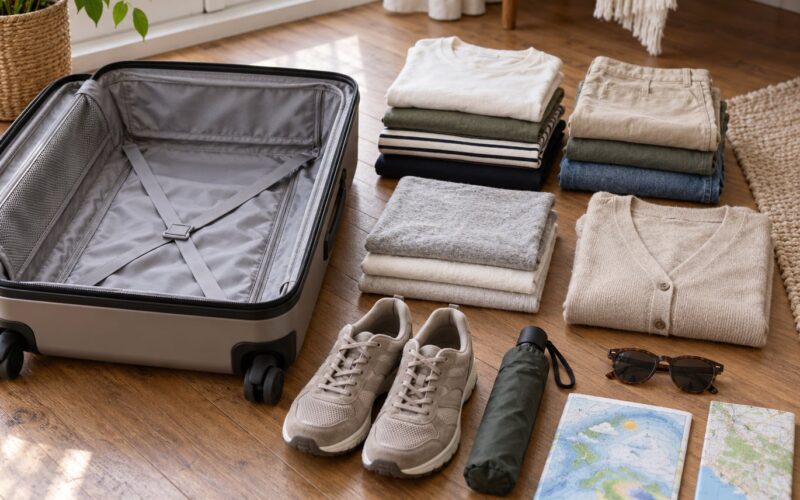
Plan outfits instead of items. Seven tops and two pairs of pants in a capsule is a lighter bag than a dozen unmatched pieces, and it still works for a two-week trip if you can wash.
Roll soft items to push air out of the fabric, fold structured ones like jackets and coats, and fill the gaps with rolled socks and tights. Compression bags belong on bulky insulated items only, since crushing down fill permanently reduces loft.
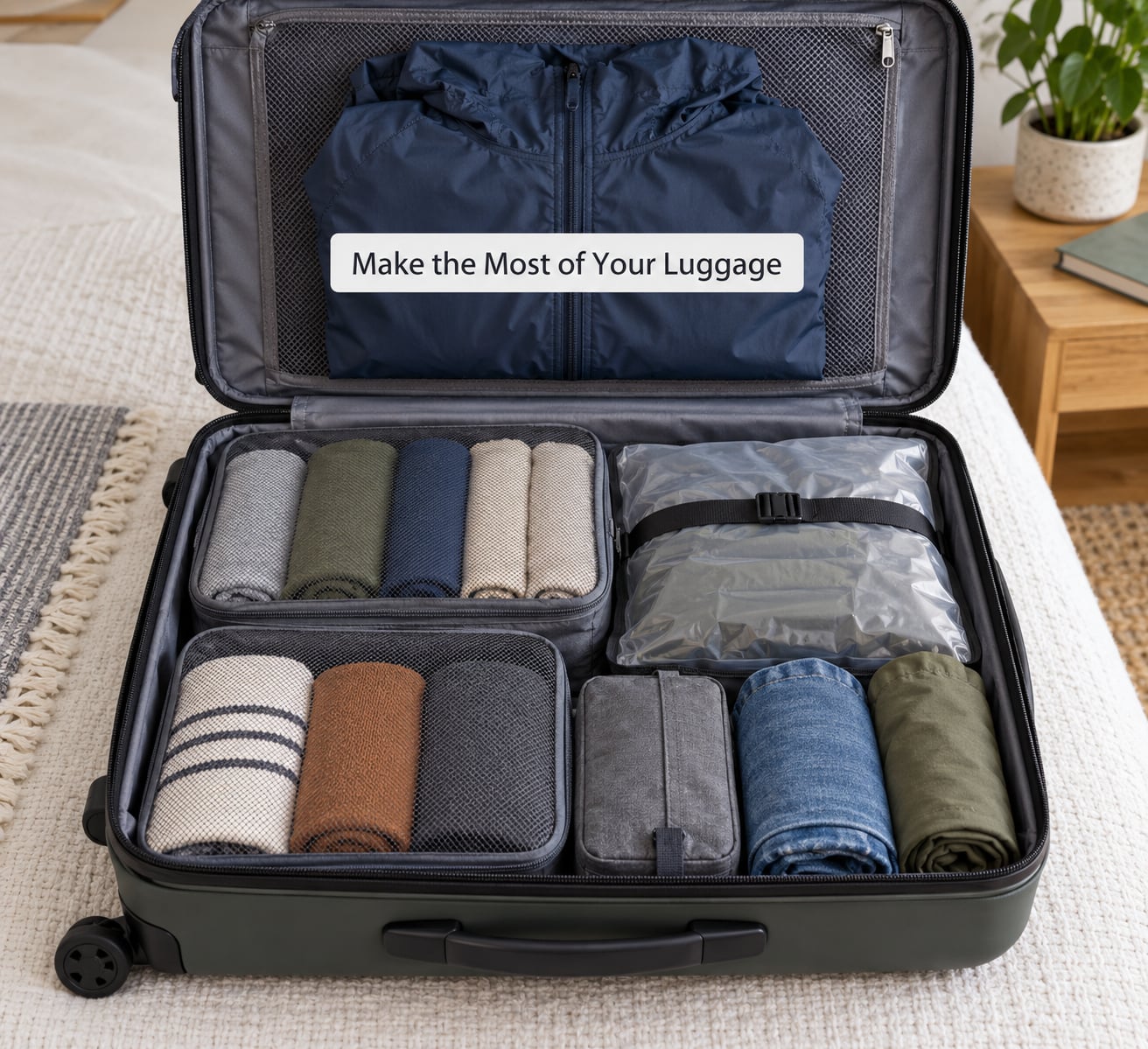
Check your airline’s weight limit before you pack, not at the counter. A common checked limit is 23 kg, and winter gear hits it fast. If your plan needs a checked bag, build for it openly instead of shoving everything into a carry-on and hoping.
5. Protect Clothes and Documents in Transit
Keep damp or snowy boots separate from everything else. A dedicated plastic bag inside your suitcase costs nothing and stops one wet pair of boots from ruining a week of clothing.
Put liquids in a sealed pouch, and keep medication, passports, boarding passes, chargers and one change of clothes in your personal item. That way a delayed checked bag is an inconvenience rather than an emergency, and it works even if the delay runs overnight.
If you are buying anything at your destination, pack your bulkier winter gear on the way out and wear it home. It is the cheapest luggage space you will ever get.
6. Do a Final Cold-Weather Check Before Leaving
Run this list the night before, not at the door.
- Forecast rechecked for the arrival day, and the coat and boots match it
- Base layer, mid layer and shell all present and wearable together
- Waterproof shell where snow or rain is forecast
- Socks counted: one more pair than you think you need
- Hat, gaiter and mittens in the day bag, not buried in the suitcase
- Sunscreen and sunglasses packed
- Charger, medication and documents in your personal item
- Backup plan if the bag is delayed: a fleece or sweater in the carry-on
Common Mistakes
These are the errors I see most often, and the fix for each.
- Packing one heavy coat instead of layers. One bulky item cannot be adjusted when the temperature swings ten degrees between breakfast and lunch. Three light layers can. This is also the single biggest cause of overpacking for winter.
- Packing cotton base layers. Cotton absorbs sweat, dries slowly, and loses insulating ability once damp. Merino wool or synthetic does the opposite. This mistake is so widespread that it gets repeated as advice everywhere.
- Ignoring waterproofing. A warm coat that soaks through in wet snow is cold within an hour. Check whether your outer layer is actually waterproof, not just water-resistant, and whether the seams are taped.
- Forgetting the small accessories. A hat, gaiter and gloves take almost no room and account for most of what you feel in cold weather. The most forgotten item, though, is usually a second pair of warm socks.
- Wearing untested boots. Take a full day walking in them at home first. Blisters plus a long sightseeing day is a bad combination.
- Overfilling the suitcase. If you cannot close it, something goes. A bag you can lift is worth more than a third sweater you will not wear.
One more worth flagging: do not pack ski or snow gear for a city trip. Rentals cover the equipment, and your bag is better spent on layers you will actually wear for five straight days.
Frequently Asked Questions
What is the best way to stay warm while traveling in winter?
Wear three thin layers instead of one thick one: a moisture-wicking base layer, an insulating mid layer such as fleece or down, and a windproof waterproof shell. You add and remove layers as the temperature and your activity change, which keeps you comfortable in swinging conditions. Cover your head, neck and hands, and keep your feet in wool socks inside insulated boots.
How many layers should I pack for a cold-weather trip?
Plan three wearable layers plus two pairs of pants, then add outerwear. For base layers, pack one set per three days plus one extra, so three sets for a week. Bring two pairs of socks per two days. A second mid layer is only worth the space if you are heading somewhere genuinely cold or you will be doing a lot of standing still outdoors.
Do I need waterproof boots for a winter destination?
Yes, if there is any snow, slush or ice. Warm and wet feet ruin a trip faster than a cold face. Choose insulated boots with a lug sole and a waterproof membrane, and wear them in transit if you can. Pack a lighter, comfortable pair for hotel interiors and warmer days, and overlap your socks with the boot collar to close the cold gap at the ankle.
How can I pack winter clothes without wrinkles?
Roll anything soft and unstructured: tops, leggings, tights and underwear. Fold structured or crease-prone pieces like jackets, coats and button-down shirts. Packing cubes with a mesh panel let you see the contents without emptying the bag, and folding each top around a second top keeps a whole stack flat and square inside one cube.
What should I do if my luggage is delayed while traveling in winter?
Keep medication, documents, chargers and one full change of warm clothing in your personal item so a delay never leaves you without the basics. If you can, buy a base layer top, a pair of socks and a knit hat from a shop near the airport, and layer them over whatever you are wearing. Check whether your airline offers delivery to your hotel before you leave the airport desk.
How much luggage space do winter clothes usually require?
A full winter kit fits a carry-on if you plan it: two tops, one mid layer, one shell, two pairs of pants, and one pair of boots worn in transit. Add a second shell and a second boot pair and you will need a checked bag. Compression bags on bulky outerwear are usually what tips a winter bag from checked back into carry-on territory.
Conclusion
Start with the forecast, not the suitcase. Write your base, mid and outer layer down on paper, add footwear and the small accessories that carry most of the warmth, and pack nothing that does not fit one of those lines. Compress the bulky outerwear, wear the boots in transit, and keep one warm change of clothes in your personal item.
That is the whole method for how to pack for a winter destination. Done once, it takes less than an hour and the bag closes.