Updated for 2026
The safest place to keep your passport while traveling is on your body, in a zipped money belt or concealed pouch worn under your clothes — not sitting in a hotel safe. Keeping it safe abroad comes down to three layers: physical control of the original, backups that work when your phone does not, and a fast response plan for cards and accounts. Set all three up before you fly and the whole thing takes about an hour.
Most travelers lose documents abroad because of a gap in routine, not bad luck. A jacket pocket left on a café chair, a bag set down at a checkpoint, a passport handed over at a rental desk. Each one is a five-second decision, and each one is easy to avoid once you decide in advance what you will and will not do.
Below is the routine I actually use: what to prepare at home, how to carry things day to day, and what the first hour looks like after a loss. Rules differ by country, so check your own government’s travel advice before each trip.
Table of Contents
- 1What You Need
- 2Step-by-Step: How to Keep Your Passport and Cards Safe Abroad
- 3Make Digital and Photocopy Records
- 4Use Different Storage for Passport and Cards
- 5How to Keep Your Passport and Cards Safe Abroad at Checkpoints
- 6Limit What You Carry in Public
- 7Activate Tracking and Alerts
- 8Inspect Cards and Devices Without Creating New Risks
- 9Know What to Do Immediately After Loss or Theft
- 10Check Security Before Hotel Check-In and Checkout
- 11Common Mistakes
- 12Quick Security Tips
- 13Frequently Asked Questions
- 14Where is the safest place to keep my passport while traveling?
- 15Is it safe to leave my passport in a hotel safe?
- 16Should you keep a copy of your passport on your phone?
- 17Where to hide cash when traveling?
- 18What should I do if my passport is stolen while abroad?
- 19Conclusion: Start Before You Leave
What You Need
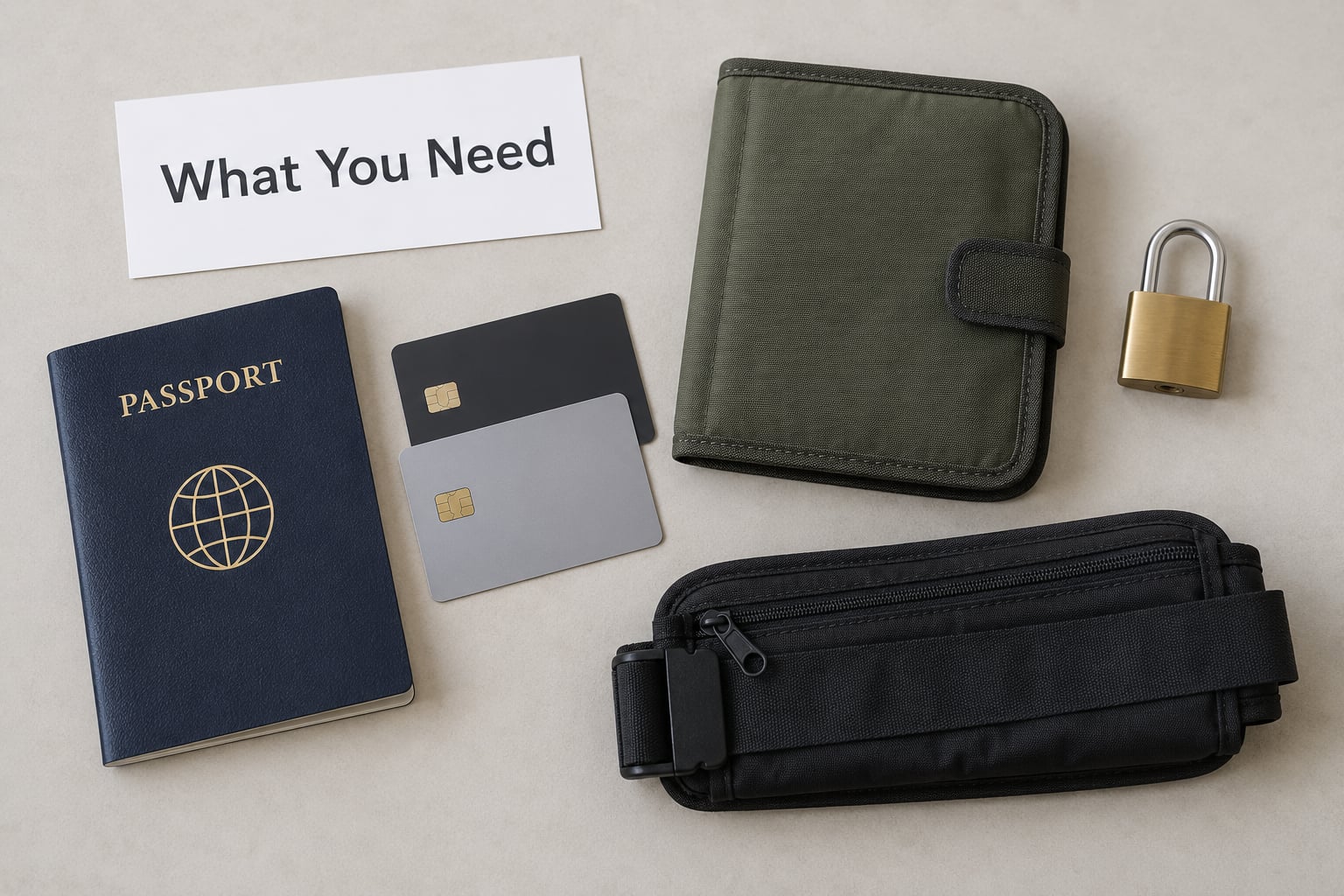
Get these together before you leave home. The whole kit fits in a drawer and takes under an hour to assemble.
- Your passport, plus copies. A photocopy of the photo and data page, a scan on your phone, a copy in cloud storage, and one printed copy kept with someone you trust at home.
- A spare passport photo. Two extra prints cost little and speed up a replacement application if your passport goes missing.
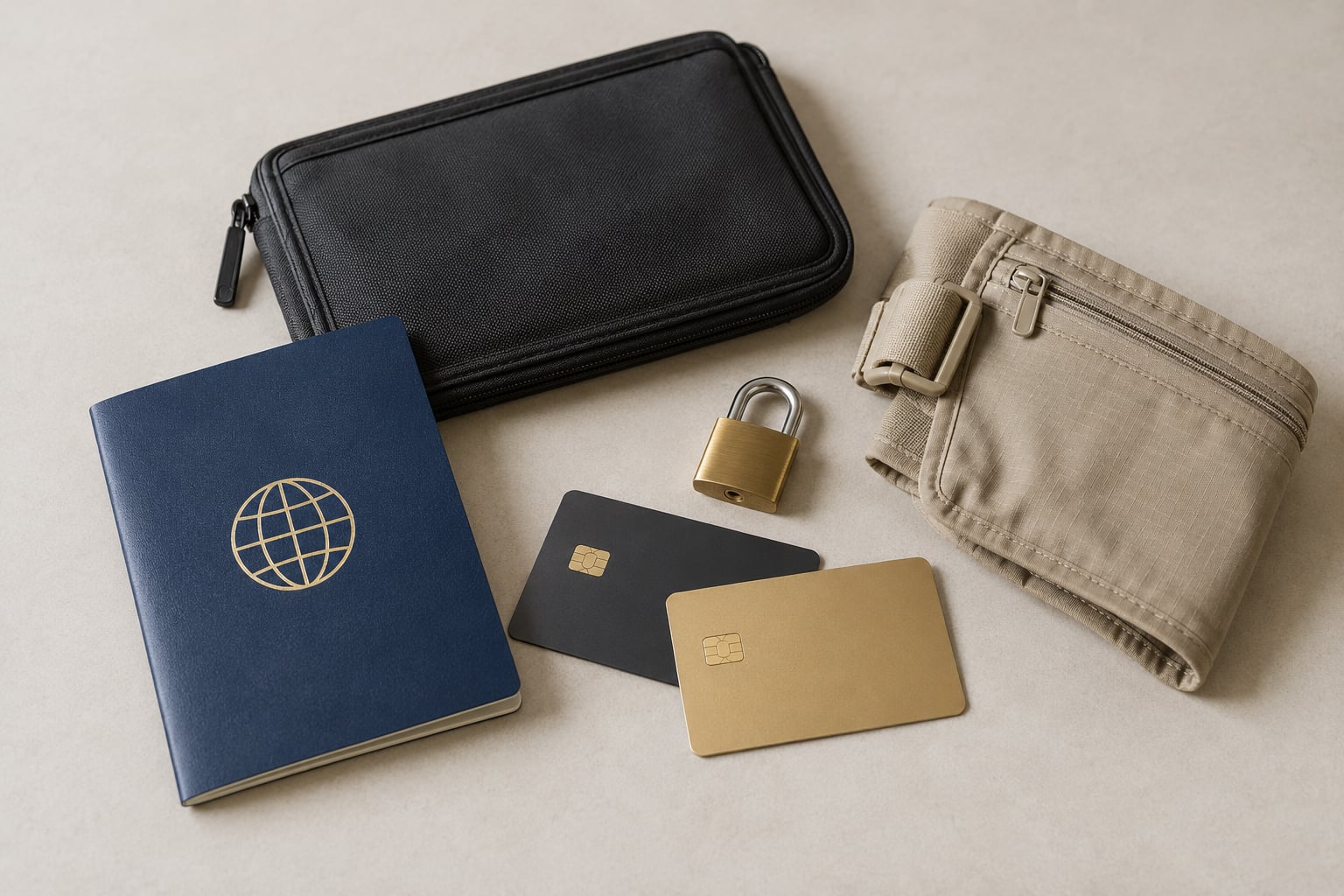
- A money belt or concealed pouch. Something zipped, worn against the body, ideally with RFID-blocking material in the lining.
- Two payment cards from different networks. One in your everyday wallet, one stored separately from your cash. A stolen wallet should never be a total loss.
- A written record of card numbers. Issuer customer service numbers and the 24-hour fraud line for each card, photographed and on paper.
- An emergency contact sheet. Your country’s embassy or consulate for each destination, local emergency numbers, and a relative who can be reached.
- Travel insurance that covers document replacement. Check the policy wording before you buy, since many cover medical costs but exclude emergency travel documents.
Step-by-Step: How to Keep Your Passport and Cards Safe Abroad
Make Digital and Photocopy Records
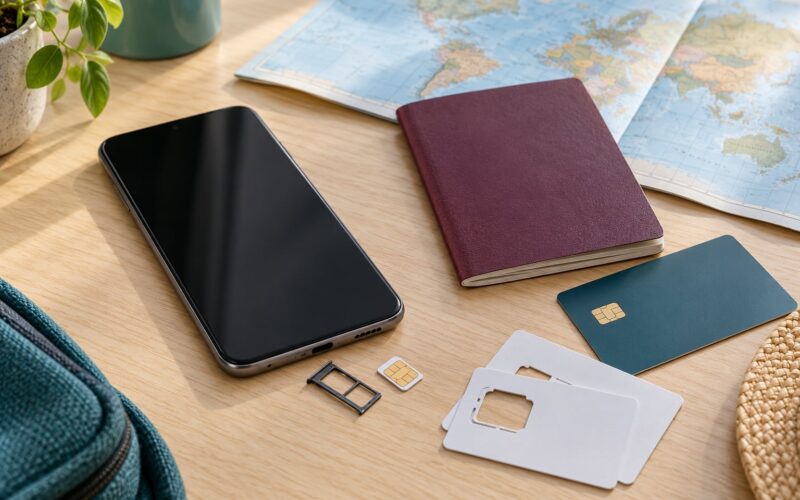
Photograph your passport’s photo page, the visa pages and the back of each card. Store that in your phone’s photo library and in a cloud folder you can open without an internet connection.
A scan on your phone is useful until your phone is stolen or flat, which is exactly when you need it. So keep a paper copy too, and email one copy to a trusted person rather than your own inbox.
You’ll know this worked when a border agent asks for something specific and you produce it in seconds instead of digging through an app. Use a password manager or an encrypted folder rather than a password-protected PDF you have never opened before — being locked out of your own backup abroad is a very specific kind of misery.
Use Different Storage for Passport and Cards
Split everything. Passport in the money belt against your stomach, one card in the everyday wallet, second card and the day’s cash in a separate bag or jacket. Nothing important travels in the same pocket as something you’d happily lose.
| Storage method | Security | Accessibility | Legal compliance |
|---|---|---|---|
| Money belt under clothing | High | Low | Best — keeps the original on you |
| Concealed neck pouch | High | Medium | Good — worn under a shirt |
| Zipped inner bag pocket | Medium | High | Good |
| In-room hotel safe | Low | Medium | Poor in countries that require the original on you |
| Hotel reception hold | Low | Low | Poor — you cannot control who handles it |
On-body storage wins for one reason: it cannot be stolen without someone taking you with it. A commenter on the WiseBread passport thread put it bluntly — leaving a passport in a room is a bad idea because in-room safes open to a master key, and you should not assume a member of staff would never sell your documents.
Rick Steves forum regulars tend to prefer a neck pouch worn under a shirt over a waist wallet, mostly because it stays put when you bend, reach overhead or cycle. Test whichever you buy with real clothes before the trip.
Verify the arrangement by checking, in this order: passport in the belt, one card in the wallet, second card and cash elsewhere. If you can only find two of the three, you have a storage problem, not a memory problem.
How to Keep Your Passport and Cards Safe Abroad at Checkpoints
At any checkpoint, the passport should already be in your hand before you reach the window, not buried in a bag you are unloading. Keep it zipped in the belt until the queue stops moving, then take it out and put it straight back.
Stay aware of the classic distraction pattern, because it works everywhere. A traveler in Paris lost her cross-body bag from a café table in seconds while someone distracted her with a boxed pizza — passport, phone and cash all inside the bag. When someone engages you in conversation near a road, at a crossing or in a queue, check your bag before moving on.
Cross-body bags beat shoulder bags because a strap can be pulled from behind. If you use a backpack, wear it on your front in crowds. And no matter how many stops a bag makes, count it before you walk away from a train, a taxi or a café. You will know this worked when leaving a checkpoint takes the same five seconds as arriving.
Limit What You Carry in Public
Carry one card and the cash you need for the next few hours. The rest stays in the second stash. A wallet with three cards, an ID, a passport and a boarding pass is a single point of failure.
Where to hide cash when traveling? Split it. Keep one portion in the money belt, one in a zipped bag compartment in a different bag, and buy something small with a portion each morning so you are not carrying a full day’s worth. Never count cash in public, and queue at ATMs that are well lit, busy and ideally inside a bank lobby rather than a freestanding machine on a dark street.
Leave passports and phones out of sight in restaurants and bars. A phone on a café table is an invitation, whatever the cafe’s reputation.
Activate Tracking and Alerts
Before departure, set transaction alerts on every card and turn on login alerts for email, banking and your main travel accounts. If alerts are on, a blocked transaction in a city you have not reached yet gives you hours.
Enable device tracking on your phone and laptop, and note where the account recovery email and phone number are in case the device itself is gone. A phone is usually more valuable to a thief than a passport and far more useful to you, because it holds your banking access and your backups.
Tracking helps you respond faster; it does not get a stolen passport back. Treat alerts as an early warning system, not a guarantee.
Inspect Cards and Devices Without Creating New Risks
After each transaction, glance at the terminal before tapping and check that the machine is fitted over the card slot. If a card slot looks loose, taped over or unfamiliar, walk away and use a different machine — no card is worth the cash.
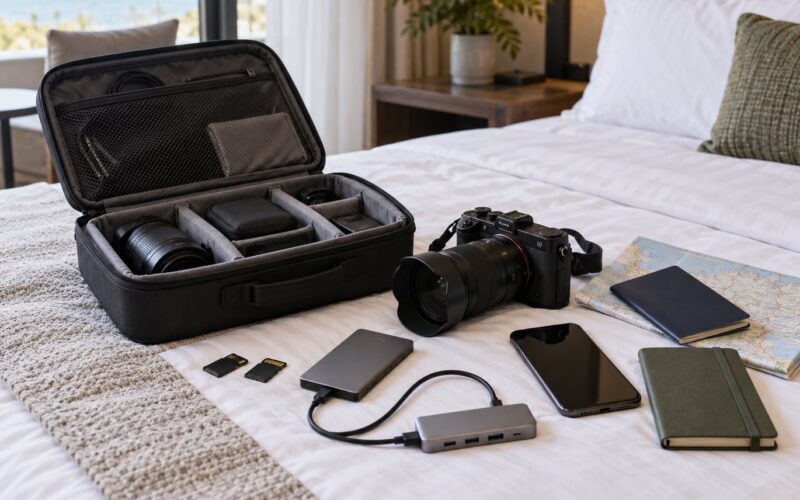
Avoid public USB ports and unfamiliar charging stations where you can, and carry your own charger. Once a week, check statements line by line rather than only the total, because a single small fraudulent charge is often the first sign of a cloned card.
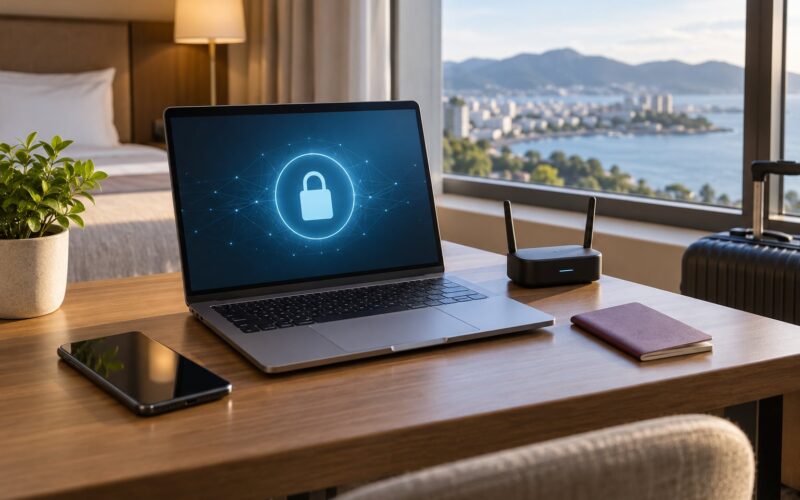
Skip public Wi-Fi for anything financial. If you must connect, use your phone’s hotspot instead, and never use a card reader that has been left unattended.
Know What to Do Immediately After Loss or Theft
Move somewhere safe and busy, then act in this order. Speed matters more than order after the first hour, but this sequence avoids the mistakes that cost people extra days.
- Block cards first. Call the 24-hour fraud number for each card and report them lost or stolen. You are not liable for unauthorized charges once you have reported promptly.
- Block your devices. Use another device or computer to mark your phone and laptop as lost, which signs you out of accounts.
- File a police report. Consulates will ask for one, and most will not open a case without it. Get a reference number and keep a copy.
- Contact your embassy or consulate. A lost passport means an emergency travel document before you can travel again, and full replacement can take considerably longer.
- Write down details while they’re fresh. When, where, what was in the bag, what you were wearing, and any description of a person or vehicle.
Do not destroy or heavily damage the passport yourself. Consular staff need to see it, and mutilating it can complicate a replacement claim. If it was stolen rather than lost, also check whether your travel insurance covers document replacement before you pay anything out of pocket.
You’ll know the response worked when you have a police reference number, a blocked card on every account, and a consular appointment booked — not when you feel better.
Check Security Before Hotel Check-In and Checkout
Test the safe before you trust it. Type in a code, close it, then re-enter it. If the safe opens without a code, or the door does not latch fully, use it for nothing and keep the passport on you.
Decide before you unpack: passport comes out at the door, cards and cash go into the belt for the day, one spare stays in your locked bag. If a hotel asks to hold your passport for check-in or for a rental car or tour, ask why in writing and get it back before you leave the desk.
Before checkout, empty the safe, the wardrobe safe and every drawer, then count your cards against the ones you started with. It takes thirty seconds and it is the step most people skip.
Common Mistakes
- Carrying every card you own. Fix: two cards from different networks, split across two places.
- Storing passport and cash together. Fix: one loss should not take both.
- Leaving the passport in a hotel safe. Fix: many countries legally require the original on your person, and master keys exist.
- Relying on public Wi-Fi for banking. Fix: use your phone’s hotspot.
- Putting valuables in an unchecked bag. Fix: a delayed bag turns a small loss into a border problem.
- Never testing the safe. Fix: open it once with a code before you put anything in.
- Handing your passport to a vendor. Fix: ask why, and never let a rental desk or tour operator retain it overnight.
One caveat worth stating plainly: rules about carrying identification differ widely. Some countries expect the original passport on you at all times, and a photocopy is often not an acceptable substitute at a hotel desk or a police check. Check your destination’s official guidance rather than trusting a general travel forum.
Quick Security Tips
- Do a five-second document and card check every time you arrive somewhere new.
- Keep cash out of sight on public transport, especially on night services.
- Save your embassy and card fraud numbers somewhere you can reach with a stranger’s phone.
- Report losses the same day, even on a weekend.
- Leave one full set of documents and cards at home as your recovery layer.
Frequently Asked Questions
Where is the safest place to keep my passport while traveling?
On your body, in a zipped money belt or concealed pouch worn under clothing. It cannot be taken without someone grabbing you, which is the outcome you want to avoid. A hotel safe is convenient but weaker, and in-room safes often open to a master key. Check whether your destination legally requires the original passport on your person before deciding to leave it anywhere.
Is it safe to leave my passport in a hotel safe?
It is a reasonable backup for a spare card or a photocopy, not for the original. Travelers reporting on travel forums describe in-room safes that open to staff master keys, and reception staff who handle documents for check-in. If you must use one, test the keypad with no code, confirm the door latches, and keep the original in a money belt instead.
Should you keep a copy of your passport on your phone?
Yes, as one layer among several. A photo of the data page is fast to show and fast to send to an embassy, but it disappears exactly when you need it most: a stolen phone, a dead battery, or a flat screen on day two. Keep a paper photocopy as well, one copy in cloud storage, and one printed copy kept at home.
Where to hide cash when traveling?
Split it across at least three places rather than hiding it well in one. Keep a small amount in your money belt, a larger portion in a zipped compartment of a different bag, and withdraw a day’s worth at a time from a bank machine rather than a freestanding one on a dark street. Never count money where you are standing, and buy something small early so you are not carrying a full day’s cash at midday.
What should I do if my passport is stolen while abroad?
Move somewhere safe, then call your card issuers and report them lost or stolen. File a police report and keep the reference number, because consulates require one. Contact your nearest embassy or consulate, which will issue an emergency travel document so you can continue; a full replacement takes considerably longer. Do not damage the passport yourself, and keep receipts if insurance may reimburse you.
Conclusion: Start Before You Leave
Protecting your passport and cards is not one clever trick. It is physical control of the original, backups that survive a dead phone, and a response plan you have rehearsed once.
Start tonight: separate your passport from your cards and cash, photograph the data page and both sides of every card you are taking, write down the fraud number for each one, and save the embassy contact for every country on your itinerary. An hour of setup turns a lost document into a paperwork problem instead of the end of your trip.