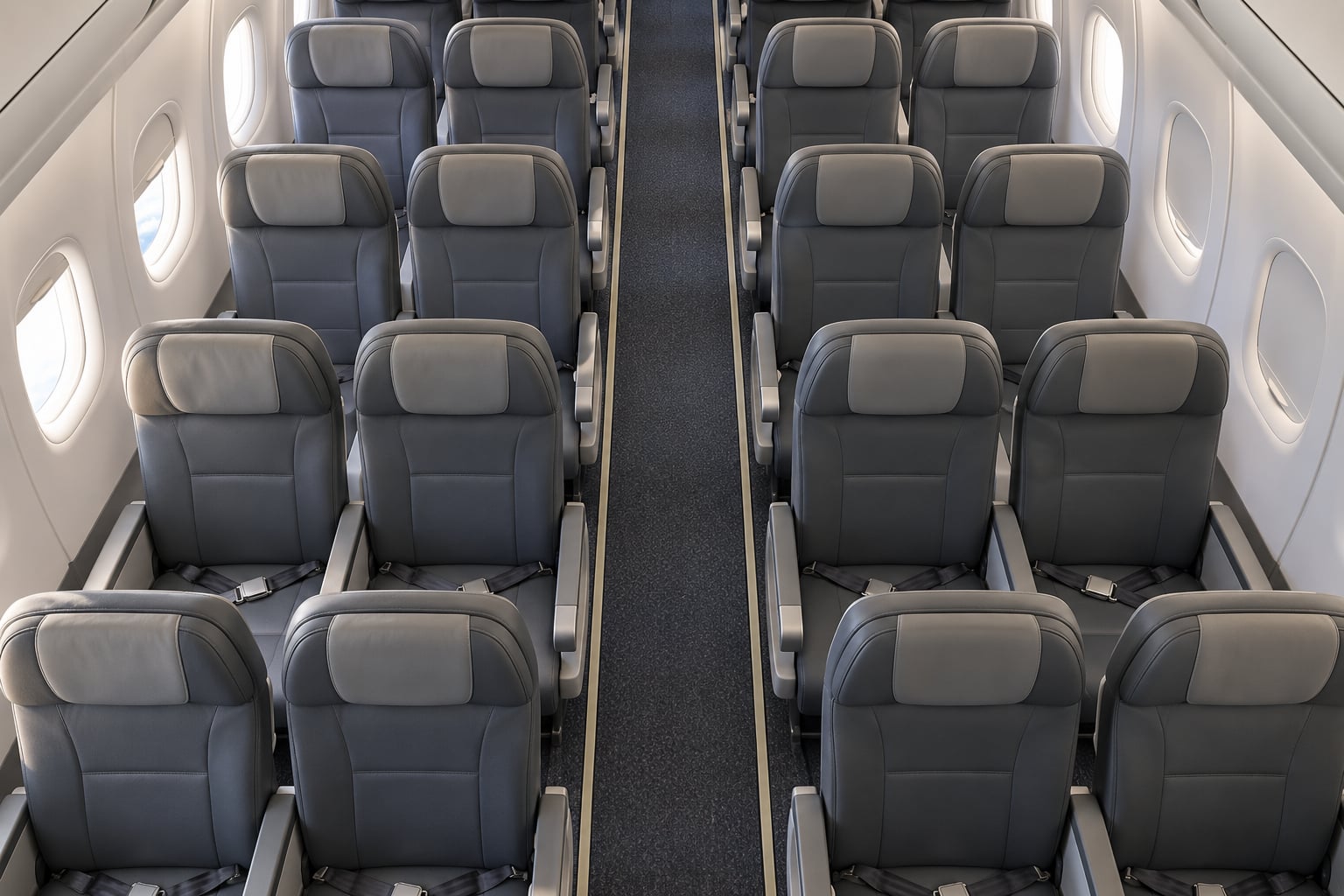
There is no single best airplane seat, and anyone who tells you otherwise has never had to get up at 3 a.m. with 140 people asleep around them. Short answer: take the window seat for views, sleep and fewer interruptions, and take the aisle seat if you value easy movement, quick bathroom access and fast deplaning. Most of the window seat vs aisle seat pros and cons debate comes down to how long you are in the air and how much you need to move.
I fly a lot of short hops and a fair number of overnight long-hauls, and my own preference flips depending on the trip. Below is how the two positions actually compare, seat by seat, plus the details worth checking on the seat map before you pay for anything.
Table of Contents
- 1Window Seat vs Aisle Seat Pros and Cons at a Glance
- 2Which Seat Is More Comfortable?
- 3What actually makes a seat comfortable
- 4The best choice for long-haul comfort
- 5Which Seat Offers Better Sleep?
- 6Why the window position sleeps better
- 7Sleep strategies that work in either seat
- 8How Do Legroom and Personal Space Compare?
- 9Knee space and crossing your legs
- 10Side-to-side space
- 11Which Seat Is Easier to Get In and Out Of?
- 12Boarding, deplaning and everything between
- 13Travelers with limited mobility
- 14Window Seat vs Aisle Seat Safety and Spill Risk
- 15What each position offers
- 16Follow the crew, not the seat map
- 17Window Seat vs Aisle Seat for Families and Companions
- 18Infants and small children
- 19Companions, pets and mobility aids
- 20Broader passengers
- 21Window Seat vs Aisle Seat on Different Trips
- 22Short flights under two hours
- 23Overnight red-eyes
- 24Long-haul flights over six hours
- 25Tight connections and packed itineraries
- 26Which Seat Features Should You Check Before Booking?
- 27The checks that actually change your experience
- 28Timing and aircraft swaps
- 29Which Should You Choose?
- 30Frequently Asked Questions
- 31Are window seats usually better on long flights?
- 32Are aisle seats better for sleeping on a plane?
- 33Do aisle seats really have more legroom?
- 34Which seat is best for a nervous flyer?
- 35Is a window seat safer during an emergency?
- 36Should couples choose window or aisle seats together?
- 37Conclusion
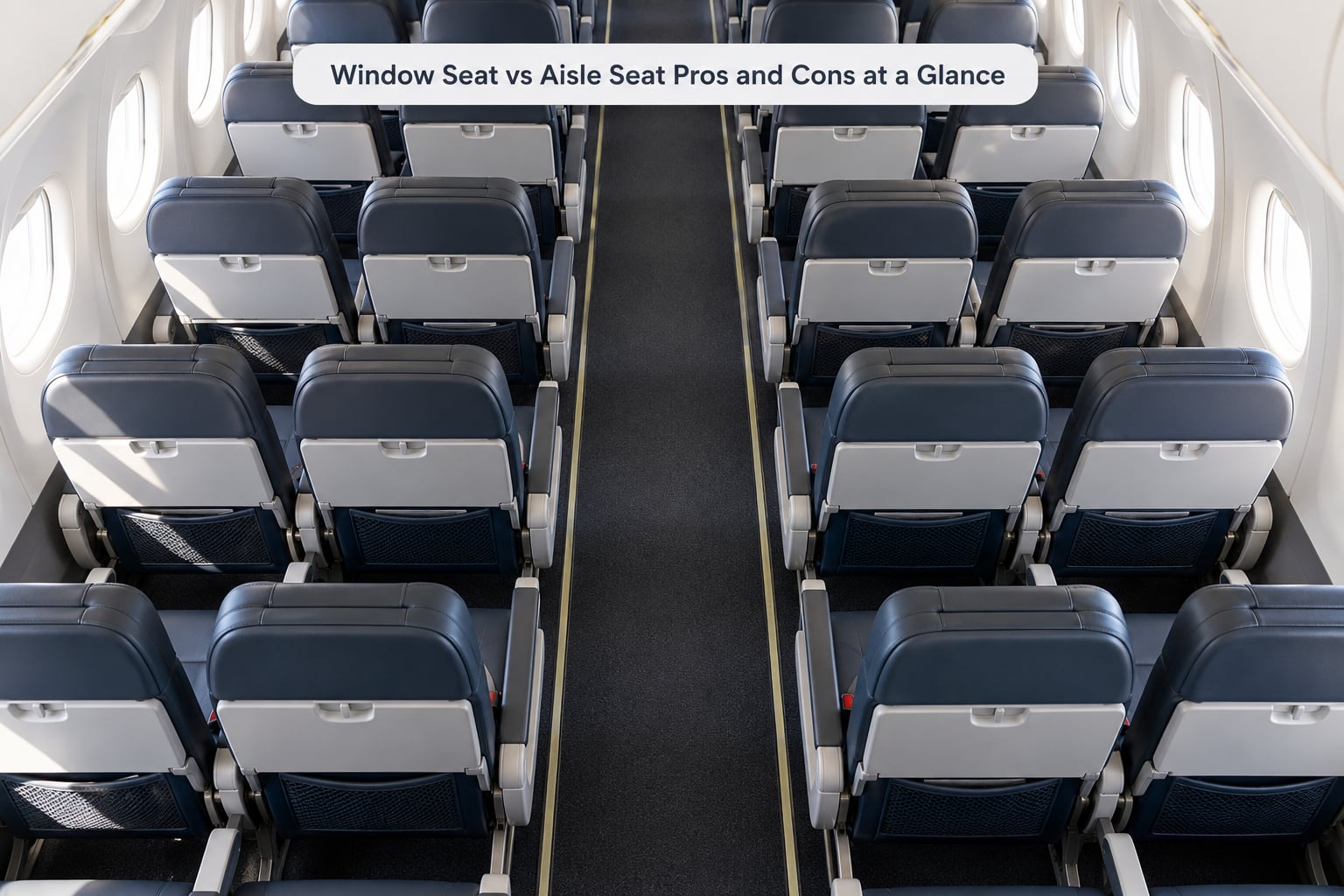
Window Seat vs Aisle Seat Pros and Cons at a Glance
| Factor | Window seat | Aisle seat |
|---|---|---|
| View | Wings, terrain, clouds, city lights on approach | None, just the seatback in front |
| Comfort on the body | Wall to lean on, fewer people brushing past | Easier to shift position and stretch |
| Legroom | Same as the aisle in most rows; less usable space if your neighbour leans back | Same pitch as the window, but more room to angle your legs |
| Bathroom access | Have to pass one or two passengers | Step out and go |
| Sleep | Darker, quieter, side wall for support | Brighter, more light and noise, but easier to get up |
| Overhead bin | Harder to reach, often filled by earlier boarders | Direct access |
| Getting in and out | You only climb over your own passengers | Fastest in and out of the row |
| Temperature | Colder in winter, warmer when the sun hits the fuselage | Cabin conditioned, so steadier |
| Interruptions | Fewest, since nobody passes | Most, from carts, crew and row mates |
| Best for | Viewers, photographers, light sleepers on red-eyes, long solo trips | Tall and broad passengers, parents, mobility needs, tight connections |
Which Seat Is More Comfortable?
Comfort has very little to do with the window and almost everything to do with the seat itself. Width, pitch, padding and how far the seat reclines decide how a six-hour flight feels, and those numbers are identical across a row.
What actually makes a seat comfortable
Seat pitch is the distance from the back of your seat to the back of the one in front. A narrow-body like a 737 or an A320 usually gives about 30 to 32 inches, which is tight once you factor in the seatback pocket and the tray table. Wide-body long-haul aircraft run closer to 32 to 34 inches in economy.
Then there is width. In a 3-3 narrow-body layout, economy seats are roughly 17 inches wide; in a 3-4-3 wide-body they can drop to about 15.5. A window seat in a middle seat-free row has one shared armrest on one side, which many people find gives them room to spread a little. An aisle seat in a two-seat block has an armrest between you and your neighbour too, so the difference is small.
The best choice for long-haul comfort
For long-haul comfort, an aisle seat in a wider row beats a window seat in a cramped one every time. Travelers with broad shoulders or who need to angle their legs outward should look at rows ahead of and behind the wing, where the floor often slopes slightly and gives back a bit of knee room.
Bulkhead rows add legroom because there is no seat in front, but they can feel exposed and the tray table design varies. If recline matters to you, check the seat map carefully: bulkhead and sometimes the last row of a section are fixed upright, and some rows sit behind a non-reclining seat.
Which Seat Offers Better Sleep?
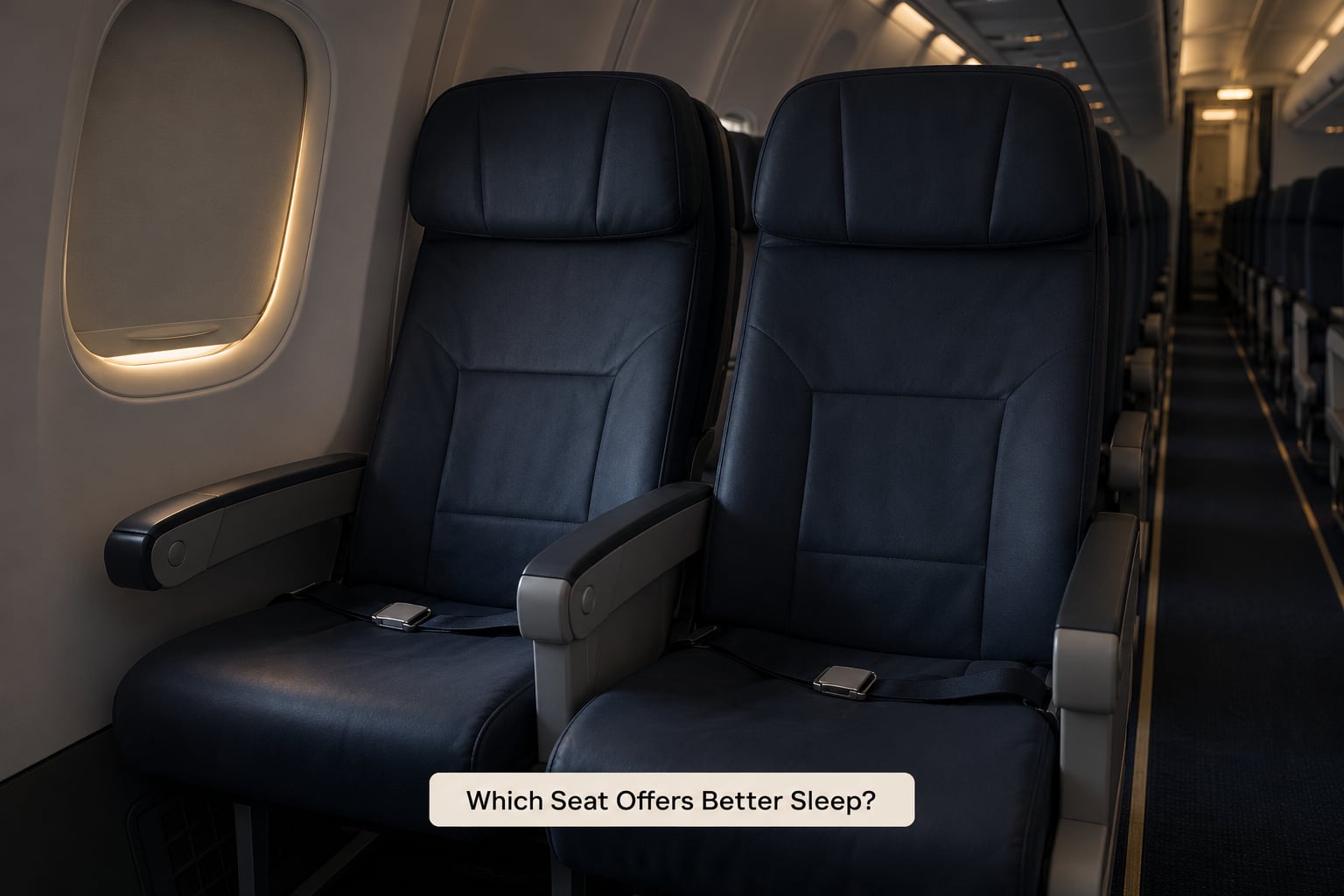
The window seat wins for sleep, and not by much. What you gain is darkness you control, less foot traffic, and a solid surface at your shoulder and head when the seat reclines.
Why the window position sleeps better
Light is the biggest factor. A window shade closes completely and no aisle light spills onto your face. Aisle seats sit under overhead lighting and get hit by the reading lights of passers-by, which matters enormously on a red-eye.
The wall helps too. When the seat reclines, the fuselage curves inward and the window-side headrest stays put, so you get a place to lean instead of sliding forward. Travellers on the aisle have nothing to brace against and tend to slide down and forward.
Sleep strategies that work in either seat
Aisle travelers can close the shade, wear an eye mask, and use earplugs or noise-cancelling headphones. They should also avoid the row directly in front of the lavatories and behind the galley, where doors open and close all night and people stand to use the sink.
Window travelers can pack a neck pillow, bring a blanket from home, and accept that they will need to disturb someone if they want the restroom at 4 a.m. On an overnight flight that is often the price of the darker, quieter seat.
How Do Legroom and Personal Space Compare?
Aisle seats do not automatically give you more legroom. Pitch is a property of the row, so the window seat in row 22 has the same knee clearance as the aisle seat in row 22. What differs is how usable that clearance feels.
Knee space and crossing your legs
In an aisle seat you can angle your legs outward into empty space, cross one leg over the other, or put your feet in the footwell without hitting a stranger’s knees. In a window seat your knees face the seatback directly, so you have nowhere to shift your weight and any forward lean by the passenger in front lands on your knees.
Side-to-side space
On the window side, you have a wall on one side and one armrest. On the aisle side, you have armrests on both sides and a footwell people step through. Travellers who want to stretch a leg out, or who shift position often, generally find the aisle easier. Anyone who values a barrier between themselves and the aisle prefers the window.
Which Seat Is Easier to Get In and Out Of?
The aisle seat, without contest. You stand and you move. That single fact drives most of the practical arguments in the window seat vs aisle seat pros and cons debate.
Boarding, deplaning and everything between
An aisle seat is the fastest way off the aircraft, which matters when you have a connection to make or a bag that will not appear any sooner. You can stand up, stretch your hips, walk to the lavatory, and check your phone during turbulence without negotiating with strangers.
A window seat takes longer in both directions. On the way in you slide past one or two passengers, and on the way out you wait for them to move or ask them to. Frequent flyers mention this as the moment window-seat regret is strongest, particularly on narrow-body aircraft where the row is packed.
Travelers with limited mobility
If you use a cane, crutches, a walker or a wheelchair, or if you have a knee or hip condition that makes standing difficult, request an aisle seat as early as your booking allows. It shortens the distance to the aisle, gives you a clear path if you need to move, and lets a crew member reach you quickly. Bulkhead rows near the front are worth asking about for the extra floor space.
Window Seat vs Aisle Seat Safety and Spill Risk
Neither position is meaningfully safer, and the seat letter matters far less than the aircraft layout and the crew’s instructions.
What each position offers
The window side puts you away from aisle traffic: fewer people stepping past, less chance of a bag or a drink knocking into you, and less jostling when a passenger moves. That is a real, if modest, comfort and spill advantage.
The aisle side puts you closer to an exit and to the path a crew member would take in an evacuation. On most aircraft there are more exits reachable from the aisle than from the window line, though the actual count depends entirely on the type of plane.
Follow the crew, not the seat map
Know where your nearest exits are before takeoff, keep your seatbelt fastened when seated, and listen to the safety briefing for your specific aircraft. If you have mobility needs, a flight attendant can tell you in advance what the exit plan looks like from your row, and airlines will usually note it in your reservation when you request it.
Window Seat vs Aisle Seat for Families and Companions
With anyone else along, the decision stops being about comfort and starts being about logistics. Sometimes the answer is not window or aisle at all but a specific row.
Infants and small children
Ask for a bassinet seat when you book, since bassinet availability is limited and usually limited to bulkhead rows. If you are not using one, many parents take the aisle and let the child sit by the window, which keeps the child contained and gives the adult a quick path to the lavatory and to bags under the seat.
Companions, pets and mobility aids
Two adults traveling together often book the window and aisle of a two-seat block and leave the middle empty, though that only works on layouts that have one. If you are traveling with someone who needs the aisle, take it yourself as well or take the two middle seats so both of you are close.
Service animals generally need to be kept within the footwell of an aisle seat so they do not block the escape path. A person using a mobility aid also needs the aisle or an accessible row, and should confirm the layout with the airline before flying.
Broader passengers
If you are a plus-size traveller, look for an aisle seat in a row with a wider seat or an exit row, and consider an aisle seat so you can sit at a slight angle. Check whether your airline sells an extra seat or offers a seatbelt extender, and tell the cabin crew at boarding if you need more space. Ask about it early rather than hoping the seat beside you is empty.
Window Seat vs Aisle Seat on Different Trips
Match the seat to the trip and you will rarely regret the choice. The same seat is comfortable on one route and irritating on another.
Short flights under two hours
Take the aisle. Nobody needs a view that badly for an hour, and the easy exit at the end is worth more than the scenery. This is also the trip where a middle seat in a three-seat row is perfectly fine if you board early and stay put.
Overnight red-eyes
Take the window, ideally in a row away from the lavatories and the galley. Darkness, fewer interruptions and a wall to lean against matter more than bathroom access when the plan is to sleep the whole flight.
Long-haul flights over six hours
Most travelers switch to the aisle here for bathroom frequency and comfort, and that is the right instinct for anyone with a bladder or digestive condition, or a history of DVT who was advised to move around. Window travelers who still want the view should bring a stool or bag for their feet and accept the climbing.
Tight connections and packed itineraries
Choose the aisle at both ends of the connection. Deplaning speed is the whole game when you have forty minutes and a terminal change, and a window seat in a full row can turn that into a longer walk than the connection allows.
Which Seat Features Should You Check Before Booking?
Five minutes on the seat map is worth more than any article, including this one. Here is what to look at.
The checks that actually change your experience
Start with pitch and width on that specific aircraft, not on the airline’s average. Then check whether the seat reclines, whether the row behind a non-reclining seat is marked as such, and whether you are looking at a bulkhead or exit row. Exit rows usually require you to be at least 15 years old, able to lift the armrests and open the hatch, and they often have no seatback pocket in front of you.
Also note where the galley and lavatories sit relative to your row, whether the flight uses a bassinet or pet area, and whether the window in your row is aligned with the seat or falls between two rows. Misaligned windows are common on some wide-body aircraft and ruin the view you paid for.
Timing and aircraft swaps
Choose your seat during booking if the airline lets you, and again at online check-in, which usually opens 24 hours before departure. Note that airlines are allowed to change your aircraft, and when they do, your preferred seat can move to a different position or disappear. Save a screenshot of your confirmation and ask at the gate if the assignment changes to something clearly worse.
Which Should You Choose?
Pick the window seat for the view, for photography, for sleep on an overnight flight, for a wall to lean on, and for fewer strangers moving around you all flight. Pick the aisle seat for easier bathroom access, fast deplaning, quick boarding, more usable legroom, working on a laptop, stretching, travelling with kids, and any mobility need.
As a simple first step, check the trip length. Under two hours, aisle. Overnight, window. Longer than six hours, aisle unless you know you sleep best by a wall. If the choice is genuinely close, look at the seat map for that aircraft first and let the pitch and row position decide it, because a good row beats a good seat letter every time.
Frequently Asked Questions
Are window seats usually better on long flights?
It depends on what bothers you most. Surveys tend to show a majority of passengers prefer the window seat, and on long flights the darker, quieter, wall-side position is easier to sleep in. Aisle travelers counter that bathroom access and usable legroom matter more over six hours. Most people who try both pick one and stick to it, so pick based on your biggest annoyance rather than the crowd.
Are aisle seats better for sleeping on a plane?
Usually not, unless bathroom access outweighs rest. Aisle seats get more light from the overhead fixtures and more noise from passengers and crew passing, and you have no wall to lean against when the seat reclines. On a red-eye, an eye mask and earplugs narrow the gap a lot. On any flight where you expect to get up often, the aisle still wins.
Do aisle seats really have more legroom?
Not in terms of pitch, which is a property of the row and identical across a window-aisle pair. What the aisle gives you is usable room: you can angle your knees outward, cross a leg, and stretch your feet into empty space instead of facing a seatback. Travellers over six feet and those who shift position often often report a clear comfort difference for that reason alone.
Which seat is best for a nervous flyer?
An aisle seat near the front of the cabin. You are closer to the crew, closer to the exits, and you can leave your seat without disturbing anyone if you need to. An exit row or bulkhead adds visible space and a sense of control. Some travellers find the window calmer because no one passes, so try both once and notice how you actually feel.
Is a window seat safer during an emergency?
Neither position is meaningfully safer. The window side avoids aisle traffic and spill risk during normal flight, while the aisle side gives shorter paths to exits and to crew. Exit numbers, row positions and cabin layout vary by aircraft, so the seat letter tells you very little. Know your nearest exits, keep your belt fastened when seated, and listen to the briefing.
Should couples choose window or aisle seats together?
Book the window and aisle of a two-seat block and leave the middle empty when the layout allows it, which works on three-across aircraft but not on dense wide-body rows. If the middle cannot be left open, take the two middle seats instead of splitting far apart. Couples who want a shared view and fewer interruptions should take the window and aisle anyway and get up when needed.
Conclusion
Window seat vs aisle seat pros and cons come down to two questions: how much do you need to move, and how much do you value being undisturbed. The window seat gives you the view, control of light, a wall at your shoulder and the quietest seat in the cabin. The aisle seat gives you freedom to stand, stretch, reach the lavatory and leave the plane first.
For anything under two hours, take the aisle and get off quickly. For an overnight flight, take the window and sleep. When the choice is close, forget the letter and look at the aircraft-specific seat details, because pitch, recline and row position move comfort more than window or aisle ever will.