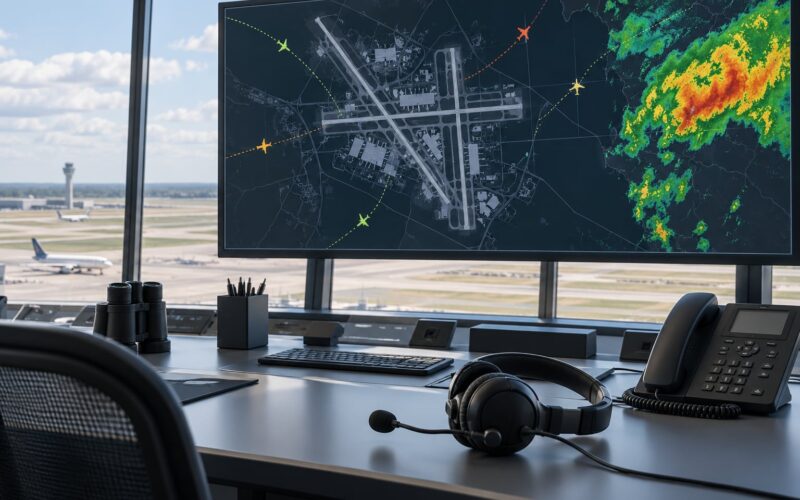
Flight routes are planned in layers. An airline first decides whether a city pair is worth serving at all, using booking data, fares and its own cost forecasts. Then it works out what path an aircraft can physically and legally fly, adjusts that path for wind, weather and restricted airspace, and files the result with air traffic control before departure. Most of the work happens months or even years before anyone boards.
Airports matter just as much. A runway that cannot take the aircraft, a gate that does not exist at 6 a.m., or a night curfew will stop a route no matter how many people want to fly it. Understanding the process explains things passengers usually just find annoying: why the 8 a.m. flight to a leisure destination only runs in winter, why a direct service keeps being withdrawn, and why adding a second daily frequency is harder than launching the route itself.
Below is how the decision actually moves through an airline, and where the airport side gets a veto.
Table of Contents
- 1How Flight Routes Are Planned: The Main Factors
- 2What Data Do Airlines Use to Decide Where to Fly?
- 3How Does Airport Capacity Affect New Flight Routes?
- 4How Do Aircraft Performance and Range Shape Routes?
- 5How Do Airlines Calculate Whether a Route Is Profitable?
- 6How Are Seasonal and Short-Lived Routes Scheduled?
- 7What Role Do Competition and Regulation Play?
- 8How Is a Flight Route Tested Before Launch?
- 9Frequently Asked Questions
- 10How long does it take for an airline to plan a new flight route?
- 11Why do airlines cancel routes that appear popular?
- 12How do airlines decide how many flights to operate on a route?
- 13What is the difference between a new route and a new nonstop flight?
- 14Can airports influence which airlines launch new routes?
- 15How do fuel prices and aircraft shortages change flight routes?
- 16Conclusion
How Flight Routes Are Planned: The Main Factors
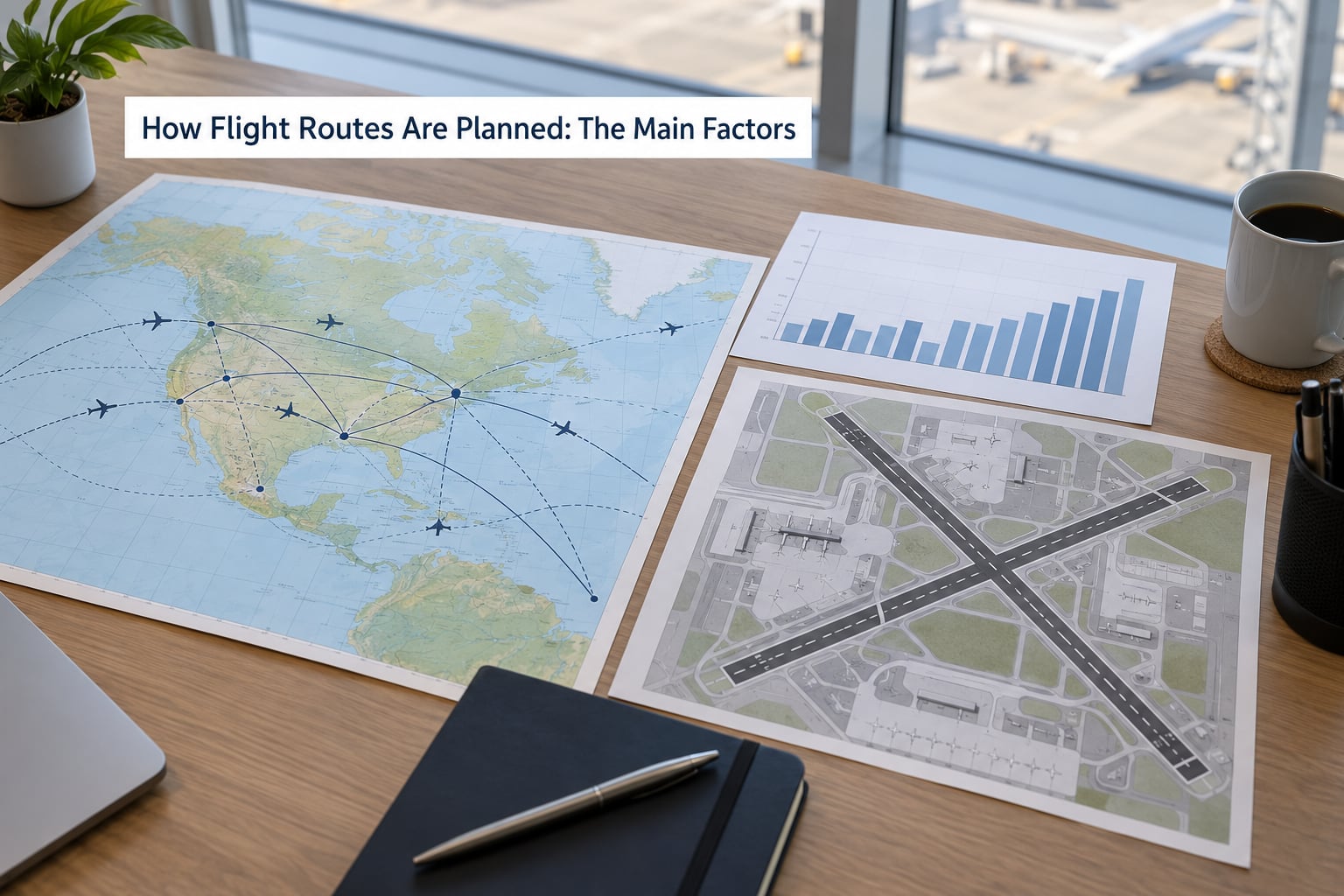
Six inputs decide whether a city pair gets a flight, and each one can kill the proposal on its own.
| Factor | What planners look at | Typical failure it causes |
|---|---|---|
| Passenger demand | Forward bookings, searches, connecting traffic, load factor history | Route is announced, then suspended after three months |
| Aircraft suitability | Range at required payload, runway length, cabin size | No aircraft in the fleet can fly it profitably |
| Airport capacity | Runway slots, gates, curfew, ground handling, congestion | Frequency capped or launch blocked entirely |
| Competition | Rival carriers, rail on the same corridor, codeshare partners | Fares collapse below the cost of flying |
| Seasonality | Holiday peaks, weather, events, charter and leisure cycles | Route exists for five months, then disappears |
| Regulation | Traffic rights, overflight permissions, security and emissions rules | Planned path is unusable as designed |
The first three are hard constraints. A plane that cannot physically reach the destination, or an airport that cannot accept it, stops the conversation regardless of demand.
What Data Do Airlines Use to Decide Where to Fly?

Route planners work from booking data and market forecasts, not gut feel. The core input is the booking curve: how many people have reserved seats for a city pair by date, and how that number compares with the same point last year.
Alongside it they track forward bookings and cancellations, load factor by flight and by season, and the fare mix across buckets. A route that fills cheaply at low fares is less attractive than one that fills slowly at high fares, even when the second one carries more empty seats.
Search and website data come next. Where passengers type a city name into the booking flow, which connections they try and abandon, and which competitor itineraries surface in the results all feed the same model. Connecting traffic matters more than many travellers expect, because a feeder route that feeds a hub can beat a route that fills with local passengers.
Planners also read the wider market: economic growth and population trends in the destination, tourism arrivals, cargo demand, event calendars, and the political and visa situation. Some routes are added for reasons that never appear in a passenger count, such as keeping a country on the route map for future bilateral talks or opening a destination before a rival does.
How Does Airport Capacity Affect New Flight Routes?
Airports control access through slots, gates and charges, which is why they can shape the network as much as airlines do. At congested airports, a carrier cannot simply add a flight because the demand exists; it needs a landing slot, a stand at the right hour, and the ground handling to turn the aircraft around.
The practical checks run in this order:
- Runway and slot capacity. Airports with more movements per hour can accept more services. Where demand outstrips capacity, slots are allocated by coordinators under agreed rules, and an airline may hold a slot it cannot use profitably.
- Runway length and strength. The aircraft has to be able to take off fully loaded at the destination, and wet or hot conditions shorten the usable runway.
- Terminal and gate space. A gate free at 7 a.m. is worth nothing if the only widebody stand is a three-hour walk away and already taken.
- Curfews. Noise limits block late arrivals and early departures, which rules out red-eye departures and effectively creates an eight-hour daily window.
- Congestion and weather. When delays stack up, traffic managers apply flow restrictions to specific runways, which pushes arrival times back and makes a tight-turning schedule unworkable.
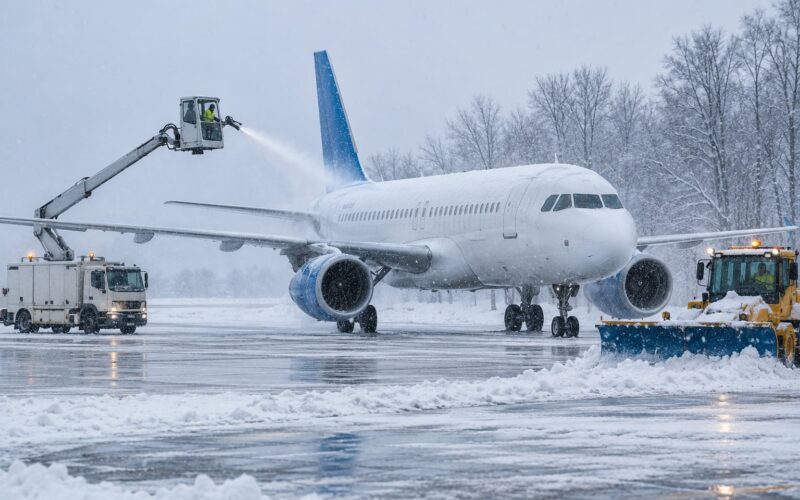
- Ground handling and diversion cover. An airport with no spare tug, no de-icing capacity in winter, or no nearby diversion field raises the operational risk that the airline prices into the route.
Airport charges matter too. A carrier considering a new city pair compares what it would pay per passenger at the destination against the alternative of flying to a nearby hub and connecting, where it already owns gates and staff.
How Do Aircraft Performance and Range Shape Routes?
Aircraft decide which routes are physically possible and which ones are merely awkward. Range and payload trade against each other: an aircraft can fly further when it carries less, so a heavy cargo or full passenger load can shorten the usable route.
Cruise altitude shapes the rest. On a long sector the crew steps the aircraft up through predefined levels as fuel burns off, usually climbing a few thousand feet at intervals, and each level costs less fuel per kilometre than the one below it. On short hops the aircraft never leaves lower altitudes, which is why a 400-kilometre hop is much less efficient per seat than a 4,000-kilometre flight.
Runway length at both ends constrains which aircraft can be assigned, and weather limits do too: high temperatures, icing, and strong crosswinds can all make a normally available runway unusable. Some routes also carry an ETOPS requirement, meaning the aircraft must be able to reach a suitable diversion airport after any single engine failure, and those alternates shape how the route can be planned over sparse terrain or ocean.
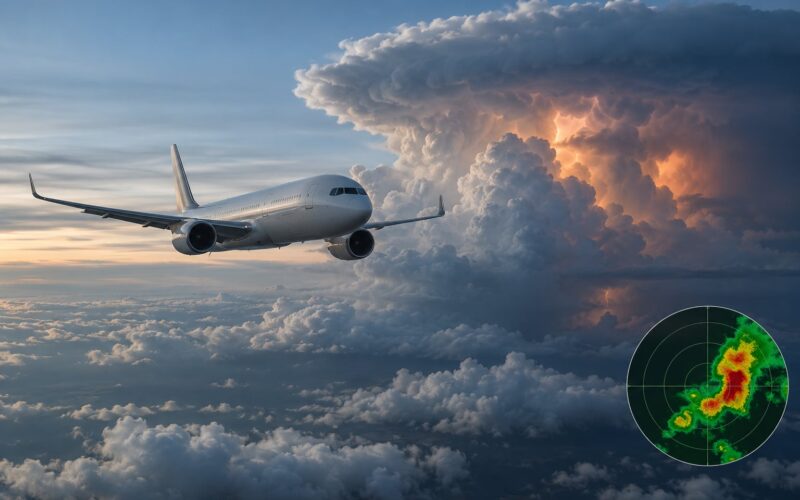
Once airborne, the crew continues to work the problem. Convective cells get deviated around, turbulence is avoided where reports allow, and the aircraft steps or descends to ride stronger or smoother winds. The route flown on any given day is rarely identical to the one filed the night before.
How Do Airlines Calculate Whether a Route Is Profitable?
Profitability comes down to whether total revenue beats total cost on the seats the airline offers, which planners express as a break-even load factor.
On the revenue side they model expected fares by season and by booking window, cabin mix, the number of seats offered and how full the aircraft is likely to be. Demand for a route can be strong and still produce poor revenue if the market is dominated by price-sensitive leisure travellers who book late and travel on low fares.
On the cost side the model includes fuel for the sector, crew duty time and pay, airport and navigation charges at both ends, handling and cleaning, aircraft ownership or lease cost, and distribution expenses for selling through booking channels. The distance flown matters more than the distance advertised, because wind changes fuel burn and block time directly.
Where two carriers fly the same city pair, each one prices against what the other can offer. That tends to compress fares toward cost, which is why a route with full flights on both airlines can still be withdrawn.
How Are Seasonal and Short-Lived Routes Scheduled?
Some demand is predictable and dated, so airlines build around it. Winter sun routes in northern Europe run for a defined season and then stop. Summer-only services to Caribbean and Mediterranean leisure markets appear in the spring schedule and disappear in the autumn one. School holidays, public holidays and major sporting events get extra frequencies or temporary capacity for a few weeks rather than a permanent addition.
Weather drives the opposite decision. Routes served by aircraft with limited runway performance or an ETOPS constraint are often suspended for days at a time in winter, so the schedule is built with fewer assumptions about daily reliability.
Less predictable demand gets tested first. A charter or a seasonal service may run for one summer, a trial of three rotations a week may last a year, and only a route that hits its target load factor moves into the permanent schedule. Watch any route launched with unusually confident frequency numbers and see whether those numbers are still there two seasons later.
What Role Do Competition and Regulation Play?
Regulation decides where an airline is allowed to go and how often. Bilateral agreements and open skies arrangements grant traffic rights between two countries, and many countries also control overflight rights, which determine whether an aircraft may cross their airspace on the way somewhere else.
That distinction bites during disruptions. A closed or unsafe airspace region forces flights to add thousands of kilometres, and European carriers in particular have had to route around parts of eastern Europe for years. Slot rules at congested airports, security screening requirements, noise abatement, and emissions and noise certification rules all narrow the field of possible services.
Competition works at two levels. A rival already flying the city pair forces fare discipline, while a codeshare partner can take traffic without competing head-on. Where high-speed rail covers the same city pairs in under three hours, short-haul flying tends to lose.
How Is a Flight Route Tested Before Launch?
The stages run roughly in this order, and they overlap more than any diagram suggests:
- Market research. Demand forecasts, competitor schedules, connecting traffic and a check that the aircraft in the plan can fly the city pair within its payload range.
- Revenue modelling. Expected fares, load factor and seasonality turned into a break-even load factor, tested against downside scenarios such as a slow start.
- Airport negotiation. Landing and handling agreements, gate allocation, slot requests, fees and any incentives on offer, sometimes including marketing support.
- Fleet and crew assignment. Aircraft type, rotation and crew base decided, with duty-time limits checked against the sector length.
- Schedule filing. Timetable lodged with the air navigation provider and the relevant authorities, and slots confirmed where the airport coordinates them.
- Operational readiness. Handling contracts, catering, fuelling, ground transport, and the alternates and diversion airports named for the operation.
- Review after launch. Load factor, on-time performance, delays and passenger feedback compared against the original case, usually within the first three months.
Almost every proposal gets trimmed at one of these steps. Frequency is cut, the aircraft type changes, or the launch moves to a later season because demand or slots were not ready.
Frequently Asked Questions
How long does it take for an airline to plan a new flight route?
A seasonal route can go from idea to first flight in about six months. A permanent international service usually takes longer, often one to two years, because traffic rights, aircraft availability and airport slots all have to be negotiated. Demand analysis starts well before that, and a trial service is often run first to test whether the revenue case holds.
Why do airlines cancel routes that appear popular?
A full flight does not mean a profitable one. If fares are low, if the aircraft was assigned more capacity than the market supports, or if the route depends on a seasonal spike, a route can lose money at high load factors. Fuel costs, currency changes, airport fee increases and a new competitor on the same city pair often push it below the break-even load factor.
How do airlines decide how many flights to operate on a route?
They start from forecast demand and spread it across the days and hours that best match it, then check the schedule against aircraft availability and slot rules. Frequency is capped by what the airport can handle and by how quickly the aircraft can turn and reach its next sector. Adding a single extra daily flight is often harder than adding the second daily one.
What is the difference between a new route and a new nonstop flight?
A new route is a new city pair on the network, however the aircraft gets there. A new nonstop flight is an added service on a city pair that already exists. Airlines often launch a city pair as a connecting service through a hub, then add nonstop flights once demand is proven, since nonstop capacity is only justified when passengers clearly want to avoid the connection.
Can airports influence which airlines launch new routes?
Yes, heavily. Airports allocate slots, gates and stands, set charges and curfews, and can offer incentives to airlines that commit new capacity. Where demand exceeds capacity, the airport effectively chooses which carriers grow. A large airport can also attract an airline by handling a new aircraft type, as happened when several hubs installed widebody-capable stands and long taxiways.
How do fuel prices and aircraft shortages change flight routes?
Higher fuel prices shorten the range and payload that a sector can carry profitably, which pushes airlines toward hub-to-hub flying and away from thin long-haul routes. When aircraft are scarce, deliveries go to the most profitable uses, so planned routes are left waiting for an aircraft and low-frequency services are cut first. Long-haul leisure routes are the usual casualties.
Conclusion
How flight routes are planned comes down to a sequence. Airlines test demand against fares and their own costs, choose a city pair the fleet can serve, work out a path their aircraft can legally and safely fly, and file it with air traffic control. Airports then decide how much of that plan they can absorb, through slots, gates, curfews and fees. Schedules are usually locked in two to four times a year, which is why frequencies move in steps rather than gradually.
If you want to understand a specific route on your own trip, start with the season. Check whether the service runs year-round or only in winter or summer, and compare the frequency against the number of seats the aircraft offers. Then look at the departure time: a route that only appears twice a week, or only in the evening, is telling you something about demand and airport slots. If a route you relied on disappears, the schedule change that removed it usually came months earlier than the announcement you saw.