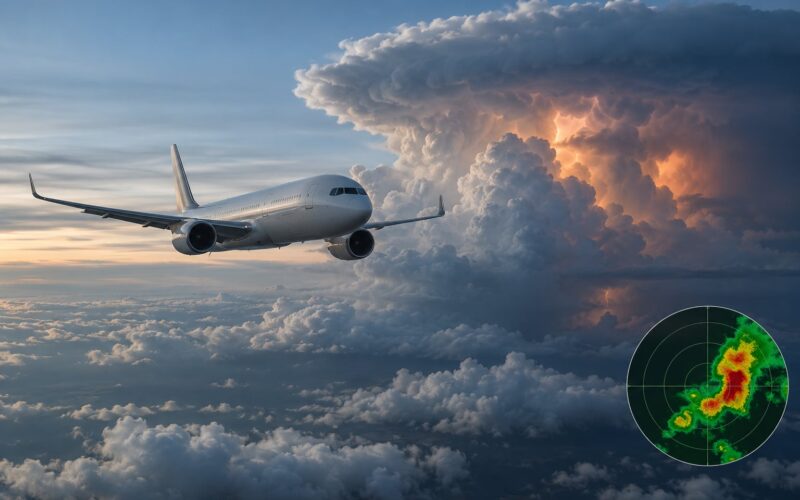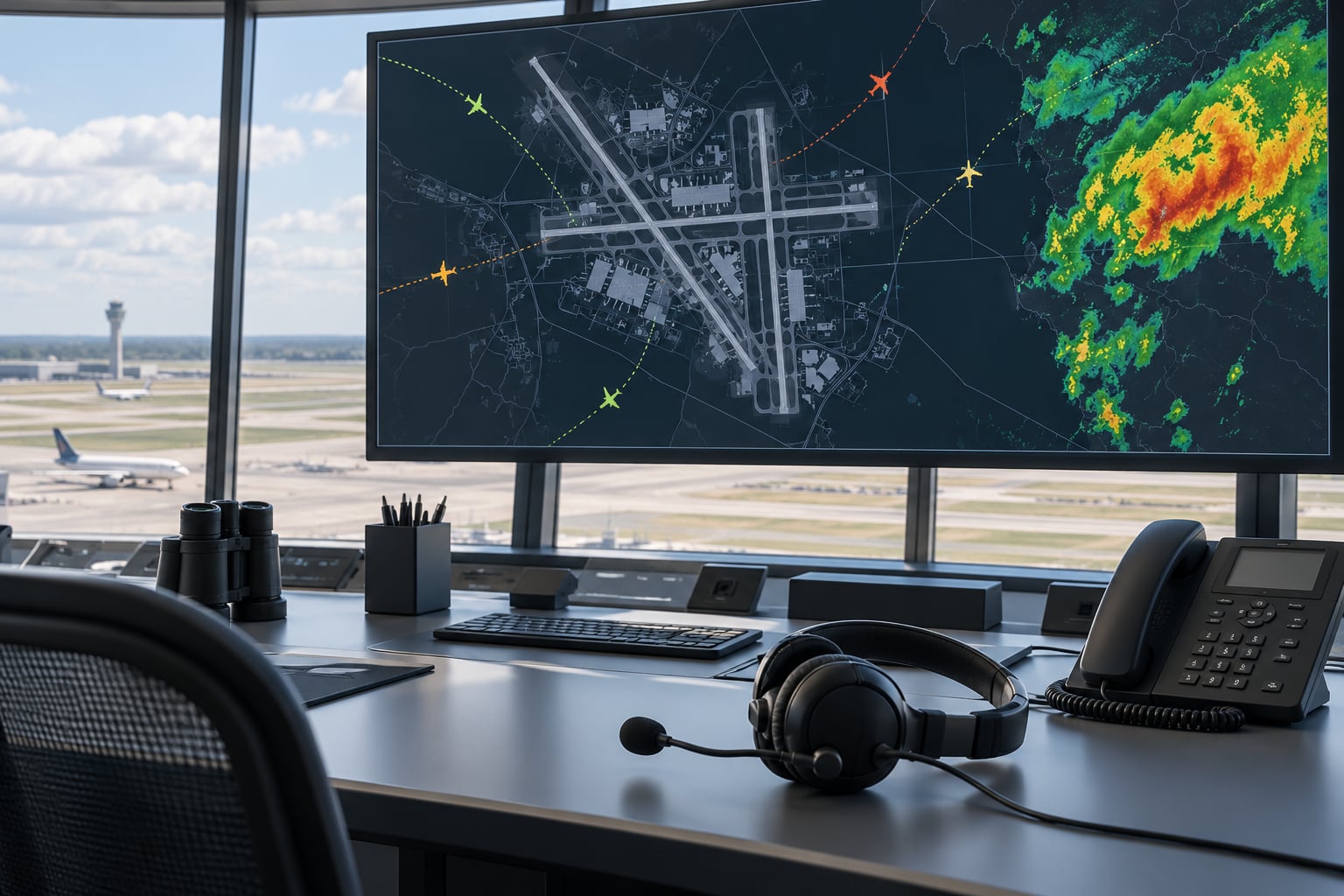
What is a ground stop at an airport? It is an air traffic control order that temporarily keeps flights heading to a specific destination airport grounded at their departure points, because that airport cannot safely accept more arrivals for the moment. It is not a closure, and flights already in the air can usually still land.
You see it on the departure board at an airport that has nothing wrong with it, and it is the most misunderstood phrase in air travel. Passengers read it as the airport being shut or their flight cancelled. Both readings are almost always wrong.
A ground stop is a routine safety tool, issued thousands of times a year for reasons as ordinary as a thunderstorm cell sitting over the destination’s final approach. This guide explains the mechanics, the causes, how long they last, and what to do when one lands on your itinerary.
Last updated: October 2026
Table of Contents
- 1What Is a Ground Stop at an Airport?
- 2Why Do Airports Put Flights on a Ground Stop?
- 3How Weather Creates an Airport Ground Stop
- 4How Long Does an Airport Ground Stop Last?
- 5Does an Airport Ground Stop Cancel Your Flight?
- 6What Should You Do If Your Flight Is on a Ground Stop?
- 7Airport Ground Stop vs. Flight Delay, Hold, and Diversion
- 8How a Ground Stop Differs from a Ground Delay Program
- 9Does a Ground Stop Affect Arrivals and Baggage?
- 10Frequently Asked Questions
- 11Can I leave the airport during a ground stop?
- 12Is a ground stop the same as a flight cancellation?
- 13Why is my flight on a ground stop when the weather looks clear?
- 14Will my airline protect my connection if a ground stop delays me?
- 15Does a ground stop mean my checked baggage will be lost?
- 16Can I get compensation for a ground stop?
- 17The Bottom Line on Airport Ground Stops
What Is a Ground Stop at an Airport?
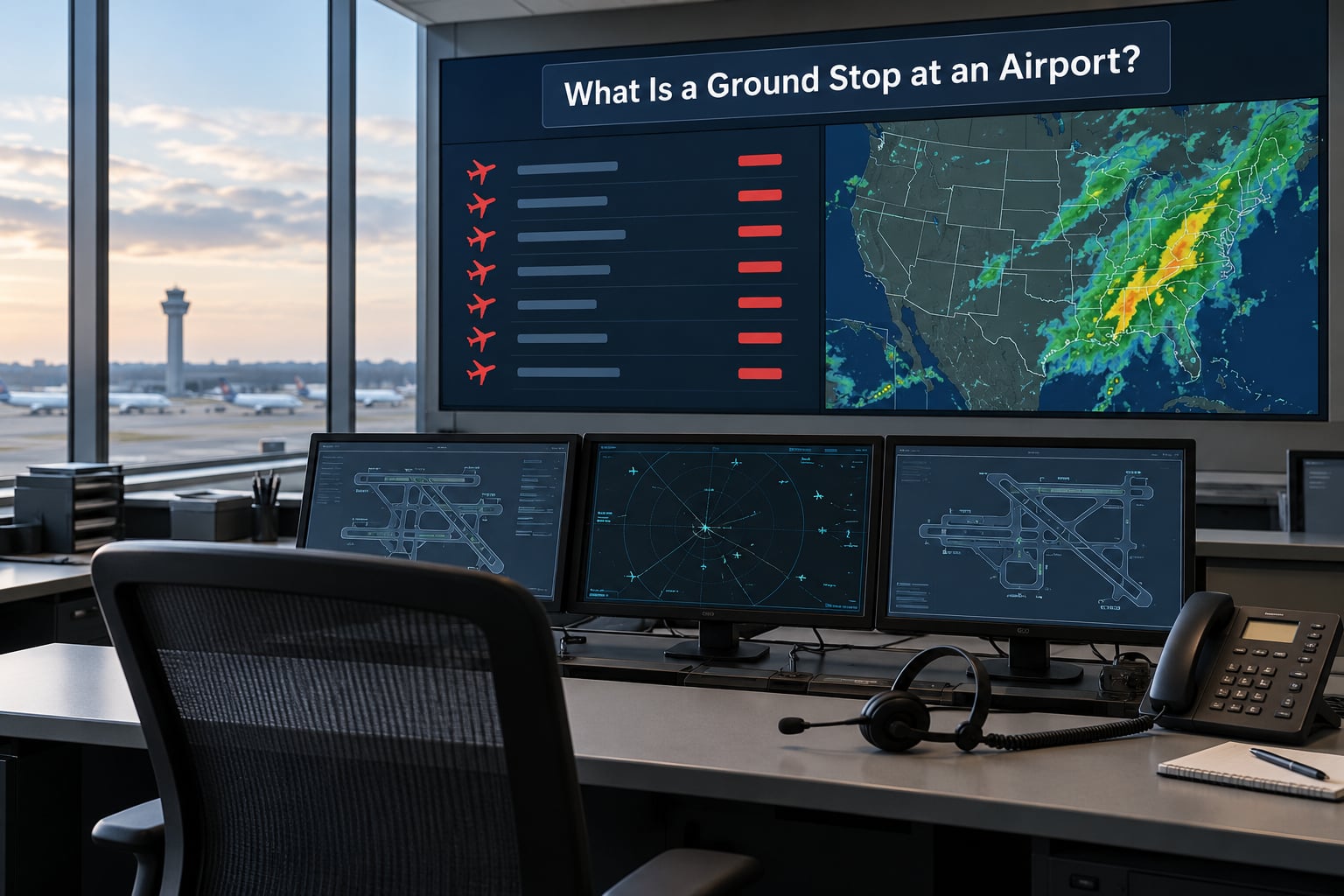
A ground stop is an order that withholds departure clearance. An aircraft bound for the affected destination is not allowed to taxi out and take off until air traffic control releases the hold, so it waits at the origin gate or on the apron instead.
Controllers hold flights on the ground rather than in the air for a simple reason: a jet that circles at 15,000 feet burns enormous amounts of fuel, competes for airspace with everyone else, and has to be talked down by a controller who may already be stretched. Keeping it on the ground is cheaper, safer and easier to manage. Ground stops are issued by the FAA, either by the local control facility at the departure airport or by the air traffic control center that owns the destination’s airspace.
The scope varies, and this is where a lot of confusion comes from. Most stops target one arrival airport. A broader stop can cover every flight entering a control center’s airspace, which is what happened at San Francisco International on June 8, 2026, when a brief stop applied to flights routed through Western US air traffic control centers rather than to SFO alone. At the extreme, a nationwide or worldwide stop can ground flights across a network, as the January 11, 2023 failure of the US notice-to-airmissions system effectively did.
Some stops are also tiered, applying only to certain carriers, certain aircraft types or flights above a specific weight. Regular travelers rarely notice, but it explains why two flights to the same city can be held for very different lengths of time.
Key takeaways
- A ground stop is a safety order that keeps inbound flights on the ground at their departure points.
- It is issued by air traffic control, usually because the destination airport’s arrival capacity has dropped.
- It is not an airport closure, not a cancellation, and it usually does not affect aircraft already airborne.
- Most last from tens of minutes to a few hours; the rare large ones run for hours or a full day.
- The fastest way to know what is happening is the FAA’s National Airspace System Status page and your airline’s app.
What a ground stop is not
It is not a closure. The destination airport keeps operating, other flights keep landing, and only the specific inbound flow is throttled. It is not a cancellation either. A held flight is still booked, still scheduled, and usually still flies later the same day. And it very rarely affects aircraft already in the air, because by the time a stop is issued the pilots of inbound aircraft usually still have clearance to continue, land, or divert if the situation changes on arrival.
Why Do Airports Put Flights on a Ground Stop?
The underlying reason in almost every case is the same: the destination cannot safely handle more arrivals than are already on their way. Controllers can slow that flow in three ways, and ground stops are the bluntest of them.
Runway capacity. A single runway closed for emergency repairs, a displaced threshold after a runway excursion, or a runway being plowed, deiced or inspected cuts the number of landings the airport can perform each hour. Houston Hobby Airport sat under a ground stop for nearly three hours on July 30, 2024 while crews worked on an emergency runway repair.
Controller staffing. Air traffic control is a staffing system first. When positions go unfilled, the number of aircraft a facility can safely sequence falls. Austin-Bergstrom International Airport was placed under a ground stop early on the morning of March 21, 2025 because of controller staffing, and the resulting delays ran well past the first wave of departures.
Equipment or system failure. A failed radar, a bad software deployment or an outage of the notice-to-airmissions system can ground traffic far from any airport. These are rare, and when they happen the stop is often nationwide because the fix is not local.
Security and emergencies. A security incident, a disabled aircraft on a taxiway, a fuel spill or a medical evacuation closes gates and taxiways. Departures held at the origin are the simplest way to keep the airport from being overwhelmed while the situation is resolved.
Congestion. Even with everything working, a hub can simply be oversubscribed. Summer Friday afternoons and the evening bank at places like Newark, O’Hare and Dallas are routine candidates, and a ground stop can be a preemptive way to stop a small jam becoming a six-hour one.
One thing travelers find frustrating: the FAA and airport operators usually publish the fact of a ground stop without publishing the cause. If you notice that the official status page says only “ground stop” with no explanation, news coverage is usually the only public source for the reason, and it is often attributed rather than officially confirmed.
How Weather Creates an Airport Ground Stop
Weather is the most common trigger, and it works by removing landing capacity rather than by making takeoff impossible. A line of thunderstorms near the destination’s final approach means aircraft cannot be safely cleared to descend, so controllers stop feeding new arrivals into the pattern. Wind shear and microburst warnings on approach do the same thing for short, violent periods.
Winter works the same way with different tools. Snow and ice require plowing, and freezing rain may require aircraft to be deiced before departure, which adds ground time at both ends. Low ceilings and visibility below minimums block approaches entirely, and strong crosswinds can exceed the demonstrated limits of a runway, forcing the airport into a lower arrival rate. Less common but just as capable of grounding a region: volcanic ash and dense wildfire smoke, which can close airspace outright.
Denver International Airport is the classic example of weather doing this at scale. On June 11, 2025 the FAA issued a ground stop there as severe Colorado storms moved through.
How Long Does an Airport Ground Stop Last?
Anywhere from about fifteen minutes to a full day. There is no standard duration, because the stop lasts exactly as long as the condition that caused it.
A runway repair or a fast-moving storm line usually clears within one to three hours. Texas’s Hobby example above ran close to three hours. A staffing shortage can last a shift if positions stay open. Equipment failures are the wild card, since resolution depends on technicians and software, and the January 11, 2023 notice-to-airmissions outage produced nationwide holds that stretched across the working day. Weather systems that stall over a region, such as a hurricane sitting offshore, can hold traffic far longer than a forecast would suggest.
Your airline will give you the best estimate available, usually a revised departure or arrival time that updates as the situation changes. Treat any single time the airline gives you early on as provisional, and understand the difference between an announced hold and a firm departure time. A hold is “we expect to rebook you around this time”. A firm time is “this is your new departure”. The first can move; the second is what you should plan around.
Does an Airport Ground Stop Cancel Your Flight?
No. A ground stop is a delay mechanism, and the overwhelming majority of flights held this way eventually fly. Cancellations that follow a ground stop are almost always a downstream decision, not the first one.
What turns a hold into a cancellation or an overnight is the cascade. A jet held at the origin arrives late, and by then the crew may be close to flight duty limits, meaning the airline cannot legally put them on a long flight home. An aircraft is out of position, so the return leg has no crew or no plane. Your onward connection was already the tightest one on the itinerary, and a three-hour hold at the destination leaves you landing at midnight with nothing available. Passengers on a r/unitedairlines thread described exactly that pattern during a Houston ground stop, with delays measured in six hours while a storm warning was still active over the area.
Rerouting is the usual recovery. If a hold applies to every flight heading to a specific destination, the airline may send a later departure, put you on a different aircraft, or route you through a different connecting airport. Cancellation comes last, when the schedule can no longer be recovered before the aircraft’s operating day ends.
What Should You Do If Your Flight Is on a Ground Stop?
Do these in order, and the first one takes about a minute.
- Check the FAA’s National Airspace System Status page. It is the authoritative list of active ground stops, ground delay programs and arrival rate restrictions, and it distinguishes airport-specific stops from control-center and nationwide ones. It also tells you whether the hold is on arrivals or departures.
- Check your airline’s app or website, not just a third-party tracker. Your operating carrier is the one making the boarding, crew and rebooking decisions.
- Ask about connection protection early. If you have a tight onward connection, tell the gate agent before the delay grows. Airlines can often rebook you on a later connection at no charge, and asking at minute twenty is far easier than at hour six.
- Ask what the airline is offering. Long holds with a meal, and overnight stays when a delay pushes past midnight, are standard practice, but only when the delay is significant and the airline agrees to cover it.
- Keep your booking records. Screenshots of the delay, the rebooking offer and any cancellation notice make a later compensation claim far easier.
- Ask before leaving the secure area. If you are not yet on board, most terminals let you reach a restaurant or a lounge, but international passengers should confirm re-entry and security re-screening first.
One habit worth building: refresh the flight status yourself every thirty minutes rather than staring at a static departure board. Ground stops lift without much notice, and the aircraft that gets a released slot is often the one you rebooked onto.
Airport Ground Stop vs. Flight Delay, Hold, and Diversion
These get used interchangeably in casual conversation, but they describe different things happening in different places. Knowing which one you have tells you where to look for information.
| Measure | What it is | Where you are | Typical length | How to spot it |
|---|---|---|---|---|
| Airport ground stop | ATC order that withholds departure clearance for flights bound for a given destination | On the ground at your departure airport, usually at a gate | Tens of minutes to several hours | A public advisory on FAA status and an alert in your airline app |
| Individual flight delay | A single aircraft is late: maintenance, a late inbound crew, boarding hold | On the ground at your departure airport | 15 minutes to several hours | Only your flight shows a delay; no public advisory |
| Air traffic control hold | A tactical instruction to circle or stay at an altitude for a set period | Airborne, in the air | Usually under 30 minutes, occasionally longer | ATC instructions in your route; fuel is the limiting factor |
| Deicing or operational hold | The airline pauses boarding or pushback for deicing, loading or paperwork | On the ground, often with deicing trucks alongside | 10 to 45 minutes | Aircraft surrounded by ground equipment, or a hold time in the app |
| Diversion | The destination is closed to your flight, so ATC sends you somewhere else | Airborne, then landed at an alternate airport | The rest of the flight plus ground time at the alternate | Your app shows a different arrival airport |
How a Ground Stop Differs from a Ground Delay Program
A ground delay program is the gentler sibling of the ground stop. Instead of refusing to release any departures, a GDP assigns each affected flight a specific new departure time spread over the delay period, so the flow is throttled without a hard freeze. When a program exists alongside an arrival rate restriction, the two work together: the arrival rate is the number of aircraft the destination can accept per hour, and a GDP is the schedule-level tool used to match demand to that number.
The practical difference for a passenger is the tone of the notice. A ground stop says nothing leaves until further notice. A ground delay program hands you a new time, usually in the app, and expects you to be there. Neither is a cancellation, and neither tells you anything about your checked bag.
Does a Ground Stop Affect Arrivals and Baggage?
Yes, in ways that are less visible than your departure time. A destination that cannot land aircraft cannot free up gates, so arriving passengers sit on the ramp and the gate plan degrades. That pushes departures back, which is why an airport can have a ground stop on its arrivals and still be unable to depart anyone on time.
Connecting passengers feel it hardest. A missed connection means a new boarding pass, a different gate, and sometimes a baggage recheck at the connecting airport. A bag that was tagged to a through-check will be recovered by airline staff and forwarded, but forwarding is manual, so delivery can take a day or more behind you.
Downstream service at the destination suffers too. Crews arrive late, rental cars and hotels get shifted, and onward flights from that airport inherit the delay. That is why a ground stop at a hub can affect a traveler who never touched that city and never heard its name.
Frequently Asked Questions
Can I leave the airport during a ground stop?
It depends on whether you have boarded. If your flight is still at the gate, most airlines will let you walk to a restaurant, lounge or shop in the terminal, and many airports allow curbside re-entry with a boarding pass. Once the door closes you are expected to stay on board. If you are flying internationally with a long hold ahead, confirm with the gate agent before leaving the secure area, because security re-screening can add its own delay.
Is a ground stop the same as a flight cancellation?
No. A ground stop is a hold on departure clearance, and the flight remains booked and scheduled. Most flights held this way operate later the same day. A cancellation is a separate decision made when the airline can no longer recover the aircraft, the crew or the schedule, usually near the end of the operating day. If your booking shows a cancellation, the hold has already ended badly.
Why is my flight on a ground stop when the weather looks clear?
The stop is almost never about the weather where you are standing. It applies to your destination, and sometimes to a whole control center’s airspace, so a clear sky at your airport says nothing about conditions 200 miles away. Other common reasons include a runway closure or repair, a controller staffing shortage, a radar or system outage, a security incident, or simply more aircraft scheduled to arrive than the airport can accept.
Will my airline protect my connection if a ground stop delays me?
Often yes, if you ask early. Most carriers will rebook you on a later connection at no charge when the delay is theirs or caused by ATC, and the gate agent is the person who can do it. Tell them your onward flight number as soon as the delay passes an hour, and get the rebooking in writing. Protection is far less smooth after midnight, when there is nothing left to rebook you onto.
Does a ground stop mean my checked baggage will be lost?
Almost never. A held flight is a delayed flight, and the bag stays tagged to the same itinerary. The real risk is a missed connection, where staff physically recheck and forward the bag from the connecting airport. That forwarding is manual, so it can arrive a day or more behind you. Pack anything you need for one night in your personal item, and keep your bag tag for the claim.
Can I get compensation for a ground stop?
Usually not in the United States, because the delay is driven by air traffic control rather than by the carrier, and US rules mainly cover cancellations and major changes. In the European Union, rules are broader: a delay of three hours or more on arrival from an EU airport can qualify for compensation even when the cause is outside the airline’s control, unless you were connecting from another flight. Rules vary by country, so check the passenger rights for your specific itinerary.
The Bottom Line on Airport Ground Stops
A ground stop is a temporary safety decision made by air traffic control to keep aircraft out of airspace that cannot take them. It is not a closure, not a cancellation, and not a problem with the airport you are sitting in.
Do one thing first: open the FAA National Airspace System Status page and see whether the hold is on your destination, and for how long. Then talk to the gate agent early, especially if you have a connection or a red-eye to catch.