A U.S. passport card is a wallet-sized travel document that proves U.S. citizenship and identity, and it is valid for land border crossings and sea travel to Canada, Mexico, Bermuda, and certain Caribbean destinations. It is never valid for international air travel, which is the single fact that decides whether it is useful for your trip. If you are wondering what is a passport card used for and whether it covers your itinerary, this guide walks through every accepted use, every hard limit, and how the card compares to a passport book.
The short answer: a passport card is a compact supplement for regional trips, not a replacement for a passport book. Most travelers who need documents for Europe, Asia, or an international flight need the book, not the card.
This guide was updated for 2026. Fees and processing times change, so check travel.state.gov before you apply.
Table of Contents
- 1What Is a Passport Card Used For?
- 2Permitted uses
- 3Major limitations
- 4Where Can You Travel With a Passport Card?
- 5Which cruise itineraries accept a passport card?
- 6Passport Card vs. Passport Book: What Is the Difference?
- 7Can You Fly With a Passport Card?
- 8How Do You Get a Passport Card?
- 9First-time application
- 10Renewal
- 11How Long Does a Passport Card Stay Valid?
- 12Can a Child Use a Passport Card?
- 13What Should You Do If You Need Both Documents?
- 14Frequently Asked Questions
- 15Is a passport card valid for international flights?
- 16How long does a U.S. passport card last?
- 17Can I use a passport card for a cruise?
- 18Do I need a passport book as well as a passport card?
- 19Can a passport card be used for a visa?
- 20What documents should I carry when using a passport card?
- 21Conclusion
What Is a Passport Card Used For?
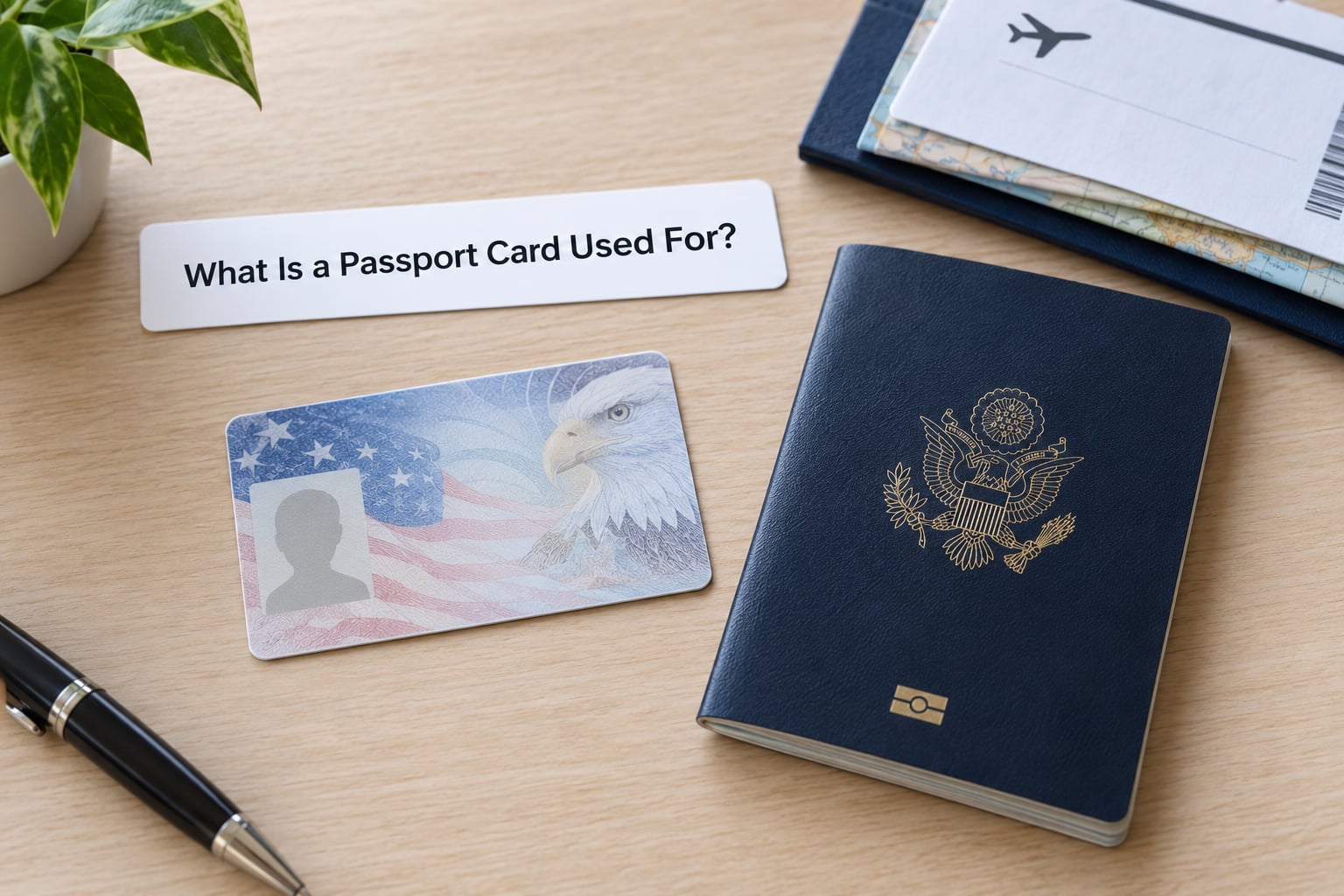
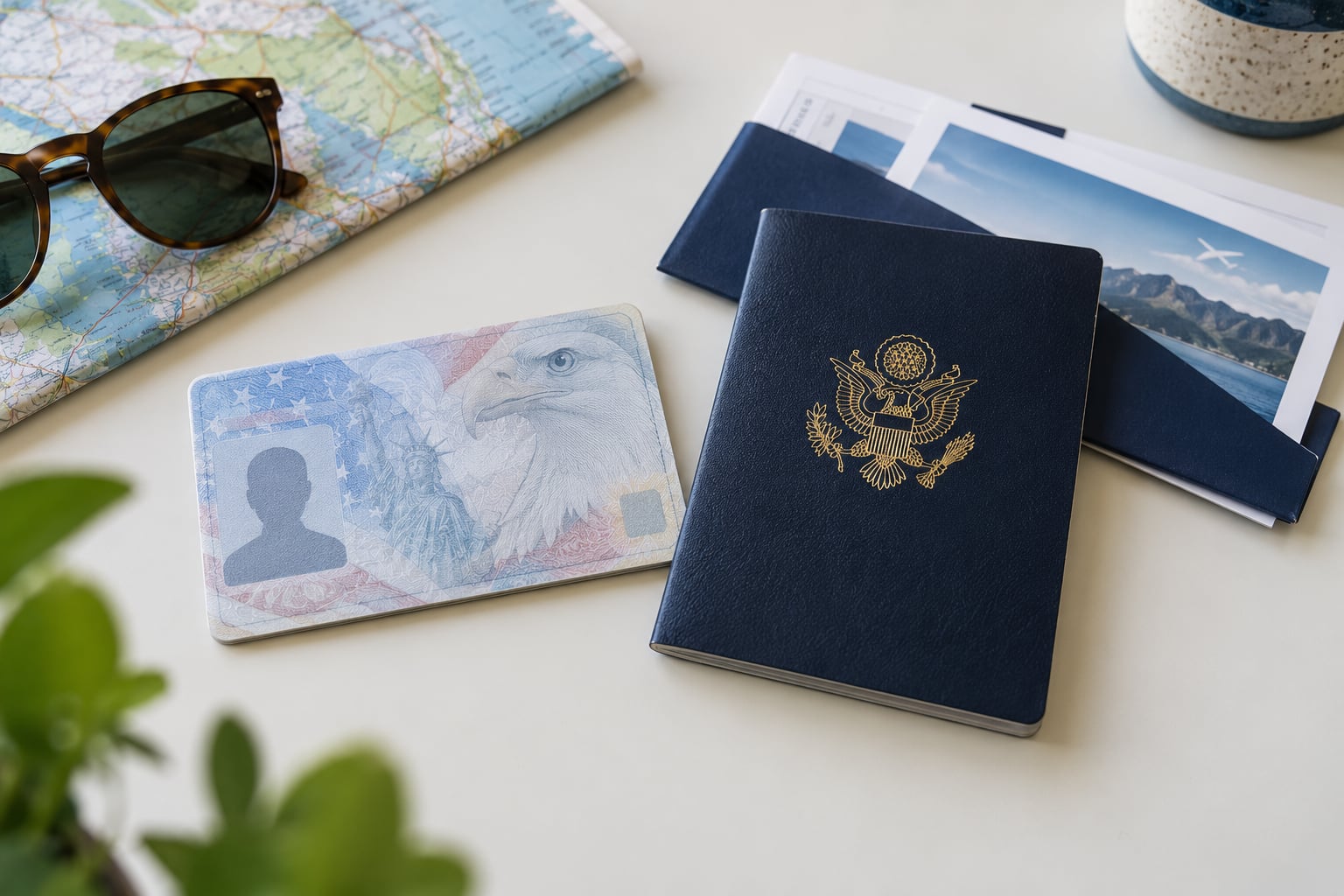
The U.S. passport card is a federally issued, credit-card-sized booklet that serves as proof of U.S. citizenship and identity at specific land and sea ports of entry. Border agents scan its chip and read its machine-readable zone to confirm who you are and where you are from. It was designed in the 1990s for people in northern and southern border communities who crossed frequently and did not want to carry a full passport book.
Permitted uses
- Entering or returning to the United States at a land border crossing with Canada, Mexico, Bermuda, the Bahamas, or certain Caribbean nations
- Sailing on a closed-loop cruise that begins and ends at a U.S. port, along with the ferry and boat routes covered by the same rule
- Boarding a domestic U.S. flight as a REAL ID-compliant photo ID
- Hotel check-in, car rental, and any U.S. federal facility that asks for a federal photo ID
- Carrying proof of citizenship without the bulk of a passport book
Major limitations
- No international air travel, under any circumstance, in either direction
- No entry to Europe, Asia, Africa, the Middle East, or anywhere outside the covered Western Hemisphere destinations
- No visa support, since no country that issues visas to U.S. citizens accepts a card as the passport for entry
- No help getting home from an international airport if you did not bring a book
That last limitation is the one people regret. A card is fine going into Canada by car and useless coming back from Paris by plane, because the return leg is an international flight.
Where Can You Travel With a Passport Card?
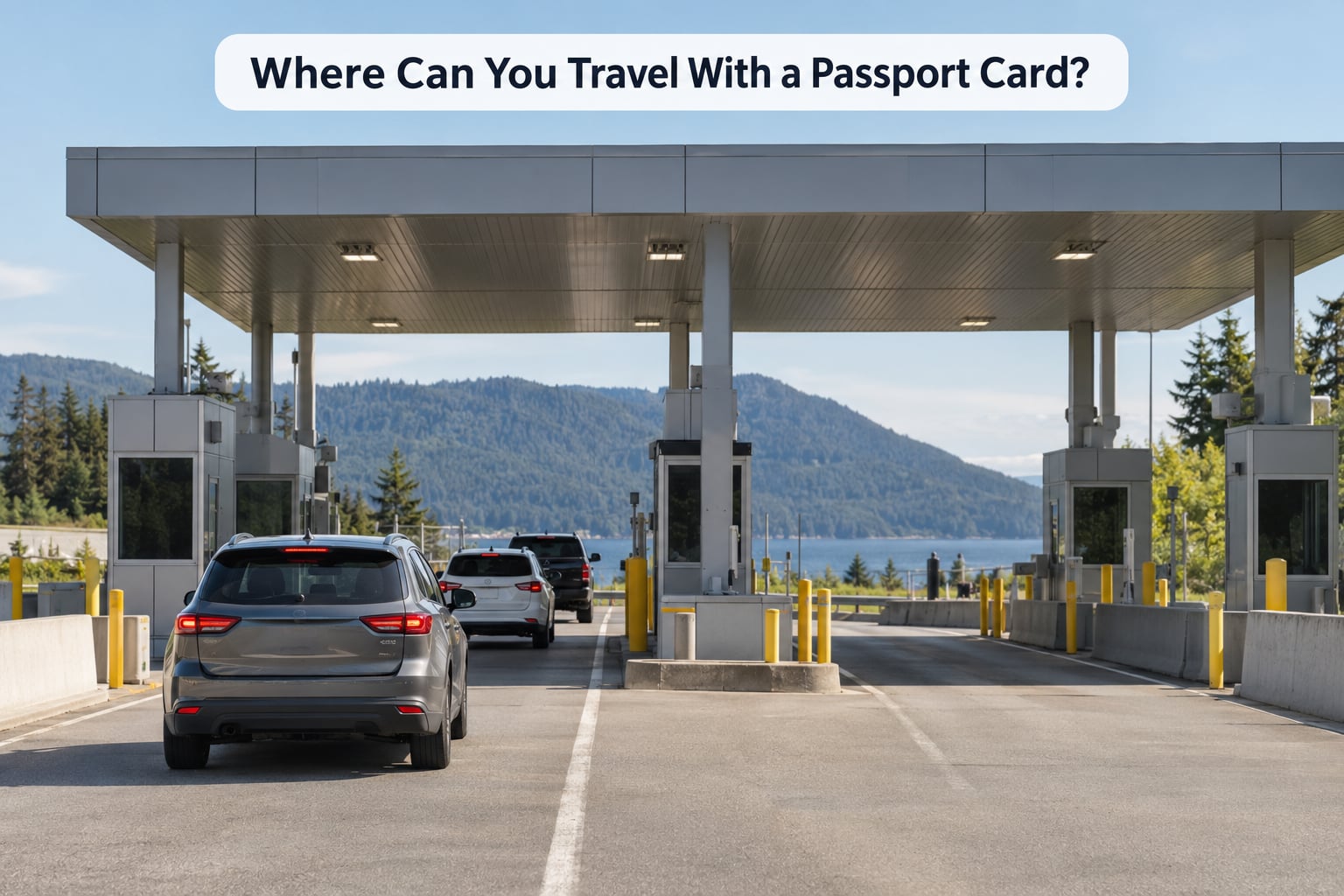
A passport card is accepted at land border crossings and sea ports of entry for a defined set of destinations under the Western Hemisphere Travel Initiative, the U.S. and Canadian rules that set document standards for the region. The covered destinations are Canada, Mexico, Bermuda, and a group of Caribbean nations including the Bahamas and several others in the northern Caribbean.
Land travel is the cleanest use case. Driving from Michigan into Ontario, from Vermont into Quebec, from Texas into Mexico, or from California into Tijuana all work with a card. So do the short ferry and passenger boat routes that count as sea ports of entry.
Which cruise itineraries accept a passport card?
A closed-loop cruise is a sailing that leaves from a U.S. port and returns to that same U.S. port without calling at a foreign port. For those trips, a passport card or a certified birth certificate is generally accepted in place of a passport book, though each cruise line sets its own rules and can be stricter than the government.
Two exceptions catch travelers regularly. Sailings that call at ports in the French West Indies, including Martinique and Guadeloupe, require a passport book even when the itinerary is closed-loop. Cuba requires a passport book plus an authorized travel category under U.S. regulations. If either appears anywhere on your itinerary, the card is out.
Requirements change as border rules shift, so confirm with the cruise line and the destination’s official immigration page before booking a segment around the card.
Passport Card vs. Passport Book: What Is the Difference?
| Criterion | Passport card | Passport book |
|---|---|---|
| Size | Wallet-sized, credit-card format | Full booklet, fits in a jacket or bag |
| Proves citizenship | Yes, federally issued | Yes, federally issued |
| Land travel to Canada and Mexico | Accepted | Accepted |
| Closed-loop cruises | Usually accepted, line rules apply | Accepted |
| International air travel | Not valid | Valid |
| Europe, Asia, Africa travel | Not valid | Valid |
| Visa applications | Not accepted | Accepted |
| Domestic U.S. flights | REAL ID compliant, accepted | Accepted |
| Validity for adults | 10 years | 10 years |
| Validity under 16 | 5 years | 5 years |
| Replacement if lost abroad | Requires an emergency travel document | Requires an emergency travel document |
| Renewal without mailing the current document | Eligible renewals can be done online | Same online renewal path applies |
The book does everything the card does, and then some. If you only need the functions listed above, a book still works fine. The card’s real argument is convenience: it is small enough to keep in a wallet year-round instead of sitting in a drawer.
Border-region commuters in Michigan, Texas, and Southern California tend to reach the same conclusion. They carry the card daily because crossing twice a week with a book in a glovebox is a hassle.
Can You Fly With a Passport Card?
Yes domestically, no internationally. A passport card is a REAL ID-compliant federal photo ID, so TSA accepts it for domestic U.S. flights, which is why many travelers hold one instead of paying to upgrade a driver’s license. On the international side, the answer is flat: a passport card cannot be used to board a flight to or from a foreign country.
Think about which direction your trip needs. Flying from Boston to Montreal is international air travel and a card will not get you on the plane. Driving from Boston to Montreal over the border works fine with a card.
The emergency case is worth sitting with. If a cruise sailing leaves without you and you need a flight home from a foreign airport, or a medical evacuation puts you on a transatlantic flight, the card is not that document. Carrying only a card on a cruise is dead weight for exactly this reason. If any part of your plan involves leaving a foreign country by air, carry a passport book.
How Do You Get a Passport Card?
There are two paths, and the second one is simpler.
First-time application
First-time applicants and minors apply in person at a passport acceptance facility, most often a USPS location, a clerk of court, or a public library designated for the service. Bring proof of U.S. citizenship such as a birth certificate or a previous passport, a valid photo ID, a photocopy of the photo ID, and the required fees. You fill out Form DS-11, which is signed in front of the acceptance agent.
Renewal
Eligible renewals go through the online or mail renewal system rather than an in-person appointment, and many travelers can keep their current document in hand instead of mailing it in. That last detail matters to frequent border crossers who need a working card the whole time.
Fees differ by document type, application type, and processing speed, and they are adjusted periodically. Rather than repeat figures that will be stale, check the current State Department fee schedule on travel.state.gov. Routine processing is measured in weeks, and expedited options cost more and move faster for urgent travel.
How Long Does a Passport Card Stay Valid?
A passport card issued to an adult is valid for 10 years. One issued to a child under 16 is valid for 5 years. The document does not hold more pages, so there is nothing to run out of, which is a genuine advantage over a heavily stamped book.
Separate from expiration, many destinations ask for three or six months of remaining validity before they let you enter. That rule applies to passport books too, and it applies at your own return to the United States, so a card with two months left can be refused.
Can a Child Use a Passport Card?
Yes. A U.S. citizen child under 16 can receive a passport card on the same application as an adult, and the child must appear in person at the acceptance facility. Both parents or guardians generally need to provide consent, with the DS-3053 notarized consent form covering the case where one parent cannot attend.
The card is issued with a 5-year validity rather than 10. For a family driving to Canada or taking a closed-loop cruise, the card works the same as an adult card. For anything involving an international flight, get the child a book.
What Should You Do If You Need Both Documents?
Map every leg of the trip against the two rules. Any international flight means a passport book. Any land or sea crossing to a covered destination means the card handles it. Itineraries that mix a short drive to Canada with a separate trip to Europe need the book, and a card adds nothing there.
Some travelers keep both on purpose. The book lives in a bag for international trips, and the card stays in the wallet as daily ID for domestic flights, hotel check-ins, and border runs.
One clarification worth making: a passport card is not a trusted-traveler program card. NEXUS and Global Entry are programs that speed border processing and require their own separate enrollment, application, and fee. People searching for a passport card often want one of those instead, and they solve a different problem entirely.
If a card is lost or stolen while you are in the United States, report it and apply for a replacement. If it is lost abroad and you are on a closed-loop sailing, you will need an emergency travel document and help from a U.S. embassy or consulate to get home.
Frequently Asked Questions
Is a passport card valid for international flights?
No. A U.S. passport card is not valid for international air travel in either direction, which includes flights to Canada, Mexico, and Bermuda. It works only at land border crossings and sea ports of entry, and for closed-loop cruises that start and end at a U.S. port. If your itinerary includes any flight that leaves or enters a foreign country, you need a passport book instead.
How long does a U.S. passport card last?
A passport card issued to an adult is valid for 10 years, and one issued to a child under 16 is valid for 5 years. Expiration is separate from destination entry rules, since many countries require three to six months of remaining validity before you arrive. The card also has no pages to fill up, so it cannot run out of space.
Can I use a passport card for a cruise?
For a closed-loop cruise that departs and returns to a U.S. port without calling at a foreign port, a passport card is generally accepted, though each cruise line can set stricter rules. A certified birth certificate is another option on many sailings. Ports in the French West Indies, including Martinique and Guadeloupe, and Cuba require a passport book even on closed-loop itineraries.
Do I need a passport book as well as a passport card?
Only if your travel includes international flights or destinations outside the covered set. A passport book can do everything a card can do, so buying both is usually a convenience choice rather than a requirement. Many border-region commuters keep the card in their wallet as federal photo ID and leave the book packed for international trips.
Can a passport card be used for a visa?
No. Countries that issue visas to U.S. citizens require a passport book as the basis for the application, because a card cannot support an international entry. If you are applying for a Schengen, UK, or other visa, plan on a passport book for both the application and the trip. The card serves only the land and sea destinations it covers.
What documents should I carry when using a passport card?
Carry the passport card itself, and treat it as your primary proof of U.S. citizenship and identity at the border. For land or sea travel to Canada, Mexico, Bermuda, or the Caribbean, it is the document that matters. A driver’s license or state ID is a useful backup for everyday situations, but it does not replace the card for international border crossings.
Conclusion
Choose a passport card when your trip is a land or sea crossing to Canada, Mexico, Bermuda, or a covered Caribbean destination, a closed-loop cruise, or when you want compact federal photo ID for domestic flights and everyday use. Choose a passport book the moment an international flight or a visa enters the picture, because that is where the card stops working.
Start by listing every leg of your itinerary and marking each one land, sea, or air. If even one leg is air and international, get the book first.