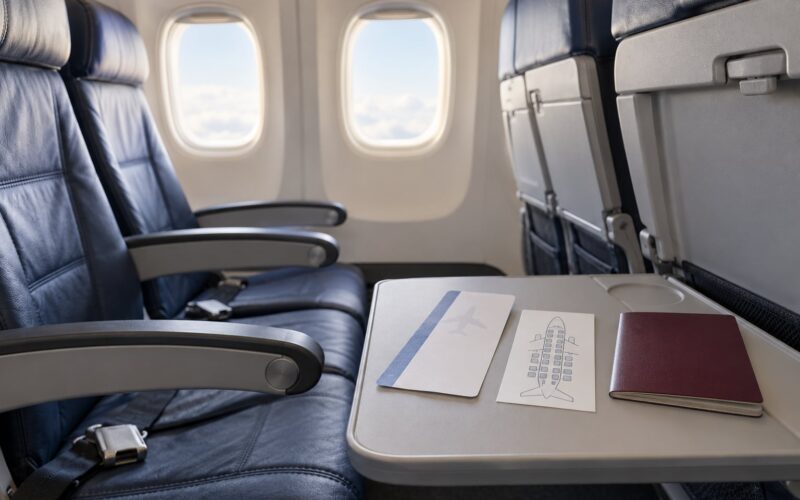
You can land a red-eye usable by treating the overnight cabin like a bedroom you get to wake up in. Knowing how to survive a red eye flight is mostly about doing the work on the ground first: stay awake through the departure day, pick the right seat, pack a small sleep kit, and keep water and light on your side for the hours after landing. Most passengers get a few broken hours rather than a full night, and that is fine — body rest beats staring at the ceiling.
Below is the routine I would hand to a nervous first-timer, in the order the trip actually happens. Last updated October 2026.
Table of Contents
- 1What You Need
- 2Step-by-Step: How to Survive a Red-Eye Flight
- 3Step 1: Shift Your Sleep Schedule Before the Trip
- 4Step 2: Choose a Red-Eye Flight That Fits Your Routine
- 5Step 3: Prepare Your Body the Day Before
- 6Step 4: Build a Comfortable Carry-On Kit
- 7Step 5: Protect Your Sleep at the Airport
- 8Step 6: Sleep Smarter During the Flight
- 9Step 7: Stay Hydrated and Avoid Heavy Alcohol
- 10Step 8: Manage Movement and Jet Lag During the Flight
- 11Step 9: Make the First Day at Your Destination Work for You
- 12Common Mistakes
- 13Frequently Asked Questions
- 14Can you really sleep on a red-eye flight?
- 15How many hours before a red-eye should I stop eating and drinking?
- 16Should I stay awake during a red-eye flight to avoid jet lag?
- 17Is melatonin useful for sleeping on a plane?
- 18What should I do after landing to reduce jet lag?
- 19How can I sleep on a plane if I am a light sleeper?
- 20Conclusion: Start With the First Three Steps
What You Need
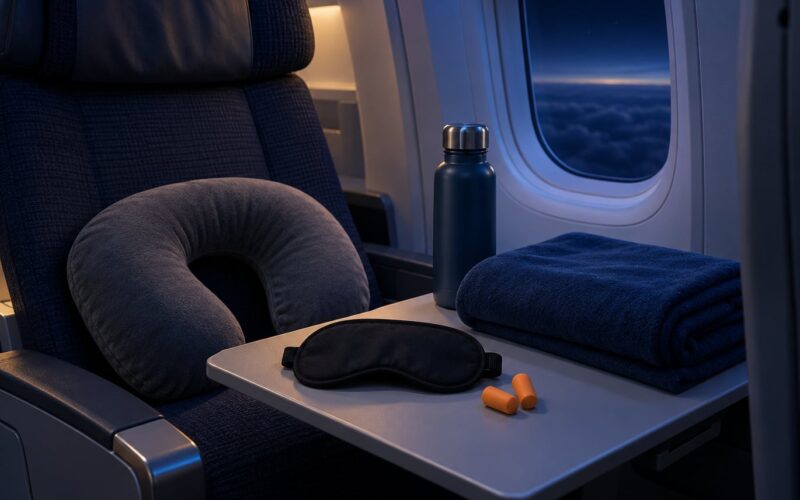
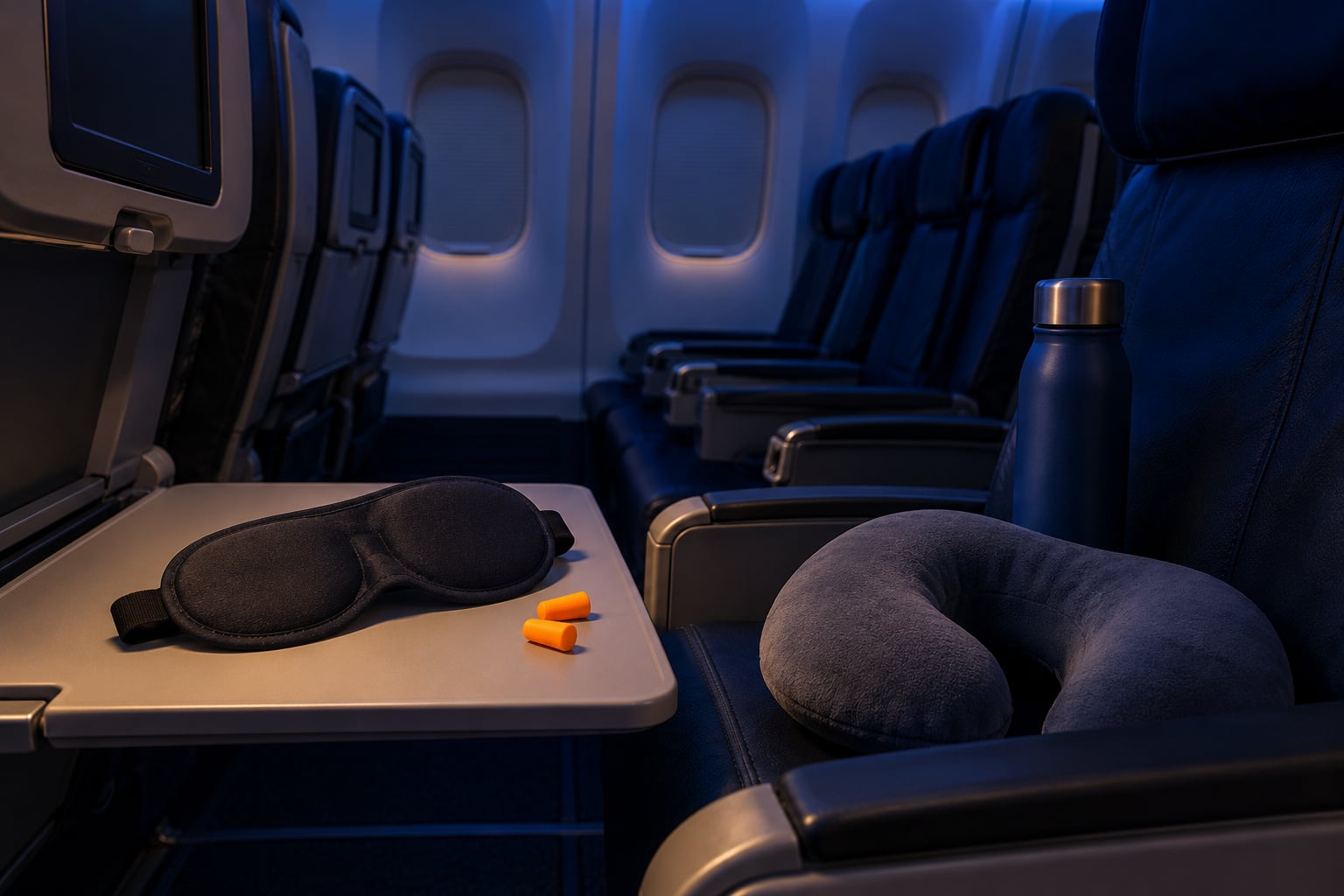
Everything below fits in a jacket pocket or a daypack, which matters because the items you need at 1am cannot be buried in a checked bag. If you are packing for how to survive a red eye flight, treat the list below as a single kit rather than a shopping list.
- A contoured sleep mask. A flat mask presses on your eyeballs and becomes unbearable past three or four hours, so buy the moulded kind that seals around the eye sockets without touching them.
- Foam earplugs, plus a backup pair. They roll flat into a wallet. Passengers on FlyerTalk are blunt about this: they carry foam earplugs on any flight where they expect to sleep because they work, and noise-cancelling headphones tend not to.
- A memory foam neck pillow. The single most complained-about problem on red-eyes is waking every twenty or thirty minutes because your head keeps bobbing without support.
- An empty reusable water bottle. Fill it after security. Dry cabin air pulls moisture out of you faster than most people expect.
- Soft layers, not jeans. Denim is stiff, warm and impossible to fold up against a tray table when you curl up to sleep. Joggers and a hoodie work.
- A phone charger and a short charging cable. Your phone is your alarm, your music source and your boarding pass.
- Any regular medication in your carry-on. Prescriptions and anything you might need mid-flight belong in the cabin, not in a suitcase somewhere behind you.
- A toothbrush or a pack of wipes. Landing at 6am and meeting someone for breakfast is a different experience with a clean mouth.
- A light plan for arrival. Know where you are sleeping, when you can get to the hotel, and whether anything non-negotiable sits on the morning after.
| Kit item | What it solves | Smart move |
|---|---|---|
| Contoured sleep mask | Cabin lights, reading-light spill, sunrise through the window shade | Try it at home for an hour first; many people find cheap flat masks intolerable |
| Foam earplugs | Galley clatter, lavatory queue, neighbouring headphones, call announcements | Mould them before boarding so you are not fiddling in the dark |
| Neck pillow | Head bob and the twenty-minute wake-up cycle | Position it so your chin is level, not tipped up |
| Reusable bottle | Dehydration from cabin air at roughly 10-20% humidity | Fill it past security, refill at the galley after take-off |
| Long scarf or light blanket | Cold during the second half of a night flight | Doubles as a neck cover if the cabin vents are aimed at you |
| Lip balm | Dry nose and cracked lips | Keep it in your hand, not in a checked bag |
| Compression socks | Cankles and stiff legs after hours seated | Put them on before boarding if you already own a pair |
| Phone and charger | Alarm, white noise, boarding pass | Switch on airplane mode so nobody’s ringtone ruins the cabin |
Step-by-Step: How to Survive a Red-Eye Flight
Nine steps, in the order they happen. If you only remember three, make it steps one, four and nine.
Step 1: Shift Your Sleep Schedule Before the Trip
Move your bedtime earlier by roughly an hour a day for three or four days before departure, and hold your wake time steady rather than also shifting it. That combination nudges your circadian rhythm without the misery of trying to sleep eight hours the night before a flight. You know it is working when you start yawning at your normal evening hour instead of your usual midnight.
If the shift will wreck your week, skip it and keep your normal schedule. Forcing an extreme change often backfires, and a normal night beats a broken one.
Step 2: Choose a Red-Eye Flight That Fits Your Routine
A red-eye usually means leaving between about 9pm and midnight and touching down between 5am and 8am. Work backwards from what you need on arrival: a hotel night you can reach in under an hour changes the maths completely, and a 45-minute transfer after a 6am landing is a genuinely bad night.
Compare itineraries on three things before you book — total flight time including connections, realistic departure and arrival times in local time, and whether a connection gives you an unplanned two-hour nap in a bright terminal. Longer is not automatically better; five and a half hours in one dark cabin can beat nine hours split across two.
Step 3: Prepare Your Body the Day Before
Have a normal, well-hydrated day and stay awake through it. Most of the people who sleep well on red-eyes simply spent the daylight hours being busy enough to be genuinely tired by boarding, which is exactly the tactic that keeps showing up in community recommendations.
Keep caffeine to before mid-afternoon, eat a light dinner rather than a heavy one, and skip the alcohol. Cabin air is already dry, and alcohol makes the dehydration and the broken sleep worse rather than better.
Step 4: Build a Comfortable Carry-On Kit
Assemble the kit from the checklist above the night before and keep every piece in one pouch. Grabbing a mask, earplugs and pillow from three different places at 11:30pm is how people end up flying a red-eye with no eye mask at all.
This is the step people skip, and it is the one that decides the flight. Anyone learning how to survive a red eye flight usually discovers that the difference between a ruined night and a decent one came down to a two-dollar mask and a neck pillow, not the seat.
Step 5: Protect Your Sleep at the Airport
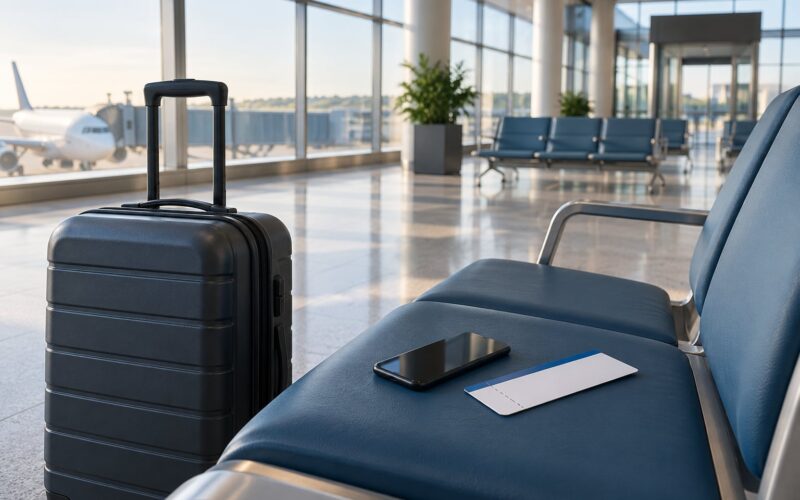
Arrive early enough to clear security without sprinting, then stop trying to nap in the terminal if you are a normal sleeper. A 6pm doze in a bright waiting area sets up a night of broken rest; if you must nap, keep it under 20 minutes and do it before 4pm.
Dim your screen in the last hour, switch to something dull, and put your kit together on the plane rather than in the gate area. Find a quieter spot near the gate rather than a bar if you want to stay calm, and let your last caffeine land a few hours before take-off.
Step 6: Sleep Smarter During the Flight
Most people do best in a window seat: nobody climbs over you, and you control the shade. The aisle case has real merit too — travellers who prioritise walking every two to three hours to keep their circulation moving argue that a seat beside the aisle beats a wall of strangers. A workable compromise on a longer flight is a window seat when you plan to sleep and an aisle when you plan to move.
Once you are settled: recline fully if the person behind you allows it, angle the shade so no light hits your face, put the mask on before take-off so you are not handling small objects while climbing through turbulence, and relax your jaw and shoulders. Rest your phone on the tray table edge rather than your lap so a hard landing does not send it across the aisle.
Set an alarm for about an hour before landing. On a long flight you will also want a plan for the walk to the lavatory, which means an aisle seat or a negotiated trip over your seat mate.
Step 7: Stay Hydrated and Avoid Heavy Alcohol
Drink steadily rather than gulping, and aim to finish a glass of water each hour or so without overdoing it, because a full bladder is its own kind of wake-up call. Water, plain tea and a small coffee earlier in the flight are the sensible options.
Skip the free drinks that come with the seat. Alcohol suppresses REM sleep, dries you out further and leaves you groggy on landing, which is why experienced flyers treat “a couple of drinks to pass out” as a mistake rather than a strategy.
Step 8: Manage Movement and Jet Lag During the Flight
Get up once every two or three hours and walk to the lavatory or galley and back. Five minutes of movement beats ten hours of sitting still for how your legs and back feel on arrival, and it is the one in-flight habit most consistently worth keeping.
If you are crossing time zones, set your watch to destination time at take-off and eat and drink on that clock rather than the one you left with. For eastward travel in particular, try to sleep when your body thinks it is night at home. None of this erases jet lag, and anyone promising a routine that does is overselling it.
Step 9: Make the First Day at Your Destination Work for You
Aim for outside light within an hour of landing, even if it means breakfast on a terrace rather than a hotel room in the dark. Light arriving early anchors your new clock; a blacked-out room does the opposite.
Keep your nap short and early — 20 minutes, before mid-afternoon, in a chair rather than a bed if you can. Nap for an hour and sleep inertia can wreck that night’s sleep, which is exactly how travelers end up awake at 6pm two days later.
Have real food, one normal coffee, and something scheduled that keeps you upright. Then go to bed at your destination’s local bedtime, even if it feels early. Recovery varies a lot with flight length, number of time zones crossed and your own health, so treat the first day as a plan rather than a guarantee.
Common Mistakes
Nearly every ruined red-eye comes down to one of these, and nearly all of them are fixable.
- Staying awake until boarding out of pure adrenaline. Try a long walk, a museum, or a workout in the late afternoon so the tiredness arrives naturally.
- Drinking to get knocked out. Swap to a warm drink and an eye mask; you will wake clearer and less dehydrated.
- Packing the kit in checked luggage. Keep it in a personal item from the start. Retrieving a bag at 11pm defeats the purpose.
- Skipping water because the lavatory is far. Sip steadily and go before you need to, especially with an aisle seat.
- Wearing jeans. Rigid denim is the worst possible fabric for a curled-up night. Soft layers win.
- Arrowing away the shade. Check it periodically; one row mate opening a shade at cruise altitude has woken more people than any alarm.
- Treating landing morning as a normal schedule. Get light early and cap the nap, or you will be awake at 6pm.
- Arriving with no plan. Have transport, check-in and breakfast sorted before you land, and give yourself a slow first morning.
Some extra tips by type: light sleepers should pick an aisle seat, travel with a noise-cancelling headset as backup, and accept that earplugs do the heavy lifting. Deep sleepers can curl up almost anywhere with a mask and a pillow. Anyone flying east across several time zones, anyone already running on short sleep, and anyone with a critical meeting within a few hours of landing is better off on a daytime flight.
Frequently Asked Questions
Can you really sleep on a red-eye flight?
Most passengers do not sleep deeply, but plenty get useful rest. Travelers who sleep best arrive genuinely tired, pick a window seat, block light with a contoured mask and shut out noise with foam earplugs. Frequent flyers tend to set expectations low on purpose: body rest is the win, and real sleep is a bonus. A short nap still beats eight hours of wakefulness.
How many hours before a red-eye should I stop eating and drinking?
You do not need to fast. Eat a normal, light dinner and keep drinking water through the evening rather than stopping hours ahead. What matters more is skipping alcohol and keeping late caffeine out of the picture, because both of those damage sleep quality on top of the dryness. Sip steadily in the air instead of downing a bottle at once.
Should I stay awake during a red-eye flight to avoid jet lag?
No. The standard approach is the opposite: stay awake and busy during the day of departure so you are genuinely tired by boarding, then sleep through the flight. Setting your watch to destination time at take-off and eating on that clock helps further. Staying awake the whole night sounds clever and usually ends with a rough landing and a worse recovery.
Is melatonin useful for sleeping on a plane?
Many travelers find it helps with the timing of sleep, particularly on long flights, but it is not a universal answer and the effect varies. Because it is a supplement with real interactions, ask your doctor or pharmacist before using it, especially if you take other medication. Never give it to a small child without medical advice, and check the rules for your destination.
What should I do after landing to reduce jet lag?
Get outside in daylight within an hour of arrival and stay awake through the first day. Keep any nap to about 20 minutes and finish it before mid-afternoon, in a chair if possible. Eat at local times, have one normal coffee rather than a stack, and go to bed at your destination’s local bedtime. Recovery speed depends on flight length and how many zones you crossed.
How can I sleep on a plane if I am a light sleeper?
Aisle seat, earplugs, mask and a plan. Light sleepers are woken by neighbours and by aisle traffic, so an aisle with more movement is often calmer than a window beside restless passengers. Bring a contoured mask that does not press on your eyeballs, mould foam earplugs before boarding, and accept that you may rest rather than sleep. One familiar pre-sleep routine helps more than any gadget.
Conclusion: Start With the First Three Steps
Start tonight, not the morning of the flight. Shift your sleep earlier over a few days, pick an itinerary that gives you a realistic overnight window and a reachable hotel on arrival, then build the kit pouch and keep it with your personal item. Those three things do more for how you feel at 6am than any seat upgrade.
A realistic routine is the whole trick. Trying to force normal sleep in a reclining chair at 35,000 feet is why people dread these flights, and accepting a few hours of solid rest changes the trip entirely.