Yes, you can sleep at an airport overnight, and most terminals will let you stay the whole night. The difference between a miserable night and a workable one comes down to three things: where you settle, what you pack, and how you secure your belongings while you rest. Here is how to sleep comfortably at an airport overnight, step by step.
I have done this more times than I would like to admit, and the people who handle it best are never the ones who brought the most gear. They are the ones who arrived with a plan, picked their spot on purpose, and set three alarms.
Nobody promises eight solid hours. Aim for two or three real sleep cycles instead of one broken stretch, and treat everything else as a bonus. Safety comes before comfort: if you cannot keep your bag attached to you while resting, you are not settled yet.
Table of Contents
- 1What You Need
- 2Step-by-Step
- 3Choose Your Airport Sleep Location
- 4Prepare Before Your Overnight Flight or Layover
- 5Build a Comfortable Sleep Station
- 6Block Light and Reduce Airport Noise
- 7Stay Comfortable and Secure
- 8Set Alarms and Monitor Your Gate
- 9Common Mistakes
- 10Frequently Asked Questions
- 11Can I sleep at the airport overnight?
- 12Is it safe to sleep alone in an airport at night?
- 13What time do airport gates close at night?
- 14Can you sleep in an airport lounge overnight?
- 15When is a transit hotel a better choice than sleeping in the terminal?
- 16Conclusion
What You Need
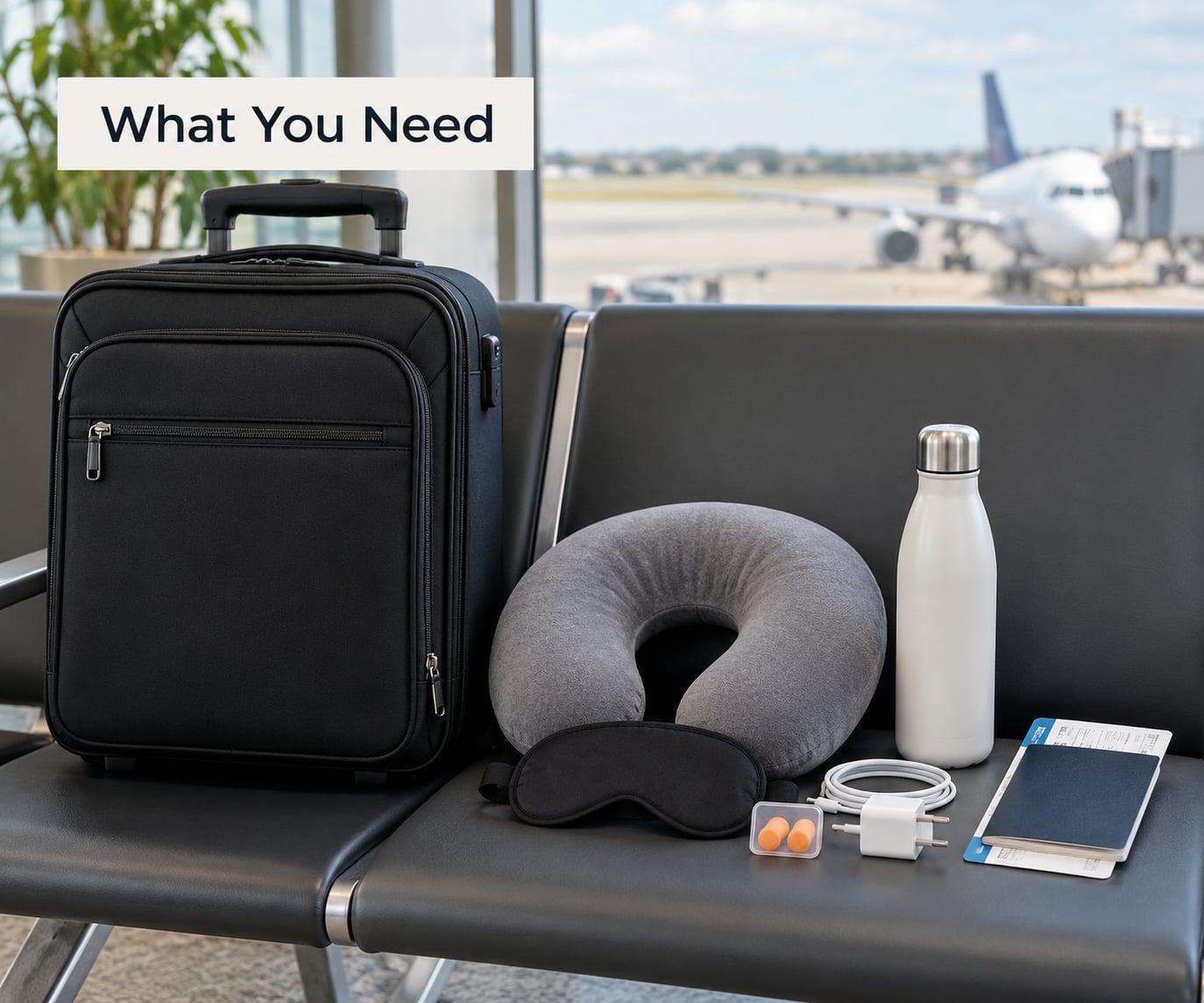
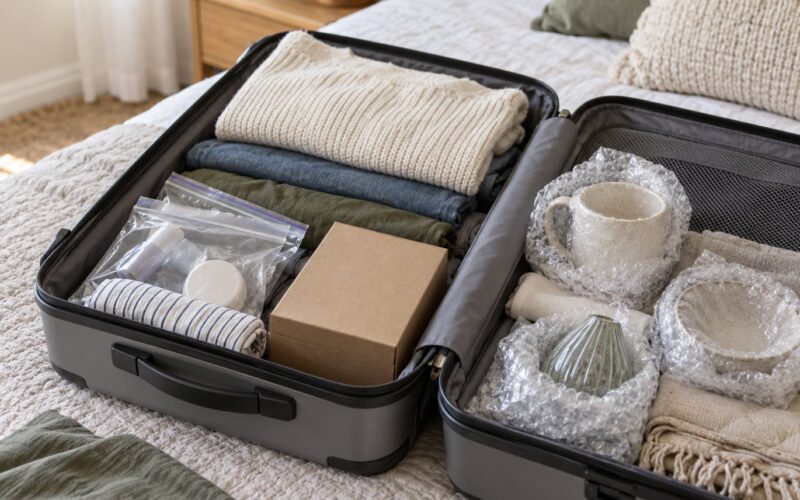
An overnight sleep kit fits into a small daypack and travels in your cabin bag, so you already have it with you when the delay hits. Most of it also earns its space on the flight in.
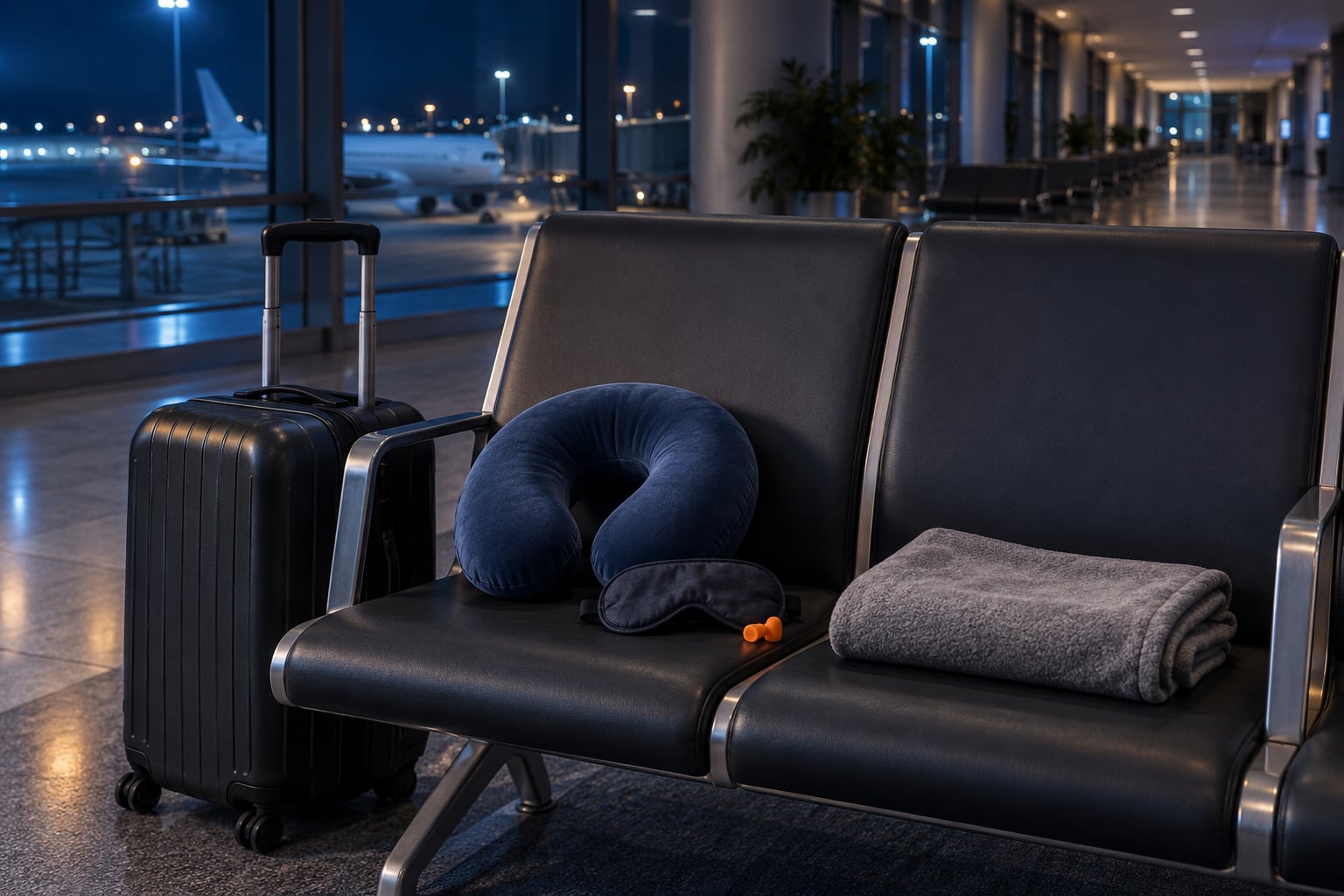
- Neck support. An inflatable neck pillow packs flatter than a foam one and is easier to squirm into position with. A rolled sweatshirt works if you have neither.
- Eye mask. Terminal lighting is bright and inconsistent, and overhead lights near a gate often stay on all night.
- Ear protection. Foam earplugs cut the announcements and the general hum better than headphones you have to take off to hear your gate.
- A warm layer. Airports run cold at night. A hoodie, a scarf and socks cover you far better than a thin blanket alone.
- Water and snacks. Terminal food options shut down or shrink to vending after midnight, and dehydration makes sleep harder.
- Power. A power bank and a charging cable. Outlets are often on the floor next to a wall, which is where you will be sitting.
- Toiletries. A toothbrush, deodorant and a change of clothes matter more than people expect after a night in a terminal.
- Medication. Anything you take regularly, plus whatever you would grab from the pharmacy at home.
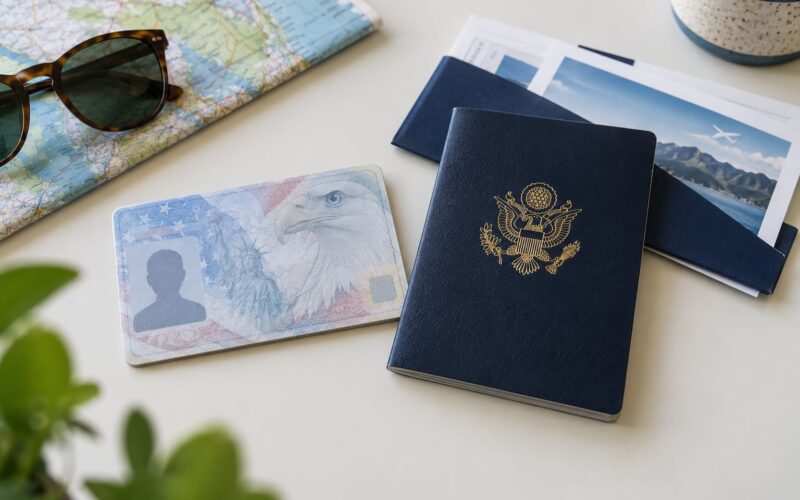
- Your documents. Passport, boarding pass and your phone, all in one pouch you can grab without unpacking.
Keep the essentials in an easy-reach compartment. Once you are asleep with your bag looped around your leg or used as a pillow, digging through a wheelie bag is no longer possible.
Step-by-Step
Choose Your Airport Sleep Location
Pick your spot before you unpack anything, and judge it by noise, foot traffic, recline, restrooms, charging and how long you will be there.
Gate seating near your departure gate keeps you closest to boarding, but it is also the loudest and busiest place in most terminals. Head to the quieter end of a concourse instead, where the flight board is smaller and cleaning crews pass less often. Ask a staff member where the terminal quietest zone is; the answer is rarely on the map.
Corners, window walls and benches facing away from walkways win. So do seats near restrooms, but not so near that you have people walking over you all night. Landers often have power and nobody competing for them after midnight.
A lounge is an upgrade to waiting, not a replacement for rest. Most have reclining chairs and dim lighting and are worth paying for when your layover runs past five or six hours. Sleep pods and day-use hotel rooms make more sense the longer you plan to stay. Below about three hours, moving is more trouble than it is worth.
Prepare Before Your Overnight Flight or Layover
Confirm your itinerary, terminal and gate before you commit to sleeping anywhere. Terminals close, gates change overnight, and some concourses shut entirely during the quiet hours, which means you get moved to a hard seat in a busier part of the building.
Check lounge hours, security screening times and where power is available. Rules vary by airport and change often, so confirm details with the airport or airline rather than trusting what you read three months ago.
Eat before you settle and stop drinking alcohol. Sit near an outlet if you plan to charge, and put your phone in airplane mode with vibration on so alerts wake you without lighting the whole row.
Build a Comfortable Sleep Station
Terminal seats are contoured with fixed armrests, and that is what makes them hard to sleep in. You cannot lie flat, so work with the shape.
The most restful position most people find is diagonal across a row of seats, so your head is supported by one seat back and your feet point toward the corner of the next. Turn slightly rather than lying flat, keep your back supported, and let the seat take the load. If you can, place your feet on a free luggage cart as a footrest and slide the seat in front of you down a little to open up the angle.
Use your bag as the pillow if you are comfortable doing so, with the strap looped around your forearm or leg so it stays attached. Fold a jumper under your shoulders if the seat is short. The test is simple: sit in the position for ten minutes before you commit. If your shoulder, neck or lower back is already aching, change the position now rather than at 3am.
Block Light and Reduce Airport Noise
Put the eye mask on before you lie down, not once you are already awake. If light leaks around the nose, a rolled scarf or a second thin layer over the bridge of the nose closes the gap.
Earplugs handle steady hum and distant announcements. Keep them in place through the night rather than pulling them out when something sounds important, and turn your phone around so you can hear alerts through them.
Announcements still matter, so do not go fully deaf. Stay where you can hear your gate called, or leave one earplug out on the side facing the speakers. Aim to block the world without blocking the information you need.
Stay Comfortable and Secure
Loop a bag strap around your leg or tie a scarf from your wrist to the suitcase handle before you settle. It looks silly and it is the single most repeated safeguard among experienced overnight travellers. Put zippers and pockets facing your body, keep the phone and wallet on you rather than in the bag, and use a free luggage cart as a barrier in front of your things.
Stay near staffed areas and close to where the overnight cleaning crews work. They are the people who will notice anything odd, and their routes mean human traffic passes through your corner every couple of hours.
Wear loose layers and socks, keep water beside you, and stand up and walk every hour or two. Arms and legs go numb quietly in a terminal seat, and a stiff neck the next morning can spoil the whole trip.
With children or another adult, take turns. One person rests while the other sits upright with the bags, then swap. Most terminals also have family rooms where the lights are dim and floor space is clean, and those work better than a row of seats.
Set Alarms and Monitor Your Gate
Set three alarms: one ninety minutes before boarding, one an hour before, and one twenty minutes before. Put your phone somewhere you have to stand up to reach it, or keep vibration on with the sound low.
Leave yourself a real buffer. If you are already past security, thirty to forty-five minutes to your gate is usually enough. If your layover required going back landside, add ninety minutes for security screening and re-checking bags on separate tickets. Long walks between terminals can eat thirty minutes on their own.
Check the flight status before you lie down and once during the night. Ask staff whether the gate will close earlier than boarding time, because it does on long-haul flights. You will know it is time to stop sleeping when boarding starts, when your row is called, or when cleaners start moving chairs.
Common Mistakes
Most bad airport nights come from one of a handful of mistakes, and each has an easy fix.
- Sleeping right against a wall or in a corner behind a wall. You lose sightlines and nobody walks past you. Fix: choose a spot with a clear view of the walkway and pass through it.
- A pillow with no support. A bag stuffed loosely leaves your neck bent at a bad angle all night. Fix: add a folded jumper under the bag, and test the position before you commit to it.
- Restrictive clothing. Jeans, a belt and tight shoes mean you wake up stiff. Fix: change into loose layers before you settle and keep shoes on for a fast exit.
- Ignoring boarding updates. Gate changes during the night are common and are easy to miss. Fix: check the board before sleeping and once more mid-night.
- Valuables inside a bag you are not touching. Fix: phone, wallet and passport on your body, bag attached to you, zippers facing inward.
- Assuming every lounge is open. Hours vary and some close for the night. Fix: verify opening hours before paying, and have a free fallback spot in mind.
- Setting one alarm. Forum travellers who missed connections almost always set a single alarm and snoozed through it. Fix: three alarms, spaced out, with the phone out of arm’s reach.
Two habits cover most of the rest. Drink water before you feel thirsty, because you will not want to walk to a bathroom in the middle of the night. And if you are with someone, split the night into shifts so neither of you sleeps the whole time.
Some airports are simply better at this than others. Terminals with overnight cleaning, 24-hour food, plenty of outlets and lie-flat seating turn a rough night into a manageable one, while small regional terminals with no plugs, no night food and unreliable air conditioning are genuinely hard. Check your airport’s site for the specific terminals you will use before you land in the worst version of that night.
Frequently Asked Questions
Can I sleep at the airport overnight?
Most large international airports allow passengers to stay in the terminal overnight, especially if they have a connecting flight. You are normally expected to stay airside rather than wandering the public landside areas after check-in desks close. Security staff may move you if you are blocking a walkway or lying across seats reserved for departing passengers. Rules vary by airport, so check the airport website or ask staff at the airline desk.
Is it safe to sleep alone in an airport at night?
It is safer than most people expect, but only if you protect your belongings properly. Loop a bag strap around your leg or tie a scarf from your wrist to your case, keep zippers facing you, and keep your phone, wallet and passport on your body rather than in the bag. Stay near staffed areas and where cleaning crews pass. Solo travellers should avoid isolated corners and keep valuables within reach at all times.
What time do airport gates close at night?
There is no single closing time. Gates may close as early as twenty minutes before departure on some long-haul flights, while others stay open longer, and some concourses shut entirely during quiet hours and move passengers to a busier area. Always confirm the gate closing time for your specific flight with staff before you sleep, and treat any gate change during the night as a reason to check your seat in the app.
Can you sleep in an airport lounge overnight?
Usually not for free. Lounges open around the time of your departure and close on a set schedule, so an overnight stay is rarely an option even with a day pass. Some larger airports run dedicated nap zones or quiet lounges that operate around the clock, and sleep pods are designed for overnight use. Check opening hours before you pay, since a lounge closed for the night is a wasted trip.
When is a transit hotel a better choice than sleeping in the terminal?
Once your layover passes roughly five or six hours, a hotel wins. A transit hotel connected to the terminal gives you a real bed, a shower and a door that locks, and you avoid the cold, the noise and the constant announcements. The trade-off is the trip back through security and the cost, so it makes most sense when your next flight is late in the day and you want to arrive rested.
Conclusion
Start with four things tonight: confirm your gate and the gate closing time, walk the terminal and pick your spot, pack the small sleep kit so it sits on top of your bag, and set three alarms you cannot snooze from bed.
Then settle with your belongings attached to your body and a clear view of the walkway. The best overnight airport sleep is not the most comfortable one available; it is the one that keeps you safe, warm and on board for the next flight.