You prevent traveler’s stomach problems by controlling what goes into your body: drink sealed or treated water, eat food that is cooked hot or peeled in front of you, wash your hands constantly, and travel with a small medical kit you chose with a pharmacist. Most cases of traveler’s diarrhea come from contaminated food or water, and most start within the first three days of a trip.
This is general travel-health information, not medical advice. If you have a chronic condition, take regular medication, are pregnant, or have a weakened immune system, book a travel medicine clinic four to six weeks before departure and let a clinician tailor advice to your itinerary.
The rest of this guide follows a trip in order: what to sort out before you leave, the rules that matter on the ground, and how to tell the difference between a rough morning and a reason to see a doctor.
Table of Contents
- 1What You Need Before You Go
- 2The health piece
- 3The water piece
- 4The kit piece
- 5The access-to-care piece
- 6Step-by-Step: How to Prevent Traveler’s Stomach Problems
- 7Step 1: Review Your Health Before You Go
- 8Step 2: Choose Safe Food and Water to Prevent Traveler’s Stomach Problems
- 9Step 3: Protect Your Hands and Surroundings
- 10Step 4: Eat and Drink Conservatively
- 11Step 5: Monitor Symptoms and Seek Help
- 12Common Mistakes That Cause Traveler’s Stomach Problems
- 13Mistake 1: Treating bottled water as the only rule
- 14Mistake 2: Ignoring how food was handled
- 15Mistake 3: Skipping hand hygiene after public surfaces
- 16Mistake 4: Overdoing alcohol, caffeine, and new foods
- 17Mistake 5: Self-treating symptoms that need a doctor
- 18Mistake 6: Going with an empty kit
- 19Frequently Asked Questions
- 20How can I prevent traveler’s stomach problems before my trip?
- 21What should I avoid eating and drinking while traveling?
- 22Is bottled water always safer than tap water when traveling?
- 23What vaccines or medicines should I ask a doctor about before travel?
- 24When should I seek medical care for a traveler’s diarrhea?
- 25Conclusion
What You Need Before You Go
Prevention starts at home, and it starts with a short list. Most travelers who get sick did not do anything dramatically wrong; they simply made several ordinary choices in a place with different food-handling standards.
The health piece
Check whether your destination carries routine vaccination or malaria recommendations, and do it early enough to complete a course before you fly. Bring your prescriptions in original packaging with a doctor’s letter, especially for controlled medicines or injectables.
The water piece
Work out how you will handle water before you arrive, because the first 24 hours are when you have no local routine yet. Sealed bottled water is the simplest option, but it is not the only one. A water filter, purification tablets, or a habit of boiling unfamiliar water all work, and you can switch between them depending on where you are.
The kit piece
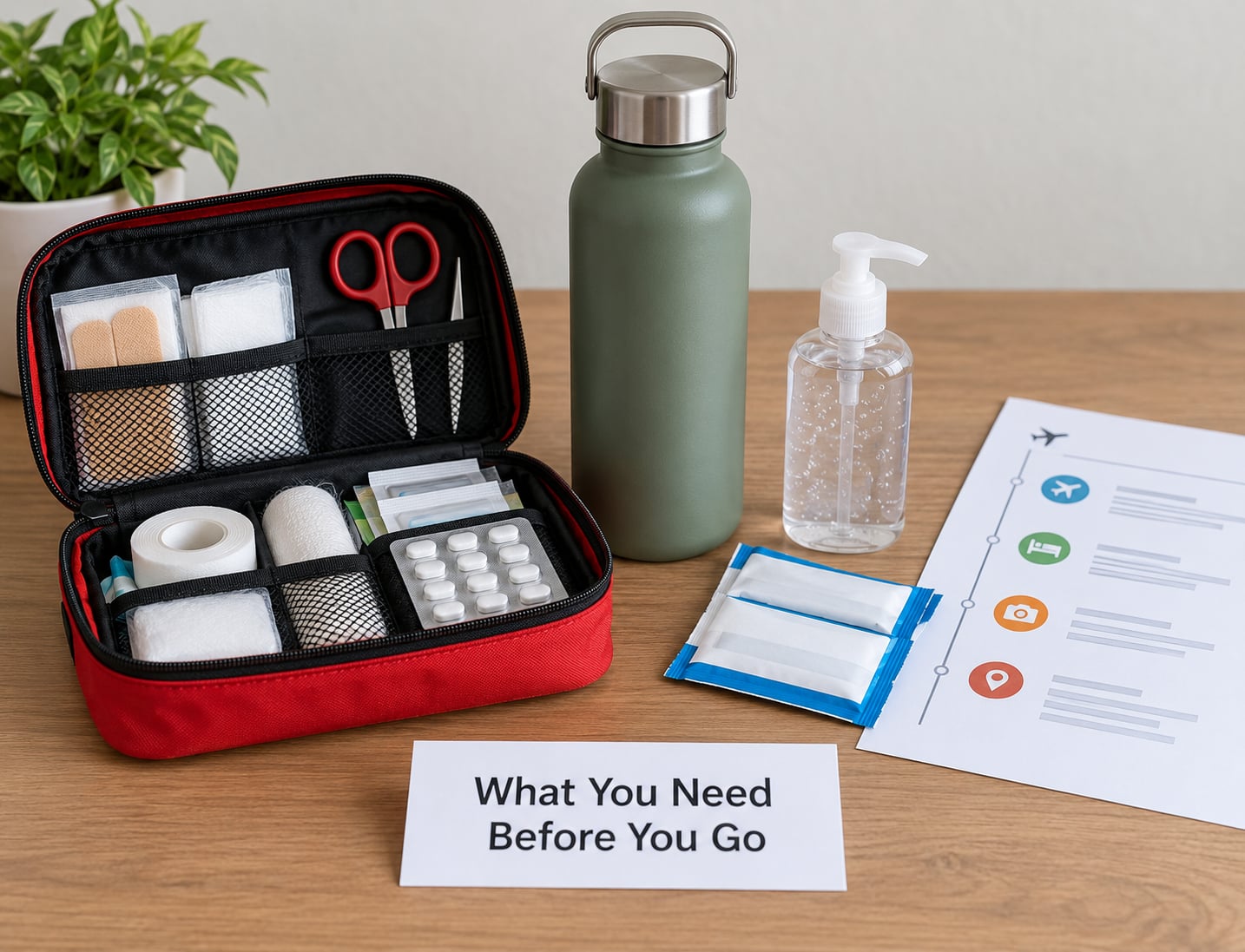
Assemble a travel health kit with a pharmacist rather than grabbing whatever is in a drawer at midnight. Ask about oral rehydration salts, an antidiarrheal you can use safely, an antacid or acid blocker if you already take one, plus basics like pain relief, plasters, and any regular prescriptions. Add hand sanitizer with at least 60 percent alcohol and a small nail brush or scrubber, since germs hide under nails.
The access-to-care piece
Save the local emergency number for each country, the address of a clinic near your accommodation, and your insurer’s contact details. People who know where to go on day three tend to lose a morning; people who don’t tend to lose a week.
Step-by-Step: How to Prevent Traveler’s Stomach Problems
The order matters more than the intensity. Health review first, then water and food, then hands, then pace, then monitoring. Here is how each stage works.
Step 1: Review Your Health Before You Go
Ask a clinician about travel risks when you have a chronic illness, a weakened immune system, a pregnancy, or medication questions. Worth flagging in that conversation: people who take antacids, acid blockers, or ulcer medicines have lost some of their stomach’s natural defence, because stomach acid is part of what kills swallowed germs before they reach the gut.
Also ask what to do about food. On a short trip to a low-risk country, routine precautions usually do the job. On a long stay, or a trip to a high-risk destination with camping or limited medical access, a clinician may talk through preventive antibiotics. That is a prescription decision, not something to self-manage from a forum post.
Step 2: Choose Safe Food and Water to Prevent Traveler’s Stomach Problems
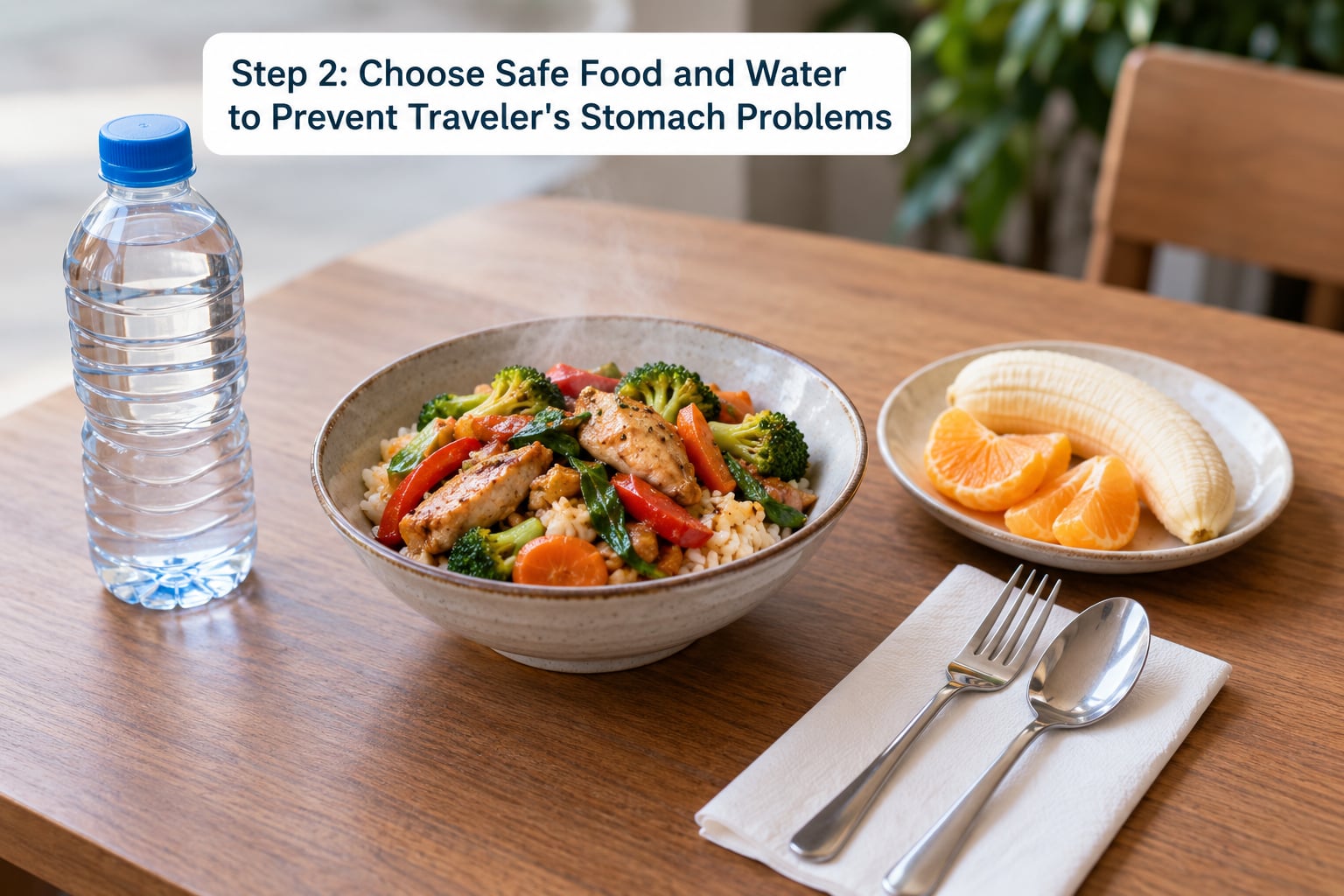
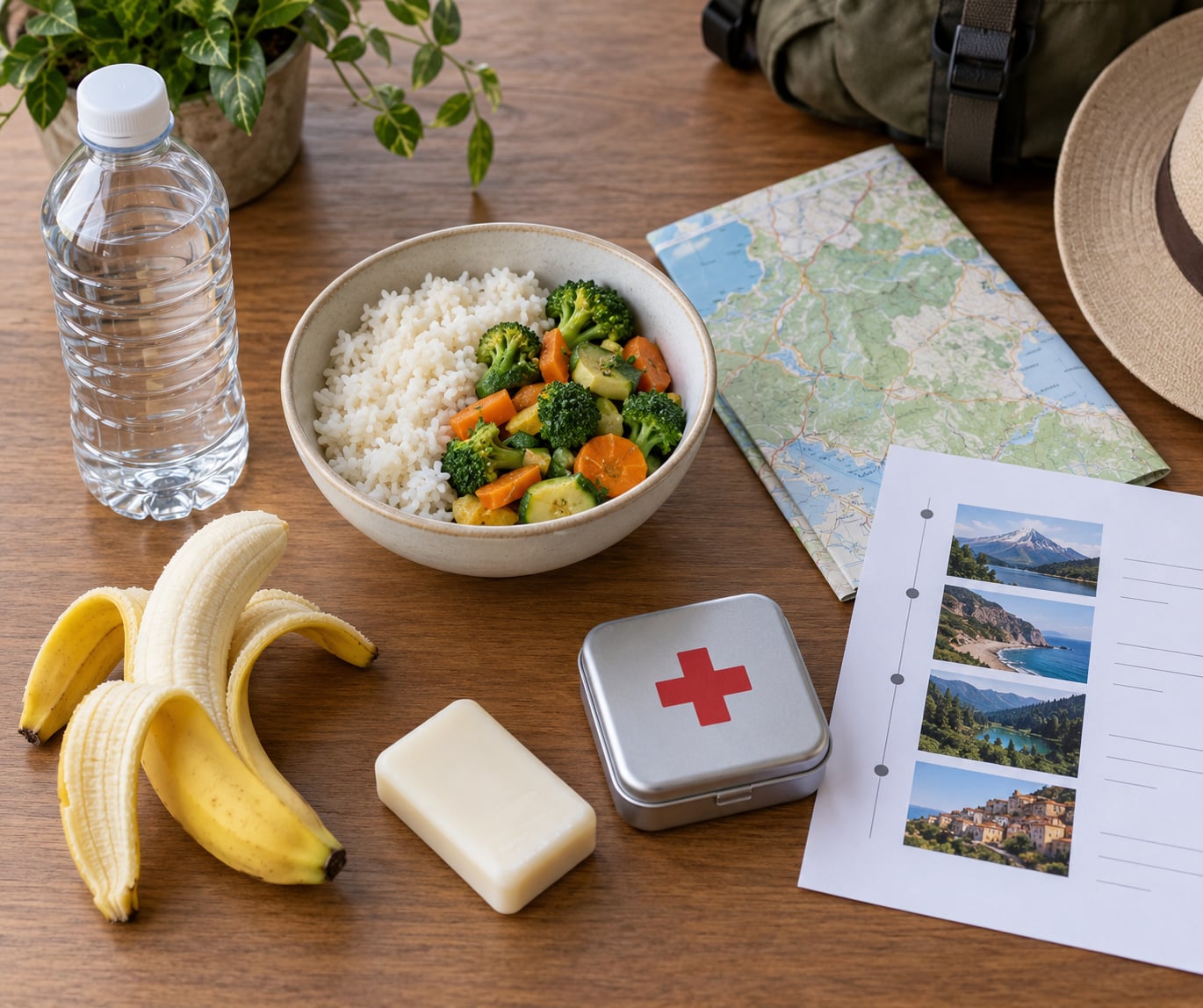
The rule most health bodies use is short enough to remember: cook it, peel it, boil it, or forget it. Food that arrives steaming hot, or fruit you peel yourself, or water you have boiled or treated, and everything else you skip.
Water deserves more attention than most people give it, because it sneaks into everything. That includes ice cubes, tea and coffee made with local water, bottled drinks opened by someone else’s hands, and the tap you brush your teeth with. Wipe bottle rims before you drink from them, use a straw instead of a shared glass, and skip ice unless the venue is reputable and you are reasonably confident the water was treated.
On food, be careful with raw salads and garnishes, unpasteurized dairy, undercooked meat and shellfish, food sitting out at room temperature, and buffet items that have been sitting. Table sauces and condiments left out in the sun are a quiet repeat offender. Contaminated food often looks and smells completely normal, so trust the handling, not your nose.
Here is the contradiction that confuses travelers most: advice to avoid street food entirely versus advice to eat where locals eat. Both are half right. A stall cooking food to order, in front of you, at the time locals eat, with a queue is generally a better bet than a quiet restaurant where meat sits under a heat lamp. The variables are heat, freshness, and turnover, not the fact that food came from a cart.
Step 3: Protect Your Hands and Surroundings
Soap and water for twenty seconds is the strongest tool you carry, and it costs nothing. Use it after the toilet, before eating, after handling money or a reception desk, and after touching animals. Rubbing alcohol sanitizer with at least 60 percent alcohol is the practical backup when you are on a bus, in a market, or in a restroom where soap has run out.
Hands are not the only surface. Wipe utensils and bottle caps, avoid sharing cups or cigarettes, and keep raw food separate from ready-to-eat food on a buffet. If you handle animals or their waste, wash again afterward.
Step 4: Eat and Drink Conservatively
Your gut is already adjusting to a new time zone, new water, and a new menu. That is the moment to eat three unfamiliar meals in one sitting and drink four cocktails on it. Smaller, slower meals and fewer brand-new ingredients at once give your digestion a fighting chance.
Be moderate with alcohol and caffeine, since both add fluid your body is trying to keep. Drink steadily through the day rather than waiting until you are thirsty. Keep moving during long flights and transfers, and eat some fibre early in the trip, because immobility and jet lag cause constipation and indigestion as often as they cause the runs.
None of this guarantees prevention. Plenty of careful travelers still get sick, and plenty of reckless ones get lucky. The goal is to lower the odds, not to feel safe enough to stop paying attention.
Step 5: Monitor Symptoms and Seek Help
Travelers on forums describe a consistent pattern: the first couple of days feel fine, and trouble often shows up on day two or three, after the initial cautious phase has been quietly abandoned.
If mild symptoms do start, hydration is the priority. Use oral rehydration solution, or a safe alternative you can find abroad such as a properly mixed oral rehydration sachet. Watch your output and your urine, and aim to keep drinking fluids even when solid food feels unappealing. Eat bland, familiar things like toast, crackers, rice, bananas, and plain cooked vegetables while you recover.
Do not reach for anti-diarrheal medicine when there is blood in the stool, high fever, severe abdominal pain, or signs of dehydration, because slowing the gut down in those situations can be harmful. Get to a clinic or hospital promptly for blood in the stool, fever above 39 degrees Celsius, severe pain, confusion, inability to keep fluids down, or little or no urine for many hours. Symptoms that keep going for roughly two weeks after you get home deserve a doctor’s appointment too, because lingering gut problems after an infection can have treatable causes.
Common Mistakes That Cause Traveler’s Stomach Problems
Mistake 1: Treating bottled water as the only rule
The water rule is not only about drinking. People who buy sealed bottles still get sick because of ice, tea made with tap water, or brushing teeth. Fix: use sealed or treated water for drinking, ice, tea, coffee, and teeth, and wipe rims before you drink.
Mistake 2: Ignoring how food was handled
A pristine plate does not mean safe food. Sauces sitting out, a salad washed in unverified water, and a buffet under a heat lamp are the usual culprits. Fix: cook it, peel it, boil it, or forget it, and choose venues where food is fresh and turnover is fast.
Mistake 3: Skipping hand hygiene after public surfaces
Money, ticket machines, reception counters, and maps all go straight to the mouth later. Fix: carry sanitizer, and use soap and water whenever you can get it.
Mistake 4: Overdoing alcohol, caffeine, and new foods
A hedonistic first night is the classic setup for day two. Fix: eat smaller meals, try one new dish at a time, and keep alcohol and coffee moderate while your gut adjusts.
Mistake 5: Self-treating symptoms that need a doctor
Popping an anti-diarrheal to push through a trip can hide a problem that needs attention. Fix: hydrate first, and see a clinician for blood, fever, severe pain, or dehydration.
Mistake 6: Going with an empty kit
Pharmacies abroad are not always reliable, and the medicine you need may not be there. Fix: fill your kit at home with a pharmacist, and know which of your medicines requires a prescription in your destination country.
Frequently Asked Questions
How can I prevent traveler’s stomach problems before my trip?
Start four to six weeks out with a travel medicine clinic if you have a chronic condition, take regular medication, or are pregnant. Pack oral rehydration salts, an antidiarrheal your pharmacist approves, hand sanitizer, and any water treatment you prefer. On the ground, drink sealed or treated water for drinking, ice, tea, and brushing, eat food cooked hot or peeled by you, and wash your hands often.
What should I avoid eating and drinking while traveling?
Avoid raw salads and garnishes, unpasteurized dairy, undercooked meat and shellfish, food sitting out at room temperature, and table sauces left in the sun. Drink only sealed or treated water, including for ice and teeth brushing. Skip food that has been sitting under a heat lamp. Contaminated food usually looks and smells fine, so judge the handling rather than the appearance.
Is bottled water always safer than tap water when traveling?
Not always. Bottled water with an unbroken seal is reliably safe, and it is the simplest choice in high-risk destinations or where you cannot verify plumbing. In countries with reliable municipal treatment, tap water at hotels and established restaurants is usually fine. Boiling, purification tablets, and filters are the alternatives. Ask locally, and stay cautious whenever you cannot confirm how the water was handled.
What vaccines or medicines should I ask a doctor about before travel?
Ask a travel clinic which routine and destination-specific vaccines you need and how far ahead to start them, and whether your itinerary calls for malaria prevention. Mention every medicine you take, including antacids and acid blockers, since they reduce your stomach’s natural protection. Preventive antibiotics are an option for some itineraries, but that decision belongs to a clinician who knows your health history.
When should I seek medical care for a traveler’s diarrhea?
Get medical help promptly for blood in the stool, fever above 39 degrees Celsius, severe abdominal pain, confusion, inability to keep fluids down, or very little urine for many hours. Dehydration is the main danger, so keep drinking safe fluids and use oral rehydration solution while you arrange care. If symptoms continue for roughly two weeks after you return home, book an appointment rather than waiting.
Conclusion
Do five things, in this order, and you cut most of the risk. Get a health review before you leave if anything about your medical situation is unusual. Pack a kit built with a pharmacist. Treat your water, including ice, tea, and teeth brushing. Eat food that is cooked hot, peeled by you, or skipped, and wash your hands every time you have the chance.
When symptoms start, hydrate with safe fluids and oral rehydration solution, and see a doctor for blood, high fever, severe pain, or signs of dehydration. That is a complete plan, and it costs far less than a lost day on a trip you flew a long way to take.