You travel in the shoulder window and the trip costs meaningfully less than peak, but only if the dates and the booking order are right. The savings come from landing in a real low-demand period and booking early enough to catch the lower rates, not from the label itself. Most of the work happens before you pay for anything.
That is worth knowing, because plenty of guides promise cheap shoulder trips and then quietly book you into a week that sits right next to a festival. This one starts from the demand side: who is actually competing for that hotel room, that rental car, that flight.
Budget it in an evening or two. The method below is repeatable, and it works for a long weekend in a nearby city just as well as for a two-week international trip.
Table of Contents
- 1What You Need
- 2Step-by-Step: How to Travel During Shoulder Season and Save
- 3Choose destinations with meaningful off-peak periods
- 4Compare flexible dates around peak travel periods
- 5Set a total budget and savings target
- 6How to Travel During Shoulder Season and Save on flights
- 7Choose flexible lodging in the right location
- 8Compare cruises, resort stays and alternative trip formats
- 9Verify the deal before paying
- 10Common Shoulder Season Mistakes to Avoid
- 11Frequently Asked Questions
- 12Is shoulder season always the cheapest time to travel?
- 13What is the easiest way to travel during shoulder season and save?
- 14Can rainy weather make a shoulder-season trip bad value?
- 15Should I book flights or hotels first?
- 16Do cruises and resorts really offer worthwhile shoulder-season discounts?
- 17Conclusion: Start With Flexible Dates
What You Need
Six things, and most people already have five of them before they start looking at fares.
- A destination shortlist of two or three places, not twelve. You cannot compare date windows across a wish list.
- A flexible-date range wider than your ideal trip. Two weeks of flexibility is where the real money shows up.
- An approximate budget split by category, so you know what a good deal actually looks like.
- Valid travel documents. Check passport expiry rules for your destination and any transit countries before you commit to dates.
- A fare comparison tool and a price alert. Alerts tell you when a fare moves; the comparison view tells you whether that fare is actually good.
- Cancellation terms, read before checkout. A flexible rate costs more up front and saves you when weather cancels a plan.
One more piece of preparation matters more than the rest: current local information. Seasonal opening hours, weather patterns and operating schedules change year to year, and a museum that closes for refurbishment in autumn will quietly wreck a two-day itinerary.
Step-by-Step: How to Travel During Shoulder Season and Save
Choose destinations with meaningful off-peak periods
A real off-peak period has low demand, workable weather and open services. A date that only looks cheap because a hotel shuts its restaurant, the ferry runs three times a week and the rain is horizontal is not a saving, it is a problem with a smaller number on it.
Compare two candidate destinations side by side on four columns: typical demand in your target month, reliability of conditions, what stays open, and how easy it is to reach. A coastal city in early autumn often beats a mountain destination in late spring, because the mountain version still depends on lifts and passes being open.
You will know you picked well when a specific week in that window looks ordinary rather than appealing. Look up the destination’s own tourism and weather pages before you book, and check whether any school holiday, religious festival or major sporting event sits inside your dates. You will know you picked badly when the cheapest week is also the week the town shuts down.
Compare flexible dates around peak travel periods
Build a date matrix: rows for departure options, columns for the weeks around them, and one cell per total trip cost including lodging. Five or six rows is enough. The point is to see the shape of demand, not to find the single cheapest cell in the country.
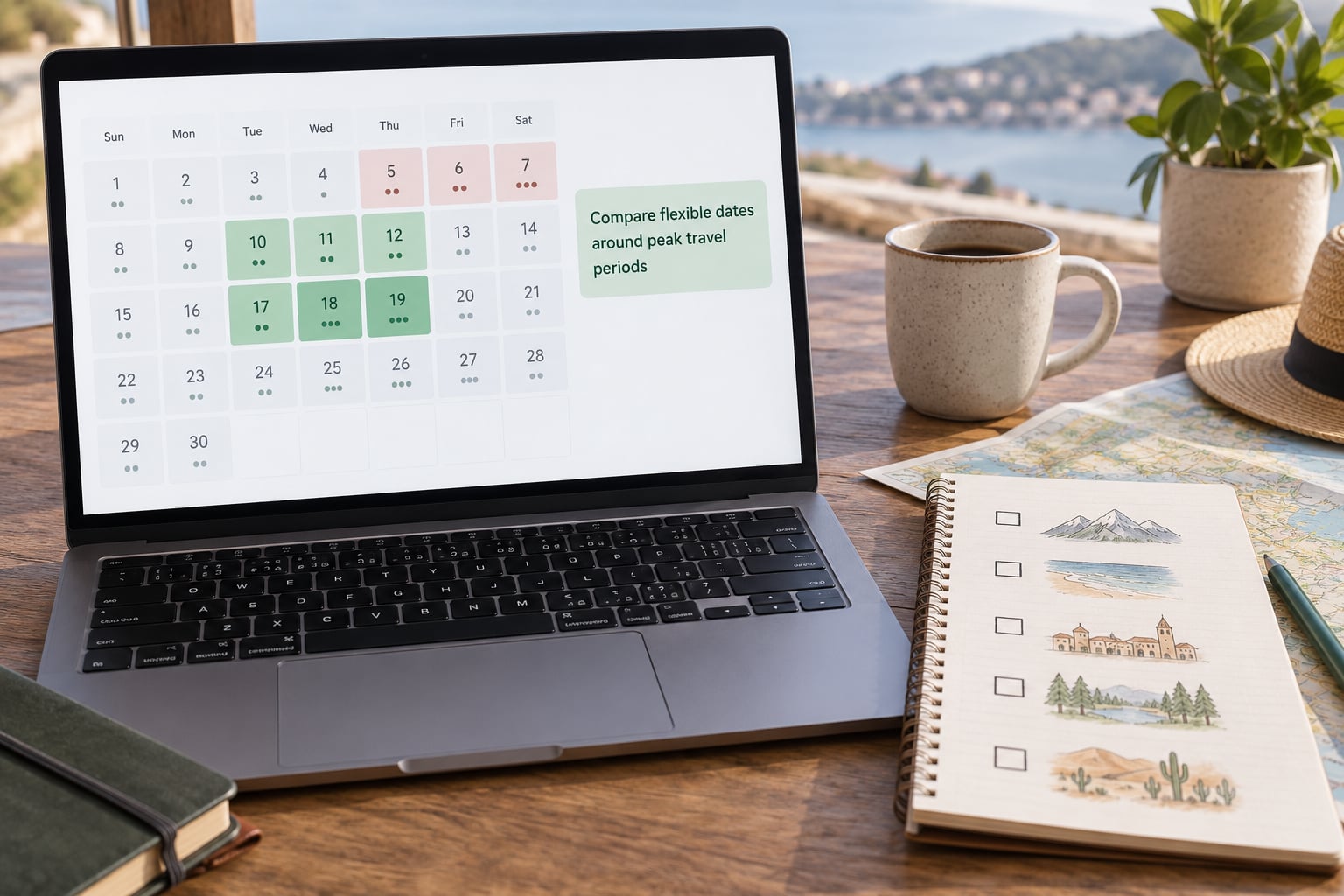
Shifting by several days pays off most at the edges of a peak block. Moving out of a school-holiday week, off a long weekend, or away from a festival weekend usually drops both airfare and room rates at once. Moving inside the peak itself rarely does, because the demand is structural.
Watch for the reverse effect too. Some destinations invert their calendar. Desert cities in the American Southwest, for instance, pull winter visitors instead of summer ones, so the shoulder window sits in a different place on the chart than you would guess from the calendar alone.
Set a total budget and savings target
Split the trip into six lines: flights, lodging, local transportation, activities, meals, and incidentals. Typical US domestic fares in the shoulder window often land in the low hundreds of dollars for a round trip, while peak-period fares for the same route can run several times that. International fares swing wider, and shoulder-season pricing on long-haul routes can fall by a third or more against the same route in high season.
Those are ranges, not quotes, and they move with fuel costs, demand and how early you book. What matters for your plan is the difference between your shoulder target and your peak target, because that gap is the whole justification for the trip.
Define the target as a total, not a per-night number, and write it down before you book anything. You will know the target worked when the checkout total, including taxes, resort or destination fees and any paid baggage, lands under it.
How to Travel During Shoulder Season and Save on flights
Airfare is the line most sensitive to dates, so do your comparison work here first. Check nearby airports rather than only the closest one, then compare the itineraries that result, including the change in ground transport on both ends.
Set a price alert on the routes you are watching, and check it at the same time each day rather than refreshing constantly. Look at several sensible booking windows for the same route instead of trusting a single rule of thumb, because the cheapest moment to book depends on how far ahead you are travelling and how stable the route is.
Then weigh a low fare against everything it drags along. A fare that undercuts the alternatives by a little may add a checked bag, a five-hour layover at the wrong time of day, or an arrival after the last useful transit connection. In the shoulder window, transport runs on thinner schedules, so an awkward arrival costs more than it would in July.
Confirm by writing down the itinerary and the final total, then checking the fare rules for changes and cancellations before the purchase goes through.
Choose flexible lodging in the right location
Compare properties on total stay price rather than the nightly figure. Taxes, resort fees and parking can add a meaningful share over a week, and a cheaper room in a neighbourhood without transit may cost you more in taxis than it saves.

Pay attention to cancellation flexibility. In the shoulder window a flexible rate often undercuts a non-refundable one at properties that would not discount a peak booking at all, because demand is soft enough for hosts to prioritise occupancy over rate certainty.
Before selecting a property, check for seasonal closures, reduced services and shortened opening hours, and confirm that local transport runs late enough for the flights you picked. Amenities that save you money elsewhere matter here too: breakfast included, a kitchen, or laundry on site removes costs from your other budget lines.
Compare cruises, resort stays and alternative trip formats
Sometimes the cheaper trip is not a flight and a hotel. An off-season cruise bundles transport, accommodation and most meals into one total, which is why shoulder-season sailings often price well below the sum of the same trip bought separately. Resort packages do something similar, folding meals and activities into a single figure.
Rail and road trips win on long routes where a flight forces a rental car at both ends. If you are already driving, seasonal drops in fuel demand and quieter campgrounds can turn the same route into a noticeably cheaper week.
Compare like for like, never headline against headline. List what is included, what is extra, the cancellation terms, the transport on both ends, and the all-in total for the same number of nights. Then check the anchor dates, because repositioning cruises and shoulder resort packages often require you to fly in a day earlier.
Verify the deal before paying
Run this last check before any payment leaves your account, and expect to change something.
- Travel dates and times, including time zones, match your plan.
- Names on tickets match passport or ID spelling exactly.
- Passport validity meets the destination’s entry requirement.
- Baggage allowance and fees are understood, not assumed.
- Fare rules are clear on changes, cancellation and seat selection.
- Resort fees, destination taxes and cleaning charges are in the total.
- Cancellation deadlines are noted somewhere you will see them again.
- Seasonal services you counted on are actually operating.
- Weather advisories for the window are checked.
- Confirmation numbers are saved in one place.
The verification succeeded when the total and the itinerary both match your research, and no line item appears that was not in the quote you approved.
Common Shoulder Season Mistakes to Avoid
Peak-date creep. The trip was costed for the quiet window, then shifted to a holiday week for convenience. Fix: set a hard rule that no peak date gets added without recalculating the total trip cost first.
Trusting a headline price. The fare looked low until bags, taxes and fees landed in the total. Fix: compare the number you would actually pay, including every mandatory charge.
Booking flight times that waste the trip. Red-eye arrivals and mid-afternoon departures look cheaper because demand is thinner. Fix: match the schedule to your destination’s transport hours and daylight.
Ignoring weather and closures. You planned around weather that arrives three days a week, and the attraction you saved for had cut its hours. Fix: confirm what is operating for your exact dates before you commit.
Taking a restrictive fare to save a little. A non-refundable ticket cannot absorb a cancelled flight. Fix: price the flexible option against the restricted one, and weigh it against the odds of real weather disruption in that window.
Overspending to justify the low base price. You found cheap flights, then spent the difference on a nicer hotel to feel good about the deal. Fix: hold the total from step three as the rule, not a suggestion.
Final savings tips: book early on the routes with thin shoulder-season transport, keep at least one flexible component in the itinerary, choose a property with free cancellation and a kitchen, and pick weekdays over weekends, where the difference is often large and never controversial.
Frequently Asked Questions
Is shoulder season always the cheapest time to travel?
No. Shoulder season is usually cheaper than peak, but it is often pricier than low season, and in destinations that became trendy it can cost close to peak rates. A festival, a school holiday or a large event inside your dates will push prices up regardless of season. The only reliable test is the total cost for your specific dates, including fees and transport.
What is the easiest way to travel during shoulder season and save?
Shift your dates away from school holidays and festival weekends, then book the flight and the cancellable stay early. That combination captures the lower demand window and keeps your options open if the weather turns. Price alerts help you catch a fare rather than chase one, and comparing nearby airports often finds a cheaper, workable itinerary.
Can rainy weather make a shoulder-season trip bad value?
It can, especially when an outdoor itinerary depends on dry days. That risk is higher in shoulder windows than in low season, because some services and attractions have already cut hours or closed. Check the destination’s own weather and opening information for your exact dates, build at least one indoor alternative per outdoor day, and consider flexible cancellation.
Should I book flights or hotels first?
Usually the flight first, because airfare sets the largest share of the cost and the widest spread between shoulder and peak dates. Book a cancellable room the moment the flight is confirmed rather than a prepaid one, so you can move the stay if the flight moves. Reversing the order works better when lodging is the scarce item, such as a small coastal town with few properties.
Do cruises and resorts really offer worthwhile shoulder-season discounts?
Often yes, because they bundle transport, lodging and meals into one figure and cut capacity or staffing in low months. Compare all-in totals for the same number of nights instead of headline rates, and check whether you must arrive a day earlier to catch positioning sailings or repositioning transfers. Some routes simply do not run every month, so verify the sailing or stay exists.
Conclusion: Start With Flexible Dates
Shoulder-season saving is mostly a timing exercise. Find a window with genuinely low demand, check what is actually open and running that week, book the flight first, keep the stay cancellable, and compare totals rather than headlines. The dates decide the price; the verification step decides whether you actually got it.
Do one thing right now: pick two destinations, build a five-row date matrix for each, and record the live total cost for every row. Once you see those numbers side by side, the booking window picks itself.