To handle motion sickness on a plane, do two things that matter most: sit over the wings where the cabin moves least, and take an over-the-counter antihistamine such as meclizine or dimenhydrinate 30 to 60 minutes before departure if your own clinician or pharmacist has confirmed it is safe for you. Eat lightly, keep your gaze outside, and drink small sips of water steadily.
Most people who get airsick find that a small amount of preparation beforehand makes the difference between an unpleasant trip and a fine one. Once the nausea has properly started, it is much harder to settle than to prevent.
Two things worth knowing up front. Air sickness comes from a sensory mismatch: your inner ear registers the aircraft’s movement while your eyes see a still cabin, and your brain reacts to the conflict. And most cases are triggered by the bumps of takeoff and the descent, not by the smooth cruise in between. Knowing that pattern tells you when to brace and when to relax.
This is general information, not personal medical advice. Anyone who takes other medicines, manages a health condition, is pregnant or breastfeeding, or is travelling with a child should talk to a doctor or pharmacist before using any over-the-counter nausea product.
Table of Contents
- 1What You Need to Prevent Motion Sickness on a Plane
- 2How to Handle Motion Sickness on a Plane, Step by Step
- 31. Choose a seat with a stable view
- 42. Plan what you eat and drink
- 53. Ask a clinician about prevention options
- 64. Use simple in-flight techniques
- 75. Respond early if nausea begins
- 86. Know when to ask for help
- 9Common mistakes that make air sickness worse
- 10Frequently Asked Questions
- 11What causes motion sickness on a plane?
- 12Is airplane motion sickness the same as turbulence-induced nausea?
- 13What should I eat before a flight if I get motion sick?
- 14Do motion-sickness patches or medicines work before a flight?
- 15Can motion sickness make me vomit during a long flight?
- 16When should I see a doctor about motion sickness before traveling?
- 17Conclusion
What You Need to Prevent Motion Sickness on a Plane
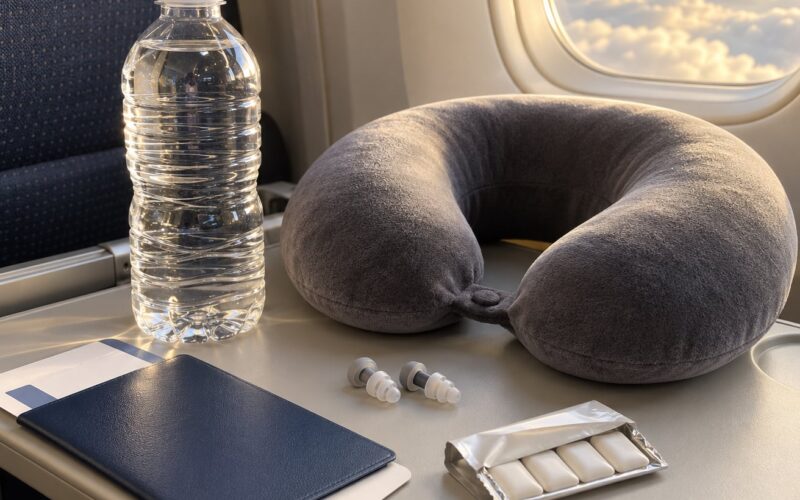
Gather these before you leave for the airport and most of the work is already done. Travellers in r/flying and r/Flights threads repeat the same short list year after year.
- A seat near the front edge of a wing
- Over-the-counter nausea medicine approved for you
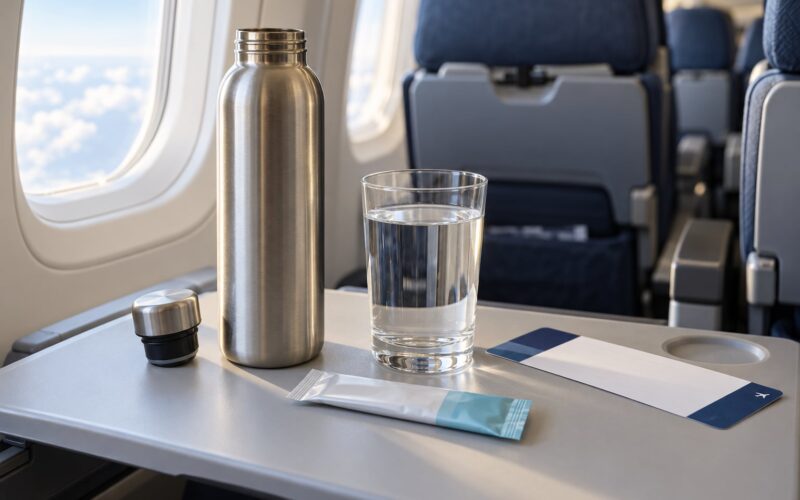
- A water bottle, filled after security
- A small, light snack for the flight
- Ginger chews or lozenges, if you already use them
- A travel sickness bag in your seat pocket
- A neck pillow or headrest for takeoff
- A second dose timed with your pharmacist’s advice
Request the seat when you book, and ask again at check-in if the booking did not let you choose. Free check-in or online check-in can also let you move seats before boarding closes.
Airline rules differ on medicines, including whether liquids need to be in a clear bag and whether anything has to stay in its original packaging. Check your airline’s current guidance rather than assuming, and check your own medical guidance before packing anything you have not used before.
How to Handle Motion Sickness on a Plane, Step by Step
1. Choose a seat with a stable view
Sit over the wings, or slightly ahead of them. That part of the fuselage moves the least, so the sensory conflict your inner ear reports is smaller. Search results argue about this constantly, with some sources saying the very front of the plane and others saying the middle, and the reason they differ is the aircraft. Narrow-body jets and wide-body jets have their centre of gravity in different places, and the calmest zone shifts with the cabin layout.
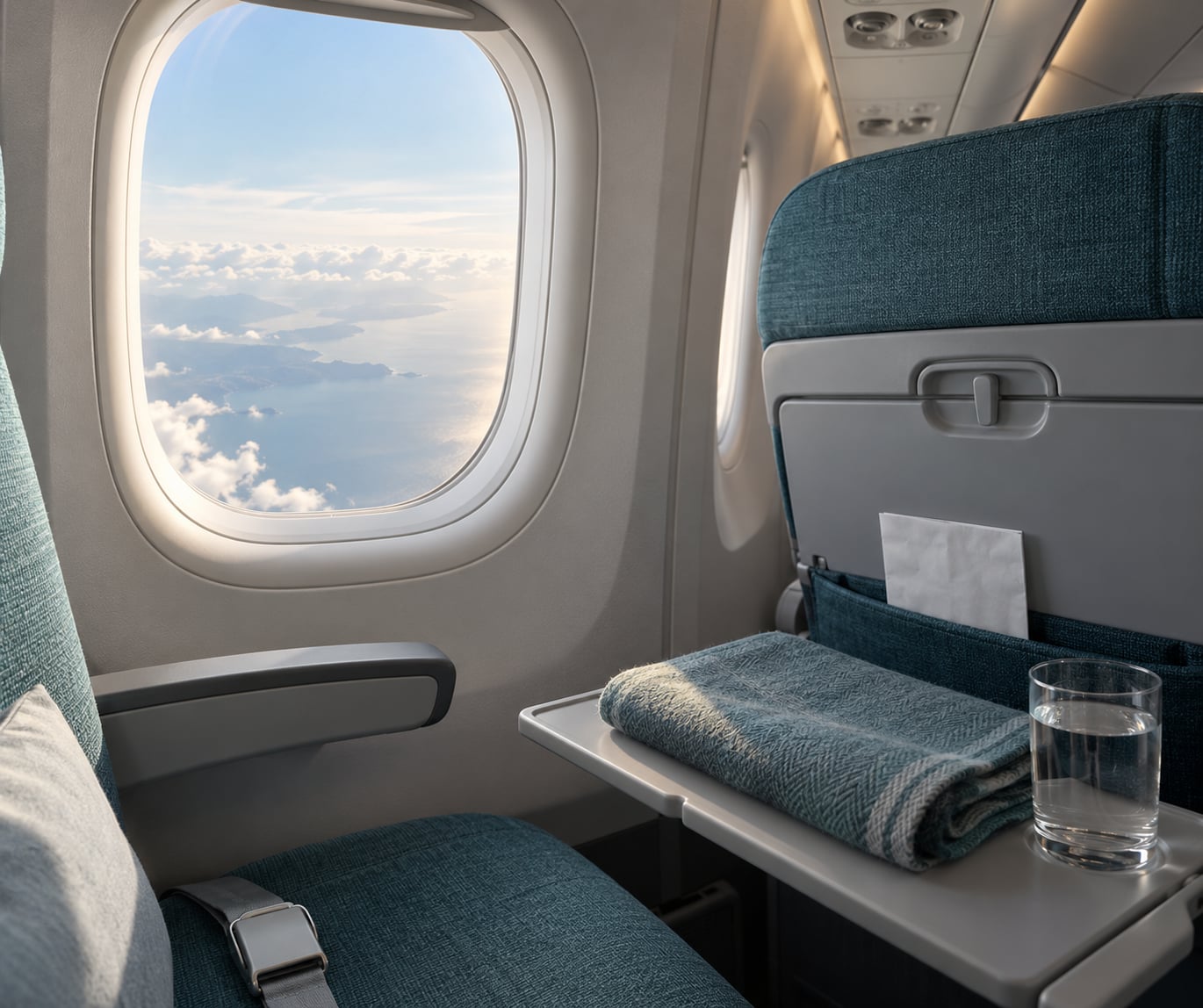
The practical rule that works across most aircraft is this: choose a window seat near the front of the wing section, and keep your gaze outside rather than on the cabin or the screen in front of you. A stable image of the horizon and the ground helps your eyes agree with your ears.
How to tell it is working: by the time the aircraft finishes climbing and levels off, the queasy feeling has faded instead of building.
Avoid the back rows on smaller aircraft. The tail sits behind the centre of gravity, so it swings and bounces more in rough air. Rows behind the wings on a large plane are the equivalent zone.
| Where you sit | What you experience | Verdict |
|---|---|---|
| Front edge of the wing, window | Smallest movement through takeoff and descent | Best choice |
| Just ahead of the wing, aisle | Low movement, easy to reach the vent | Good if you need to move around |
| Middle of the cabin, window | Moderate movement, stable outside view | Acceptable |
| Behind the wing, window | Larger swings in the climb and the descent | Skip if you can |
| Last rows, either side | Closest to the tail, behind the centre of gravity | Avoid |
On a night flight there is no horizon to look at, so the window seat loses part of its advantage. In the dark, a middle seat away from the aisle often feels calmer because you are less aware of the cabin’s movement. Ask the crew for an unswitched dim cabin, keep your head against the headrest, and let your eyes rest on a fixed part of the seatback in front of you instead of drifting around the dark cabin.
2. Plan what you eat and drink
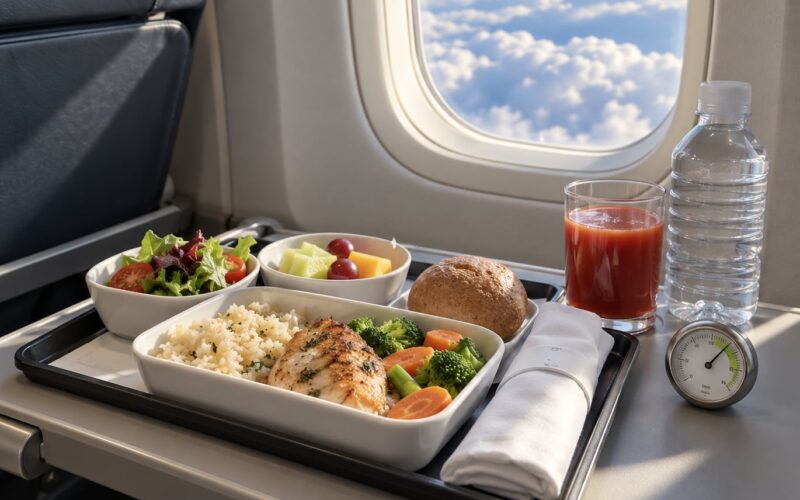
Eat something light before departure. This is the advice most often repeated and most often ignored, because plenty of travellers still believe you should fly on an empty stomach. Traveller threads push back on that pretty firmly, and for good reason: an empty stomach plus turbulence is a reliable route to nausea for a lot of people. A small portion of something bland, such as crackers, toast, fruit, or plain pasta, gives your stomach something gentle to work with.
Skip the greasy, spicy, and very rich food, and go easy on alcohol. Drink water in small sips through the flight rather than large amounts at once, because dehydration makes nausea heavier and headache worse. Aiming for a steady rhythm works better than trying to catch up.
How to tell it is helping: you arrive mid-flight feeling the same as you did at boarding, not heavier and more sluggish.
3. Ask a clinician about prevention options
This is the part to sort out before the trip rather than in the terminal. If you get carsick or seasick, or you have been caught out before, a doctor or pharmacist can talk through the options that are appropriate for you, when to take them, and what to avoid.
Three families come up most often in general travel guidance. First-generation antihistamines such as dimenhydrinate and meclizine are the standard over-the-counter option, and they are often sedating, which is the main complaint people raise about them. Scopolamine, sold as a patch, works differently and lasts longer, and travellers report dry mouth and blurred vision with it. Ginger products and similar supplements come up constantly in forums, and the evidence is weaker and more mixed than the advertising suggests.
| Option | What it is | Drowsiness | Check with a professional first if |
|---|---|---|---|
| Meclizine | Over-the-counter antihistamine | Lower than dimenhydrinate, but still possible | You take sedatives, or you have glaucoma or prostate problems |
| Dimenhydrinate | Over-the-counter antihistamine | Commonly reported as strong | You have a long flight and need to stay alert |
| Scopolamine patch | Prescription, applied behind the ear | Usually mild, but other effects reported | You are pregnant, elderly, or have eye or urinary conditions |
| Prescription alternatives | Other anti-nausea medicines your clinician may discuss | Varies | Any first-line option has failed you before |
| Ginger products | Chews, lozenges, or supplements | None expected | You take blood thinners or have reflux |
| Acupressure wrist bands | Pressure point bands sold as sea bands | Not applicable | Expect little, and check your skin if you have a bandage allergy |
Timing matters as much as the product. General guidance puts an over-the-counter dose 30 to 60 minutes before departure so it is working before you need it, and patches the evening before. Both are instructions from a label or a clinician, not from this article. Do not use a second dose without checking the interval with a pharmacist.
Natural remedies fall into clear tiers. Ginger has the best evidence behind it, in a usable form such as candied ginger, lozenges, or tablets; r/travel posters call it a lifesaver and mention ginger ale as the substitute when chews are unavailable. Peppermint and mint chewing have weaker but real support. Wrist bands are the most polarising: one long-sailing traveller in r/traveladvice said they changed their life, while plenty of others report nothing at all. That split makes sense if you understand what they do, which is very little beyond a mild placebo effect. If you want to try them, they are cheap and harmless for most people, but set your expectations honestly.
4. Use simple in-flight techniques
These are free and the ones travellers endorse most consistently. Aim the overhead air vent at your face, which is the most repeated tip across r/flying, r/Flights, and r/travel. Keep your head still against the headrest during the climb, the descent, and any rough patch, and fasten your seatbelt before the seatbelt sign goes back on, because most attacks land during turbulence and a lurch while unfastened is its own problem.
Look at the horizon, the clouds, or the ground, and stop reading and scrolling if you can. On a work flight or a long-haul with no window, an audiobook works better than a screen, because it gives your eyes a job without giving them a moving frame.
Breathe slowly and deliberately, longer out than in, for a couple of minutes. It is not dramatic, but it reliably takes the edge off a rising panic, and panic makes nausea considerably worse. Stay warm if you can, because heat is widely reported as an aggravator.
How to tell it is working: you get through the first thirty minutes of rough air without needing to stop what you are doing.
5. Respond early if nausea begins
The first few minutes matter, because once the nausea climbs, the methods that worked start to fail. Stop reading and stop watching the screen. Uncross your legs, plant your feet, and keep your back against the seat. Turn the vent toward your face and take slow, controlled breaths. Small sips of water if you can tolerate it, and the food you packed if you have it.
Find your airsickness bag before you need it. They sit in the seat pocket in front of you or the seat beside you, depending on the cabin, and the flight attendants can point one out. Let a crew member know early that you feel unwell. They cannot treat you, but they can bring water, get you air, and call for medical help if it becomes necessary.
Follow any plan a clinician gave you before the trip, including the timing of a second dose. Do not take anything in the air that you have not already taken safely on the ground.
Get help straight away for severe or persistent vomiting, signs of serious dehydration, chest pain, confusion, fainting, blurred vision that does not clear, or a headache unlike any you have had before. Those are not motion sickness symptoms, and they need a doctor.
6. Know when to ask for help
Tell a flight attendant if the nausea keeps building despite your plan, if you cannot keep fluids down, or if you feel faint, clammy, or short of breath. Crew are trained for this and would far rather hear from you early than find you later in the galley.
Be clear about the limits of what they can do. Crew can offer water, bring a bag, adjust your seat, and contact ground medical services. They are not clinicians and cannot prescribe or administer treatment. If your symptoms point to something beyond ordinary air sickness, the crew will help you arrange medical care at the airport or a diversion.
Getting help early is easier than getting help late. If a first flight went badly, the next one is usually easier anyway, because many people adapt to the movement after a few trips. That is worth remembering before a long-haul that follows a rough short-haul.
Common mistakes that make air sickness worse
Flying on an empty stomach. It is repeated constantly and it is wrong for most people. A light meal beforehand settles things; fix: eat something bland a couple of hours before departure.
Drinking heavily and skipping water. Alcohol and coffee on an empty stomach dehydrate you, and dehydration amplifies nausea. Fix: water in small, steady sips through the flight.
Taking medicine for the first time in the terminal. A new tablet is an unknown on a six-hour flight. Fix: try it at home first, on a day with nothing scheduled, or ask your pharmacist to help you choose.
Reading and scrolling through turbulence. A moving image held in your field of view is close to the worst input you can give your inner ear. Fix: window view, audiobook, or eyes closed with your head supported.
Expecting a wrist band to do the work. Fix: treat it as a small comfort, not a plan. Build the real plan around seat, meal, and a medicine you have already discussed with a clinician.
Trying to tough it out. Sitting quietly and saying nothing for two hours is how people end up needing help in the aisle. Fix: tell a crew member early.
Frequently Asked Questions
What causes motion sickness on a plane?
Air sickness is a sensory conflict. Your inner ear senses the aircraft’s movement, while your eyes see a fixed cabin and a horizon that appears to tilt, and your brain reacts to the mismatch. The result is nausea, dizziness, sweating, and sometimes vomiting. It is a normal response in healthy people, and it tends to be worse during takeoff, turbulence, and landing than during the cruise.
Is airplane motion sickness the same as turbulence-induced nausea?
Related, but not identical. Motion sickness comes from the sensory conflict described above and builds whether or not the plane is bumping. Turbulence adds a stronger, more sudden stimulus, so it often triggers an attack in someone who otherwise feels fine. A calm flight can still make you queasy if you are reading, and a bumpy flight may be manageable if you are seated over the wings.
What should I eat before a flight if I get motion sick?
Eat something light and bland a couple of hours before departure, such as crackers, toast, fruit, or plain pasta, and keep light snacks for the flight. Skip greasy, spicy, and rich food, and go easy on alcohol. Flying on an empty stomach is widely advised and makes nausea worse for many travellers. Drink water in small sips throughout the journey rather than in large amounts at once.
Do motion-sickness patches or medicines work before a flight?
For many travellers, yes. Over-the-counter antihistamines such as meclizine and dimenhydrinate are the usual option, and general guidance places a dose 30 to 60 minutes before departure. Scopolamine patches are a prescription option applied behind the ear the evening before. Effectiveness varies, drowsiness is common with first-generation antihistamines, and a pharmacist can check for interactions with your other medicines.
Can motion sickness make me vomit during a long flight?
It can, though the aim is to prevent it. Vomiting during a flight is unpleasant and can leave you dehydrated and exhausted for the rest of the trip. Knowing where the airsickness bag sits in your seat pocket helps. If you do vomit, tell a flight attendant, take small sips of water afterward, and tell them if you cannot keep fluids down, because that is a sign you need medical help rather than patience.
When should I see a doctor about motion sickness before traveling?
Book an appointment before your trip if you have had severe air sickness before, if standard options have failed you, or if you travel long-haul or frequently. See a doctor or pharmacist first if you are pregnant or breastfeeding, travelling with a young child, managing a health condition such as glaucoma or prostate problems, or already taking other medicines. They can confirm what is safe for you and how to time it.
Conclusion
Start with the two things that do the most work: a window seat near the front of the wing, and an over-the-counter antihistamine taken 30 to 60 minutes before departure if your clinician or pharmacist has cleared it for you. Add a light meal, steady water, and a headrest, and you have covered most of the ground before you board.
Then use the free techniques on cue: vent toward your face, eyes outside, head still, and tell a crew member early if nausea starts. If your symptoms are severe, recurring, or tied to anxiety about flying, book an appointment before your next trip rather than planning a workaround in the terminal.