Tourist scams are confidence tricks aimed at travelers, and you can avoid most of them by booking through verified direct channels, agreeing every price before you pay it, using a credit card rather than cash wherever possible, and walking away from any offer that seems too good to be true.
Almost every scam works the same way. Someone approaches you first, creates a distraction or a sense of urgency, moves you away from the crowd or to a second location, then leans on social pressure until you agree before you have had time to think.
That pattern is worth learning on its own. Once you spot the first move, the rest is usually easy. Here are the rules that stop the majority of it, split the same way the search results do.
Before you book and before you go online
- Book flights, hotels and rental cars through the provider’s own site or a well-known booking platform, never a link in an unexpected email.
- Check the domain letter by letter before you enter card details; look for extra letters, odd extensions and misspellings.
- Pay with a credit card wherever the vendor accepts one, because card charges are usually easier to dispute than cash.
- Never pay by wire transfer, gift card, cryptocurrency or peer-to-peer cash app for anything you booked online.
- Turn on account alerts and download a VPN plus offline maps before you land.
On the ground, at the counter and on the street
- Agree the taxi fare or insist the meter runs before the door closes.
- Decline help with an ATM or exchange counter from anyone you did not ask.
- Refuse anything that gets tied, worn, signed or handed to you for free.
- Loop your bag around the chair leg and keep it in front of you in cafés, bars and stations.
- Check that an ATM card reader and keypad feel normal and sit flush before you insert anything.
- Move your phone off public Wi-Fi and out of unknown USB charging ports before you open a banking app.
Table of Contents
- 1What You Need
- 2Step-by-Step
- 31. Learn the common scams first so you recognize one instantly
- 42. Set up secure backups before departure
- 53. Research destinations and use reputable services
- 64. Check prices, routes, and bills before agreeing
- 75. Protect payment details in public
- 86. Stay safe and respond calmly when something feels wrong
- 97. Report the incident and replace compromised essentials
- 10Common Mistakes
- 11Frequently Asked Questions
- 12What is the single best way to avoid tourist scams?
- 13How do I know if a taxi is scamming me?
- 14What is the new ATM scam?
- 15What should you never say to a scammer?
- 16What do I do if I get scammed while traveling?
- 17Which travel scams target older travelers?
- 18Conclusion
What You Need
The practical preparation for this takes about ten minutes and it does more than any street-level vigilance will. Scams that never get the chance to start leave you with your time and your temper intact.
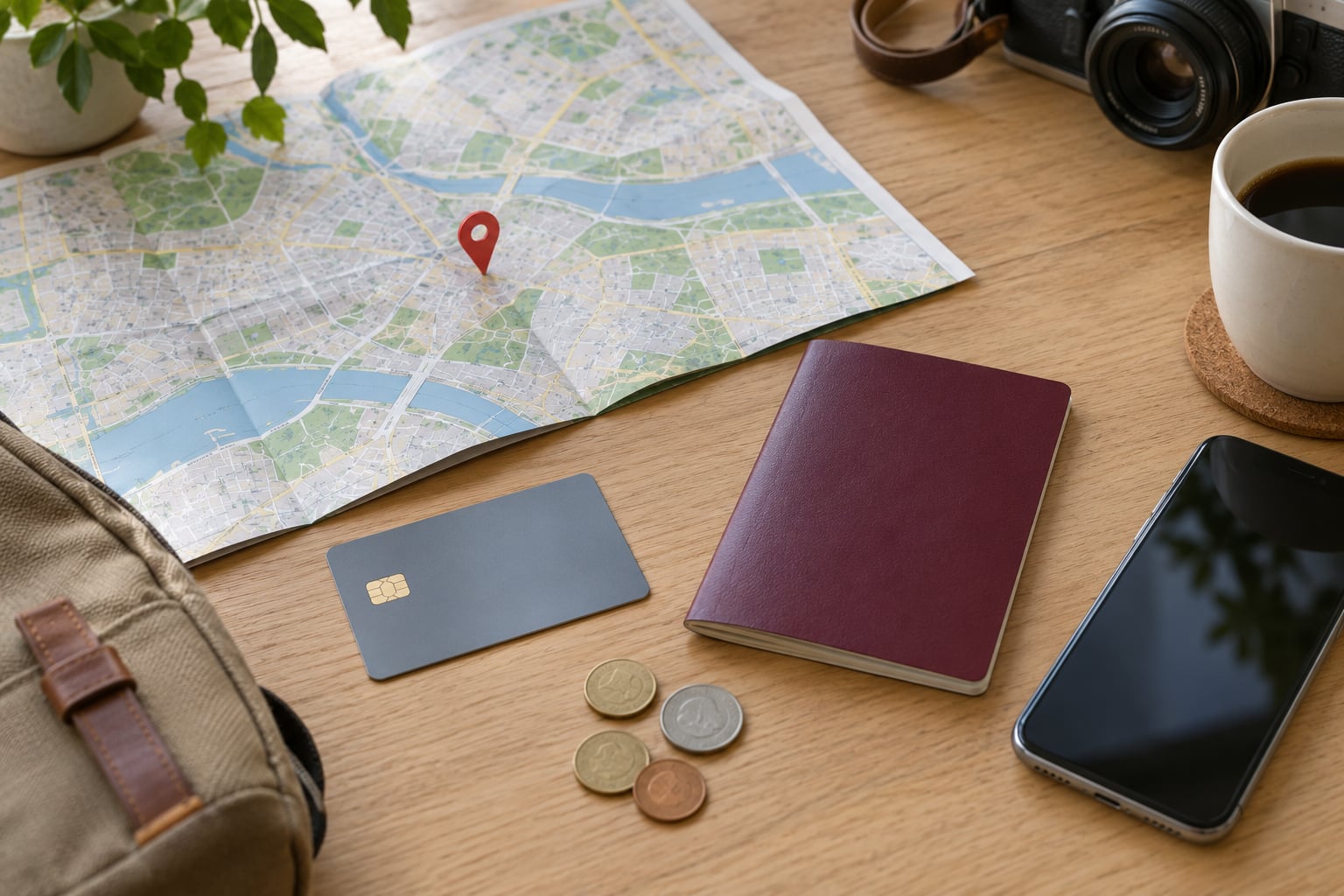
- Two payment methods that are not the same card. A primary credit card and a separate debit card from a different network. If one is compromised you still have the other.
- Cash split across two places. Some in a money belt or zipped inner pocket, some in a bag or a second wallet. Never all of it in one bag.
- Digital copies of your passport, visa and insurance policy. Stored in an encrypted folder you can open without data, plus one copy with someone at home.
- Bank and card numbers reachable offline. Screenshot the customer service numbers so you can call when roaming is broken.
- The local emergency number and the address of your nearest embassy or consulate. Save both as text, not as a bookmark.
- Offline maps and a plan for staying connected. Download the region before you land, and know whether you need an eSIM, a local SIM or a roaming plan.
- Travel insurance documents and a photo of every booking. A screenshot of your reservation is often the fastest proof that you paid and where you should be staying.
One more thing matters more than people expect: tell a trusted person your rough itinerary and check in every few days. If something goes wrong, the first twenty-four hours are when a second person is genuinely useful.
Step-by-Step
1. Learn the common scams first so you recognize one instantly
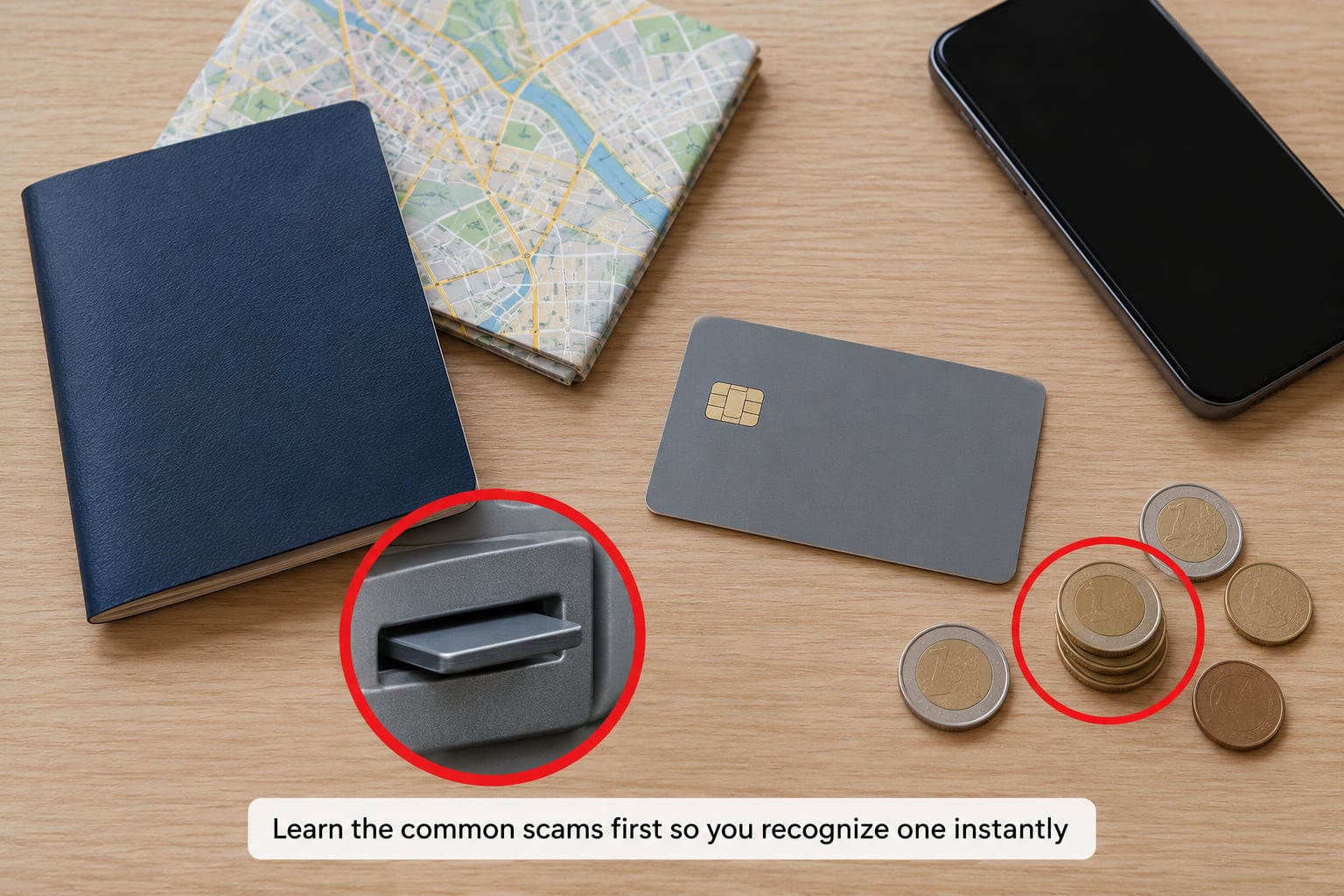
Most travel scams fall into six families, and once you have seen each family once you will spot them anywhere.
- Rides and fares: taxi overcharges, a meter that has been broken or swapped, tuk-tuk drivers who circle forever before setting a price, fake rideshare drivers who approach you in the street instead of in the app.
- Free gifts and friendly strangers: the friendship bracelet, a “found” ring, a free tea ceremony, a petition that needs your signature, a friendly local who is much too interested in you.
- Distraction: the spill on your sleeve, a bump in a crowded station, a child begging, a dropped wallet, a shell game or three-card monte table that someone wants you to try.
- Money and ATMs: card skimmers and PIN pad overlays, someone counting out your cash “wrongly”, a bad exchange rate at an unofficial counter, a stranger who offers to help you use the machine.
- Authority: fake police or immigration officers, a fake taxi official, a doctor or guide you never contacted, an urgent story about a friend or relative in distress.
- Bookings and bargains: a “closed for lunch” attraction that funnels you into a commission shop, a motorbike or jet ski rental followed by a damage claim, a souvenir shop that swaps your item when you look away.
Underneath all of them sit five levers: reciprocity (do something for me and I will owe you), distraction (look down here), social obligation (saying no is rude), urgency (act now or lose everything), and apparent authority (I am official, so cooperate). Once you can name the lever, the pressure stops feeling like your problem and starts feeling like theirs.
Five red flags show up in nearly every case: the person approached you first; the offer is free or insists there is no charge; they want you to follow them somewhere else; they create a scene or a crowd; and they mention a friend or a cousin in your home city. If you get two of those at once, the decision is already made.
Here is the same ground scam by scam, with the red flag and the response for each.
- Taxi overcharge. The meter runs wrong, or the fare is invented at the destination. Red flag: the driver avoids the meter or gets agitated. What to do: agree the fare before you sit, or use the official taxi rank.
- Fake rideshare. Someone approaches you with a ride you did not order. Red flag: they know your name without you saying it. What to do: only accept rides booked inside the app.
- Friendship bracelet. Something is tied to your wrist and a price appears later. Red flag: it is free, and the price is a surprise. What to do: refuse, then walk away without stopping.
- The spill. Liquid lands on you while hands go for your bag. Red flag: your attention is pulled downward. What to do: step back from the crowd first, check your bag second.
- Card skimmer. A sleeve or keypad overlay copies your card and PIN. Red flag: the reader sits loose or too high above the fascia. What to do: use bank-attached ATMs indoors and cover the keypad.
- Currency switcheroo. Counted-out cash is sleeved with counterfeit notes. Red flag: the counter argues about the rate mid-transaction. What to do: check the notes in your own hands, at the counter, before leaving.
- Fake police. Impersonators demand a phone, a fine or a password. Red flag: real officers do not collect a fine in cash on the street. What to do: ask for a station, walk to a staffed shop and call the local number yourself.
- Closed for lunch. A guide claims an attraction is shut and offers a replacement. Red flag: he earns a commission where he takes you. What to do: check opening times yourself, or skip the stop entirely.
- Motorbike damage. A small scratch on a rental is billed as a major one. Red flag: no photo was taken at handover. What to do: photograph every panel and tyre before you ride.
- Emergency relative. A call or message claims a family member is in trouble and asks for money. Red flag: urgency plus a request to keep it secret. What to do: hang up and call the person back on a number you already had.
Where they cluster also follows a pattern. Paris and Barcelona have pickpocket teams working metro turnstiles and the Eiffel Tower, Las Ramblas and La Boqueria. Rome and Venice run the friendship bracelet and petition near the major sights. Prague and Krakow concentrate the currency exchange and taxi commission tricks in the old town. Bangkok, Hanoi and Ho Chi Minh City combine the tuk-tuk overcharge, the closed-for-lunch commission tour and motorbike damage dispute. Istanbul adds the closed-attraction commission stop to the same mix.
That list describes where to be alert, not who to distrust. The people who run these are a small, identifiable group, and the overwhelming majority of residents in every one of those cities are simply trying to earn a living. Read the situation, not the passport of the person in front of you.
2. Set up secure backups before departure
How to avoid tourist scams is mostly a preparation problem, and the ten minutes you spend at home are the cheapest insurance you will ever buy.
Tell your bank the dates and countries. Most major issuers have a travel notice or an app toggle for it, and without one a foreign transaction can be treated as suspicious and blocked at the worst moment. Ask about zero foreign transaction fees too, since a card that charges a percentage on every meal quietly costs more than the scam you were trying to avoid.
Split your money the same way. Card for anything that takes a card, a modest amount of local cash for markets and small tips, and that cash in two separate places. A lost wallet in week two should not end your trip.
Put your documents somewhere you can reach without connectivity. An encrypted cloud folder plus screenshots of your passport bio page, visa and insurance certificate means a stolen bag is an evening’s paperwork rather than a consulate queue. Leave a copy with someone at home.
Turn on transaction alerts and two-factor authentication on anything money-related before you leave, not while you are standing at an ATM with a queue behind you.
Finally, download the map, save the emergency number, and know how you will get online. Search for your bank’s real support line and screenshot it, because the number you need at 2am is not the one you can look up then.
3. Research destinations and use reputable services
Five minutes of checking before you arrive removes several entire categories of trouble.
Start with official tourism and foreign-affairs guidance for your destinations. It tells you which neighborhoods to avoid, which border crossings are problematic and which scams are currently being reported, and it costs nothing to read.
Then read recent traveler reports rather than old listicles. Scams change fast: the operating crew behind a popular racket gets shut down and a new one moves in next month. Reviews on a big platform, dated within the last few months, tell you far more than a list written years ago.
Book through official channels. The airline’s own site, the hotel’s own site, the official transit operator, the official attraction website. If a price is dramatically lower elsewhere, the difference is the point. Watch the domain character by character, and be suspicious of a message that arrives with an attachment or a login link you were not expecting.
For getting around, use a licensed taxi rank, the transit system, or an established ride-hailing app where one operates. The whole reason apps help is that the driver, the plate and the price are recorded before you get in.
For guides, check whether they are officially licensed. In several cities a licensed guide is legally required to be able to produce credentials, and a person who cannot is telling you something.
4. Check prices, routes, and bills before agreeing
Almost every successful scam is a transaction you agreed to without a number in front of you.
In a taxi, agree the fare or watch the meter from the moment you sit down. If the driver says the meter is broken, ask for the official rate or get out. Note the vehicle plate and the driver’s licence number if the overcharge is significant enough to report.
At a currency counter, ask for the rate and the fee separately, and check the amount you receive before you leave the counter. Take the sleeved notes out and count them yourself while you are still standing there. Official exchange counters inside banks and hotels are usually not the best rate, but they are not going to hand you a note with your name on it either.
For tours, ask what the price includes and what the guide earns a commission on. Anyone who takes you to a shop “where the money helps local families” is earning from it.
For a “closed for lunch” story, you have one question: what time does the official site say it reopens. Then either wait or move on. Do not accept the replacement.
At a restaurant, check prices before you order, especially where there is no printed menu, and ask for the bill with the itemised prices. Check the charge on your card immediately, not two days later when you will not remember.
For a motorbike or jet ski rental, photograph every panel, mirror and tyre at handover and get it time-stamped. When it comes back, look at it in daylight before you sign anything.
5. Protect payment details in public
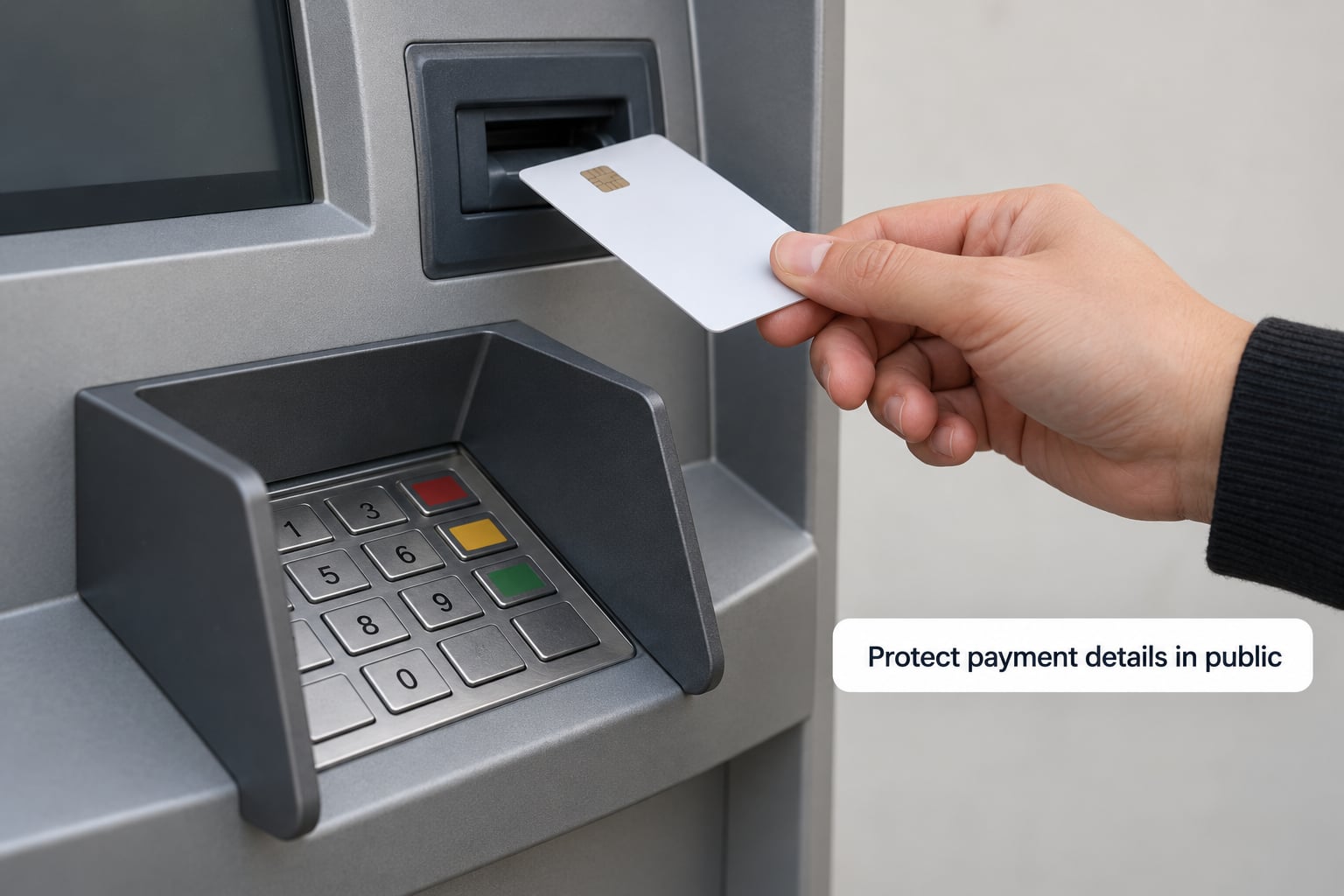
Where you tap a card is as important as how much you pay.
Use ATMs attached to or inside a bank branch. Independent machines on a street corner are the ones that get fitted with skimmers, because nobody is refilling the owner’s shop next door all night.
Before you insert anything, look at the card slot. A skimmer is a sleeve that sits on top and does not sit flush. Wiggle it gently; if it shifts at all, do not use it. Then check the keypad, because an overlay that steals your PIN does not need to touch your card. Cover the keypad with your hand as you type, even if it looks fine.
Take the card back the moment the machine returns it. Debit card claw machines that sit next to an ATM take cards and demand a code to release them; walk past.
If a stranger offers to help you with the machine, say no politely and use it alone. If someone has already touched the machine, tell the bank.
Skip the fancy QR sticker. If a sticker beside a parking meter, a menu or a counter tells you to scan and pay with your phone, scan it with a different app or pay the person. Stickers like this are placed by strangers and the payment goes wherever the code points.
Skip public Wi-Fi for anything financial. An “evil twin” hotspot with a friendly name can sit between you and your bank. Use your phone’s own connection or a VPN, and remember that a USB port in an airport or a café can hand a stranger your device. Carry a wall charger, not just a cable.
For bags: cross-body and in front of you, loop the strap around the leg of your chair or the armrest of a bar stool, and put your phone away before you sit down. The instinct to look at your bag is the whole attack.
6. Stay safe and respond calmly when something feels wrong
Safety beats money. A few euros are replaceable; you are not.
If something feels off, move toward people and staff. A shop counter, a hotel lobby, a cafe with waiters, a staffed ticket desk. Do not follow anyone to a second location, no matter how reasonable the reason sounds, and do not get into a vehicle you did not book yourself. Forum travelers describe being led somewhere that felt safe because it was right beside a police station, then trapped in a private space; the location did not matter, the isolation did.
Say something and keep moving. The following lines are short enough to use while walking.
- “No thank you.” Then keep walking.
- “I am waiting for someone.” Then keep walking.
- “Call the police if I do not stop.” Said loudly, in a language you can fake.
- “I do not speak any language.” Boring, and it works.
- “Stop following me.” Only in a busy, staffed place, and only once.
Never say yes to any of these, because each one is the moment the deal is done: what is your name, where are you staying, how much money do you have, which hotel are you in tonight, can you sign here, will you take this gift.
Never look down at the mess on your shirt, the wallet on the ground or the child in front of you. That downward glance is the opening. Step aside first and check yourself second.
Do not fight, argue or grab. If a bar presents a bill for drinks you never ordered and the door is blocked, refuse clearly, keep saying you are calling police, and negotiate your way out. The person who walks away empty-handed still won.
Know when not to escalate. A few euros at a counter in a language you do not speak is not worth a scene and a bad afternoon. Forum contributors on a double-charge in Linz made exactly this call and were right to. Save your energy for the situations that are about money or safety rather than principle.
7. Report the incident and replace compromised essentials
If it happens anyway, speed matters more than completeness. This is the sequence I would follow.
Freeze the card first. Use your bank’s app to lock the card, or call the number on the back of it. A skimmed card will keep draining an account until someone notices, and most banks will not credit the time before the report. Do this from a device you trust, not a hotel computer.
Notify the bank and ask for the process in writing. Ask for a reference number and note the date. Ask about a temporary replacement and where it can be delivered. Dispute fraudulent charges quickly; banks handle these far better when the report arrives within days rather than months.
File a report with the police. Get a written copy or reference number, even if the officer is not motivated. Many banks and insurers ask for it before they will process a claim. If there is a tourist police desk, contact that too; they are set up for exactly this and often faster than a local station.
Document everything. Receipts, card statements, screenshots of the listing, the vehicle plate, the date, the time, the place. Keep them somewhere that is not the same bag that got stolen.
Tell your insurer. Travel insurance covers a different set of problems than card fraud protection, and you may have both. Notify the insurer as soon as you can, because notice periods are usually short.
Replace documents. A lost passport starts with your embassy or consulate, and you generally need a police report first. A photocopy plus your digital copy gets you moving much faster than a memory of what the page looked like.
Finally, say so where it helps other travelers. A verified warning on a forum or a review for a specific business, written after you have left, does more good than staying angry at the moment.
Common Mistakes
These are the errors I see most often, and the correction for each.
- Accepting unsolicited help. The single biggest one. A stranger who appears at an ATM, an exchange counter or a map with an open hand is usually working. Correct it: you did not ask, so you decline and continue alone.
- Displaying every payment method at once. Cards, cash and phone all visible tells an observer everything. Correct it: one card out, cash away, phone away.
- Negotiating in an isolated spot. Arguing over a fare on an empty roadside or inside a shop you cannot find again changes the risk profile completely. Correct it: argument only where there are other people, and never over a small amount.
- Ignoring the first warning sign. The follow-up call, the free tea, the too-friendly local. Correct it: the first approach is not the second chance, it is the opening move.
- Paying cash for anything with a receipt. Cash removes your only leverage. Correct it: card wherever a terminal exists, and ask for an itemised receipt.
- Using public Wi-Fi for banking. Correction: phone data or a VPN, always, and never a public USB port for a device you rely on.
- Signing rental damage without a photo. Correction: time-stamped photos at handover, or do not ride.
- Trying to win a confrontation. Correction: disengage, get to staff, get out. You were never going to win in a place where you do not speak the language.
One reality check, because lists like this tend to inflate themselves. Experienced travelers on the Rick Steves forum push back on several widely circulated “scams” as rare or implausible, and note that petition scammers work near offices and commuter stations rather than at major sights. Not every widely repeated story happens to you. Learn the pattern, not the horror story.
And the reverse point matters just as much. Scams are a global retail operation aimed at tourists, not a national character trait. Thousands of people in these cities will help you without a second thought the moment you ask properly. Reading a crowd as hostile is its own kind of mistake, and it is the one that turns a small loss into a bad day.
Frequently Asked Questions
What is the single best way to avoid tourist scams?
Refuse offers that arrive unsolicited, and stay in places where your money is your business. Someone who approaches you first with something free, or who insists they will not charge you, is working far more often than they are being kind. Everything else, from fare checks to card safety, is second layer.
How do I know if a taxi is scamming me?
Watch the meter start before you move, and if the driver says it is broken, ask for the official fare or get out. Agree a fixed price before you sit in countries where taxis are not required to meter. In a few cities the official taxi rank or a ride-hailing app is simply the safer choice.
What is the new ATM scam?
Two variants are growing. The first is a fake QR sticker placed beside or over the machine that sends your payment to someone else while showing a convincing receipt page. The second is the classic skimmer rebuilt for the tap and pin era: a thin overlay on the keypad that records your PIN.
What should you never say to a scammer?
Never confirm your hotel, your route, your group size or how much cash you are carrying. Do not say your name, and never take something out of your hands, sign anything or agree a price in the moment. Short lines work best: no thank you, I am waiting for someone, and keep walking.
What do I do if I get scammed while traveling?
Freeze the card from your phone first, then call the bank’s number from the back of the card and get a reference number. Next file a police report and ask for something in writing, keep every receipt, notify your insurer, and write down the time and place while you still remember.
Which travel scams target older travelers?
The ones that rely on politeness rather than speed. Fake officers demanding a document or a fine, strangers who need help reading a form, help at an ATM or an exchange counter, and overcharging that a traveler feels awkward questioning. Advance research, a card over cash, and a firm no are the whole defence.
Conclusion
If you do five things, you will lose very little to tourist scams. Set up a second card and split your cash before you leave. Use licensed transport, official booking sites and reputable guides. Agree every fare, rate and bill before you pay it. Protect your card and phone in public, and skip public Wi-Fi for anything financial. And if something feels wrong, walk toward people and walk away from the person in front of you.
One rule covers the rest: never accept a deal from someone who found you. Scams need a script, and the script starts with an offer you did not ask for. Ignore it and your trip continues.