A plane is retired when an airline permanently takes it out of service, usually because keeping it flying costs more than it earns. After the last flight it is de-registered, defuelled and preserved, then sent to storage, conversion, a museum, or a dismantling yard where usable parts are removed and the metals are recycled. Below is how airplanes are retired and scrapped, stage by stage.
The picture most people carry is a jet towed to a desert and set on fire, which is the least interesting ending available to it. In practice most aircraft spend years parked before anything is dismantled, and the valuable part of a retired airliner is almost never the shell.
Table of Contents
- 1What Happens When an Airplane Is Retired?
- 2How Airplanes Are Retired and Scrapped: The Process Step by Step
- 3How Airplanes Are Retired and Scrapped: Where the Parts Go
- 4What Is Scrapped and What Is Recycled?
- 5Why Do Airlines Retire Aircraft Early?
- 6Can a Retired Airplane Return to Service?
- 7What Happens to Aircraft Electronics and Interior Materials?
- 8How Much of a Retired Airplane Can Be Reused?
- 9What Environmental and Safety Challenges Does Scrapping Involve?
- 10Frequently Asked Questions
- 11What happens to planes when they are retired?
- 12What happens to scrapped airplanes?
- 13How much is a scrap plane worth?
- 14Why do planes need to be retired?
- 15How long can an airplane fly before retirement?
- 16Where can I find scrap aircraft parts for sale?
- 17Conclusion: What Happens First in the Retirement Process?
What Happens When an Airplane Is Retired?
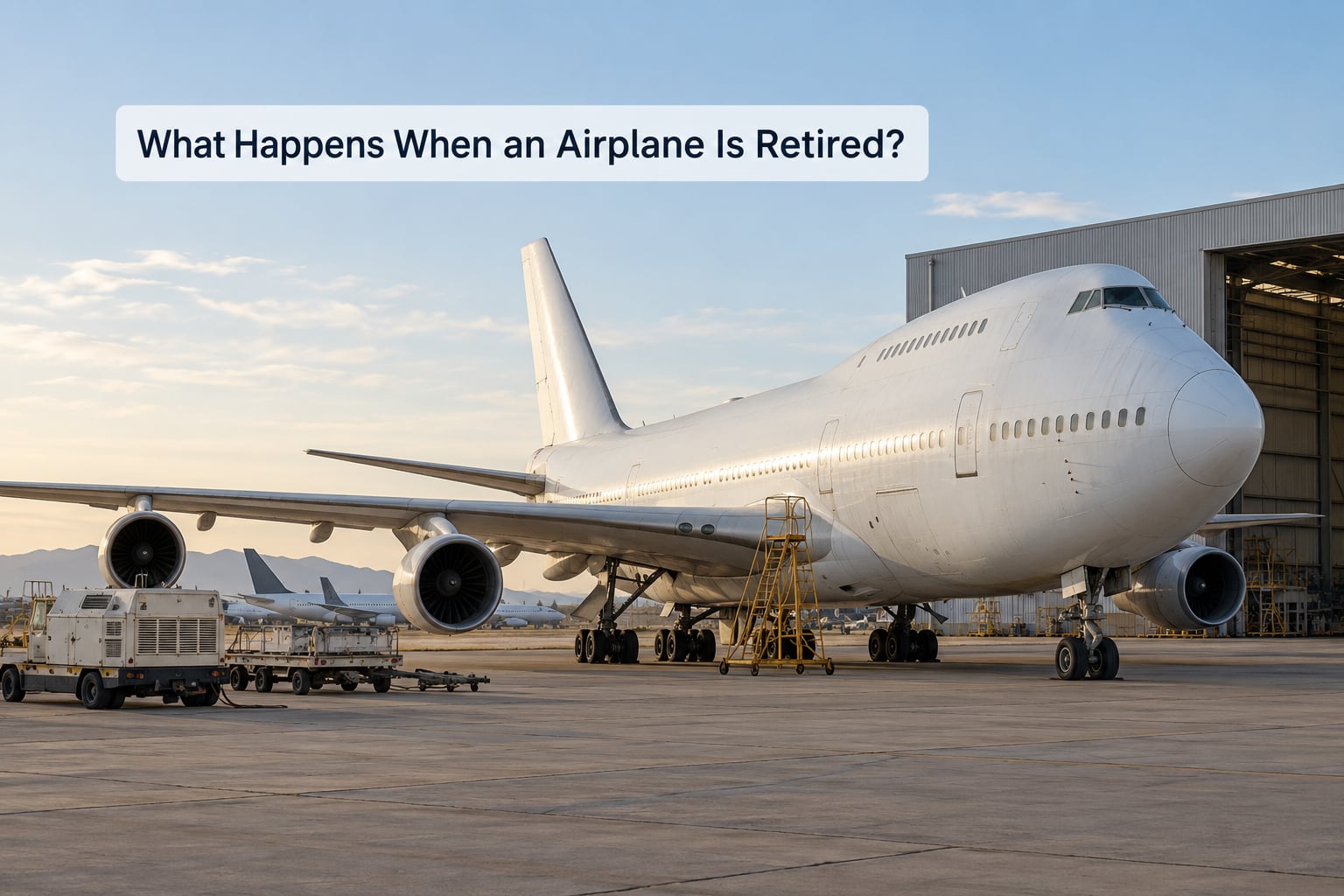
Retirement is a commercial and technical decision, not a legal age limit. An airline withdraws an aircraft from its operating certificate when the aircraft has reached the end of its economic life: the cost of inspections, repairs, crew training and spares support now exceeds what the aircraft can earn or what a buyer will pay for it.
Four things usually end a passenger jet’s career, and they rarely arrive one at a time. Structural fatigue from pressurisation cycles and landings, corrosion, the maintenance burden of an ageing type, and a fleet or network decision that makes the aircraft the wrong size or the wrong technology.
The regulatory step matters more than most travellers realise. Before the aircraft flies its last revenue service, it is removed from the airline’s fleet and its registration is cancelled with the national authority, the FAA in the United States or EASA in Europe. Its airworthiness certificate goes with it. Without an airworthiness certificate and a valid registration, the aircraft legally cannot fly again.
That is the moment retirement is real. Storage, a grounding, a lease dispute or a long period out of service is none of those things. Enthusiasts on aviation forums are careful about the distinction, because a plane sitting in a boneyard is often described as retired when it is really waiting.
How Airplanes Are Retired and Scrapped: The Process Step by Step
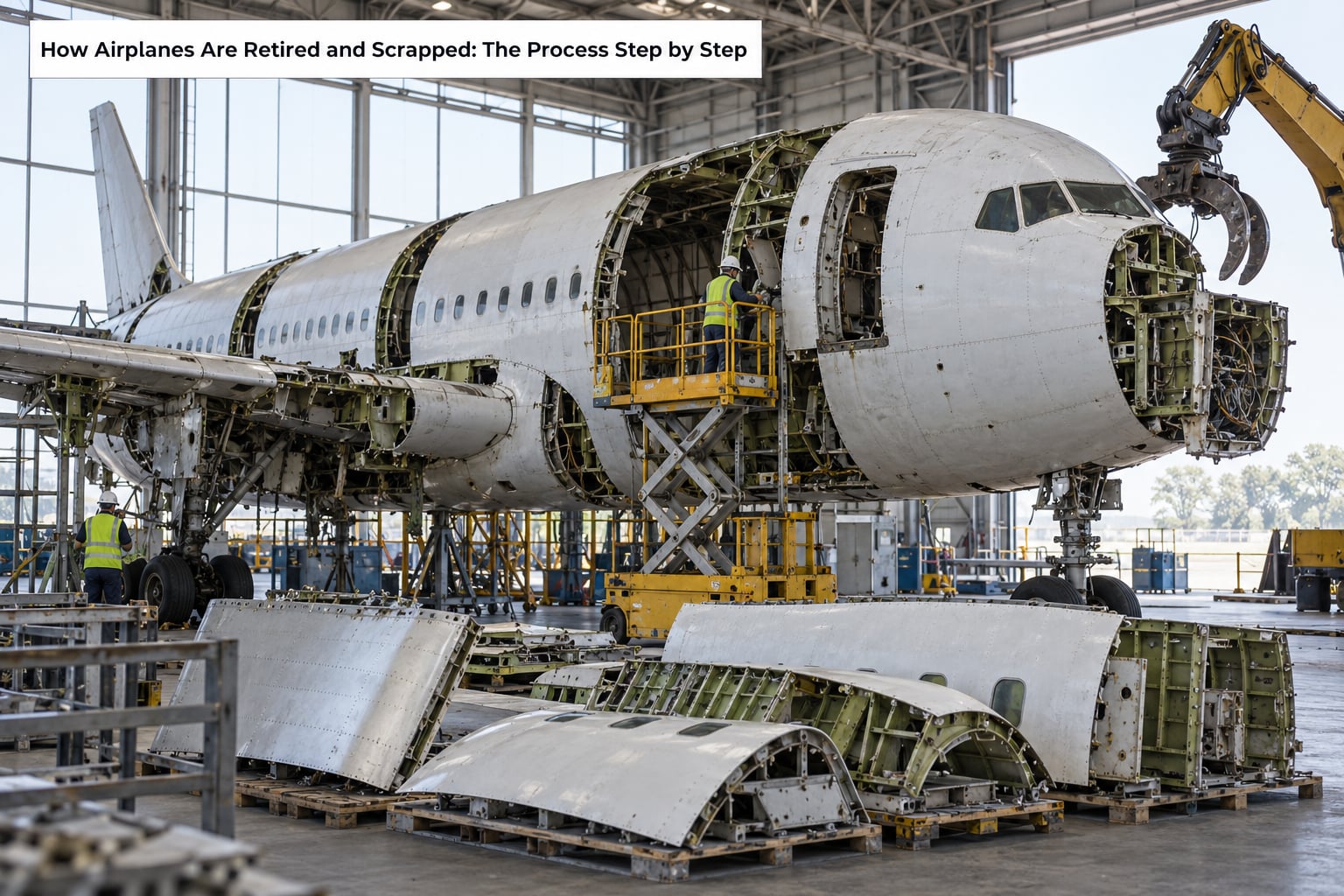
The sequence below is how airplanes are retired and scrapped in most cases. Timelines vary enormously with size and condition, so treat each step as a stage rather than a deadline.
1. Replacement planning. Long before an aircraft is withdrawn, the airline’s fleet planners have usually decided what replaces it. Without a replacement, a retirement decision stalls, because the line has to keep flying. This stage also sets the aircraft’s fate: sale, lease return, conversion candidate or part-out.
2. Last flight and de-registration. The aircraft flies its final sector, often carrying extra fuel if it has to position to a storage site, then its registration is cancelled and the airworthiness certificate is withdrawn.
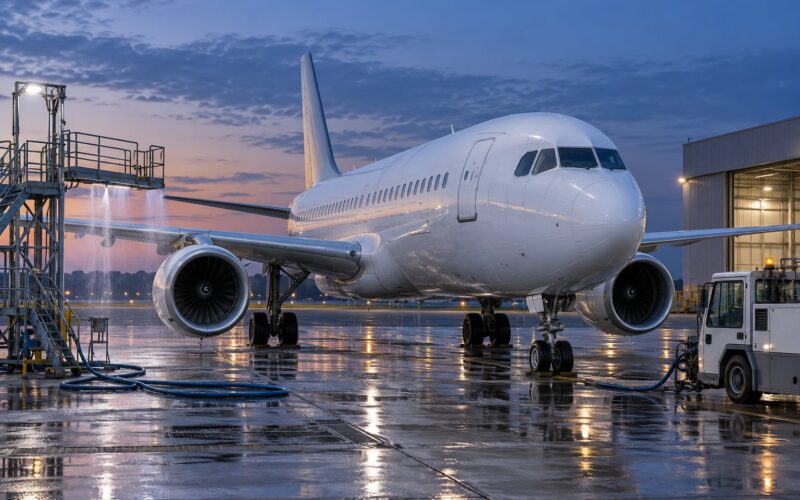
3. Defuelling and fluid removal. Fuel is drained and the tanks are purged. The drained fuel is reused in diesel vehicles and heating oil or sold off, rather than simply vanishing. Hydraulic fluid, engine oil, gear oil and cabin supply air are drained too, along with batteries and fire-suppression bottles.
4. Washing and preservation for storage. If the aircraft has any prospect of flying again, it is washed to strip salt and dirt, openings are sealed, tyres are covered or removed, and the airframe is preserved against corrosion. Deserts such as those around Roswell, Tucson, Victorville and Cotswold are used because low humidity and low rainfall slow corrosion dramatically.
5. Assessment and part-out planning. Maintenance records are pulled and the airframe is examined to decide which units are worth removing. An average airliner holds more than 350,000 individual components, so the decision about what comes off is where most of the money is made.
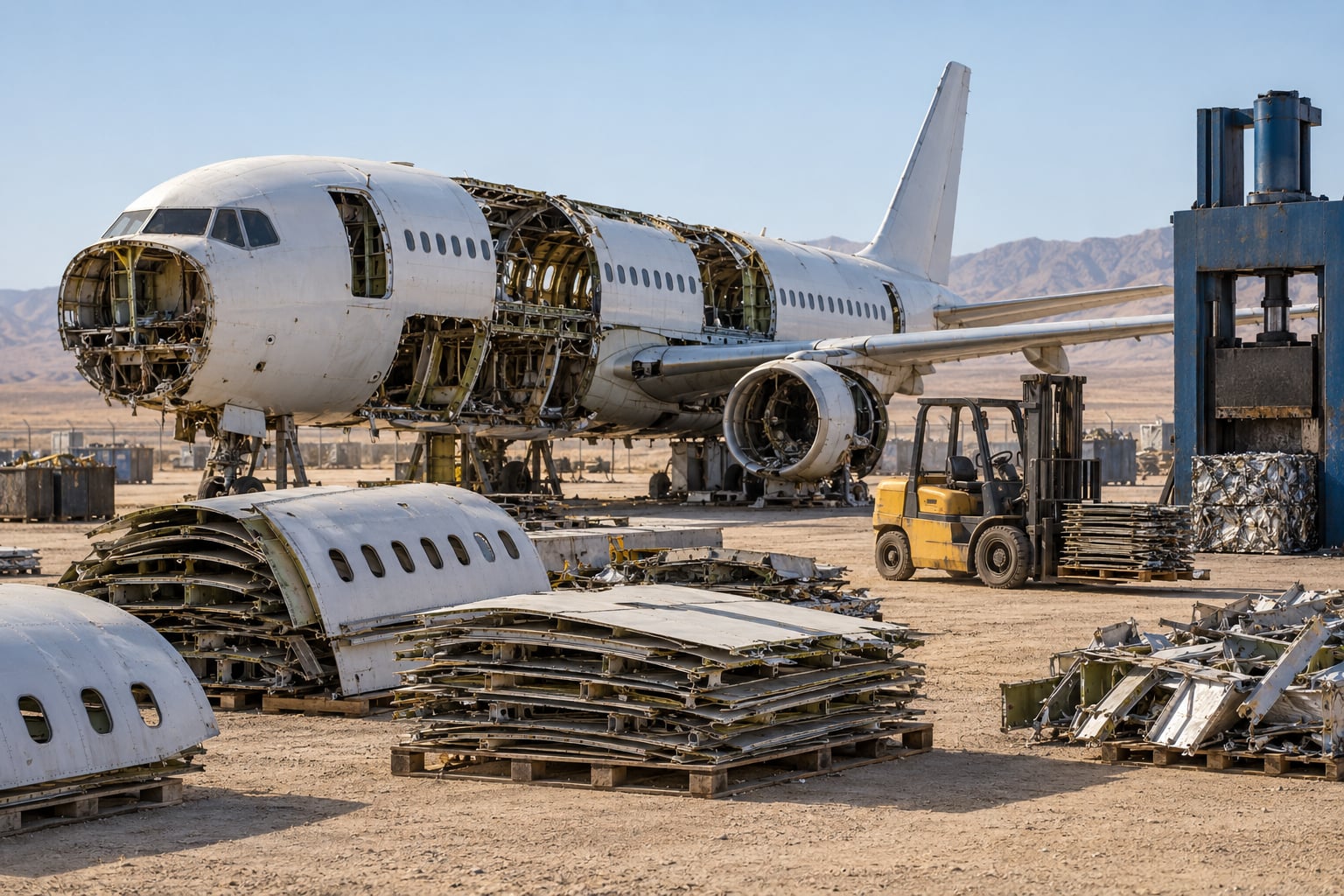
6. Dismantling. Serviceable components are removed first, then the cabin, then the structure. A Boeing 737-sized airframe can be reduced to scrap in hours; a Boeing 747 takes days including cleanup, and pulling a large engine down can occupy a team for about four days on its own.
7. Shredding, crushing and smelting. The bare structure is fed into a shredder or hydraulic press, ferrous and non-ferrous metals are separated, and the aluminium goes to a foundry for remelting. A 747 has been reported as taking up to three months end to end.
How Airplanes Are Retired and Scrapped: Where the Parts Go
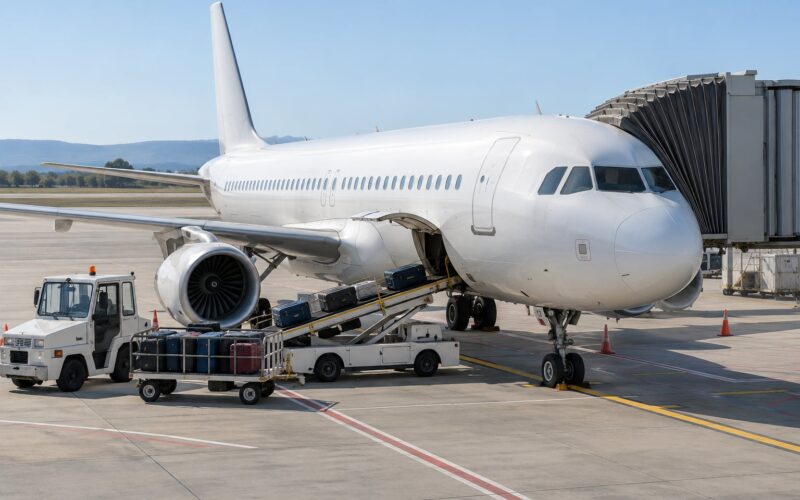
Reuse comes before recycling, and the removed equipment is nearly always worth more than the metal. Engines and their auxiliary power units lead the list, because they have cycles and hours remaining and the market for certified used engines is active worldwide. Landing gear follows, since every landing wears brakes, tyres and bearings.
Other removals include avionics and line-replaceable units, fuel pumps, generators, hydraulic and pneumatic components, flight control parts, galley and cabin fittings, and sometimes whole seats if a cabin refurbishment programme is running in parallel. Life-limited parts are tracked by serial number and total cycles, so they carry documentation that a buyer can verify.
That traceability is the legal dividing line. A part may leave a scrapped aircraft only if the aircraft was de-registered and the part’s history can be shown, including what happened to it in the crash or severe event that ended the airframe’s life. Parts are sold through accredited dismantlers and approved distributors, and an untraceable unit has no legal market value regardless of its condition.
What Is Scrapped and What Is Recycled?
Scrapping is the destruction of material with no resale route. Recycling is recovery of material into another product. A retired airframe is mostly aluminium alloy, with smaller quantities of titanium, steel, magnesium, copper wiring, plastics, glass and composite structures.
The Aircraft Fleet Recycling Association, the main industry body for end-of-life aircraft, reports that its accredited dismantlers recycle 90 to 92 percent of an airframe by weight and up to 99 percent of jet engines. IATA puts the broader figure at around 90 percent of aircraft parts being reusable or recyclable. Those numbers are good, and they also hide the part that isn’t.
What reliably stays in landfill is the soft interior. Seat fabrics and foam, carpets, blankets, insulation, and fire-retardant materials are mixed, contaminated and often bonded to structures, so recovery is uneconomic in most cases. Composite structures and honeycomb core have the same problem, though some are now being handled by dedicated recycling routes.
Beyond roughly 15,000 commercial aircraft retired worldwide over the past 35 years, more than 12,000 further aircraft are projected by AFRA to reach end of life over the next two decades. Aircraft fleet recycling is a growth industry rather than a rounding error, and capacity for it is being built ahead of that wave.
Why Do Airlines Retire Aircraft Early?
An aircraft is retired when one of these gets bad enough, and often when several get bad at once.
- Fatigue and pressurisation cycles. Every takeoff and landing is a pressurisation cycle, and cabin structures are certified by cycle count rather than by age. Short regional flights chew through cycles far faster than long-haul ones, so the same airframe can be young in years and used up in cycles.
- Rising maintenance cost. Heavy checks become more frequent and more expensive on an ageing type, and heavy structural repair can exceed the aircraft’s market value in a single event.
- Fuel and operating efficiency. A new-generation aircraft burns noticeably less per seat, which on thin routes or reduced passenger volumes can flip a route from profitable to marginal.
- Parts support. When an aircraft type is only a handful of frames from retirement, spares become scarce and expensive. An airline often pulls the remaining airframes forward rather than fund support for a shrinking fleet.
- Fleet standardisation. Commonality cuts training, spares and maintenance cost. Mixed fleets are expensive to run, so airlines retire types early on schedule rather than out of necessity.
- Noise and emissions rules. Noise certificate limits and noise curfews at some airports make older designs harder to operate profitably, independent of their mechanical condition.
- Lease and strategy decisions. Aircraft returned at the end of an operating lease can be young, and a fleet renewal or corporate strategy can retire a perfectly airworthy aircraft early.
So is there a 25-year lifespan? No. You will see 25 years in depreciation tables, around 18 years in retirement statistics, and military jets still flying decades past both. Aircraft age in cycles and in the severity of what happens to them, not on a calendar, and an aircraft can leave service at 15 years or run well past 30.
Can a Retired Airplane Return to Service?
Once an aircraft is genuinely retired, its registration and airworthiness certificate are gone, so it cannot simply fly again. A previously stored aircraft is a different case, and the destination depends on condition, records and demand.
| Fate | What happens next | Share of airframe recovered | Typical timeframe |
|---|---|---|---|
| Long-term storage | Defuelled, preserved and parked in a desert boneyard awaiting a buyer | Full airframe retained | 1 to 10 years or more |
| Freighter conversion | Cargo door and floor reinforcement installed by a conversion specialist | Most of the airframe | 3 to 9 months |
| Part-out and dismantling | Serviceable equipment removed, then the structure is shredded and sorted | 90 to 92 percent by weight | Days to several months |
| Museum or preservation | Selected airframes preserved intact, often in a heritage display | Single airframe, no recovery | Long term |
| Repurposing and upcycling | Cabin fittings reused in furniture, restaurants, hotels or art installations | Small fraction | Ongoing |
Freighter conversion is the most technically interesting second life. A cargo door is cut into the fuselage side and the floor structure is reinforced so freight pallets can be carried and the load distribution still meets the original certification. Boeing’s 737-800BCF and conversions run by specialists such as Israel Aircraft Industries are well-known examples, and many former passenger jets now fly as freighters.
Storage is its own answer to the question. An airframe parked in a dry desert with sealed openings and preserved systems can come back to service years later, though it needs an airworthiness check, new registration, fresh inspections and often fresh engines before anyone boards it.
What Happens to Aircraft Electronics and Interior Materials?
Avionics are removed rather than destroyed. Line-replaceable units, screens, transponders, radios, flight computers and wiring harnesses go to approved distributors for testing and resale, and copper-bearing wiring is a genuinely valuable recovery. Aircraft electronics use lead-free solder and specific plating to resist vibration, so the recycling route is specialised.
The cabin is a different problem. Seats, carpets, blankets, sidewalls, galley equipment, lavatories and trim are removed in bulk, and what happens next depends on condition. Furniture-grade seating sometimes gets upcycled by manufacturers, which is where upcycled airline furniture for homes and hotels comes from. Anything contaminated, worn or mixed goes to disposal or energy recovery, because sorting fabric, foam and plastic from each other is not worth the cost at scrap volumes.
Interior removal also matters for hygiene. Aircraft cabins carry dust, skin flakes, allergens and residues from passengers who were unwell during the flight. Decontamination happens before dismantling so that workers are not exposed during teardown, and it also keeps the removed furnishings from becoming a transfer point for contamination elsewhere.
How Much of a Retired Airplane Can Be Reused?
The most striking thing about end-of-life value is the gap between the shell and everything else. The bare metal from a wide-body airframe, after crushing and sorting, is commonly worth only tens of thousands. The complete salvage package, dominated by engines, the auxiliary power unit, landing gear and avionics, has been reported to run into many millions. The plane you see being cut up is the least valuable part of it.
How much is actually recovered depends on age, type, condition, completeness of records, the maintenance history, the current demand for used serviceable parts and where in the world the aircraft is dismantled. A young aircraft returned from a short lease, fully recorded and complete, is worth far more than a corroded frame with missing components and thin paperwork.
Approved channels for buying used parts are the dismantlers and distributors that hold industry accreditation, plus the original equipment manufacturers for certain units. Buying from an untraceable source is not only risky, it is illegal to install a part whose history cannot be shown.
What Environmental and Safety Challenges Does Scrapping Involve?
Dismantling an aircraft is hazardous-material work, not just cutting. Fuel is drained first, which removes the largest fire risk and lets the drained fuel be reused rather than wasted. Oils, hydraulic fluid, lubricants, coolant and fire-suppression agents are drained and collected for proper treatment.
Refrigerants used in air conditioning have to be recovered under controlled procedures so they are not released to the atmosphere. Batteries are removed before the structure is crushed, and pyrotechnic and emergency equipment is handled by trained crews following the operator’s approved procedures.
On the environmental side, the honest picture is mixed. High-value metals are recovered at very high rates and the aluminium content is genuinely valuable feedstock for smelters. Soft furnishings, insulation and mixed composites usually go to landfill or energy recovery, and composites are the hardest stream to handle because the resin and the fibre are bonded together.
For travellers, the practical takeaway is that an aircraft retirement is a logistics problem as much as an environmental one. Every aircraft retired is roughly one replacement delivered, and most operators in this market say the fleet is expected to keep growing, so end-of-line volume is rising rather than falling.
Frequently Asked Questions
What happens to planes when they are retired?
Most aircraft are stored first, defuelled, washed, sealed and preserved in a desert boneyard, sometimes for a decade. If no buyer appears, they move to a dismantling facility where engines, landing gear and avionics are removed for resale, hazardous materials are stripped, and the structure is shredded so the metals can be smelted and recycled.
What happens to scrapped airplanes?
Scrapping happens in stages: de-registration and cancellation of the airworthiness certificate, defuelling and removal of fluids, washing and preservation, an assessment of what can be removed, dismantling and part-out, then shredding or crushing and metal sorting. Small aircraft can be reduced in hours, while a Boeing 747 can take days to several weeks.
How much is a scrap plane worth?
The bare metal is usually worth only tens of thousands, but the parts package is worth far more. Engines, the auxiliary power unit, landing gear and avionics dominate the value, and the total salvage for a widebody has been reported at many millions. Age, condition, records, missing components and demand for used parts decide which end of that range applies.
Why do planes need to be retired?
Because the economics change, not because a clock runs out. Pressurisation cycles and fatigue life, corrosion, rising heavy maintenance costs, poorer fuel efficiency per seat, shrinking parts support and fleet standardisation all contribute. There is no fixed legal lifespan, and a structurally sound aircraft can be withdrawn early for commercial reasons or returned early from a lease.
How long can an airplane fly before retirement?
There is no fixed limit, and the common figures conflict for good reason. Calendar age, pressurisation cycles and heavy repair cost are three different clocks, and short-haul aircraft burn cycles far faster than long-haul ones. Expect retirement anywhere from the mid-teens to well beyond 30 years, with military types often outliving commercial expectations.
Where can I find scrap aircraft parts for sale?
Through accredited dismantlers and approved aviation parts distributors, and through original equipment manufacturers for certain units. A part can only be sold legally if the aircraft was de-registered and its full history can be traced, including whether it came from a severely damaged airframe. Untraceable parts have no legal market value.
Conclusion: What Happens First in the Retirement Process?
The first step is not a decision about the scrapyard. It is an internal evaluation of operational fit, maintenance condition and economics, made years ahead of time, while the aircraft is still flying and still has a replacement planned.
Only after that evaluation does the destination get chosen: long-term storage for an airframe worth reviving, freighter conversion for a hull with useful life left, a museum or upcycling project for a special aircraft, or a dismantling facility for everything else. From there the sequence is fixed, and it runs through de-registration, defuelling, preservation, part-out, dismantling and metal recycling.
AFRA expects more than 12,000 aircraft to reach end of life in the next two decades, so this is a process you will keep hearing about. Understanding it is the easiest way to make sense of the next plane you see parked in a desert with its wings sealed and its tyres covered.