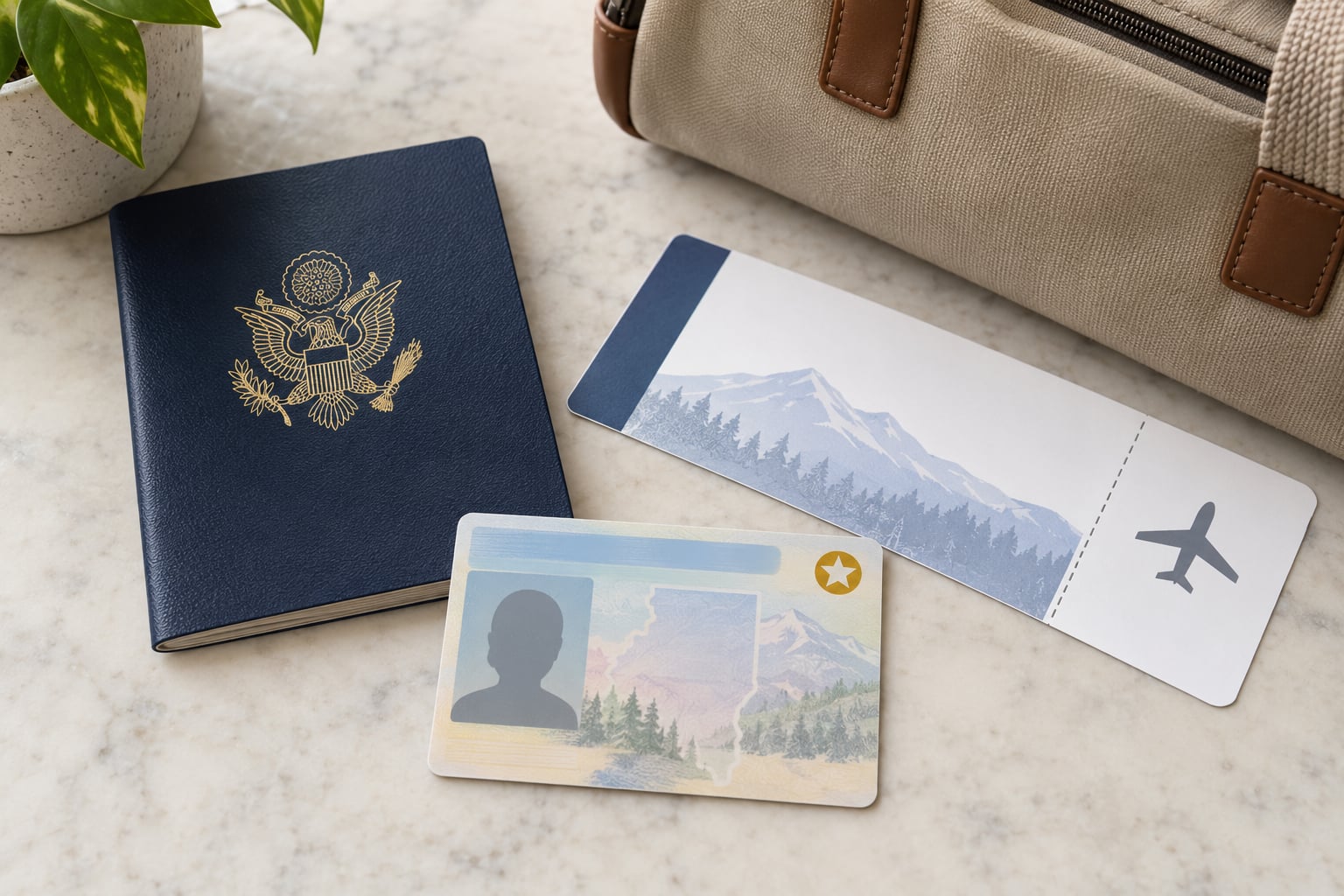
If you are working out how to travel with a real ID in the United States, the answer is short: carry a state driver’s license or ID card with a star on the top portion, or carry another document TSA accepts at the checkpoint, such as a valid U.S. passport, passport card, trusted traveler card, military ID, or permanent resident card.
Since May 7, 2025, a standard license without that star no longer gets you through a domestic security line by itself. The check itself takes seconds once the right document is in your hand. The real work happens days earlier, at the DMV or on the airline’s website, and that is where nearly every avoidable delay comes from.
This guide was last updated in October 2026. Identity rules shift more often than most travel guides admit, so confirm your specific document against the TSA’s official guidance at tsa.gov/realid before you book.
Table of Contents
- 1What You Need
- 2Step-by-Step
- 3How to Check That Your REAL ID Is Valid
- 4How to Travel With a REAL ID on a Domestic Flight
- 5What to Do If You Do Not Have a REAL ID
- 6Common Mistakes While Preparing to Travel
- 7Common Mistakes and How to Avoid Airport Day Delays
- 8Frequently Asked Questions
- 9Can I still fly without a REAL ID?
- 10Can I still fly if my driver’s license doesn’t have a star?
- 11Will a temporary REAL ID let me fly?
- 12What will TSA accept instead of a REAL ID?
- 13Do children need a REAL ID to fly?
- 14What if my REAL ID doesn’t arrive before my flight?
- 15Conclusion
What You Need
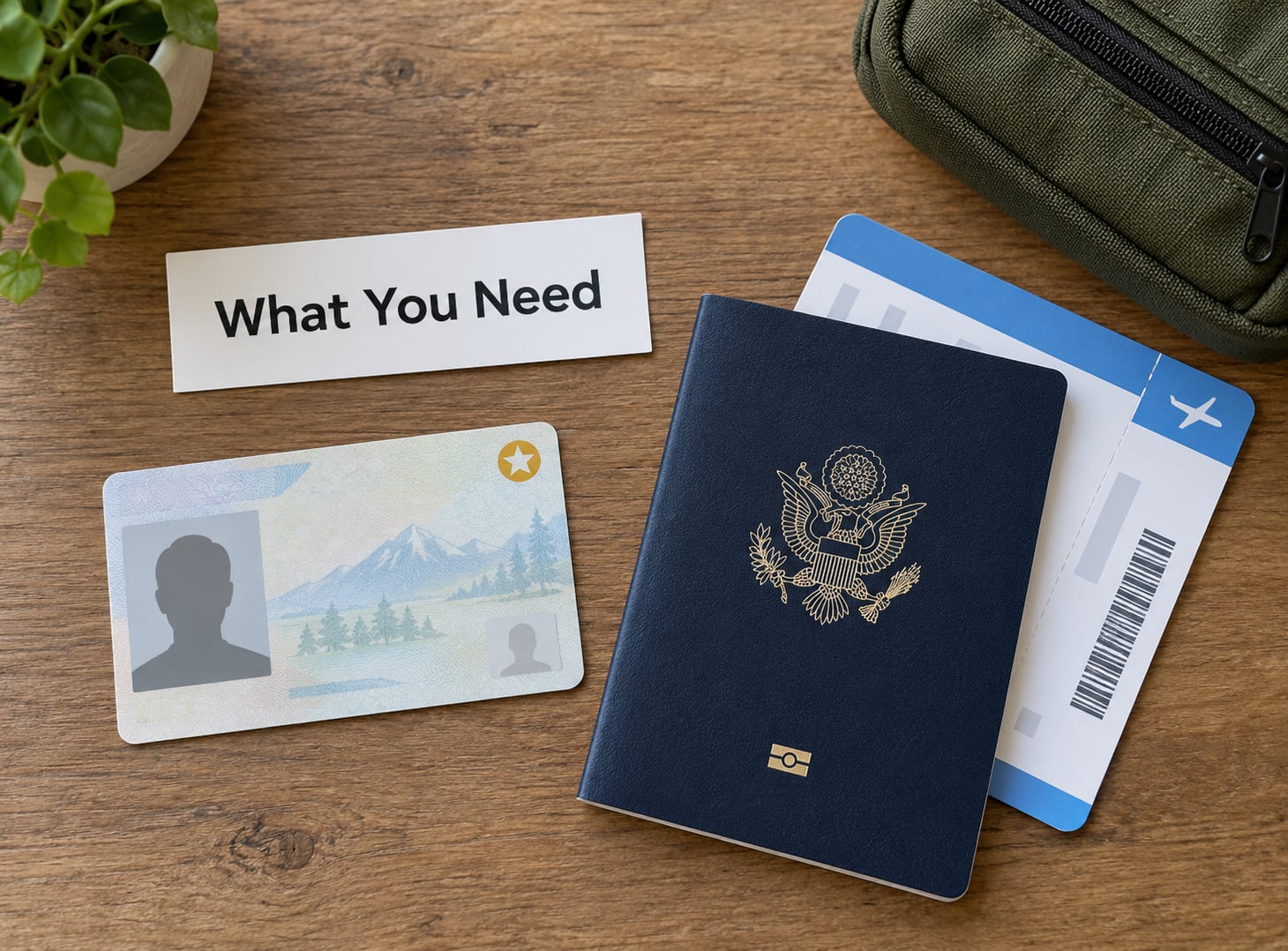
A REAL ID is a state-issued driver’s license or identification card built to federal standards set by the REAL ID Act of 2005 and enforced by the Department of Homeland Security. You can spot one by a star in the upper portion of the card, sometimes inside a bear outline or a cutout, and by the printed line Federal limits apply near the bottom. That phrase is not marketing. It tells you the card is accepted for domestic flights and entry to federal facilities.
A regular state license looks nearly identical to most people. The difference is that star. Card designs vary by state, so a plain gold star in one state may sit inside a silhouette in another, and a few states still hand out compliant cards that look ordinary until you know where to look. If you have ever renewed a license since the state began issuing compliant cards, the one in your wallet is likely already a REAL ID.
A passport is a separate category of document. It is accepted for domestic flights and it is the only thing that works for international travel, because a REAL ID does not replace a passport for crossing a border. Many travelers who already hold a valid passport never need to touch the DMV again.
Before you leave the house, confirm five things on the document you plan to use:
- It is not expired. An expired card, even a REAL ID card, is treated as no ID at all.
- The name matches your booking. Airline agents compare the ID name to the ticket name, and a middle name you dropped or a hyphen you added can stop you at the counter.
- The card is physically intact. A cracked laminate, a peeled corner, or a large scratch across the photo or the printed data can get a card rejected at the discretion of the officer.
- The card is issued by a U.S. state. Foreign licenses are handled differently, and travelers without U.S. citizenship should read the section further down.
- It is a card, not a phone photo. Screenshots and digital wallets are not treated like physical documents at every checkpoint, so do not rely on one as your only ID.
Here is the practical comparison of the documents people actually show up with. The cost column stays qualitative because every issuing body sets its own fees and changes them.
| Document | Accepted for domestic flights | Accepted for international travel | Cost to get | Time to get |
|---|---|---|---|---|
| REAL ID compliant license or ID card | Yes | No | State fee, varies by state | Usually issued at the DMV appointment or mailed in about two weeks |
| Standard state license, no star | No, triggers paid identity verification | No | None to obtain | Immediate |
| Valid U.S. passport book | Yes | Yes | Federal fee | Several weeks, rush available |
| U.S. passport card | Yes | No, land and sea borders only | Federal fee | Several weeks, rush available |
| Global Entry, NEXUS, SENTRI or FAST card | Yes | Global Entry works for international travel | Membership fee with approval process | Weeks after a background check |
| Department of Defense identification | Yes | No | None | Issued through your employer or base |
| Permanent resident card | Yes | No | Federal fee | Weeks or longer |
| Border crossing card | Yes | No, Canada and Mexico crossings only | Federal fee | Weeks |
| Tribal photo ID from a federally recognized tribe | Yes | No | None | Issued by the tribal authority |
| Digital or mobile driver’s license | Only at participating airports, with a physical backup | No | Usually free with the state app | Minutes, once the app is set up |
If you are still deciding, a passport buys the most flexibility, because one document covers domestic flights, international travel, and federal buildings. A REAL ID is cheaper and faster for travelers who never leave the country.
Step-by-Step
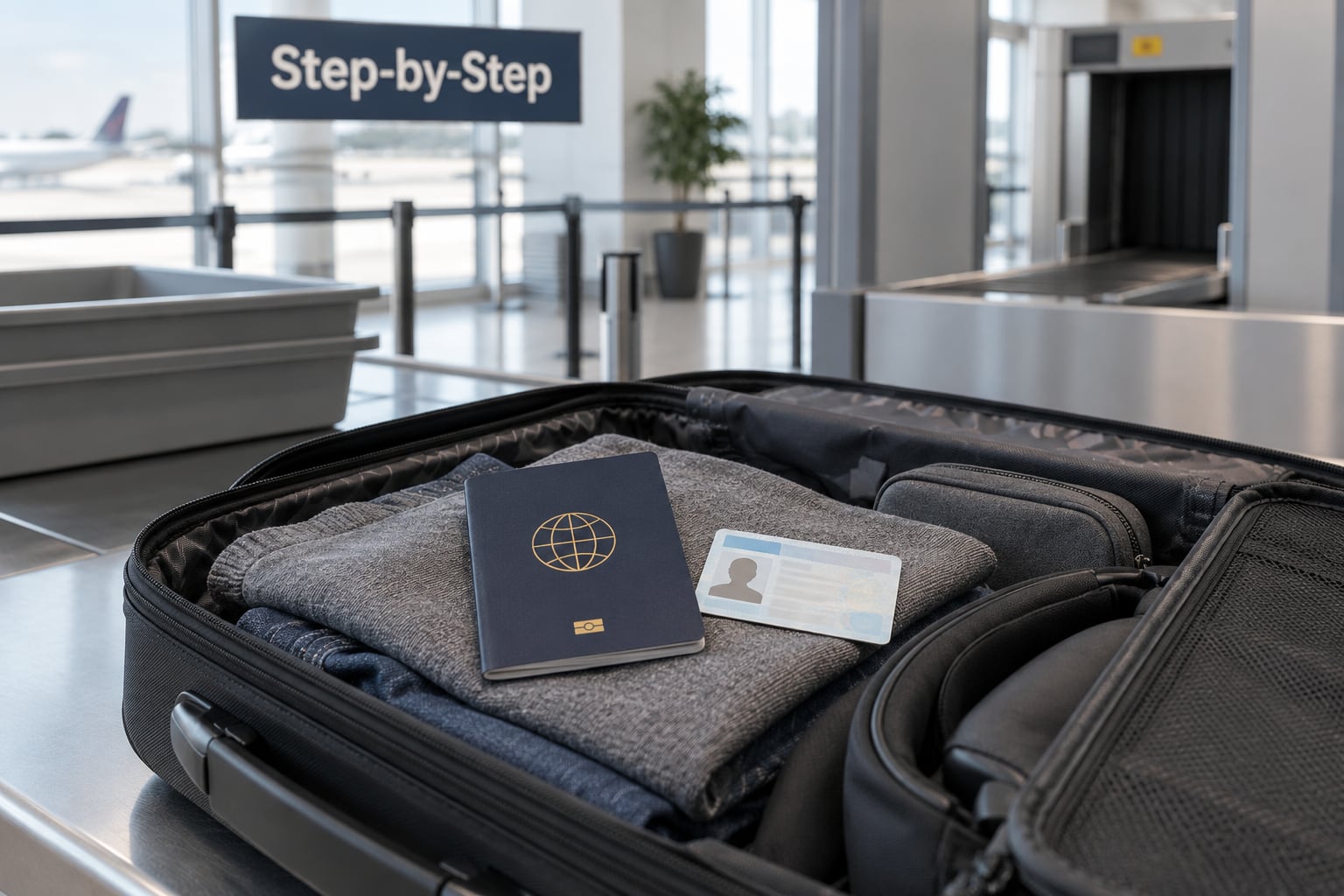
The whole process has two halves that most guides blur together: getting a compliant document, and using it correctly on the day. Start at the top, because a perfect airport routine cannot save a trip if the card itself does not qualify.
How to Check That Your REAL ID Is Valid
Take two minutes at your kitchen table and read the card, not the wallet. Confirm the expiration date on the front is after your return date, and turn it over to find the star and the Federal limits apply line. If either one is missing, you are holding a standard license and need to plan for the alternative path below.
Next, compare the name, date of birth, and address on the card against your airline booking. Airlines check these at the counter, and a mismatch caused by a recent marriage, divorce, or court-ordered name change is one of the most common reasons an otherwise valid document gets rejected. If your name changed, most DMVs issue a new card rather than updating the old one, so bring the paperwork that proves the change.
Finally, compare your card against your state’s published compliant design. Card layouts shift every few years, and an older design may have been replaced. If the design is out of date but the card is unexpired, TSA generally still accepts it, though a current card avoids any debate at the counter.
How to Travel With a REAL ID on a Domestic Flight
Check in online the night before so the document details are attached to your reservation before you arrive. Keep the card in hand, not in a checked bag, and take a second accepted document as backup even when your REAL ID is perfectly valid. Cheap insurance against a lost wallet costs nothing.
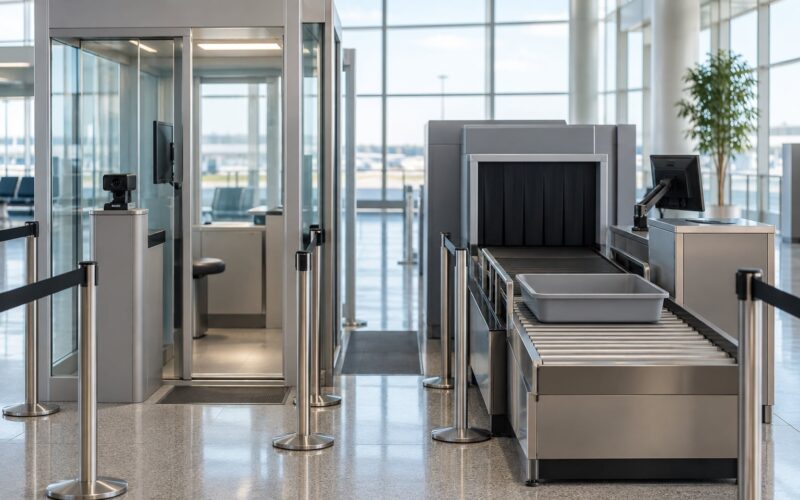
At the airport, go straight to the regular security line. TSA PreCheck and trusted traveler status do not waive the document requirement, so members still need an accepted ID at the checkpoint. At the podium, the officer reads your card, checks the expiration date, and hands it back. That is the whole process when everything is in order.
If you are traveling with a passport instead of a REAL ID, the flow is identical. Show the same document you used to book, keep it accessible rather than packed in a suitcase, and expect it to be returned at the podium.
For travelers crossing an international border, a REAL ID gets you through the airport security line and nowhere else. You still need a passport book, and a passport card covers land and sea crossings to Canada, Mexico, and the Caribbean but not an international flight.
What to Do If You Do Not Have a REAL ID
You can still fly without one, and the process since February 1, 2026 is paid online identity verification rather than an informal officer’s decision. Starting about ten days before your trip, go to the TSA ConfirmID page on the official TSA website, create an account, and submit your identity details, travel details, and a photo of your document.
Pay the 45 dollar verification fee online and wait for a confirmation email. That email, or the confirmation page it links to, is your receipt. You present the receipt on a phone or printed at the checkpoint alongside any expired or non-compliant documents you have, and the officer runs the verification before sending you to additional screening.
The receipt stays valid for ten days, so a single payment can cover a round trip inside that window. A second trip after ten days means paying again.
Arrive up to three hours early. Travelers report additional screening runs ten to fifteen minutes and occasionally thirty or more, and TSA has specifically advised passengers without compliant identification to build in that extra margin. That cushion matters most if you have a tight connection.
Understand the limit: TSA gives no guarantee of clearance if identity verification fails, and the outcome still depends on the officer on the day. Enforcement varies by airport and by checkpoint, which is why travelers on travel forums report wildly different experiences from the same document. Treat this route as a workable plan, not a sure thing.
If your situation does not match any of the above, contact the airline and your state’s licensing authority directly rather than guessing. They can confirm what your specific paperwork will and will not do.
Common Mistakes While Preparing to Travel
The errors below account for most problems at the counter, and every one of them has a straightforward fix:
- Using an expired card. Fix: renew before the trip and allow mailing time, or use an accepted alternative you already hold.
- Relying on a photo on your phone. Fix: carry the physical card. Digital credentials work only at participating airports and only with a physical backup.
- Assuming any card marked REAL ID qualifies. Fix: confirm the star and the Federal limits apply wording, since some temporary and novelty cards print the words without meeting standards.
- Checking rules weeks after booking. Fix: verify the current requirement on tsa.gov before you buy the ticket, not before you leave.
- Matching the booking to your old name. Fix: update the ticket with the airline after a legal name change.
- Trying to fly internationally on a REAL ID. Fix: apply for a passport book and count on several weeks.
Common Mistakes and How to Avoid Airport Day Delays
Most travelers who get delayed do one of four things: they bring the wrong card, they bring only one card, they misjudge the time extra screening takes, or they find out at the counter that their documents do not match their reservation. Each has a fix you can make tonight.
Bringing the wrong card. Check for the star before you pack. If your license has no star, decide today whether to renew, to use a passport, or to pay for identity verification. Deciding at the counter is what turns a ten minute problem into a missed flight.
Bringing only one card. A backup costs you nothing. A second accepted document, or even an expired passport that matches your name, gives an officer something to work with if your primary document is damaged or disputed.
Underestimating screening time. Plan an extra hour when you are traveling without a compliant document, and more if you are connecting to a flight with a short layover. TSA has said publicly that passengers without compliant ID should arrive as much as three hours early.
Document mismatch with the booking. Names must line up across the ID and the ticket, including middle names and hyphens. Airlines can usually correct a ticket by phone or at the counter, but not always for free, and some fares are non-changeable.
Two timing notes that save the most grief. First, if you need to renew a REAL ID, do it well before your trip: DMV backlogs have run to several weeks, and mailed cards take time to arrive. Second, if your compliant card will not arrive before your departure, treat the backup plan as the real plan. Ask your DMV for the interim paperwork, keep any older license you still have, and use that combination along with any expired passport as supporting documents, which travelers on travel forums report has been enough to get through in some cases, though it is never guaranteed.
Frequently Asked Questions
Can I still fly without a REAL ID?
Yes, but the process changed on February 1, 2026. You now complete paid online identity verification through TSA ConfirmID before your trip, submit your document photo and details, and present the confirmation receipt at the checkpoint. The fee is 45 dollars and the receipt stays valid for ten days. Plan for additional screening of ten to thirty minutes and arrive up to three hours early.
Can I still fly if my driver’s license doesn’t have a star?
You can fly, but a non-compliant license no longer moves you through the line on its own. TSA sends you to a separate lane where officers run paid online identity verification, which you should complete before arriving. If you have a valid passport, passport card, trusted traveler card, military ID, or permanent resident card, use that instead and skip the fee entirely.
Will a temporary REAL ID let me fly?
A temporary or interim DMV paper license is not treated as a compliant document. TSA may accept it as supporting evidence when presented with other documents, such as your most recent non-compliant license or an expired passport that matches your name, but clearance is at the officer’s discretion and is never guaranteed. The dependable options are a compliant card, a passport, or a ConfirmID receipt.
What will TSA accept instead of a REAL ID?
A valid U.S. passport book or passport card, a Global Entry, NEXUS, SENTRI or FAST card, a Department of Defense identification, a permanent resident card, a border crossing card, or tribal photo identification from a federally recognized tribe. Digital and mobile driver’s licenses are accepted only at participating airports and generally require a physical backup document. Any one of these is enough on its own.
Do children need a REAL ID to fly?
TSA does not require identification for children under 18, and airlines generally accept a birth certificate or passport as proof of age. Older minors who hold their own state ID should carry it, and any non-compliant card would trigger the same additional screening that applies to adults. Adults traveling with children should still bring their own compliant document, since the child’s status does not cover the accompanying adult.
What if my REAL ID doesn’t arrive before my flight?
Use another accepted document for this trip, such as a passport or trusted traveler card, and complete paid online identity verification if you have no alternative. Ask your DMV for interim paperwork and keep your previous license, since together with other documents it may help an officer verify you, though that is discretionary. Then arrange the renewal for after the trip so your next flight is covered.
Conclusion
Start by finding the physical document you intend to use and checking it for a star, an expiration date past your trip, and a name that matches your booking. If it passes, pack it with a backup and travel normally. If it fails, decide between renewing at the DMV, using a passport or trusted traveler card you already hold, or completing paid online identity verification before departure.
Whichever path you pick, confirm the current rules on tsa.gov/realid and with your airline. Knowing how to travel with a real ID is mostly a matter of deciding which document you are carrying, then making that decision before the day of the flight rather than at the checkpoint.