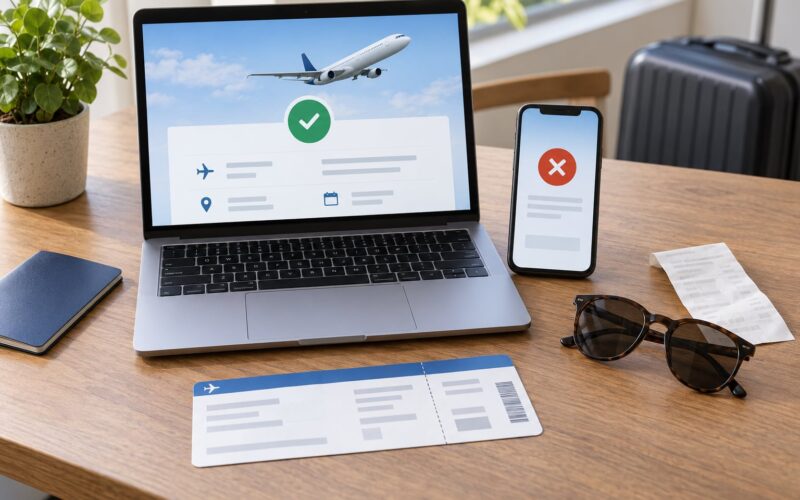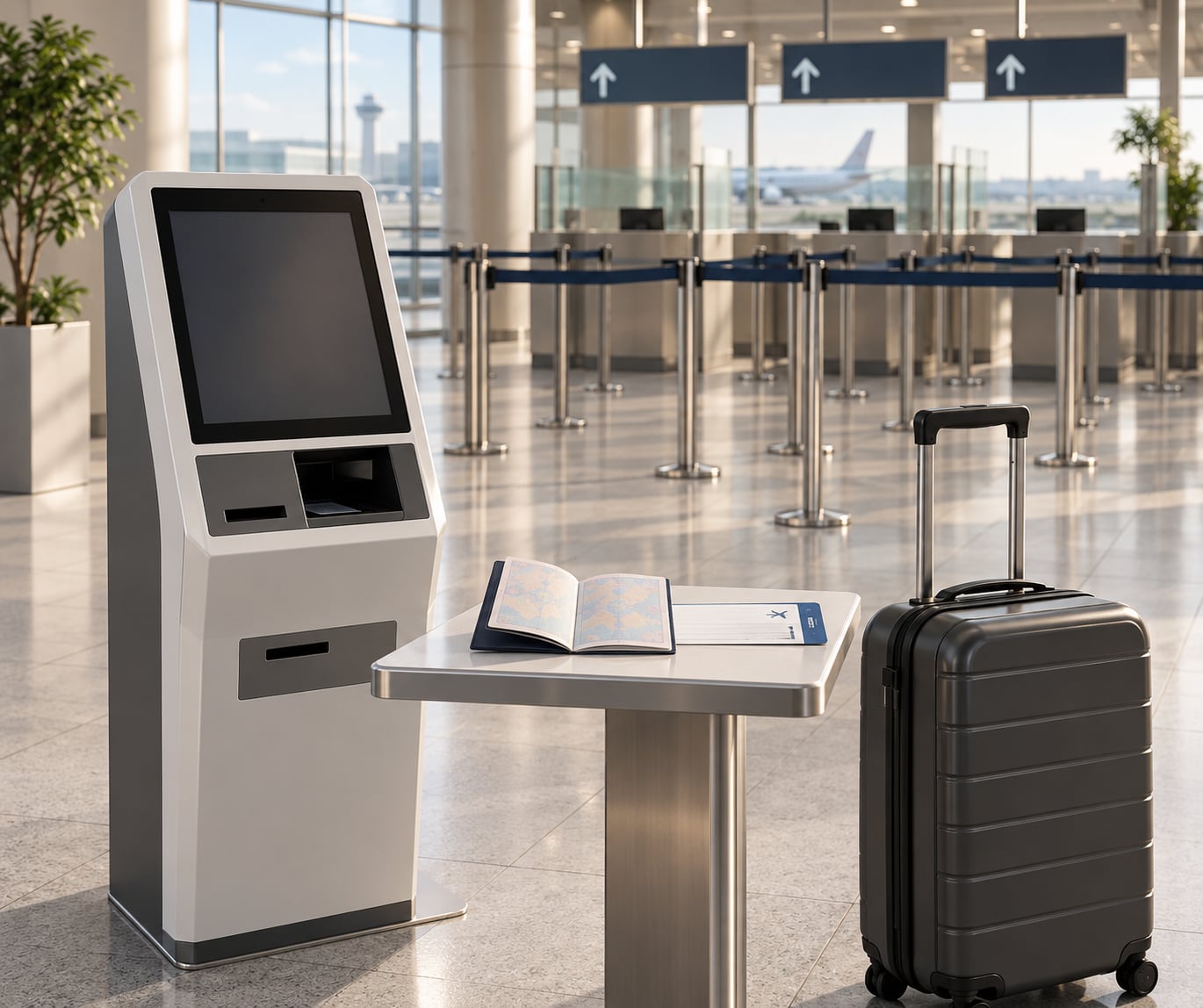
Global Entry is a Trusted Traveler Program run by U.S. Customs and Border Protection. You apply once, clear a background check and a short interview, and then use a self-service kiosk at participating airports to clear U.S. immigration and customs instead of standing in the staffed line. That is how global entry works for US travelers in the simplest terms, and it is worth understanding before your next trip abroad.
Two things get lost in the crowd of advice about it. First, Global Entry does not speed up anything on the way out of the United States. It is an arrival program. Second, the membership card you receive in the mail is not what you use at the kiosk, and plenty of first-time members still show up with the card and no passport in hand.
Here is the full picture: what the program is, who qualifies, the application steps, what happens step by step when you land, how it differs from TSA PreCheck and other trusted traveler programs, and the parts that regularly frustrate members.
Table of Contents
- 1What Is Global Entry and How Does It Work for US Travelers?
- 2Where Global Entry helps and where it doesn’t
- 3What Are the Benefits of Global Entry?
- 4Who Is Eligible to Apply?
- 5How Do You Apply for Global Entry?
- 6What Do You Need for the Enrollment Interview?
- 7How Does Global Entry Work at Airports?
- 8How global entry works for US travelers when you clear preclearance abroad
- 9Does Global Entry Work for Flights From the United States?
- 10Global Entry vs. TSA PreCheck: What Is the Difference?
- 11Do you need Global Entry if you already have TSA PreCheck?
- 12How Long Does Global Entry Last and Can It Be Used for Family Members?
- 13What Can Go Wrong With Global Entry?
- 14Application errors and document mismatches
- 15Interview scarcity
- 16Expired or wrong document
- 17The lane was slower than the regular line
- 18A denied or delayed application
- 19Frequently Asked Questions
- 20What are the pros and cons of Global Entry?
- 21How do you add Global Entry to my flight ticket?
- 22Is Global Entry available for U.S. citizens?
- 23Is it worth getting TSA PreCheck with Global Entry?
- 24Should I choose NEXUS or Global Entry instead?
- 25Do Global Entry kiosks accept the membership card?
- 26Conclusion
What Is Global Entry and How Does It Work for US Travelers?
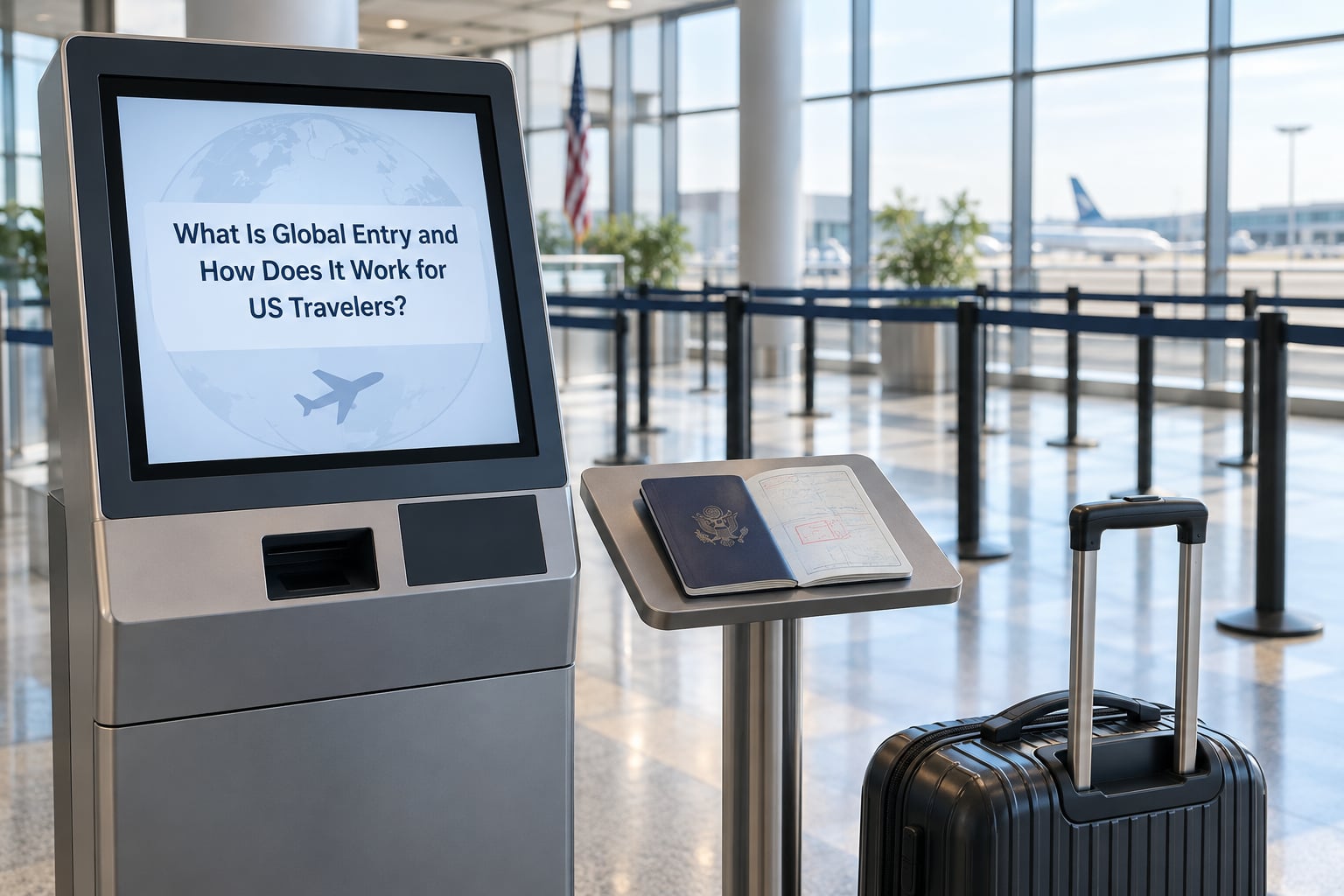
Global Entry is a CBP Trusted Traveler Program that lets pre-approved, low-risk travelers clear U.S. entry faster. The program covers the immigration and customs process you go through when you arrive back in the United States, and it bundles TSA PreCheck membership into the same five-year enrollment.
What it does not do matters just as much. It does not speed up the outbound departure from a U.S. airport, it does not replace a passport or a visa, and it does not promise that no officer will ever ask you a question.
Where Global Entry helps and where it doesn’t
- Helps: the arrival line at participating U.S. airports and land and sea ports of entry, where members use kiosks and expedited lanes.
- Helps: domestic security screening, because TSA PreCheck is included for the same five years.
- Doesn’t help: the departure queue in the United States beyond the PreCheck lane, or any screening you go through abroad.
- Doesn’t help: replacing travel documents. You still need a valid passport and any visa your destination requires.
What Are the Benefits of Global Entry?
The core benefit is a shorter wait when you land back in the country. Members clear immigration and customs at a kiosk, then head to baggage claim with a printed transaction receipt instead of queuing for an officer. On a busy arrival bank, that difference can run from a few minutes to most of an hour.
- Expedited arrival processing through self-service kiosks and dedicated lanes.
- TSA PreCheck included for five years, so domestic flights go through the shorter security lane too.
- Paperless entry. The customs declaration happens on the kiosk screen, so there is no paper form to hand over.
- Access at many airports in the United States, plus benefits in some partner countries through NEXUS and SENTRI lanes.
- Head-of-the-line privilege when kiosks malfunction or a member needs to speak with a CBP officer.
Set your expectations honestly, though. The savings depend on the airport, the checkpoint, the time of day and how many other members are in the lane. On a good run, the whole arrival feels like a domestic connection: no questions, straight to baggage claim. At a quiet hour, members sometimes walk past the staffed line entirely.
Who Is Eligible to Apply?
U.S. citizens are eligible, as are lawful permanent residents and citizens or residents of a set of partner countries. Every person who wants to use the program has to qualify on their own, including children and infants. There is no family shortcut that covers everyone under one application.
Members in the past have listed eligible countries including Argentina, Australia, Bahrain, Brazil, Canada, Colombia, Germany, India, Japan, Mexico, the Netherlands, Panama, Singapore, South Korea, Switzerland, Taiwan, the United Kingdom and others. The list changes, so confirm the current set on the official CBP Trusted Traveler Programs site before you assume your nationality qualifies.
Two rules surprise people. A lawful permanent resident applies with their green card and passport, not citizenship documents. And a Global Entry application is never shared: a spouse, a teenager and a toddler each need their own paid application and their own interview.
How Do You Apply for Global Entry?

Applying runs through the official Trusted Traveler Programs portal. It is a five-step process, and the two steps that cause the most delay are the background check and getting an interview slot.
- Create your TTP account on the official CBP Trusted Traveler Programs portal using an email address you check regularly.
- Start a Global Entry application. Enter your personal details exactly as they appear on your passport, then upload your passport and your driver’s license or state ID.
- Pay the nonrefundable fee. The current fee is 120 USD and covers the full five-year membership, including TSA PreCheck. It is government-set and can change, so check the official site for the live amount.
- Wait for conditional approval. Once the background check clears, CBP issues a conditional approval letter that includes your membership number.
- Schedule and attend your interview at any enrollment center, then receive your RFID membership card by mail.
Interview availability is the bottleneck everyone complains about. New appointment slots are typically released on the first Monday of each month, and popular enrollment centers fill quickly. Members also cite Enrollment on Arrival, where qualifying travelers can complete an interview during an international arrival without booking ahead of time.
Apply well before a booked trip. Background checks occasionally take weeks, and an interview slot may sit further out than the one you need.
What Do You Need for the Enrollment Interview?
The interview itself is short, often five to ten minutes, and mostly involves confirming that you are who your documents say you are. Bring more than you think you need, because a mismatch at the counter costs far more time than an extra photocopy.
- A valid passport that is not expired, open to your photo page.
- A driver’s license or state ID with a current address.
- Your green card or citizenship documentation if you are not applying as a U.S. citizen.
- Your appointment confirmation, including the enrollment center address.
- Your existing membership number or Known Traveler Number if you are a prior member or moving from another trusted traveler program.
Take photos of everything before you leave home. If the scanner cannot read a document, a stored image is a fast fallback.
How Does Global Entry Work at Airports?
The airport process is short and mostly automated. At most participating airports, the Global Entry kiosks sit near the arrivals area or the CBP hall, sometimes above the escalator between the aircraft and baggage claim, and sometimes on a departures level that international passengers can reach before security.
- Find a Global Entry kiosk on the arrivals level or in the CBP hall.
- Scan your machine-readable passport or green card at the kiosk reader.
- Scan both fingerprints on the biometric reader.
- Complete the customs declaration on screen and answer the duty-free questions.
- Take the printed transaction receipt. That receipt replaces the paper customs declaration.
- Walk to baggage claim. If an officer sends you aside, you rejoin through the head-of-the-line privilege.
One correction saves a lot of confusion: kiosks do not accept the RFID membership card. Passports are the required document, and legal permanent residents use the green card. The membership card is useful for other lanes and for identity confirmation, not for the kiosk.
Secondary inspection is still possible. Trusted traveler status lowers your odds of being pulled aside and shortens the process when it happens, but it does not remove the possibility.
How global entry works for US travelers when you clear preclearance abroad
If you fly through a preclearance airport in Dublin, Shannon, Montreal or another approved location, your customs and immigration inspection happens before you board, not after you land. Members sometimes report the preclearance queue being no faster than the standard one. That is a feature of the airport’s layout and staffing, not a failure of your membership.
Does Global Entry Work for Flights From the United States?
Yes, but indirectly. The arrival benefits kick in when you come back into the United States. The benefit on the way out is TSA PreCheck at security, and that only shows up on your boarding pass if your Known Traveler Number, printed as PASS on most airlines, is attached to the reservation.
- Log in to your Trusted Traveler Programs account and copy your PASS number.
- Open your airline’s Manage Trip or manage booking page and add the number in the passport or Known Traveler Number field.
- Reissue or recheck your boarding pass and confirm the TSA PreCheck logo appears.
- If it is missing, contact the airline and confirm the number is saved on the reservation rather than typed into a comment box.
Adding the number after booking is common and usually fine. Update it before check-in when you can, and recheck your checked bag after adding it, since bag tags print from the same record.
Global Entry vs. TSA PreCheck: What Is the Difference?
Global Entry includes TSA PreCheck for the full five years, so the practical answer is that you do not need a separate PreCheck membership. The two programs cover different checkpoints: security before a flight, and immigration and customs after landing.
| Program | What it speeds up | Fee | Length |
|---|---|---|---|
| Global Entry | U.S. arrival at kiosks and expedited lanes, plus TSA PreCheck | 120 USD for five years | Five years, expiring on your birthday |
| TSA PreCheck | Domestic security screening only | Lower, check current rate | Five years |
| NEXUS | U.S. and Canada entry, includes Global Entry and PreCheck benefits | Higher, includes the card | Five years |
| SENTRI | U.S. and Mexico border entry, includes Global Entry and PreCheck benefits | Higher, includes the card | Five years |
| CLEAR | Airport security lanes at private airports, subscription model | Annual subscription | Renews yearly |
| Mobile passport control | Some domestic arrivals via a phone app | Free | No membership |
NEXUS and SENTRI bundle the same benefits and add dedicated land border lanes, so they cost more but suit frequent border crossers. CLEAR speeds security, not customs. Mobile passport control is free but works mainly on domestic arrivals and does nothing at an international port of entry.
Do you need Global Entry if you already have TSA PreCheck?
Only if you want faster arrival. PreCheck solves the security line and nothing else. If you fly internationally at all, the incremental cost of moving up to Global Entry is a modest premium over a standalone PreCheck membership, spread across five years.
How Long Does Global Entry Last and Can It Be Used for Family Members?
A Global Entry membership lasts five years from the day CBP issues it and expires on the member’s birthday in the fifth year. It is not extended by travel, and it does not pause if you go a long time without flying.
Family members need separate memberships. Every traveler who wants to use the kiosk, including infants and teenagers, needs their own application, their own fee and their own interview. This trips up parents who are used to TSA PreCheck, where children under 12 ride along without a separate membership at enrollment.
Renew early if a trip is already booked in your final membership year, and check the new membership number before you repoint a reservation. Losing benefits mid-itinerary because a renewal lapsed is an annoying, avoidable problem.
What Can Go Wrong With Global Entry?
Most problems are administrative and fixable. Knowing them in advance saves a long airport line.
Application errors and document mismatches
A name typed slightly differently from your passport, or an unreadable photo of a document, triggers manual review. Match your passport character for character and re-upload clearer images. If the check stalls for an unusually long time, ask CBP for an update rather than reapplying.
Interview scarcity
Enrollment center slots are limited, and travel days around holidays are booked far ahead. If you cannot find an appointment, look at the first Monday release, check Enrollment on Arrival eligibility, and consider a different enrollment center in another city.
Expired or wrong document
Passports must be valid, and lawful permanent residents need their green card at the interview. Renewing a passport before enrolling saves a repeat trip, since your passport details are linked to your membership profile.
The lane was slower than the regular line
This is the complaint that surprises people most. It usually comes down to preclearance abroad, a maintenance issue with kiosks, a peak arrival bank, or a member who asked a question that required an officer. A preclearance return in Ireland can leave someone convinced that two years of membership meant nothing, while at a U.S. port the same week the opposite story gets told.
A denied or delayed application
If CBP denies or conditions an application you believe is in error, the Trusted Traveler Programs Ombudsman exists as an appeal route. Keep your denial notice and any supporting documents before you contact them.
Frequently Asked Questions
What are the pros and cons of Global Entry?
The main advantage is a faster, mostly self-service arrival process at U.S. ports of entry, plus five years of TSA PreCheck bundled in. The drawbacks are the nonrefundable fee, the difficulty of booking an enrollment interview, and the fact that savings vary widely by airport, checkpoint and traffic. It also does nothing for your outbound departure, and a secondary inspection is still possible.
How do you add Global Entry to my flight ticket?
Copy your PASS known traveler number from your Trusted Traveler Programs account, then add it to your reservation in the airline’s Manage Trip page under the passport or Known Traveler Number field. Reissue your boarding pass and confirm the TSA PreCheck logo appears. If it does not, contact the airline, because the number is sometimes saved as a note instead of the official field.
Is Global Entry available for U.S. citizens?
Yes. U.S. citizens, lawful permanent residents and citizens or residents of participating countries can apply. Each traveler applies individually, including children, and every application pays the full government fee. Approval also depends on passing a background check and completing the enrollment interview, so start well before a trip you have already booked.
Is it worth getting TSA PreCheck with Global Entry?
TSA PreCheck is already included for the full five years of a Global Entry membership, so there is no reason to buy it separately. PreCheck alone only covers domestic security screening. Global Entry adds the arrival kiosk process at U.S. ports of entry, which is the part that usually takes longest on a busy international return.
Should I choose NEXUS or Global Entry instead?
NEXUS bundles Global Entry and TSA PreCheck benefits and adds expedited lanes for travel between the United States and Canada, at a higher fee. SENTRI does the same for the U.S.-Mexico border. If you cross either border several times a year, the extra cost tends to pay off. For occasional flyers, Global Entry alone is the simpler choice.
Do Global Entry kiosks accept the membership card?
No. Kiosks read your machine-readable passport or, for lawful permanent residents, the green card. The RFID membership card is not accepted at the kiosk. It matters for other lanes and identity checks, and it arrives by mail after your interview, so keep your passport with you when you land.
Conclusion
Start by confirming you qualify, then apply through the official CBP Trusted Traveler Programs portal rather than a third-party site. Book the interview as soon as your conditional approval arrives, keep your passport valid, and add your PASS number to every reservation so TSA PreCheck shows up on the boarding pass.
Global Entry is a convenience tool. It makes a routine arrival noticeably easier and it bundles five years of security-lane access into the same enrollment, but it never replaces a valid passport, a visa or the documents your destination asks for. As of 2026, the practical move is to apply once, keep the paperwork current, and treat the savings as a bonus rather than a guarantee.