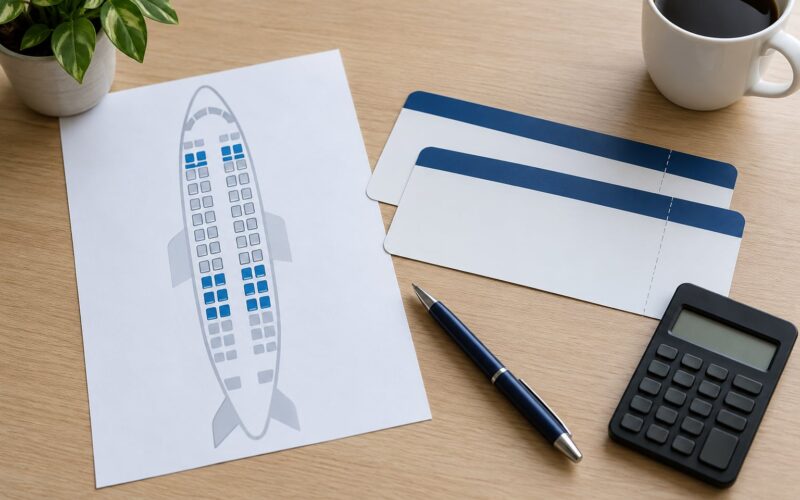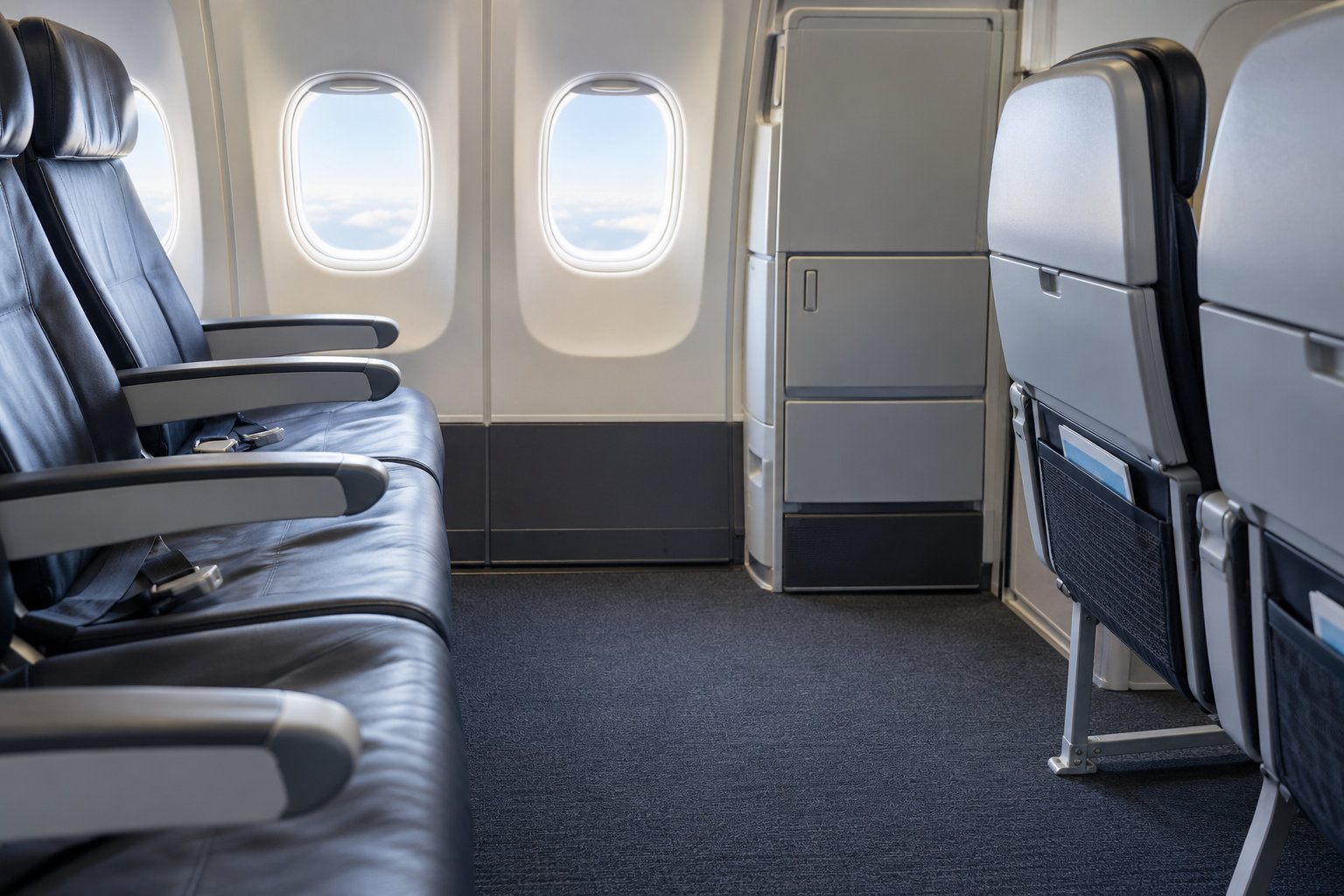
Exit-row seats and bulkhead rows almost always hold the most legroom in economy, and a paid extra-legroom row on some airlines is only a few inches better than the standard cabin. The part that trips people up is that the label tells you almost nothing. Seat pitch changes by more than six inches between rows on the same aircraft, so knowing how to pick a seat for extra legroom comes down to three things: identify which flight you are actually on, read that aircraft’s seat map, and lock the seat down the moment selection opens.
This matters more than it sounds. Airlines use the word “preferred” for seats chosen by location, not by space, and a paid extra-legroom product is not sold on every aircraft. My rule is simple: verify the row on the seat map, then decide if the gain is worth it for that specific flight.
Below is the process I use, the seat types compared honestly, and the mistakes that cost travelers their legroom every single week.
Table of Contents
- 1What You Need Before You Choose a Seat
- 2Step-by-Step: How to Pick a Seat for Extra Legroom
- 31. Check the aircraft and seat map before you choose
- 42. How to pick a seat for extra legroom by location
- 53. Compare seat width, pitch and space rather than labels
- 64. Check eligibility, fare rules and seat-selection timing
- 75. Confirm the assignment and prepare for boarding
- 8Common Mistakes That Cost You Legroom
- 9Frequently Asked Questions
- 10What seat has the most legroom on a plane?
- 11Is it worth paying for extra legroom seats?
- 12What is the 3 seat economy trick?
- 13Why avoid seat 11A on a plane?
- 14Where not to sit on an airplane?
- 15Can I move seats after boarding?
- 16Conclusion
What You Need Before You Choose a Seat
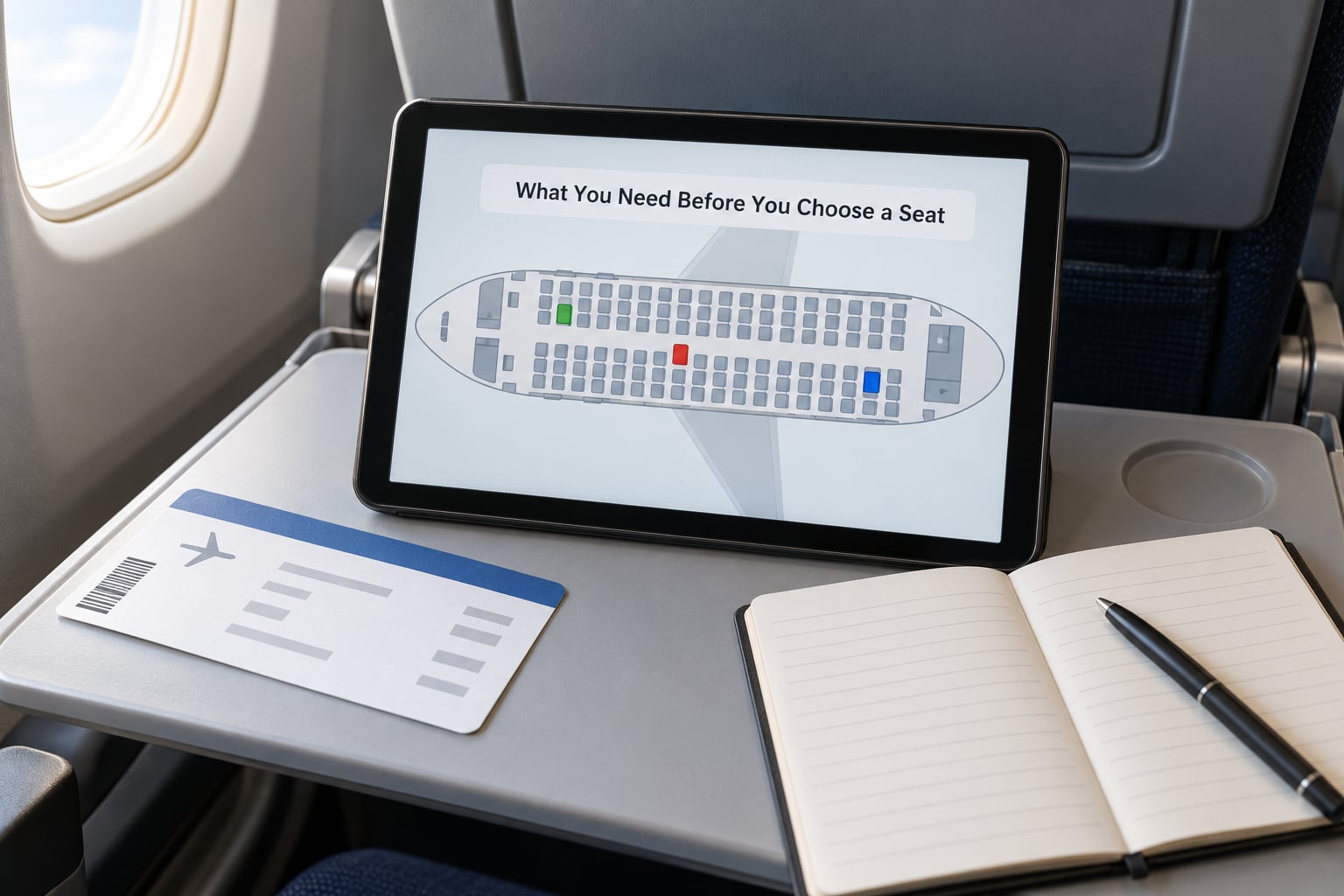
You need five pieces of information, and three of them you have to go look up rather than assume.
- The exact flight number and date. Not the route, not the airline. The same airline flies the same city pair with a narrow-body one way and a wide-body the other.
- The aircraft type for that flight. Airlines assign equipment late and change it. Check the booking, the confirmation email, and again at check-in.
- That aircraft’s seat map. The airline’s own seat map tells you row numbers and layout; a third-party map tool tells you pitch, recline and underseat storage per seat.
- Your fare rules. Basic-economy fares often do not include a seat assignment at all, while some full fares include a standard seat and charge only for the rows ahead of it.
- Your own priorities. Legroom, sleep, a smooth ride, a fast exit, or keeping costs down. You cannot optimise for all five at once.
One more item people forget: your own height. Somebody at five foot seven has a completely different answer to “which row has the most legroom” than somebody at six foot three, and the honest answer changes with height, not with preference.
Step-by-Step: How to Pick a Seat for Extra Legroom
1. Check the aircraft and seat map before you choose
Start by confirming which aircraft you are flying. Look at the booking or the confirmation email, then search the flight number to see the scheduled equipment.
Why it matters: on a 3-4-3 wide-body the middle seat is a real squeeze and the exit rows are the only place with space, while on a narrow-body with a 3-3 layout the bulkhead row is usually the winner. Same airline, same cabin, completely different answer.
Then open that aircraft’s seat map. The airline’s version gives you the layout and the fee. A seat map tool such as SeatGuru layers in the measurements that matter: pitch per row, which seats recline, which have a power outlet, and which rows sit next to a galley or a lavatory. Forum regulars on airline-specific boards almost all name that tool as the one they trust before paying for anything.
How to tell it worked: you can name the aircraft type, and you can point to a specific row and column on that aircraft’s map before you book. If you cannot, you are guessing.
2. How to pick a seat for extra legroom by location
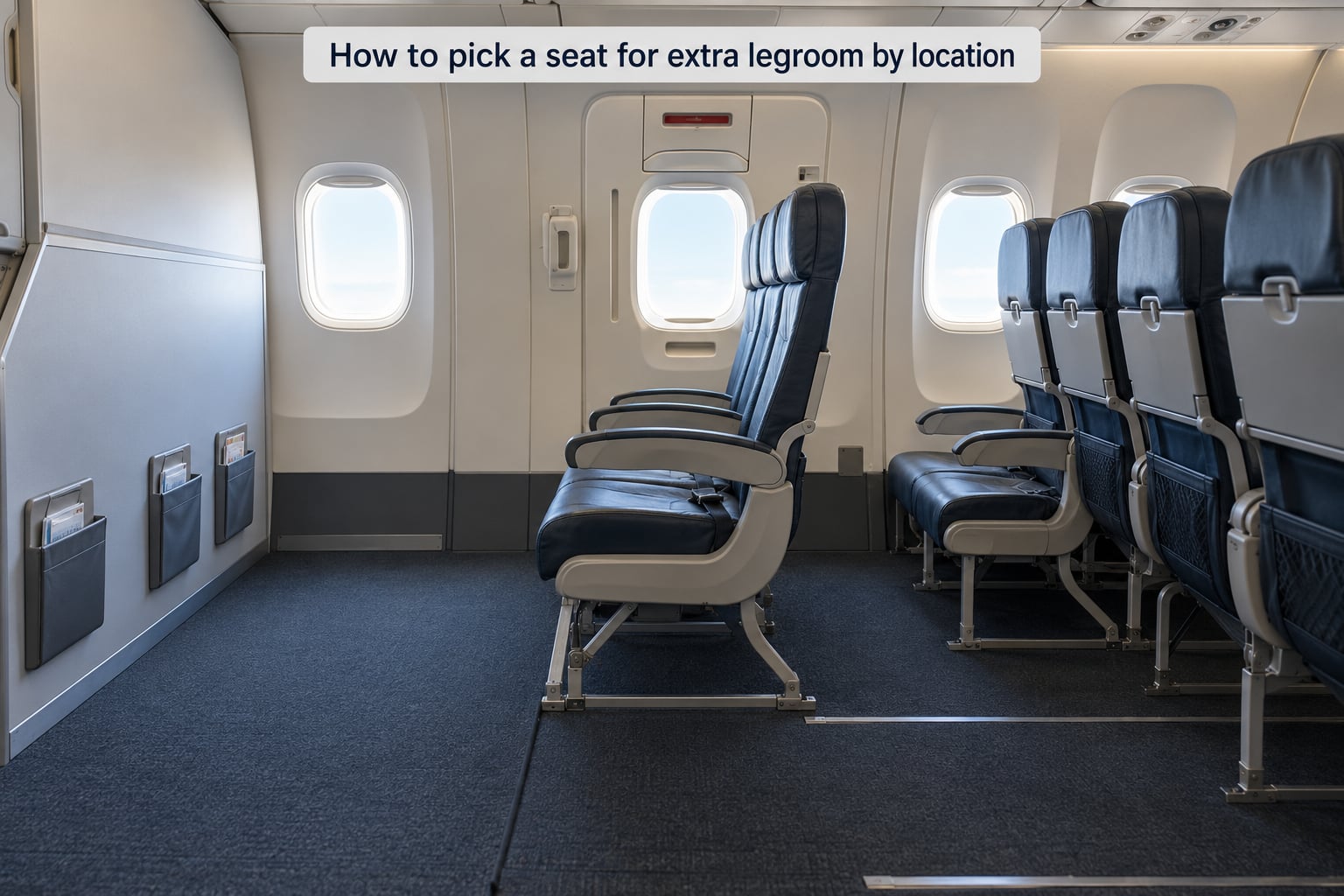
Once you have the map, match your priority to a row type. This is the comparison I come back to, and it works on nearly every aircraft.
| What matters most to you | Seat to aim for | Why |
|---|---|---|
| Raw legroom | Exit row or bulkhead row | No seat in front of you, so nothing reclines into your knees |
| Sleeping | Window seat behind the wing, or a bulkhead window | Wall to lean on and a dark window when the shade is down |
| Smooth ride | Window seat over the wing | Least movement in the cabin, farthest from the engines |
| Stretching on a long flight | Aisle seat in a row behind a bulkhead or galley | A predictable gap where nobody sits in front of you |
| Tall passengers | Exit row, then bulkhead | Footroom that a standard 31 inch row cannot offer |
| Families with a baby | Bulkhead row | Space for a bassinet, and the only rows with that option |
| Tight connection | Forward rows of the cabin | You are usually standing before the people behind you |
| Lowest cost | Check in early and take what opens | Many good seats go to early check-ins and to elites |
Now the honest trade-offs, row by row.
Bulkhead rows have no seat in front of them, which is exactly what a tall passenger wants. You also cannot put a tray table up when the seat in front stands, so the table lives in the armrest and flips out sideways, and there is usually no underseat storage. Rows near a galley can also be a bassinet spot, so the airline may reassign one at boarding. Plenty of flyers consider a bulkhead row behind the wing the best compromise on the whole aircraft.
Exit rows give you the largest footroom in economy, usually in the mid-to-high 30 inches of pitch. The catch list is longer than people expect: the seat in front does not recline, your own seat back stays upright or barely moves, there is no underseat bag space, the tray table is in the armrest, and getting up is harder because you have to climb past two armrests. Airlines also apply eligibility rules, which I cover in step four.
Paid extra-legroom rows sit in the front of the cabin. Airlines market them under their own names, and the pitch gain is real but usually smaller than the name implies, often a few inches over a standard economy row rather than the full jump an exit row gives. What you usually gain on top of the space is priority boarding, power outlets, and sometimes a seat-back screen.
Standard rows near the front of the cabin are the free option most people miss. On many aircraft there is a slightly larger gap between the galley and the first row, and the row ahead is a jumpseat with no passenger behind it.
Over-wing and window rows win on ride quality and shoulder room even when the legroom is ordinary. A window seat over the wing is the smoothest place on most jets, which matters far more than an extra two inches of knee room if you are someone who dislikes flying.
How to tell it worked: your pick matches one priority rather than three, and you know what you gave up to get it. An exit row that you cannot reach quickly, or a bulkhead row where the bassinet may reappear, is a trade, not a win.
3. Compare seat width, pitch and space rather than labels
“Extra legroom” is a marketing label. Pitch is a measurement, and pitch is what your knees care about. Pitch is the distance from the back of your seat to the back of the one in front of you, and it is quoted in inches or centimetres. Seat width is a separate number, roughly 17 to 18.5 inches in economy on a narrow-body, and it decides whether you can cross your legs at all.
| Seat type | Typical economy pitch | What you gain | What you give up |
|---|---|---|---|
| Standard narrow-body row | About 30 to 32 inches | Nothing to adjust, recline works | Knees contact the seat ahead on a bad day |
| Premium economy row on a narrow-body | About 34 to 38 inches | A real gap, more width, recline | The price gap |
| Bulkhead row | About 36 to 40 inches | Open footwell, easy to stretch | Armrest tray table, no underseat storage |
| Exit row | About 34 to 44 inches | The most footroom in economy | No recline, no underseat storage, harder entry and exit |
| Wide-body economy, 3-4-3 | About 30 to 33 inches | Wider aisle-side seats than the middle | The middle seat is narrow enough to feel tight |
| Wide-body economy, 2-4-2 on some 777 variants | About 31 to 34 inches | Wider seats and no middle-seat squeeze | Fewer seats per row |
Beyond pitch, check three physical details on the map: whether the seat reclines and how far, whether the tray table folds away or lives in the armrest, and whether the row in front is a real seat or a jumpseat. Then think about the passenger beside you. Three seats across, you get armrests on both sides and nobody to lean across. In a 2-4-2 wide-body, a window seat has a wall on one side and a shared armrest on the other.
A quieter trade gets overlooked: a row where both neighbouring seats are empty is better than a better row in the middle of a full cabin. Experienced flyers claim the middle seat is the least comfortable position precisely because you are boxed in on both sides, so if you are solo and want elbow room without paying, an aisle seat that tends to stay empty beats a nominal premium row.
How to tell it worked: you can quote the pitch of the row you picked in inches, and you know the width, the recline and the tray type from the same seat map rather than from the seat’s name.
4. Check eligibility, fare rules and seat-selection timing
Three checks before you click. First, whether the seat is even available to your fare. Basic-economy tickets on most major airlines assign a seat automatically, sometimes at check-in and often at the back of the cabin, which is why so many travellers end up in the worst row on the aircraft. Some carriers sell only certain rows to basic fares, which means your preferred row is not on your map at all.
Second, whether you meet the exit-row rules. Airlines typically require passengers in exit rows to be at least 15 years old, to meet a weight threshold in the range of 70 to 90 kilograms, to be able to reach the exit and open the hatch, to understand the safety instructions in English or the language of the crew, and to have no condition that would prevent assisting another passenger if asked. Disclosing a disability that affects your ability to help can disqualify you. Gate agents check this at boarding, and the reassignment happens on the jet bridge.
Third, when selection opens. Some airlines let you pick at booking, some sell preferred seats for a fee immediately and open the rest roughly 24 hours before departure, and a few run a first-come-first-served scramble at check-in. Travellers on airline-specific forums make the 24-hour mark a habit for a reason: that is when the last wave of seats appears, and it is also when many people who paid early lose the row they wanted to something better.
How to tell it worked: your confirmation shows the seat you chose and the fare shows any seat charge, before you leave for the airport.
5. Confirm the assignment and prepare for boarding
Recheck the reservation 24 to 48 hours before departure and again at online check-in. Schedule changes and aircraft swaps happen, and a swap to a different aircraft can move your seat number, its position, or your whole cabin section. This is the single most common reason careful seat research turns out to be wasted.
If your seat disappears, act rather than hope. Contact the airline and ask what is open in the cabin you were moved to. A polite ask at check-in, then again at the gate when boarding is calm, sometimes works, particularly on oversold flights where the agent is reshuffling anyway. Forum posters are honest about the odds: it is a request, not a right.
On board, keep your expectations right. A paid extra-legroom purchase buys a row with more pitch. It does not guarantee a power outlet, priority boarding, or that the row in front will be empty. If you are at the gate, boarding with the first group is the best lever you have left.
How to tell it worked: your boarding pass or app shows the seat number you picked, on the aircraft you are flying.
Common Mistakes That Cost You Legroom
Buying by label instead of by pitch. “Extra legroom,” “preferred,” and “front cabin” describe location as much as space. Two products with different names on the same aircraft can have identical pitch. Correct move: look up the row’s pitch in inches on the seat map before you decide.
Assuming every flight on your route uses the same aircraft. A short hop with a regional jet and a long-haul leg with a wide-body are different cabins entirely, and the equipment can change again the day you fly. Correct move: check the aircraft for the specific flight number, then recheck before departure.
Ignoring exit-row restrictions until the jet bridge. Age, weight, ability to assist, and language comprehension rules catch people regularly and the seat gets given away in front of them. Correct move: read the airline’s exit-row policy for that aircraft before you select the seat, not after.
Confusing legroom with seat width. More inches in front of your knees does not make a narrow middle seat wider. In a 3-4-3 economy cabin the middle seat is the tightest on the aircraft no matter how much pitch the row has. Correct move: check both numbers, and prefer an aisle or window if width is the problem.
Waiting until the last minute. The best extra-legroom rows go first, and travellers on open-seating airlines who check in late routinely take what remains. Correct move: be online at the moment selection or check-in opens, and set a reminder if the airline publishes a fixed time.
Sitting in the rows worth avoiding. These are the specific ones:
- The last row. On many aircraft it does not recline, the seat in front tilts forward, and there is no underseat storage because the exit area takes it. It also leaves you last off the plane.
- The last-row middle seat. The worst of both, with no legroom and a wall of a seat ahead that you cannot escape.
- Rows beside a galley or lavatory. The lavatories are usually at the front and rear of the cabin, so the first and last few rows are where the noise concentrates, along with the attendant traffic.
- Rows beside a bassinet position. Available on the aircraft, but the airline can assign a family into your row during boarding.
- Over-wing rows behind a wing exit. Often fine, but on some configurations the exit hatch narrows the window seat and the tray table sits awkwardly.
One myth deserves clearing up. You will see travelers avoid a specific seat number such as 11A because it lines up badly with the window on some aircraft. It is not a universal rule, because seat numbering, window alignment and exit placement differ between aircraft types. The general principle is real, though: window seats aligned with the window seam give you head and shoulder support. That is exactly why some flyers on open-seating airlines pick precise numbers like 16A or 22A. Check the alignment on your aircraft’s map instead of trusting a number.
How to fix all of it in one move: pick a row using measured pitch, take the aisle or window side if width is your problem, avoid the last row and the galley ends, and claim the seat the moment you are allowed to.
Frequently Asked Questions
What seat has the most legroom on a plane?
Exit-row seats usually have the most legroom in economy, typically 34 to 44 inches of pitch, with bulkhead rows close behind because no seat sits in front of them. On some aircraft one or two rows ahead of the bulkhead are effectively an exit row without the restrictions. Always confirm the row’s pitch on that specific aircraft’s seat map, because pitch varies widely between aircraft types and even between rows on the same jet.
Is it worth paying for extra legroom seats?
It is worth it on long flights if you are tall, if you need to stretch regularly for mobility reasons, or if your fare includes priority boarding and power with the seat. It is rarely worth it on a flight under three hours, and it is poor value if you can get an exit row or bulkhead row for free. Check first: some airlines let you select those seats at no charge, and plenty of travellers find the same space by asking at check-in.
What is the 3 seat economy trick?
On most wide-body aircraft, the economy cabin is three seats on one side of the aisle, four in the middle, and three on the other, which is called 3-4-3. The trick is choosing within that layout deliberately: take an aisle seat beside the four-seat block, where you have one shared armrest and easy stretch access, or a window seat in the three-seat block for width. Avoid the middle of the four-seat block, which is the tightest seat on the plane.
Why avoid seat 11A on a plane?
On some aircraft, a particular window seat number lines up badly with the window, giving you no headrest support and an awkward elbow position. That is why travellers recommend checking window alignment on the seat map instead of trusting a number, and why numbers like 16A or 22A get picked deliberately on some airlines. Seat numbering and window seams differ between aircraft types, so the warning applies to specific configurations rather than to that seat number everywhere.
Where not to sit on an airplane?
Avoid the last row, which often cannot recline and leaves you last off the plane, and the last-row middle seat. Skip rows next to a galley or lavatory, usually at the cabin ends, where noise and attendant traffic concentrate. Treat bulkhead rows cautiously if a bassinet may be fitted beside you, since families can be seated there at boarding. Row position behind a wing exit can also mean an awkward hatch and tray table on some aircraft.
Can I move seats after boarding?
You can ask, and it happens, but do not count on it. Most airlines do not move passengers unless there is a safety, accessibility, or operational reason, and the crew rarely has spare seats in a full cabin. Empty middle seats do sometimes become available on an oversold flight. Moving for comfort alone is a request, not an expectation, so pick carefully on the seat map rather than planning to fix it later.
Conclusion
Start with the exact seat map for the aircraft you are booked on, not the airline’s general page. Compare the rows by measured pitch and by the trade-offs that come with them, confirm your fare allows the seat, and claim it the moment selection opens. If you do nothing else, check the exit-row and bulkhead rows first; they hold the most economy legroom, and they are the first to go. That is how to pick a seat for extra legroom without paying for a label that does not deliver.