To handle food allergies in another country, you research the destination’s labelling rules and hidden ingredients, carry your own medicines and safe food in hand luggage, and hand every restaurant staff member a printed allergy card in their language before you order. Add a written emergency plan and you have a process that holds up in any kitchen.
I’m not a clinician, and none of this is a substitute for your own medical plan. If you have ever had anaphylaxis, this page is about the logistics around that plan, not about what to do clinically when something goes wrong.
Here is the order I would do it in, and I’ve kept each step to what you actually do and how you know it worked.
Table of Contents
- 1What You Need
- 2Step-by-Step: How to Handle Food Allergies in Another Country
- 31. Get a personalized travel allergy plan
- 42. Pack medicines and emergency supplies in your carry-on
- 53. Research ingredients, restaurants, and airline food
- 63a. Communication beats translation apps
- 74. Create a clear allergy card or translation
- 85. Confirm meals before eating
- 96. Know what to do if a reaction occurs
- 10Common Mistakes
- 11Frequently Asked Questions
- 12Can I carry an EpiPen or auto-injector on a plane?
- 13Do I need travel insurance for a food allergy?
- 14How do I tell a waiter I am allergic to something in another language?
- 15What should I do if I have an allergic reaction abroad?
- 16Is it safe to eat street food with a food allergy?
- 17Which countries are best for travelling with food allergies?
- 18Conclusion
What You Need
Get this list assembled before you book anything, because two of the items take days to arrange. Everything here is general information, so run your own list past your allergist or doctor first.
- A written emergency plan from your clinician, in plain language, stating your allergens, the severity of your reactions, and when prescribed medication should be used.
- A medical summary letter with your diagnosis, medications, doses and the treating clinician’s contact details. Keep one paper copy and one digital copy you can show from your phone.
- All your medication in its original labelled packaging, plus enough for the whole trip and a contingency supply in case of delay.
- A printed allergy card in the local language, professionally translated, with several copies so you can hand one to each person you speak to.
- Your auto-injector expiry dates written down, checked well before departure rather than on the morning you leave.
- Travel insurance that declares your allergy as a pre-existing condition and covers emergency medical treatment abroad.
- A phone translation app and a note of the local emergency number, written down on paper as well as saved in the phone.
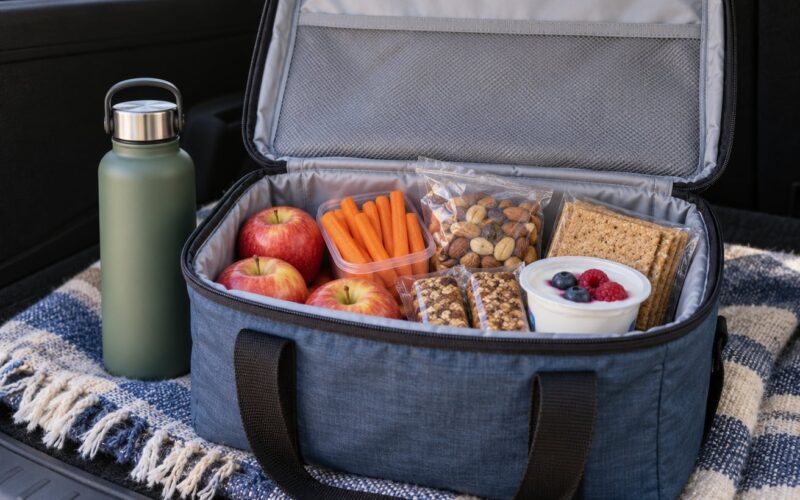
- Safe snacks in factory-sealed packaging, for flights, transfers and any journey where the food is not yours to control.
If any one of those is missing, the trip is not ready. A free-from product without a readable label in a language you understand is not a safe snack.
Step-by-Step: How to Handle Food Allergies in Another Country
Six steps, in the order they need to happen. Steps one and two happen weeks before departure, steps three to five happen in the destination, and step six is the one you hope never to use.
1. Get a personalized travel allergy plan
Start with your allergist, not a travel website, and tell them your exact destination, dates and the length of the journey. Ask them to write down which foods you react to, the reaction you have actually had before, and what your prescribed emergency medication is for.
Ask the question directly: does my allergy need extra preparation for this trip? Some travellers need advice on timing, some are told to carry a second auto-injector, and some with a history of reactions in a restaurant or on a flight are given more specific guidance. If the destination is remote or medical care is thin, say so at the appointment, because that changes the advice more than the cuisine does.
How you know it worked: you have a letter that a stranger could read in under a minute and act on.
2. Pack medicines and emergency supplies in your carry-on
Everything goes in hand luggage, never in a checked bag that goes into a hold or a lost-baggage system. Keep auto-injectors where you can reach them, not in a bag under a seat you will not open until landing.
Bring the original packaging. A loose syringe or a blister strip with no label is hard to explain to border officials, to airline staff, and to a doctor in a hospital that does not stock your brand. Check your destination’s import rules for medicines before you leave, since the prescription and the country you are entering both matter, and some destinations want the original prescription alongside the medicine.
Tell the airline about auto-injectors in advance. Most carriers have a medical request or special assistance form, and filing it before you fly is far calmer than explaining it at the gate. The same form usually covers your special meal request.
Count your supply honestly: a two-week trip needs at least two weeks of everything, plus a few extra days. If you will need a refill abroad, ask your pharmacist which injectors are sold in your destination country and how the local ones compare, and ask whether your medicine needs temperature control in a hot car or a cold hold.
How you know it worked: you can reach every dose without opening a bag, and the airline has your medical request on file.
3. Research ingredients, restaurants, and airline food
Two things catch people out abroad: a dish that looks innocent and is not, and a label in a language you cannot read. Ingredient labelling law differs widely, so a packet that is clearly safe in one country may be unlabelled, or labelled in a way that means something different, in another. Where rules require allergens to be listed, the list is more trustworthy. Where they do not, treat a label as a hint rather than a guarantee.
Learn what the local version of your allergen looks like on a menu. People ask me for names of dishes rather than ingredients, and the dish names change while the allergen does not.
| Where you are going | Hidden allergens to ask about |
|---|---|
| Southeast Asia | Fish sauce, shrimp paste, fermented prawn, soy sauce and soy oil, sesame oil, peanut in satay and curries, coconut in unexpected places |
| Japan and Korea | Sesame in dressings and broths, soy in unexpected savoury dishes, fish and bonito extracts, peanut and tree nut coatings, wheat in curry powders and marinades |
| Middle East | Tahini and sesame in every flatbread and sweet, tahini in hummus served with bread baked in the same premises, tree nuts in sweets and coffee, dairy in rice dishes |
| Southern Europe | Nuts in sauces and pesto, hidden milk and butter in breaded and fried items, egg in batters, seafood in stocks, mustard and sulphites in wine |
| Latin America | Creamy sauces hiding dairy, fried batter with egg and wheat, mole with nuts and sesame, fish sauce in ceviche, peanuts in many stews |
| West and Central Africa | Groundnuts in stews and thickened sauces, peanut oil, palm oil used broadly, fish, wheat in imported bread and pasta dishes |
| UK and Ireland | Sesame in bread and burgers, milk in sauces that look savoury, nuts in chocolate and pesto, barley malt in gluten-free-labelled drinks |
For flights, look up your airline’s special meal codes in advance and file the request early, since standard codes cover common allergens but not all of them. Bring your own food for the journey if you can, because a special meal is prepared in the same kitchen as everything else and crews often cannot tell you how that kitchen works.
How you know it worked: you can name the local dishes and the local names of your allergens without guessing.
3a. Communication beats translation apps
Translation apps are good for cross-checking an ingredient list. They are not good enough for the sentence that matters, because they routinely soften or blur a life-threatening warning into a preference. A laminated, human-written card that a waiter can hold in their hand while they read it out loud to the kitchen is the single most useful thing you can carry. Travellers on food allergy forums say the same thing over and over: the card does the work that the app cannot.
4. Create a clear allergy card or translation
Your card should be short enough to be read during service and long enough to be useful. Include your allergens in both English and the local language, say whether the allergy is severe and whether you carry an auto-injector, state the cross-contact concern in plain words, and ask staff to check with the kitchen rather than assume.
Print at least four copies and keep one in the bag you carry. Laminate them, because a folded card is a card nobody reads. Have the translation done by a human through your clinic, a national allergy organisation, or a professional translator, and write the sentence about cross-contact rather than relying on a general allergy statement.
A useful line to have translated looks like this: “I have a severe allergy to ___. It can be fatal. I carry an auto-injector. This must not come into contact with ___. Please ask the kitchen and use clean equipment and oil.”
How you know it worked: a waiter who does not speak your language can read it, repeat it back, and act on it.
5. Confirm meals before eating
Say your allergy every single time, even at the same place on the second visit. Staff change shifts, and a kitchen that cooked your food safely yesterday can be a different team today. The card goes on the table, not in your bag.
Ask questions that can be answered rather than questions that need reassurance. What is in the dish? Is it fried in the same oil as anything containing your allergen? Is there butter or cream in the sauce? Was the stock used for the rice the same stock as the fish or the noodle broth? Can the dish be made without that ingredient? Specific questions get honest answers.
Do not rely on a dish looking familiar, and do not assume a waiter understood you because they smiled and nodded. Watch the plate arrive and ask again if anything on it is unaccounted for. Eat the first bites somewhere you are comfortable and near an exit, not in a back booth on a street with no way to get help.
When answers are vague, switch. There is always another meal. A safe default is self-catering: a rental or hostel kitchen cuts the number of decisions you have to make and gives you control over your own food, and it is the most commonly recommended strategy in traveller communities for good reason. Buffer that approach with your own safe snacks for the hours a supermarket trip cannot cover.
How you know it worked: a staff member tells you what is actually in the dish, in a way you can check, and you can see the food before you commit to eating it.
6. Know what to do if a reaction occurs
Follow your own written emergency plan, which your clinician has written for you. This is not the place for general guidance to override that plan, and it is not a place to work out what is normal in a moment you will not remember clearly.
Broadly: if you have a prescribed auto-injector and your plan says to use it for a suspected allergic reaction, use it, and use it early. Then call emergency services. Europe uses 112, the United Kingdom uses 999, the United States and Canada use 911, and Australia uses 000. Save the local number in your phone and write it on paper, because a locked phone in a foreign language is a bad way to find out.
Call emergency services without hesitation for breathing difficulty, throat or tongue swelling, faintness or collapse, or symptoms that are getting worse quickly. Do not wait to see if it settles, and do not try to walk to a hospital on your own. Tell the dispatcher your allergy, that you have used your auto-injector if you have, and your hotel or accommodation name.
At the hospital, hand over your medical summary letter straight away, and keep a record of the name of the treating doctor, the treatment given and the invoice. Call your insurer as early as you can, since many policies require notification and pre-authorisation, and hospital bills abroad can be significant.
How you know it worked: you have read your own plan recently enough to follow it under stress, and you know the emergency number without looking.
Common Mistakes
Most of what goes wrong abroad comes down to a handful of avoidable habits.
Trusting a machine translation of your allergy. Apps handle recipes; they flatten the difference between “I prefer no nuts” and “this is fatal”. Fix: use a human-written printed card, and use the app only to check ingredients.
Assuming a familiar-looking dish is safe. Visual cues fail you constantly abroad, because cooking methods and sauces change while the dish name stays the same. Fix: ask about ingredients and preparation every single time, even at a restaurant you have visited before.
Believing a dedicated allergen-free preparation makes a kitchen safe. Fryers, pans, chopping boards, ladles and spoons are shared, and oil cannot be cleaned out. Fix: ask about shared oil and equipment explicitly, and treat a “we have a gluten-free menu” answer as a starting point rather than an answer.
Keeping medication in checked baggage. A delayed or lost bag turns a manageable situation into a serious one, and a hold is a place you cannot get medication from. Fix: carry-on only, original packaging, reachable, with extra days of supply.
Eating without checking what is in the food. A bun, a sauce, a bread basket and a bar all have ingredient lists, and all of them can contain your allergen. Fix: check every component, including the sides and the bread.
Assuming labelling means the same thing everywhere. Allergy rules, the wording on packages and the “may contain” style warnings all differ between countries, and in some places there is no requirement to list allergens at all. Fix: know what your destination requires before you rely on a wrapper.
Leaving the emergency plan to memory. The worst possible moment is the wrong moment to be translating symptoms. Fix: a letter in your bag, the number in your phone and on paper, and one person travelling with you who knows where both are.
Frequently Asked Questions
Can I carry an EpiPen or auto-injector on a plane?
Yes in most cases. Injectors are generally permitted in the cabin and do not need to go in checked baggage or the hold. File the airline’s medical request or special assistance form before you travel and carry the device in its original labelled packaging, with your prescription or clinician’s letter available. Airline rules and destination import laws vary, so confirm both with the carrier and with the destination’s official travel health guidance before you fly.
Do I need travel insurance for a food allergy?
You should buy it and declare the allergy as a pre-existing condition. Policies that exclude pre-existing conditions can leave you facing a substantial emergency medical bill after an allergic reaction abroad. Check that the cover includes emergency treatment and hospital admission, that the allergy is declared and accepted rather than quietly excluded, and note any requirement to contact the insurer before treatment where possible.
How do I tell a waiter I am allergic to something in another language?
Use a printed, human-written allergy card in the local language, and hand it over rather than relying on speech or an app. The card should name your allergens in both languages, say that the reaction can be fatal, mention your auto-injector, and ask staff to check with the kitchen and use clean equipment and oil. Ask the waiter to read the card back to you so you know it was understood.
What should I do if I have an allergic reaction abroad?
Follow the emergency plan your clinician wrote for you. If the plan says to use your prescribed auto-injector for a suspected reaction, use it early, then call emergency services: 112 in Europe, 999 in the UK, 911 in the US and Canada, 000 in Australia. Call immediately for breathing difficulty, throat or tongue swelling, faintness, or symptoms that are worsening, and hand your medical summary letter to hospital staff on arrival.
Is it safe to eat street food with a food allergy?
It depends on your allergy and the stall, and honestly most travellers with severe allergies eat less street food at home than abroad. You cannot control shared oil, water, boards or utensils, and you usually cannot see the ingredients. If you do eat there, choose busy stalls with high turnover, stick to food cooked in front of you, avoid anything fried, and have a safe alternative ready so you can walk away without fuss.
Which countries are best for travelling with food allergies?
There is no universally safest country, and the practical differences are about labelling rules, English-language menus and kitchen standards rather than true allergy rates. The United Kingdom, Ireland, Australia, Canada and the United States tend to have the strongest labelling and the most free-from retail food, while the EU has good rules but varies between member states. The single biggest factor is your own preparation, not the destination.
Conclusion
Book the appointment with your allergist first. Everything else on this list flows from the written plan you come home with, and the practical steps only take a weekend once you have it.
Then keep following that plan the whole way through the trip: your own food where you can get it, your card in the server’s hand every time, and your emergency number somewhere you can reach it without unlocking a phone. If anything about your destination feels genuinely too risky for your particular allergy, change the plan rather than testing it.
General information only, not medical advice. This guide was last updated in October 2026; check your airline, your destination’s import rules and your clinician’s plan close to departure, since all three change.