How to exercise while traveling comes down to three things: short bodyweight routines, one piece of portable resistance gear, and turning the trip itself into movement. Ten to twenty minutes most days holds your fitness steady without a gym, and on most trips walking already does more work than people credit.
The reason this matters is that travel stacks up sitting. A red-eye, a four-hour connection and a rental car add up to hours in a seat with your hips folded and your legs still, and a week of that leaves you stiff and weaker than you expect. Muscle memory works in your favour here too, because regaining strength takes far less time than building it the first time.
Most people wait for a perfect gym and then train twice the whole trip. The better approach is a small routine you can repeat in a hotel room, in a seat, or on a beach with no equipment at all.
Table of Contents
- 1What You Need
- 2Supportive shoes
- 3One piece of portable resistance gear
- 4Clothing that works for both
- 5Water and a snack
- 6A written one-page plan
- 7A health and safety check
- 8How to Exercise While Traveling: Step-by-Step
- 9Before You Go: Build a Simple Travel Routine
- 10At the Airport: Stay Active During Waiting and Transit
- 11On the Plane: Use Safe In-Flight Movement
- 12At the Hotel: Use the Room and Local Facilities
- 13At the Destination: Make Sightseeing Count
- 14Common Mistakes
- 15Frequently Asked Questions
- 16How do I stay active on a long flight?
- 17Can I work out every day while traveling?
- 18How much fitness do I lose on a two-week vacation?
- 19What is a good hotel room workout with no equipment?
- 20Should I pack a resistance band or is bodyweight enough?
- 21Is it safe to exercise right after a long flight?
- 22Conclusion
What You Need

You need far less than a packing list suggests. One pair of shoes that supports walking, one item that adds resistance, and a plan you wrote down before you left home.
Supportive shoes
Walking is the single biggest source of exercise on any trip, and it depends entirely on footwear. Pack the pair you already walk 10,000 steps in, not the sandals you wear by the pool.
One piece of portable resistance gear
A loop resistance band weighs almost nothing, fits in a coat pocket and turns any bodyweight movement into a loaded one. Travellers on forums like r/solotravel and r/travel cite it as the one item consistently worth packing, because it adds load without adding bulk.
Clothing that works for both
Two training outfits and one pair of shorts is enough for a two-week trip. Doing laundry mid-trip is easier than carrying a wardrobe, and hotels almost always have a machine you can use.
Water and a snack
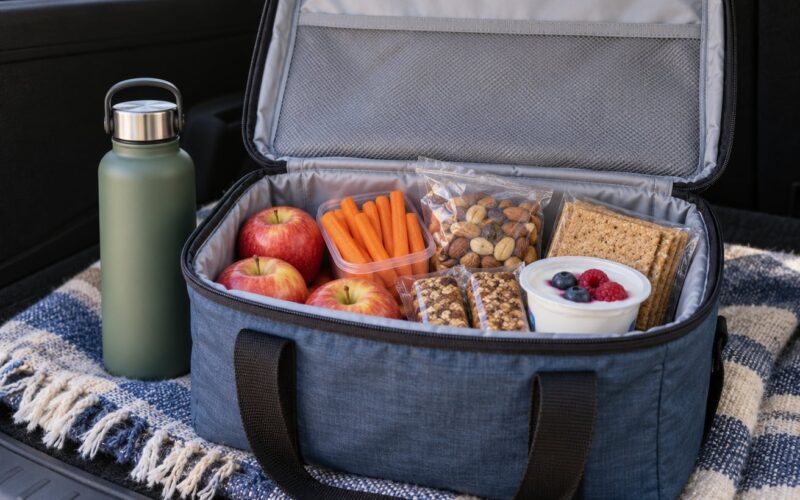
Carry an empty bottle through security and refill it at a fountain. Training in heat without water is the fastest way to feel worse than if you had skipped the session.
A written one-page plan
Four or five moves with rep counts, written on paper or in a note on your phone. Motivation on day six of a trip is not reliable, and a plan removes the need to make decisions while tired.
A health and safety check
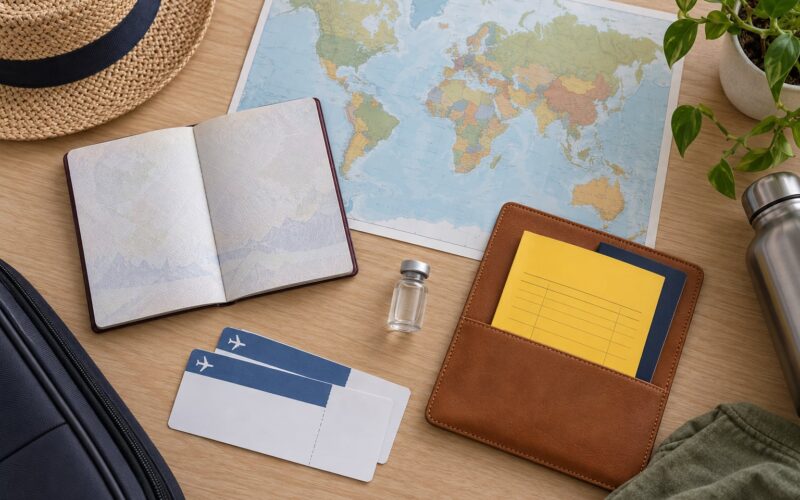
If you have an injury, are pregnant, or have a heart or joint condition, ask your doctor before starting a new routine away from home. Pack any medication you normally take, and check that it is in your carry-on rather than a checked bag.
How to Exercise While Traveling: Step-by-Step
Here is how to exercise while traveling across the five parts of a trip that matter. Work through them in order and you will cover the whole day, not just the gym-shaped hours.
Before You Go: Build a Simple Travel Routine
Pick four or five movements you can do in a small space: squats, lunges, push-ups, a plank, and glute bridges cover almost everything. Set a frequency you can hit on a bad day, and two short sessions beats one long one you skip.
In the 48 hours before departure, do the movements you’ll use on the trip so your body remembers them. Starting a new exercise on day one of a holiday, in an unfamiliar room, with unfamiliar beds around you is how people twist an ankle.
You will know the preparation worked if you can do the routine without thinking about it. Write the rep counts down and you should be able to run it from memory while tired.
At the Airport: Stay Active During Waiting and Transit

Airport time is dead time, and it is the easiest to reclaim. Instead of sitting at the gate for two hours, walk.
Walk laps of the concourse in ten-minute blocks. Most terminals have a longer loop than people expect, and travellers frequently underestimate how much of their step count comes from airports rather than destinations.
While you wait near the gate, do calf raises on both feet, ankle pumps, and shoulder rolls. These are quiet, invisible to other passengers, and they reduce the lower-leg stiffness that comes from hours of sitting.
Take the stairs instead of the escalator when you have a few minutes, and add a standing stretch between gates: feet under hips, a gentle twist through the spine, shoulders rolled back. You will know it worked if you feel warmer in the shoulders and less stiff through the hips by the time you board.
Respect the rules around all of this. Keep movement inside the secure area, stop when boarding is called, and never block an aisle or a moving walkway. Aisle activity on a plane is different, and crew instructions come first.
On the Plane: Use Safe In-Flight Movement
In-flight movement is about circulation and comfort, not a workout. Ankle pumps, gentle calf raises, and seated marches keep blood moving through the legs during a long-haul flight.
Add seated torso twists, shoulder rolls, and chin tucks for your neck after two hours looking at a screen. Then work the muscles you can without moving: press your thighs together and hold for ten seconds, squeeze your glutes for ten, and repeat a few times.
If the seat has a gap in front of you, lift one foot at a time with control for calf raises. If it does not, press your toes down into the floor and lift the heels instead.
Only stand and move in the aisle when the crew has said the seatbelt sign is off and the aisle is safe, which is usually on longer flights after the meal service. Ask a flight attendant first if you are unsure, and skip the movement entirely if you feel unwell.
Stop immediately if you feel dizzy, breathless or light-headed. Cabin pressure, dehydration and long periods of stillness affect people differently, and sitting down and drinking water is the correct response, not pushing through.
At the Hotel: Use the Room and Local Facilities
A hotel room is small, and that is fine. Bodyweight exercises work perfectly well in a space the size of a parking bay.
The furniture becomes equipment. A sturdy chair supports incline push-ups, seated rows and dips off the edge. A bed gives you a stable platform for glute bridges. A desk edge is a push-up bar. Fill a backpack with books or clothes for squats, lunges and rows, and add weight slowly.
Water bottles work as light dumbbells for rows, presses and rotational movement, and a rolled towel fills the gap under your lower back during a glute bridge or supports your knees if the floor is hard. Skip anything that creaks or has wheels.
Check the pool, the lobby and the space just outside the hotel. Twenty minutes of swimming or a brisk loop around the block counts, and it is often better cardio than a treadmill in a room with no windows.
Be a decent neighbour. Most complaints about hotel workouts are noise, especially early. Skip jumping jacks and burpees if anyone can hear you, keep the volume down, and move your session toward the middle of the day rather than 6am.
On the advertised hotel gym: travellers on r/solotravel and r/travel repeatedly mention the same disappointment, that the gym listed in the brochure has two working machines and no free weights. Ask at reception what is actually there before you plan around it, and go in knowing the room workout is your fallback, not your backup.
At the Destination: Make Sightseeing Count
The best routine on a trip is the one you do without noticing. That is where the walking belongs.
Choose walking tours over bus tours. Walk to dinner instead of taking a taxi, take the stairs to your room, and set a step target you can hit by wandering rather than by grinding. Two serious walks a day covers a lot of what a gym session would.
Look for what the destination does well: a hike with a view, a rental bike, swimming in open water, kayaking, a beach volleyball game, a tennis court, or a long swim in the pool when the weather turns. Doing the activity as a tourist means the workout is also the memory you keep.
Use the local transport to your advantage. Walking to stations, taking the tram instead of a taxi, and getting off one stop early all add up over a week.
With kids or with a companion who does not train, lower the bar to play rather than programme: a scavenger hunt where everyone walks a set distance, a swim in the shallows, a bike hire, or a long breakfast on a terrace instead of sitting in. Movement that counts as fun survives a bad day; a workout schedule does not.
Common Mistakes
Training hard right before a flight. Long flights and stiff hips are a bad pairing, and a hard session the night before means you board sore. Do something light, then walk the length of the terminal.
Ignoring hydration. Airports and planes are dry, and you lose more fluid than you notice. Carry a bottle, fill it after security, and drink before you feel thirsty.
Trying to do a real workout in a seat. Aisle space is too tight for anything rushed, and a bad rep in an unstable position is how people pull something. Keep in-flight work small, controlled and seated unless the crew says you can stand.
Skipping meals, then overeating at dinner. The classic travel pattern ends up feeling heavy and sluggish. Eat something light before training, then have a normal dinner rather than celebrating the missed calories.
Planning a routine that only works in a gym. If a session needs a machine, a barbell and forty-five minutes, it will not survive a business trip. Build the routine from movements that need nothing, and treat the gym as a bonus.
Pushing through jet lag. The first day in a new time zone is not the day for intervals. Train when your body is awake, keep it moderate, and let sleep do the work.
Ignoring pain. Sharp pain, dizziness and unusual breathlessness are stop signals, not a challenge to push through. Rest, drink water, and see a doctor when you get home if it persists. Anyone with a heart or joint condition should check with a clinician before training away from home.
Frequently Asked Questions
How do I stay active on a long flight?
Move every hour or so rather than training once. Seated ankle pumps, calf raises, thigh and glute squeezes, shoulder rolls and seated torso twists keep circulation moving without disturbing anyone. Stand and walk in the aisle only when the crew has switched the seatbelt sign off and the cabin is safe. Drink water steadily, because cabin air is dry and dehydration makes stiffness feel worse.
Can I work out every day while traveling?
Yes, most days, but not every day hard. Daily moderate movement is easier to keep up than four intense sessions a week, and ten to twenty minutes of bodyweight work most days holds your fitness steady. Take at least one genuinely easy day during a long trip, and put the harder sessions on days when you slept properly. Consistency beats intensity when the environment changes every two days.
How much fitness do I lose on a two-week vacation?
Less than most people fear, especially if you keep moving. Strength comes back faster than it was built, because muscle memory means regaining what you had takes far less time than creating it. A week of doing nothing leaves you noticeably weaker and stiff, but a two-week trip with two serious walks a day and short sessions most days costs you very little. The damage comes from stopping entirely, not from travelling.
What is a good hotel room workout with no equipment?
Pick four or five moves, work each for 40 seconds, rest 20 seconds, and repeat for two or three rounds. Squats, incline push-ups from a sturdy chair, glute bridges on the bed, reverse lunges and a plank cover the whole body in a small space. Keep jumping out of it if the room is thin-walled, and swap jumping for step-ups to stay quiet.
Should I pack a resistance band or is bodyweight enough?
Bodyweight alone is enough to hold your fitness steady for a week or two. A loop band is worth packing if you normally train with load, because it turns squats, rows and presses into loaded movements while weighing almost nothing and fitting in a coat pocket. Travellers cite it as the single most useful item to bring. Beyond two weeks of heavy training, it becomes close to essential.
Is it safe to exercise right after a long flight?
Keep the first session easy. After hours seated, dehydrated and possibly jet-lagged, your body is not ready for hard intervals, and a stiff hip from eight hours in a seat can turn a heavy squat into an injury. Walk, stretch gently, and drink water first, then train later in the day when you have warmed up. Stop if you feel dizzy or light-headed, and check with a doctor before exercising away from home if you have a heart condition or an injury.
Conclusion
Start with one thing: pack your walking shoes and a loop band, then pick a routine of four or five movements you can repeat anywhere. Set two short sessions a day in your phone, walk whenever you would rather wait, and let the sightseeing do the rest.
That is how to exercise while traveling without a gym, without a subscription, and without a plan that falls apart at the first delay.