Most people who get seasick on a cruise feel it badly for a day or two, and the fix is mostly decided before you ever board. Knowing how to avoid seasickness on a cruise comes down to four things: a short conversation with a clinician about the right prevention for you, a cabin away from the bow and the top deck, a light routine around food, screens and fresh air, and taking any medication exactly as the label or your doctor directs rather than waiting for nausea.
The reputation of cruise seasickness comes from an older era of small, slow, pitching vessels. A large modern ship has anti-roll fins, thrusters and a computer-controlled ballast system working continuously, so the ride is far steadier than most people expect. That steadiness does not cancel out rough weather, a coastal itinerary or a hull you can feel, so treat prevention as cheap insurance.
Table of Contents
- 1What You Need
- 2Step-by-Step: How to Avoid Seasickness on a Cruise
- 31. Plan how to avoid seasickness before you sail
- 42. Choose a cabin and location that reduce motion
- 53. Eat lightly and hydrate before boarding
- 64. Keep your eyes on the horizon and your body moving gently
- 75. Use fresh air and a calm environment
- 86. Follow a clinician-approved medication plan
- 97. Change the plan if symptoms start
- 10Who reacts most strongly
- 11How common is seasickness on a modern big ship?
- 12Common Mistakes
- 13Frequently Asked Questions
- 14Which cruise cabin is best for someone who gets seasick?
- 15Should I take motion-sickness medicine before a cruise, or only after symptoms start?
- 16How should parents prepare a child who is prone to motion sickness?
- 17What is the best thing to do if seasickness starts during a cruise?
- 18When should a passenger seek medical help for seasickness?
- 19Conclusion
What You Need
The single most useful thing to sort out happens days before departure, not on the gangway. Prevention on a cruise is partly a medical question, and the honest answer is that no single method suits everybody.
Before you sail, speak with a doctor or pharmacist and explain any history with carsickness, ferry crossings, airsickness or migraines. Bring a list of your current medicines, mention pregnancy or any chronic condition, and ask which prevention options are appropriate for you. Do not start a new medicine on the sailing day and hope for the best; that is how people end up managing side effects and seasickness at the same time.
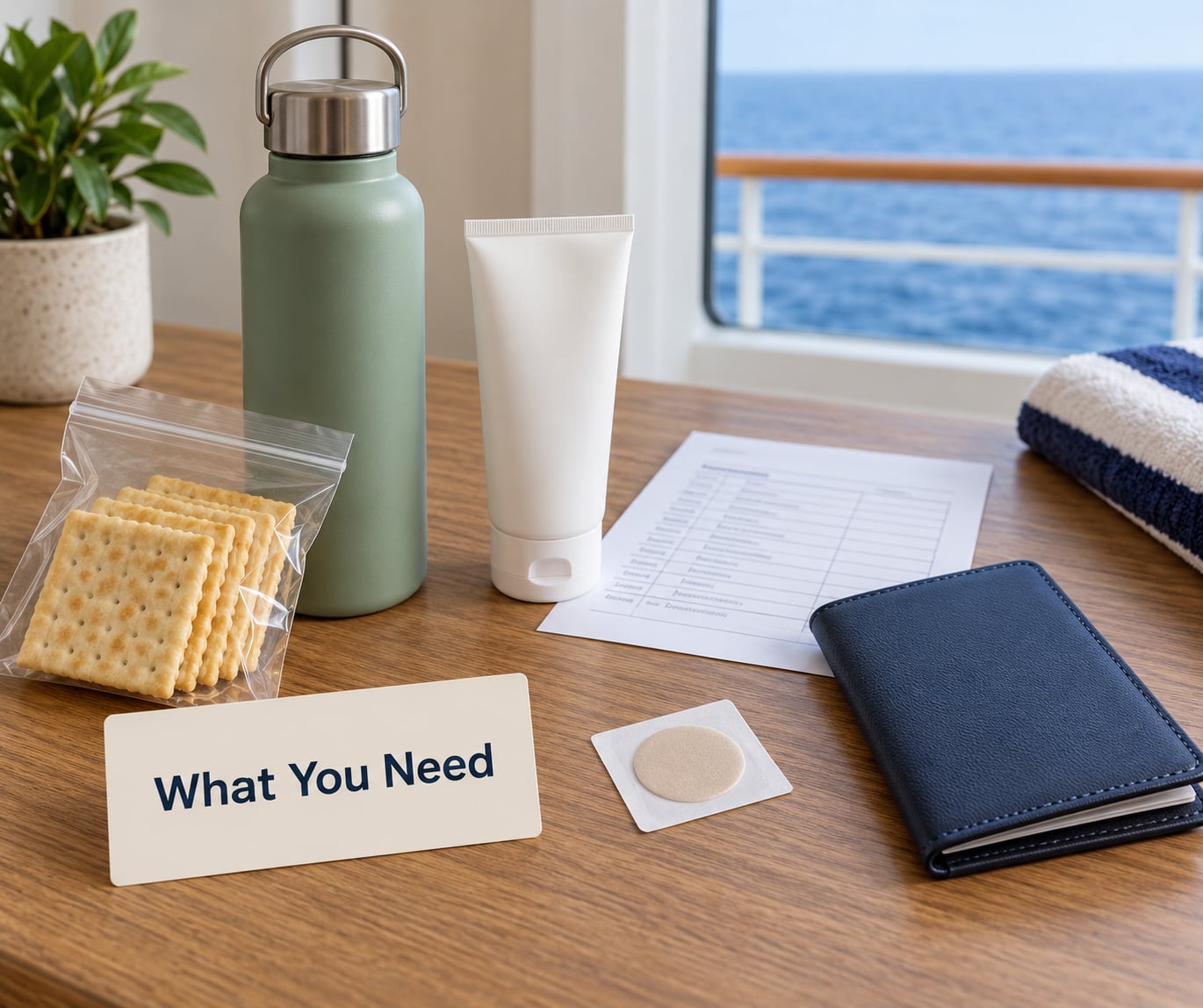
Then pack a small kit rather than a whole medicine cabinet:
- A refillable water bottle and, if you use them, electrolyte sachets
- Plain crackers, plain bread or another bland starch for queasy mornings
- Ginger chews, ginger tea bags or real ginger candies
- Sun protection and a light layer for open decks, which are windy and bright
- A written copy of your medication list, including anything you take regularly
- A motion-sickness patch or acupressure wristband, if you have used one before and know how you react to it
If you are travelling with children or anyone taking several medicines, the pre-cruise conversation is not optional. Ask about suitability, timing and interactions, and ask what to do if symptoms start despite prevention.
Step-by-Step: How to Avoid Seasickness on a Cruise
Learning how to avoid seasickness on a cruise works best as a sequence, because each step makes the next one easier. Here are seven, in the order you should set them up.
1. Plan how to avoid seasickness before you sail
Start two to four weeks out, which is long enough to test an option at home if your clinician suggests it. Talk through symptoms, pregnancy, chronic conditions, other medicines and your own history with motion sickness.
Two questions are worth asking by name: what should I take, and when should the first dose go in? That single answer removes most of the confusion people report, because the timing matters more than the brand. Note also whether the option you are considering causes drowsiness, since that shapes when you can take it around a pool day, dinner or a shore excursion.
How do you know this approach is working? Nothing dramatic. You reach sail-away without queasiness, you keep meals down, and you still have energy for the first evening instead of spending it in your cabin.
2. Choose a cabin and location that reduce motion
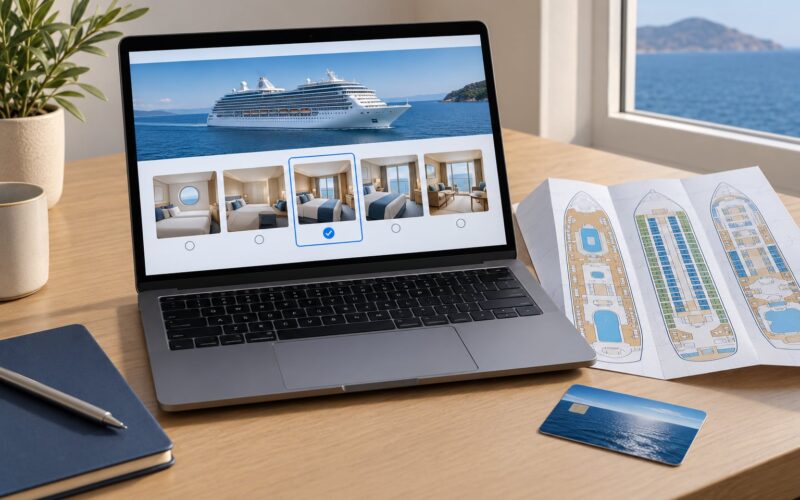
The further forward you sit, the more you feel the ship pitch into a head swell. The further aft, the more you feel it push and roll in following seas. The calmest stretch of any ship is around the middle, and lower decks move less than upper ones. If you can choose, book a mid-ship stateroom on a lower deck with a window or veranda so you have a fixed visual reference and real daylight.
- Mid-ship, lower deck: the calmest option on most itineraries.
- Mid-ship, upper deck: gentle, but more movement than a lower deck.
- Aft, near the engines: less pitch, more vibration and some roll.
- Forward, near the bow: the most pitch into swells, and the worst on coastal routes.
Be realistic about the limits. Plenty of cruisers report that a forward or upper cabin was perfectly manageable on a modern stabilized ship, so cabin advice is one factor rather than a guarantee. If you already have a booking in a rough spot, you can ask your cruise line or your onboard team whether a move to a mid-ship stateroom is possible; upgrades are often sold by the end of the first sea day.
Ship and route matter more than people expect. Small river boats, ferries and coastal sailings pitch far more than open-ocean crossings, and repositioning legs in bad weather can be rough even on a big vessel. If seasickness ruined a previous trip, check the ship size and the itinerary before you pay, not after.
3. Eat lightly and hydrate before boarding
Your stomach tolerates motion better with something in it, and far better than with an empty stomach or a heavy meal. In the twelve hours before boarding, favour plain, starchy, familiar food: toast, crackers, rice, pasta, bananas. Skip anything greasy, rich or very spicy, because the smell alone can turn a queasy stomach into a problem.
Once aboard, eat at regular times even when you do not feel hungry, and keep sipping fluids steadily. Dehydration makes fatigue and nausea feel far worse than they are, and it is the fastest route to a headache that gets blamed on the ship. Skip alcohol while you are establishing your sea legs. It dehydrates you, it worsens sleep, and it is a poor substitute for the calm, boring evening you actually want.
How do you know the routine is helping? You eat a full breakfast without regretting it, and you are not counting hours until the next glass of water.
4. Keep your eyes on the horizon and your body moving gently
Seasickness is a sensory mismatch. Your inner ear reports movement while your eyes report stillness, and the conflict is what makes you feel ill. Closing one side of that gap is the cheapest relief there is.
Give your eyes a steady, distant target: the horizon, a fixed point on the far deck, or a lifebuoy. Do this for a few minutes at a time rather than forcing a long stare through a window. Avoid close work, especially scrolling on a phone held inches from your face, because a moving screen removes your reference point entirely.
Then move gently. A slow walk along a corridor or a wide open deck is enough. Slow walking also helps your inner ear recalibrate to the rhythm of the ship, which is why many people feel noticeably better by day two. Lying flat and staying still tends to make things worse, not better.
5. Use fresh air and a calm environment
Stale, warm, enclosed air makes nausea worse. When it is safe and permitted, step out onto a deck where the air moves, loosen a belt or tight waistband, and take off your shoes if you can. Keep your own setup simple and familiar: a cool towel, a pillow, a quiet corner away from loud music and strong food smells.
Deck safety still applies. Open decks are hard surfaces that move, the rail is a boundary rather than a handrail for leaning, and weather changes quickly at sea. Keep children with an adult, and if there is any wind or spray warning, take the fresh air in a sheltered spot instead.
Ginger is the best-evidenced of the home remedies. Ginger chews, ginger tea or ginger candies are easy to find and mild enough for most people, though they do not replace prevention for a sensitive traveller. Wristbands are a separate story: acupressure at the P6 point has a plausible mechanism but weak clinical evidence, and travellers report the effect fading after a day or two, which is of little use on a seven-night sailing. Wear one if you like, but do not count on it for the whole trip.
6. Follow a clinician-approved medication plan
Motion-sickness products are antihistamines, and that explains both how they help and why they make some people sleepy. Over-the-counter options such as meclizine and dimenhydrinate are widely used, while the scopolamine patch and similar products are prescription medicines in many countries. Each has its own duration, side effects and interactions, which is exactly why the label and your clinician decide the timing, not a forum post.
The pattern most commonly reported by experienced cruisers on r/Cruise is simple: a dose the night before sailing, then once daily for the trip, with another dose at the first sign of queasiness rather than at the point of collapse. Taking a tablet once you are already vomiting is far too late to be useful.
Drowsiness is the concern people raise most often, and it is worth planning around rather than tolerating. Some travellers describe non-drowsy formulas as anything but. A practical approach is to dose at a time of day when you can rest afterwards, such as the evening before an early port day. On the night before sailing, drowsiness is often a feature rather than a problem. Never combine two products or add an antihistamine for a cold without checking with a pharmacist, because the overlap is easy to miss and the sedating effect adds up.
How do you know the plan is working? Days one and two pass with no nausea and no lost time. If you are still ill while taking medication as directed, that is a signal to talk to a pharmacist or the ship’s medical team rather than to keep adding products.
7. Change the plan if symptoms start
Prevention sometimes fails. Weather, an unusually rough route and plain bad luck happen, and the response should be graduated rather than panicked.
- Stop the plan for the hour. Cancel the excursion, the gym slot and the dinner you were dreading.
- Move to a stable, cool place. A mid-ship lounge, a sheltered deck or your cabin with the door open beats a swaying corner near the bow.
- Eat something plain and sip fluids. Crackers and water in small sips do more than an empty stomach.
- Rest without going flat. Prop yourself up slightly and keep your eyes on a fixed point.
- Use your medication as directed. If you have a clinician-approved plan, follow it rather than improvising.
- Ask for the ship’s medical team if symptoms persist past a day, stop you eating or drinking, or interfere with essential medication you need to take.
Seek prompt medical attention for severe dehydration, chest pain, confusion, fainting, severe abdominal pain, or symptoms that keep worsening rather than settling. Anyone with heart, balance or inner-ear conditions should mention it to a doctor before sailing, because the same nerve pathway that causes the nausea affects those conditions.
Who reacts most strongly
Being carsick, airsick or sick on a ferry is the clearest predictor. So are migraines, blood sugar that runs low, pregnancy, a recent inner-ear infection, and children aged roughly two to twelve. Older travellers who take several medicines at once fall into the group most likely to have an interaction worth checking in advance. None of that means skip the cruise, only that the preparation step deserves more time.
How common is seasickness on a modern big ship?
Far less common than the stories suggest, though estimates vary widely because so many people never report it. A figure often quoted comes from an offshore race study of a few hundred open-water sailors in small craft, where roughly two-thirds reported seasickness, but that is a very different population from passengers on a stabilised vessel. Industry passenger surveys commonly put self-reported seasickness among modern cruise guests in the region of 20 to 30 percent, with most cases mild and short-lived, and reported figures vary by itinerary and season. One-off seasickness in the first day or two is so common that many experienced cruisers treat it as a rite of passage rather than a problem.
Common Mistakes
Almost every avoidable bad cruise at sea traces back to one of these.
Waiting until you feel sick. Prevention products are built to work before symptoms arrive. Once nausea has started, the tablet has missed its window. Fix: take it on the schedule your clinician or the label specifies, starting the evening before.
Booking any old cabin. A forward upper cabin on a coastal itinerary is the hardest seat to feel steady in. Fix: mid-ship and low, and check the itinerary for exposed routes.
Skipping meals. An empty stomach and a moving ship is the worst combination available, and travellers consistently report that lying down hungry makes everything worse. Fix: small, plain, starchy food at regular hours.
Drinking heavily to relax. Alcohol accelerates dehydration, disrupts the sleep you need on a moving deck, and turns an occasional queasy morning into a lost day. Fix: water first, and save the celebratory drinks for a calm sea day.
Staring at a phone. Close-up scrolling removes the reference your inner ear needs and makes a headache far more likely. Fix: look up and out, or close your eyes deliberately while sitting still.
Trying four remedies at once. Ginger, wristbands, two kinds of tablet and a patch all at the same time makes side effects impossible to read and interactions easy to miss. Fix: change one thing at a time, and check combinations with a pharmacist.
Trusting a wristband for the whole trip. Travellers report the effect fading within a day or two, so it is a bonus rather than a plan for a multi-night sailing. Fix: use it alongside a real routine, never instead of one.
Assuming the ship is badly run. Seasickness in a heavy swell is a weather outcome, not a crew failing. The captain’s priority on rough water is stability, not a smooth-looking horizon.
Three things cover most of it: talk to a clinician before you book the medication plan, book a mid-ship lower-deck cabin, and spend the first two days light on food, heavy on water and frequent on open decks.
Frequently Asked Questions
Which cruise cabin is best for someone who gets seasick?
A mid-ship stateroom on a lower deck, ideally with a window or veranda. Mid-ship avoids the pitching you feel at the bow and the rolling some people notice near the stern, and lower decks move less than upper ones. A window gives you a fixed visual reference, which helps because seasickness is a sensory conflict. Even the best cabin cannot remove motion entirely, so pair it with the routine in this guide.
Should I take motion-sickness medicine before a cruise, or only after symptoms start?
Before, not after. These products work best taken before symptoms begin and again on the schedule the label or your clinician sets, with many travellers starting the evening before sailing and dosing once daily after that. If you wait until you feel queasy, the medicine arrives too late to be useful. Ask a pharmacist first if you take other medicines, are pregnant, or are travelling with a child.
How should parents prepare a child who is prone to motion sickness?
Ask your child’s doctor or pharmacist about which option is appropriate and at what age, and never use an adult product without checking. Children aged roughly two to twelve are commonly affected, and doctors often prefer a non-drowsy option so sleep is not disrupted. Bring plain snacks, a refillable bottle and familiar entertainment, keep the horizon in view where possible, and ask the ship’s medical team early if symptoms start.
What is the best thing to do if seasickness starts during a cruise?
Pause the day’s plans and move somewhere cool and steady, ideally mid-ship or in a sheltered lounge rather than near the bow. Eat something plain such as crackers, sip fluids in small amounts, and take your medication exactly as the label or your clinician directed. Prop yourself up rather than lying flat and keep your eyes on a fixed point. Most cases settle within a day or two once you are settled and eating normally.
When should a passenger seek medical help for seasickness?
Contact the ship’s medical team if symptoms stop you eating or drinking, last beyond a day or two despite taking medication as directed, or stop you taking medication you regularly need. Get urgent help for severe dehydration, chest pain, confusion, fainting, severe abdominal pain, or symptoms that worsen steadily. Anyone with heart conditions, balance disorders or a recent inner-ear problem should speak to a doctor before sailing rather than waiting onboard.
Conclusion
If you take one thing from this guide, make it the pre-cruise appointment. Ask a clinician or pharmacist which prevention is right for you and when to start it, because timing is what makes the difference. Then book a mid-ship lower-deck cabin if you can, and spend the first two days at sea eating plainly, drinking steadily and getting onto an open deck more than you think you need to.
Preparation improves the odds of a comfortable trip. It does not remove the waves, and no method works for everyone, but a passenger who planned ahead is far more likely to spend the voyage on the deck than in the cabin.