A long layover stops working against you the moment you treat it as dead time to survive. The travelers who have the calmest connections spend it deliberately: they confirm the rules before anything else, eat before they get hungry, rest in a real chair, and get back to the gate early enough that a gate change or a slow security line never becomes a problem.
Learning how to spend a long layover at an airport is mostly a planning problem, not a luck problem. A stop of four to six hours gives you room to eat well and nap. Eight hours or more can cover a walk, a shower and even a short city visit if the rules allow it. The same stop in the middle of the night is a completely different job, and it needs a different plan.
Table of Contents
- 1What You Need
- 2Step-by-Step: How to Spend a Long Layover at an Airport
- 31. Confirm Your Terminal, Lounge Access, and Security Rules
- 42. Make a Flight-Safe Time Plan
- 53. Eat and Refill Before You Explore
- 64. Use the Airport Without Wasting Time
- 75. Find a Comfortable Place to Rest
- 86. Explore Only the Areas You Can Reach
- 97. Return to the Gate With a Safety Buffer
- 10Common Mistakes
- 11Frequently Asked Questions
- 12Can I leave the airport during a long layover?
- 13Do I need a lounge to spend a long layover comfortably?
- 14How can I sleep at the airport during a long layover?
- 15What should I do if my connecting flight is delayed?
- 16Is it possible to work or study during a long layover?
- 17How do I find food and water during a long layover?
- 18Conclusion
What You Need
Most bad layovers start with something forgotten at home. Get these sorted before you leave for the airport and the middle of the trip becomes much easier to handle.
- Boarding-pass details for both flights, saved offline. Screens go down more often than people expect, and you want the gate number without hunting for signal.
- A confirmation of which terminal you arrive and depart from. Long transfers between terminals eat far more time than a map suggests.
- A charged phone and a battery pack you can actually reach. A dead phone during a re-plan is the one problem you cannot work around.
- Offline copies of anything you might be asked for: passport photo, visa or transit paperwork, hotel and transfer bookings, and a screenshot of your onward travel.
- Any medication you take, in your hand luggage, in your pocket. Checked bags can go to the wrong place, and a pharmacy three terminals away is no help.
- A change of clothes, a toothbrush and a charger cable in your day bag. This is what makes a layover bag worth carrying at all.
- Knowledge of whether your bags are checked through to the final destination. That single fact decides whether leaving the airport is realistic.
- A rough time plan written down. Not minute by minute, just the shape: when you eat, when you sleep, when you head back.
A layover bag is worth the trouble for anything over four hours. Keep it small enough that you can move with it yourself, since you may end up changing gates, terminals or even buildings on short notice.
Step-by-Step: How to Spend a Long Layover at an Airport
The plan below runs in order from the moment you land to the moment you sit down at the gate. It works whether you have four hours or fourteen, because the sequence stays the same even when the activities change.
1. Confirm Your Terminal, Lounge Access, and Security Rules
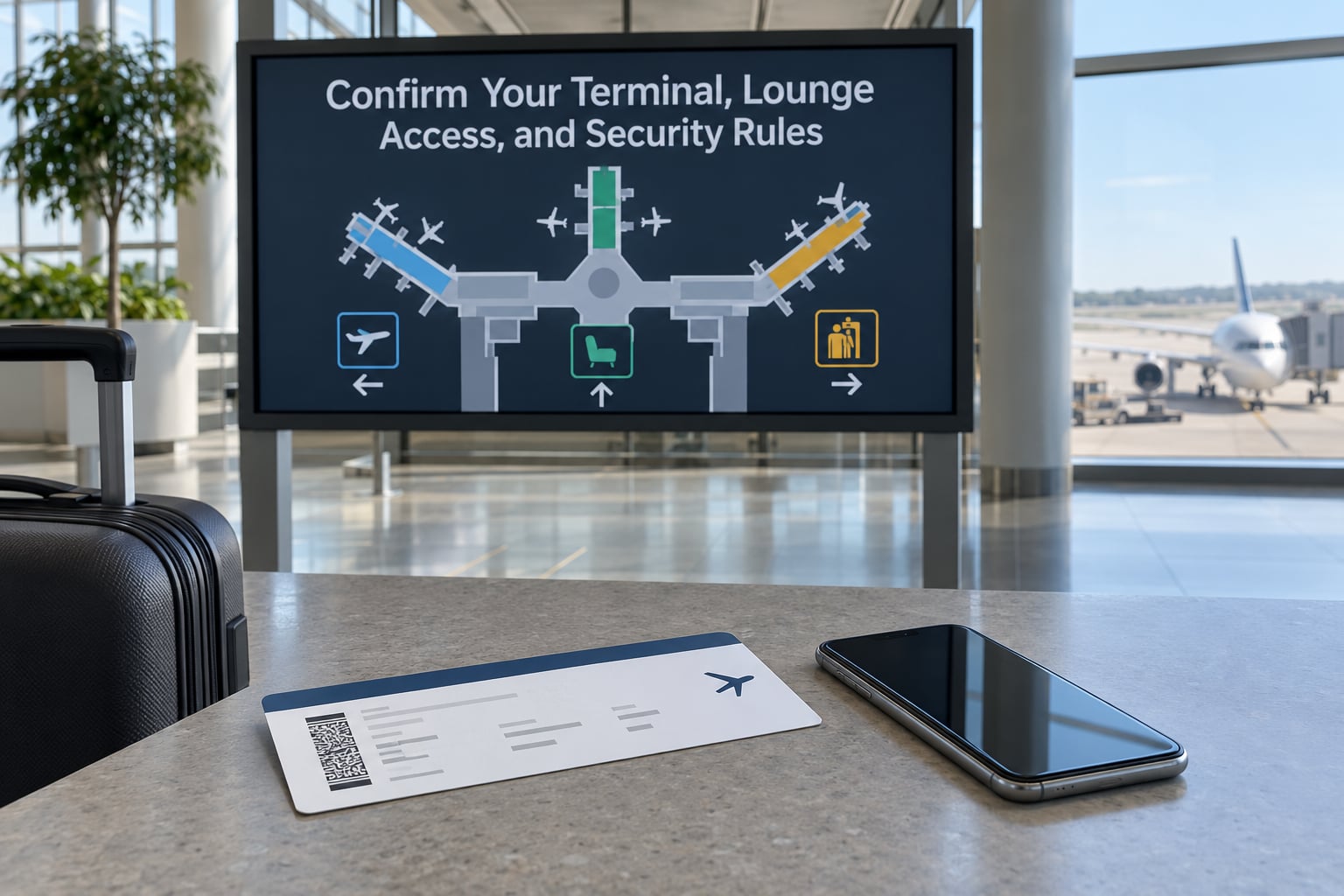
Before you do anything else, work out three things: which terminal you are in, which terminal you leave from, and whether you are allowed out of the secure area. Check the departure screens, the airport app and your airline’s site, because gate assignments move and terminals are not always adjacent.
Then decide whether leaving the building is even on the table. It depends on your nationality, your visa status, your itinerary, and whether your luggage is checked through to the final destination. With bags checked through, many travelers are required to stay airside and often have to clear a transit security check on the way back. With bags in your hand, the door is usually open, provided the entry rules for that country allow it.
Set the lounge question while you are at it. Access usually comes from airline status, a qualifying credit card, a membership such as Priority Pass, or a day pass sold at the desk. For long stops, several airports also rent quiet rooms or small day rooms by the hour, which is often cheaper than a night in a hotel if all you want is a clean bed for four hours.
Two definitions help here. Airside means the secure area past security and passport control; landside is the public arrivals area with the shops, taxis and restaurants. And minimum connection time is the shortest gap the airport itself will sell you, based on walking, security and immigration. It is a floor, not a plan, and never a safe amount of time to be out of the terminal.
2. Make a Flight-Safe Time Plan
Write the plan down and work backwards from boarding. Airlines usually start closing the gate 15 to 20 minutes before departure, and boarding often begins 30 to 45 minutes ahead for domestic and international flights. Add walking time from wherever you are, plus a buffer for a security line.
A simple table keeps this honest:
| Time you have | What it realistically buys | Be back at the gate by |
|---|---|---|
| 2 to 3 hours | Refill, eat, charge, find a quiet seat | 45 minutes before boarding starts |
| 4 to 6 hours | A proper meal, a walk, a nap in a lounge or day room | 60 minutes before boarding starts |
| 8 to 12 hours | All of the above plus a city visit or a hotel rest, if the rules allow | 90 minutes before boarding starts |
| Overnight | A shower, a real bed or a sleep room, and meals solved | 90 minutes before boarding starts |
Adjust for your airport. A single-terminal hub is far more forgiving than a mega-hub where terminals are a train ride apart. If you are not sure how far apart they are, assume worse than you hope and subtract the difference from your free time.
Build in one contingency block of 30 to 45 minutes. Incoming flights run late often enough that it is worth assuming your onward departure might drift, and you want that drift to eat your buffer rather than your exploration.
3. Eat and Refill Before You Explore
Airline food lands badly. A long stop is a good moment for a real meal, and eating early also means you are not stuck in a restaurant line when boarding starts.
Check what the terminal actually offers before you commit to staying airside. International hubs usually have a wider range than small regional ones, and airport restaurants are often clustered in one concourse. Walk to see what exists, then choose.
Fill your water bottle after security and carry an empty one through the checkpoint, since fountains and bottle-filling stations sit past the screening area. Staying hydrated is the dullest and most effective advice in this entire guide.
Pick food you will enjoy four hours later. Something rich and heavy right before a long flight is a gamble. If you are leaving the terminal, this is the best meal of the whole trip, and restaurants outside tend to be cheaper and better than the ones inside the security fence.
Set a limit before you order. Layovers invite impulse spending because you have time and nothing else to do. A simple rule works: one proper meal, one coffee, and a small treat. It keeps the stop enjoyable without turning it into a bill.
4. Use the Airport Without Wasting Time
Long stops reward people who arrive with jobs to do. Clear your inbox, reply to the messages you have been avoiding, work through the deck you need to finish, or study. A focused 90-minute session beats six hours of half-watching a screen.
WiFi at airports is usually free but often slow, so plan for offline work too. Download anything you will need before you travel, and use the stop as catch-up time rather than as an excuse to start something that needs real bandwidth.
Use the dead time productively in smaller ways: back up photos, plan the next leg of the trip, set up a budget for the days ahead, or learn a little of the language of the place you are landing in. Ten minutes of that at a gate is better than two hours of doomscrolling.
One caution. If you are deep into work, set an alarm and check the departure screen on a schedule, not once at the start of the stop. Gate changes are announced quietly, and terminal staff assume you are paying attention because you are not sleeping.
5. Find a Comfortable Place to Rest
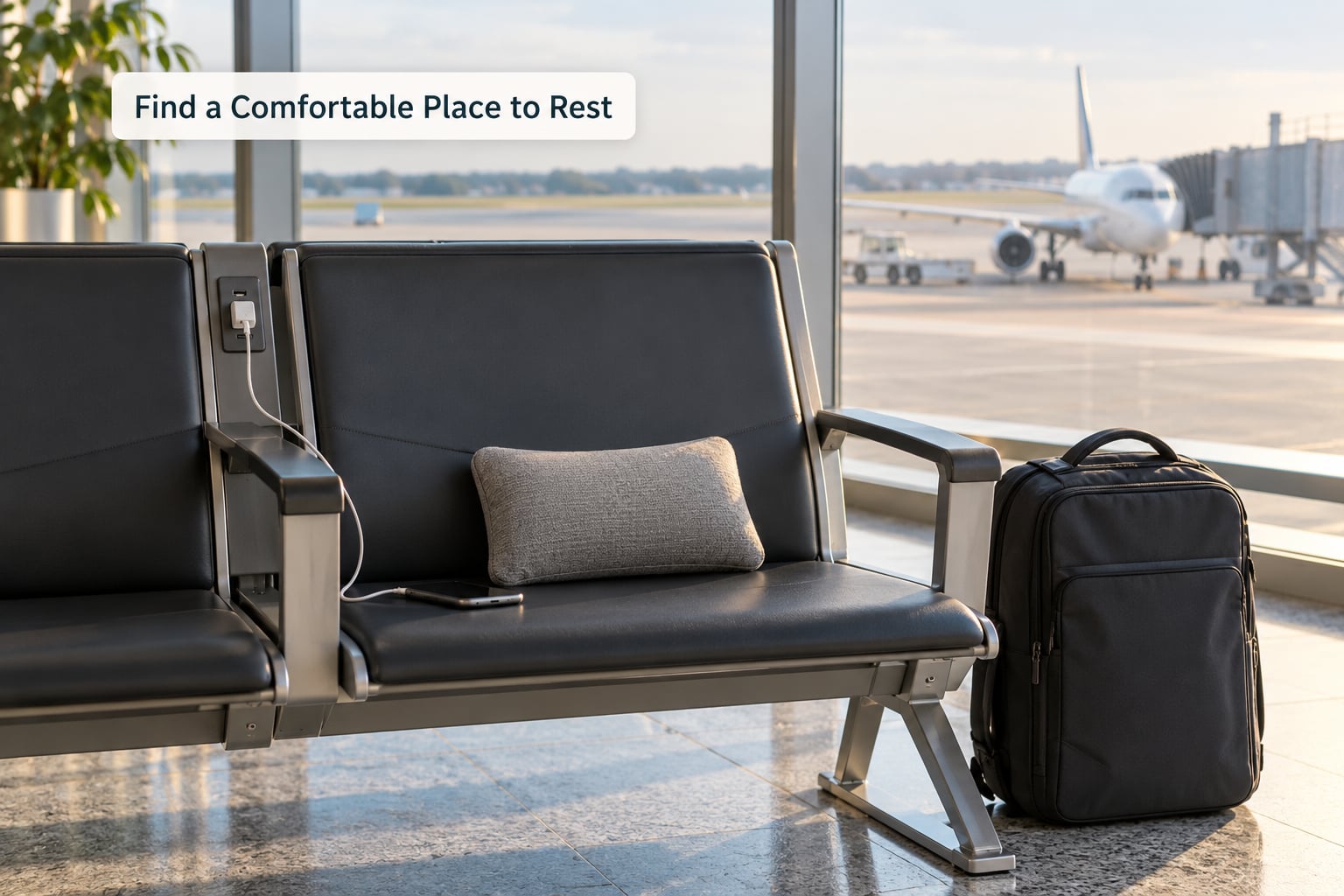
Sleeping on airport seating is possible but punishing on anything past six hours. Long layouts, hard armrests and a footrest that never fits quite right add up. Look for better options first.
Several large international hubs run sleep pods or small day rooms you can rent by the hour, and many lounges have quiet corners with proper recliners. A few airports provide separate rest zones with dimmed lighting and fewer announcements, and some have shower facilities you can book a slot in, which matters enormously after a long-haul arrival.
Wellness spaces are worth a look too. Meditation rooms, chapels and prayer rooms exist in most international terminals and are quiet by design, so they suit travelers who need real stillness rather than a bed.
Build a small kit and it pays off: a travel pillow, earplugs, an eye mask, a light blanket or oversized scarf, and a flat surface like a folded jacket. Keep it in the day bag so you can get to it in a couple of minutes.
Think about who you are travelling with before you pick a spot. Travelers who need sleep, privacy, or help getting around should ask staff about access seating and step-free routes to lounges and rest zones, which are often easier to reach than the standard gates. Families should sit near restrooms and food rather than in the far corners, and they should keep the kids close to the wall side of the seating row.
6. Explore Only the Areas You Can Reach
Decide the reachable area first, then explore inside it. Airside usually means shops, a food court, an art display, a chapel, and occasionally a public observation area or a short indoor garden. Several major hubs run free or low-cost tours for passengers with long connections, including Singapore Changi, Incheon and Istanbul, where transit tours can be booked inside the terminal.
Other terminals are famous for being worth the stop on their own. Amsterdam Schiphol has a Rijksmuseum gallery and a library past security, Munich has a beer garden airside, and Zurich and Singapore lean heavily on garden and observation space. A quick search before you fly tells you whether your connection airport has one of these.
Landside exploration is the bigger question. Short international trains, express rail links and dedicated airport express lines put many city centres within 30 to 60 minutes of a terminal, and several airports also sell organised tours that run only during long stops. The rule that protects you is simple: leave only if you can comfortably be back at the gate two hours before departure, and only if the entry rules for your nationality allow it.
With a checked bag going to your final destination, going outside can put your onward boarding in jeopardy in some countries, because clearing immigration again may mean re-entering the departure flow as a fresh passenger. Check your airline and the destination country’s rules before you book anything.
Before you leave, photograph your gate number and check the departure screens one more time. The return trip is where city trips go wrong.
7. Return to the Gate With a Safety Buffer
Decide your return time before you leave, not once you are already late. Set it in your phone alarm and treat it seriously. The buffer covers walking, a security checkpoint, a shuttle or train between terminals, and the slow final stretch to a gate at the far end of a concourse.
On the way back, watch for three signals: a boarding call for your flight, a gate change notice, and a departure time that has moved. If the gate changed, stop at a screen and recalculate the walking time from where you actually are, since the printed map on the wall rarely matches the real distance.
Go through security and immigration as early as your buffer allows, then walk straight to the gate without a detour. If boarding has not started, sit near it and stay there, because gates move and your next notification may arrive quietly over an intercom you cannot hear.
If your connection is genuinely tight and you are considering skipping a stop to catch it, call the airline rather than run. Airlines can rebook a missed connection onto a later flight, but they generally cannot help you after you have already missed it.
Common Mistakes
Assuming every airport lets you wander airside. Some airports route all connections through a sterile corridor with no shops at all. Check the connection guide for your airport before you plan anything.
Treating a lounge as the only plan. Relying on one lounge means a full flight of guests arriving ahead of you, or a lounge that has closed for the evening. Have a second option ready.
Ignoring terminal changes. A gate reassignment can cost 30 to 60 minutes in a large airport. Check screens regularly instead of once at the start.
Arriving with a flat battery. A dead phone in a layover removes your board, your maps and your alerts. Bring a power bank you can reach without digging.
Spending three hours in one restaurant or shop. Time disappears in an airport. Look around first, pick one place, and give it a set window.
Falling asleep through a boarding call. Announcements in international terminals are quiet, and some boarding calls go out only to the gate agents. Set an alarm for the start of boarding, not just for your return time.
Leaving no boarding buffer. This is the mistake that turns an interesting stop into a missed flight. Two hours for an international connection, one hour for a domestic one, and more if terminals are far apart.
Leaving the terminal without checking transit rules. The cost of an entry or transit visa problem at the border is far higher than the cost of staying airside. Check before you book, not at the exit door.
Quick prevention list: check in early so the plan exists before you land, keep your documents offline, set your return alarm, and ask an airport information desk for the layover facilities early. They are quiet about the good stuff, and they will tell you about showers, rooms and tours that no sign mentions.
Frequently Asked Questions
Can I leave the airport during a long layover?
Often yes, but it depends on your nationality, your visa status and whether your bags are checked through to the final destination. With checked-through luggage many countries require you to stay airside, and you may face a transit security check on return. With hand luggage, you can usually exit if your passport allows entry or airside transit. Check your airline and the destination country’s immigration rules before you plan an excursion.
Do I need a lounge to spend a long layover comfortably?
No. A lounge is convenient, not essential. Plenty of travelers handle an eight-hour stop with a gate seat, free airport WiFi, a good meal and a walk through the terminal. A lounge helps most when you want quiet, showers, power at your seat and a place to lie down, or when your airline status or credit card includes access. Otherwise a booked day room or sleep pod can serve the same purpose.
How can I sleep at the airport during a long layover?
Rent a sleep pod or day room if your airport has them, since they are the real difference between resting and suffering. Otherwise find a dim rest zone, use a travel pillow and eye mask, and pick a seat where nobody needs to climb over you. Overnight stops are best handled by an airport hotel booked by the hour or half-day, which gives you a shower and a bed without leaving the airport area.
What should I do if my connecting flight is delayed?
Open the airline app right away, because a delay often means a new gate, a new boarding time or a rebooking. Walk to the airline desk rather than waiting on the phone line if you are already airside and the delay is more than an hour. Ask whether the connection is protected, and if your onward flight leaves before you can reach it, take the rebooking the agent offers instead of trying to make the original one.
Is it possible to work or study during a long layover?
Yes, and long stops are genuinely productive for people who plan it. Most airports offer free WiFi, though speed varies and video calls often struggle, so download what you need in advance. Outlets are shared, so bring a power bank rather than relying on a wall socket. Set an alarm for 30 minutes before boarding begins, since a call or a deep work block can swallow your buffer without warning.
How do I find food and water during a long layover?
Check the terminal map or ask an information desk early, because food clusters in one concourse and the walk can cost 15 minutes. Airport restaurants are open long hours, and landside usually has better and cheaper options. Carry an empty refillable bottle through security and fill it at a drinking fountain past the checkpoint. Set a simple spending rule for the stop so you are not surprised by the bill.
Conclusion
Your first move is not to find something to do. It is to confirm the connection rules: your terminals, whether you can reach the public area, and whether your bags go through to the final destination. Everything else follows from that answer.
Once you know your boundaries, build a flexible plan around the three things that always pay off: eat properly before you get hungry, rest in a real chair or a booked room, and do something useful with the middle hours. Then return to the gate well before boarding starts. That is how to spend a long layover at an airport without spending your money, your energy, or your connection.