An all-inclusive resort bundles your room, all meals, drinks, and most on-site activities into a single nightly rate you pay before you fly. In practice that means very little daily spending and almost no planning, along with queues, buffet rotation, and a resort bubble you can walk out of whenever you want.
Most first-timers picture it as a cruise on land, and that picture is wrong in one important way. A ship is sealed off and moves while you sleep. A resort is a building on real ground in a real town, with local food, beaches, and culture a short drive away.
Table of Contents
- 1What Is an All Inclusive Resort Really Like?
- 2What Is Usually Included in the Price?
- 3What Usually Costs Extra?
- 4What Is an All Inclusive Resort Really Like Day to Day?
- 57am to 10am: early starters and early breakfast
- 610am to noon: the pool chair scramble
- 7Midday to 4pm: the structured part
- 84pm to 8pm: the lull and the dinner question
- 99pm onwards: the show and the quiet
- 10How Much Relaxation Can You Expect?
- 11What Are the Biggest Drawbacks?
- 12Who Is an All Inclusive Resort Best For?
- 13How Do You Choose the Right Resort?
- 14First-timer mistakes to avoid
- 15What Questions Should You Ask Before Booking?
- 16Frequently Asked Questions
- 17Does all inclusive mean everything at the resort is free?
- 18Are alcoholic drinks included at all-inclusive resorts?
- 19Are kids clubs included in an all-inclusive resort stay?
- 20Do you still tip at an all-inclusive resort?
- 21Can you eat and drink wherever you want on an all-inclusive resort?
- 22What should I check before booking an all-inclusive resort?
- 23The Bottom Line
What Is an All Inclusive Resort Really Like?
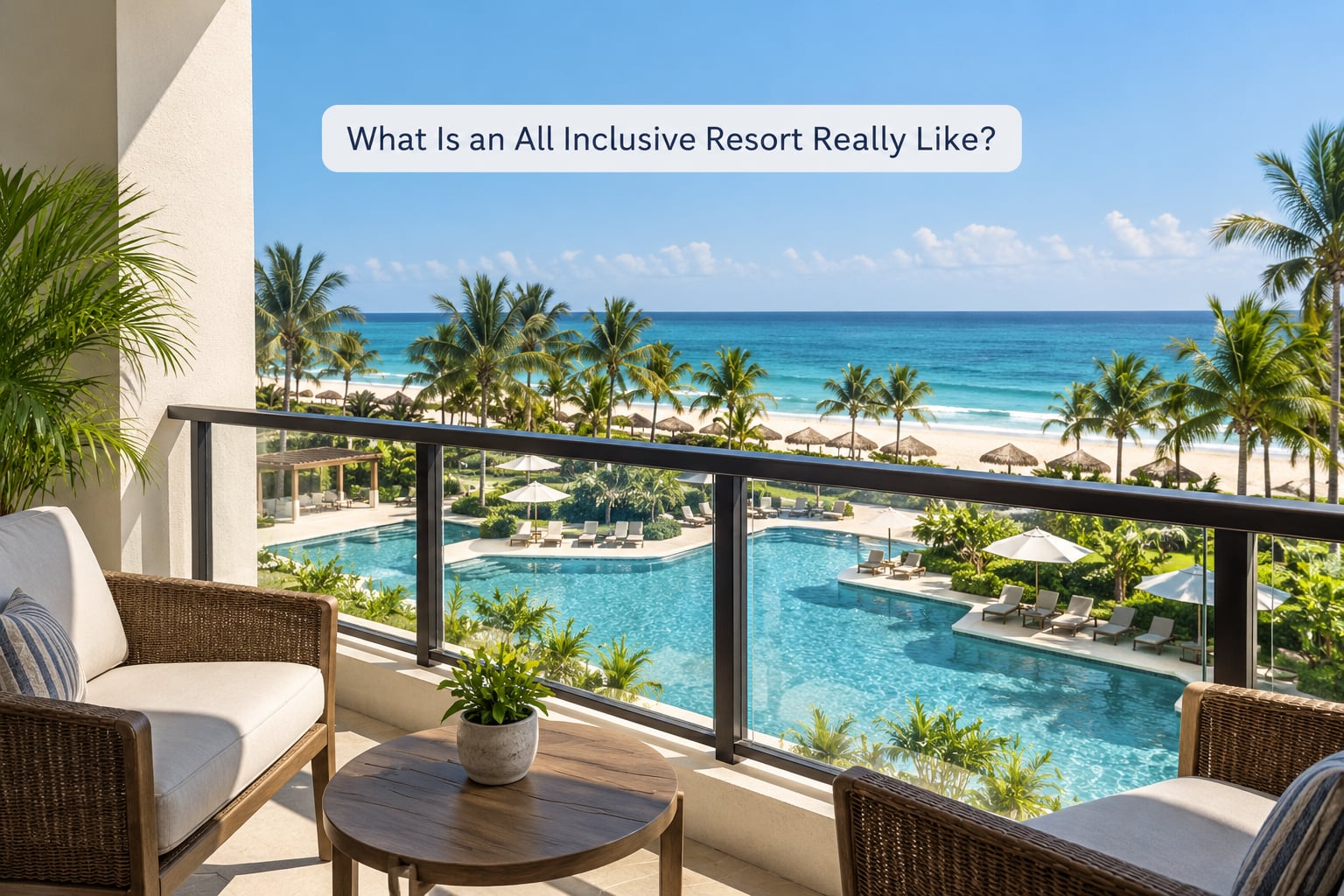
The honest version: a self-contained holiday complex in a warm destination where one rate covers accommodation, food, drink, and the on-site entertainment, and where anything outside that list gets charged to your room.
Three tiers show up on booking sites. Fully all-inclusive means all local drinks, most restaurants on property, kids clubs, and activities are covered. Partially all-inclusive bundles the room and breakfast or half board, with everything else a la carte. Unlimited-style is luxury language: meals and premium spirits included, but spa, golf, off-site trips and some restaurants are not. The word on the brochure is worth less than the inclusions list underneath it.
| Usually included | Depends on the resort | Almost always extra |
|---|---|---|
| Room and daily housekeeping | Airport transfer | Flights |
| Main buffet, all day | A la carte restaurant bookings | Extra nights beyond the minimum stay |
| Soft drinks, water, coffee | Pool and beach towel service | Premium spirits and wine |
| Non-motorised water sports | Kids clubs by age band | Spa treatments |
| Evening shows and group activities | Resort credit toward paid extras | Off-site excursions |
| Evening programme and activities | Room service | Resort or destination fee |
Read the inclusions table on the property’s own site, not the summary on the aggregator. That single habit prevents most of the disappointments described below.
What Is Usually Included in the Price?
Your room, its cleaning, and the shared spaces come first. Pool, beach, sun loungers, gym access, and the kids clubs are normally in the package, which is why families treat the club as the deciding factor rather than the pool size.
Food is the next block. The buffet runs from early morning to late evening at most properties, and one or more a la carte restaurants are usually included too, though booking rules vary. Some resorts cap how many times you can eat at each one; others set a fixed seating window and turn away late arrivals.
Drinks are where marketing gets slippery. Local beer, cocktails made from house spirits, water, and soft drinks are standard inclusions. Imported vodka, aged rum, single malt whisky, champagne and premium wine usually carry a surcharge, and some properties only offer those in one bar at set hours.
Activities fill the rest. Kayaks, paddleboards, beginner snorkelling, tennis, fitness classes and the evening show are normally on the house. Day trips to ruins, zip lines, catamaran sails, and dolphin encounters are almost never included.
What Usually Costs Extra?
Six things catch people out, and most of them are not hidden so much as buried one page deep.
- Flights and airport transfers. Rarely in the headline rate, and transfers are often a per-person, per-way add-on.
- Premium alcohol and wine by the glass. Included at some properties, charged at others.
- A la carte dining beyond your allowance. Extra nights at specialty restaurants or a cover charge can apply.
- Spa, salon and treatments. Some resorts hand out resort credit to offset them, but the credit is usually limited and expires.
- Excursions and day trips. Sold by the resort concierge at a markup over what a local operator charges.
- Resort or destination fee. A nightly charge for services the resort already includes, often itemised as taxes, club fees, or amenities fees.
On the fee question: you generally cannot decline it. It is bundled into the final total rather than billed at check-in, which is why some guests discover it only after booking. Treat the headline nightly rate as a starting figure, not the trip cost, and add airfare, transfers, excursions and incidentals before comparing two properties.
About tipping: policies vary more than anything else here. Some Caribbean and Mexican resorts fold a service charge into the nightly rate and discourage cash tips; others state that gratuities are not included and expect them. The safest habit is small cash amounts, a few pesos for housekeeping each morning, a couple of dollars per drink at the bar, and more for a la carte servers who actually do something for you. Nobody is offended by restraint, and nobody refuses a tip.
If a property disputes tipping, check the folder in your room. It states the local custom, and that beats anything you read online.
What Is an All Inclusive Resort Really Like Day to Day?
It runs to a rhythm. Once you catch it, the days feel short and strangely uniform, which is exactly the appeal for some people and the reason others feel restless by day three.
7am to 10am: early starters and early breakfast
The buffet opens around 7am and is at its best before 9. Coffee is fresh, the baked items are hot, and there is a queue only at the popular stations. Later, the coffee sits on the burner and the pastries have been out since dawn.
10am to noon: the pool chair scramble
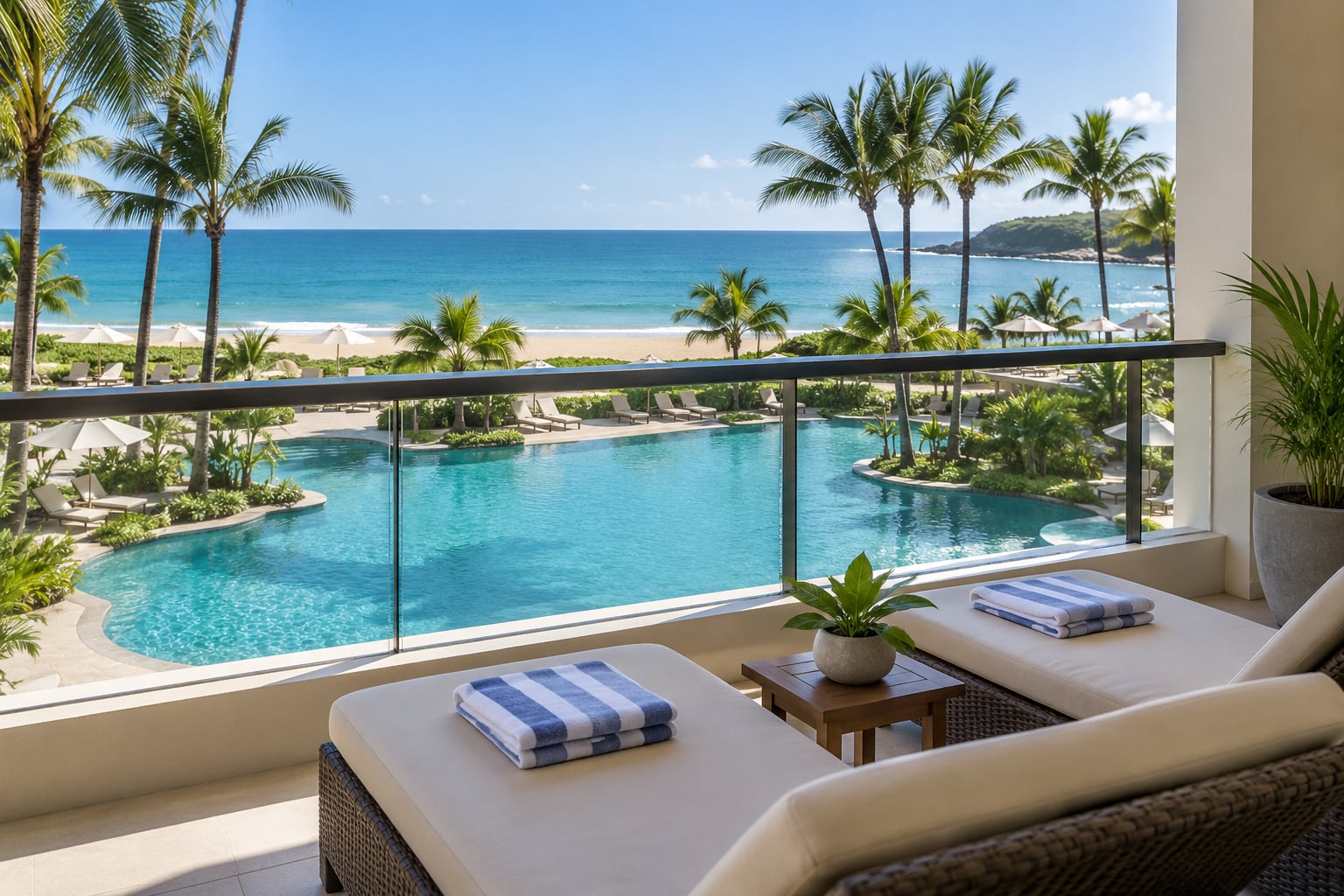
Towels appear folded on loungers early, but towels on loungers are not reservations. By half past ten the good front-row chairs with shade are taken, often with a bag left behind to hold the spot. Pool staff will move a towel and a drink onto a free chair for you, and guests generally accept that. Cabana rentals and premium lounger zones, where offered, are paid.
Midday to 4pm: the structured part
This is the window for scheduled programming: aqua aerobics, beach volleyball, cooking classes, spin, board games, and a kids club timetable that runs in age bands. Non-motorised water sports usually happen here too. Expect staff to invite you along once or twice; saying yes twice is enough to become that person.
On drinks: unlimited does not mean unlimited in practice. Pours are small, the house liquor is lighter than the bottle at home, and drinks arrive at the pace of a busy bar rather than on demand. Most people who want to get properly tipsy order premium spirits by the glass, which is why they cost extra. That is the honest answer to why free drinks rarely make anyone drunk.
4pm to 8pm: the lull and the dinner question
Afternoons go quiet. Swim, read, do nothing on purpose, then shower. Dinner usually opens in two windows, an early seating around 6pm and a late one near 9pm. Eat early for fresher food and fewer people, or eat late for a quieter room. Either way, going at the peak hour means a ten-minute queue holding a full tray.
9pm onwards: the show and the quiet
Evening entertainment is usually a short production in a lobby bar or theatre, sometimes live music, sometimes a quiz night. It rarely runs past 11pm. After that the property is dark and quiet, which is a blessing for early sleepers and dull for night owls.
How Much Relaxation Can You Expect?
Relaxation is available, but it is partly a scheduling job. The genuinely restful hours are mid-morning before crowds, the early evening, and the stretch after dinner when the pools empty out.
Season matters more than most brochures admit. December through April is busiest in the Caribbean and Mexico, weekends are heavier than midweek, and school holiday periods in July and August fill family properties. Shoulder season gives you the same resort at a calmer volume, though some restaurants and activities run a reduced schedule or close entirely.
Noise is controllable in one big way: room placement. Rooms above a lobby, near a stage, or facing the main pool bar carry the programme into your sleep. Ask for a quiet block away from the lift core and entertainment areas, and say why. Guests who do this report sleeping far better than the reviews suggest.
What Are the Biggest Drawbacks?
Repetitive food is the first thing people name. A buffet that photographs beautifully on day one becomes the same rotation of dishes by day four. Variety exists, but choice fatigue is real, and top-end dining options outside the package help more than any resort can.
Weather exposure is the second. A mediocre week can flatten a trip you cannot control. Nothing is included for rain, and indoor programming is rarely deep enough to rescue a washout unless you planned an excursion.
Room mismatch happens often enough to plan around. Guests book a specific category, a view or a swim-up, and arrive to find a different wing. The category is a request more often than it is a guarantee, so treat anything premium as something to reconfirm a week out.
Impersonal service at scale is a real effect. Large properties run on throughput. Bartenders reset the blender, not your conversation, and no one learns your name in the second week. This is a structural feature, not a bad attitude, and it is the reason smaller adults-only properties feel different.
The resort bubble is the deepest drawback for some travellers. You are paying for the easiest possible holiday and, in exchange, you rarely eat anything local, see no town, and meet no residents. The resorts in Cancún, Punta Cana, Cabo, Jamaica, Aruba and the Dominican Republic can all be reached in a taxi, and a half-day tour will show you more of the country than a week behind the property line. Forum threads describe exactly this: the excursion becomes the trip people remember.
Who Is an All Inclusive Resort Best For?
The format suits anyone who wants a low-effort holiday with a predictable total cost: families with young children, couples and honeymooners, large multigenerational groups, and anyone recovering from a long-haul flight who wants to be horizontal within an hour of landing.
| Adults-only resort | Family resort |
|---|---|
| Dinner is a scheduled event, often dress code | Dinner windows flex around bedtime and nap routines |
| Evening programme runs late and is adult-oriented | Entertainment peaks in the early evening for children |
| Spa and quiet pools dominate the daytime | Kids clubs and splash areas set the pace |
| Quieter overall, less movement at meal times | Busier and louder, especially at peak hours |
It suits people far less if they plan to travel independently, hate buffets, want a local food scene, or intend to leave the grounds most days, because you end up paying for services you skip. A small hotel in town, a villa, or a bed-and-breakfast in a walkable area often serves those trips better and cheaper. Guests who hate buffets should consider half board with breakfast and dinner in a local restaurant, which keeps some predictability without the format.
Solo travellers report mixed experiences. Safety is rarely the issue, and organised activities make it easy to meet people, but many properties are designed for couples and families, so evenings can be quiet.
How Do You Choose the Right Resort?
Work through nine checks before you book.
- The inclusions list, in writing. Pull the property’s own what’s included page, not the OTA summary.
- Total trip cost. Add airfare, transfers, extra nights, resort fee and two or three excursions to each candidate.
- Beach and pool reality. Walk the beach in Google Street View and check satellite images for construction next door.
- Room size and category. Square metres matter more than star rating; check the difference between a standard and a deluxe block.
- Dining options against your taste. How many included a la carte restaurants, and do you need reservations?
- Kids club details. Age bands, hours, whether it is supervised, and whether it costs extra.
- Evening programming and noise. Ask which blocks sit above the stage.
- Accessibility. Step-free paths, accessible rooms, and pool lifts, confirmed in writing.
- Cancellation terms and the seasonal calendar. Some properties close for part of the year or stop selling certain room categories.
First-timer mistakes to avoid
Most complaints trace back to six errors.
- Booking the wrong room category. Upgrade later is not always possible at the rates you locked in.
- Not reading what is excluded. Premium drink, a la carte caps and the resort fee are on page three, not page one.
- Leaving dinner reservations until the night before. Specialty restaurants fill up early in high season.
- Trusting resort photography. Review recent guest photos of food, rooms and queues, ideally within the last few months.
- Scheduling nothing. Book two or three excursions before arrival so you have reasons to leave.
- Skipping the first 24 hours. Take the room tour, ask about quiet areas, and note the least crowded meal time.
When reading reviews, weight recent ones heavily and look for repeat complaint themes: cold food at dinner, slow service at the a la carte restaurants, and rooms facing noise predict a mediocre week far better than an average star score.
What Questions Should You Ask Before Booking?
Ask these in writing, by email or in the booking notes, and keep the reply. Confirmation by email is what protects you later.
- Exactly which restaurants are included, and how many visits per stay?
- Which alcohol brands are covered, and which are charged?
- Is a resort or destination fee added per night, and does it appear in the total?
- Is there a minimum stay of four, five or seven nights?
- Does the kids club run year-round, at what ages, and at what cost?
- Is the transfer included, and how long is the drive from the airport?
- What are the cancellation and amendment terms?
- Does the property close seasonally or partially?
- Is step-free access available, and which room categories work for a wheelchair?
- Are gratuities included in the rate or expected separately?
Two answers you should push on: if a resort cannot tell you which restaurants are included, it is because the answer changes by date and demand. And if the total price is quoted without a fee breakdown, ask again.
Frequently Asked Questions
Does all inclusive mean everything at the resort is free?
No. It means your room, the main buffet, some drinks, and most on-site activities are in one nightly rate. Premium spirits, extra a la carte restaurants, spa treatments, excursions, room service and any resort fee are charged separately. Always read the property’s own inclusions list, because two resorts using the same label can package very different things.
Are alcoholic drinks included at all-inclusive resorts?
Usually, but with limits. House spirits, local beer, cocktails, water and soft drinks are commonly covered, while imported spirits, aged rum, single malt whisky, champagne and premium wine by the glass often cost extra. Some properties restrict those to one bar or set hours. Ask which brands are included before booking rather than assuming unlimited premium alcohol.
Are kids clubs included in an all-inclusive resort stay?
Most large properties include at least one supervised club split into age bands, commonly roughly 3 to 5, 6 to 11 and teens. Some charge a fee per session, cap attendance, or close during siesta hours. Adults-only properties have none at all. Confirm ages, hours, supervision ratio and cost in writing, since this facility drives most family decisions.
Do you still tip at an all-inclusive resort?
It depends entirely on the property. Some Caribbean and Mexican resorts include a service charge and ask guests not to tip; others say gratuities are not included. A workable default is a few pesos for housekeeping each morning, around two dollars per bar drink, and more for a la carte servers who do something for you. Small cash amounts are never refused.
Can you eat and drink wherever you want on an all-inclusive resort?
Not quite. The buffet is unlimited, but most a la carte restaurants require a reservation and often limit how many times per stay you can visit. Specialty dining may carry a supplement, and food served during pool hours is usually lighter than the buffet. Alcohol coverage can also vary by restaurant, so check which venues count as included before assuming free dining everywhere.
What should I check before booking an all-inclusive resort?
Check the property’s own inclusions list, the total price with any resort fee, the minimum stay length, dining reservation rules, kids club hours and cost, cancellation terms, and whether the property closes seasonally. Read recent guest reviews for repeated complaints about food and noise rather than relying on the star rating. Keep every confirmation email.
The Bottom Line
An all-inclusive resort is really a prepaid holiday with a fixed rhythm: predictable cost, minimal planning, and less spontaneity than the brochure implies. Read the resort’s own definition of what the rate covers, compare the total trip cost against the headline nightly figure, and choose a property whose crowd level and structured days you will enjoy. If you would rather eat where the food is actually good, skip it.