
Points and miles are a second travel currency that airlines, hotels and credit card banks hand you for flying, staying, shopping, dining or paying with a linked card. You collect them in a free loyalty account, then trade the balance for flights, rooms or upgrades instead of paying the full cash fare. You do not need to fly often to benefit.
Plenty of people get stuck on the same three questions: what exactly a mile is, how the balance turns into a real ticket, and whether any of it is worth the effort. Get those straight and the rest is just habit and arithmetic.
The honest answer is that points are useful when they match travel you already had planned, and mostly useless when they sit in the wrong program for years. Most of the confusion beginners run into comes from three sources: jargon, the belief that a point is a fixed amount of money, and the idea that you must be a heavy flyer to play.
Table of Contents
- 1How Points and Miles Work for Beginners
- 2What Are Travel Points and Miles?
- 3How Points and Miles Work for Beginners, Step by Step
- 4Travel rewards jargon in plain English
- 5What Can Earn You Points and Miles?
- 6How Do Airline and Hotel Loyalty Programs Differ?
- 7Airline alliances in one line each
- 8What Are Travel Points and Miles Worth?
- 9How Can You Use Points and Miles?
- 10Do Points and Miles Expire?
- 11How Can Beginners Maximize Their Rewards?
- 12Common Points and Miles Mistakes to Avoid
- 13Frequently Asked Questions
- 14Are airline miles and hotel points taxable?
- 15Do I need a travel credit card to earn points and miles?
- 16Are points and miles the same thing?
- 17How do I find flights available for points redemption?
- 18Should beginners focus on airline programs or hotel programs?
- 19Conclusion: What to Do First
How Points and Miles Work for Beginners
The whole system runs on one loop: join a program, earn its currency through eligible activity, and spend that currency on a reward. Everything else is detail.
Miles are the airline version of that currency, named that way because they once tracked distance flown. Points are the hotel and credit card version, because nobody calculates them per mile. In practice both behave the same way: you collect them, and the airline or hotel decides what they buy.
Three program families usually meet first. Airline frequent flyer programs such as AAdvantage, SkyMiles, MileagePlus, Rapid Rewards and Aeroplan pay for flights, seats and upgrades. Hotel programs such as Marriott Bonvoy, Hilton Honors, World of Hyatt, IHG One Rewards and Wyndham Rewards pay for nights and stays. Bank-issued programs such as American Express Membership Rewards, Chase Ultimate Rewards, Citi ThankYou Points and Capital One Miles pay for anything their airline and hotel partners accept, because you can move the balance to a partner.
You earn on day one and redeem whenever you choose. There is no minimum balance to keep and no requirement to book anything particular, which is why the entry cost is basically zero.
What Are Travel Points and Miles?
Travel points and miles are loyalty currency earned inside a program and redeemable for travel-related rewards inside that same program.
Three terms cause most of the early confusion. Award travel means you paid with points or miles for the trip itself. Paying with points on a cash ticket means you bought a normal ticket and knocked a chunk off the price, a different product with different value. Elite status is a tier you reach with enough flights, nights or spend; it changes how you are treated on future trips and is not needed by beginners.
How Points and Miles Work for Beginners, Step by Step
- Join one program. Every major airline and hotel chain has a free tier that takes about two minutes to open. Use your real name and email so a later award booking matches your ID.
- Earn through ordinary activity. Book flights or stays directly, or pay with a linked card so everyday spending also counts.
- Check the balance and its rules. Open the account’s rewards page and find the expiration date before you need it, not after.
- Search for award space. Search the airline or hotel’s own site with points set as the payment method. Partner websites often show fewer options.
- Compare before you book. Look up the same itinerary in cash. If the flight costs 180 dollars, your points are being used badly.
- Redeem and pay the fees. Award bookings still carry taxes and carrier charges, usually tens to low hundreds of dollars depending on the route.
Travel rewards jargon in plain English
- Award chart
- The table an airline uses to price a flight in miles. Each route and cabin has a number.
- Fare class
- The booking code attached to a seat, such as Y or K. Points programs charge more for the same seat in a pricier code.
- Close-in booking fee
- A small surcharge some carriers add if you book an award less than a day before departure.
- Stopover
- A free extra stop on a long itinerary, offered by some programs and sometimes at a points cost.
- Transfer partner
- An airline or hotel that accepts a bank program’s points in exchange.
- Transfer ratio
- How many points equal one partner unit. One point to one, or a slightly worse rate.
- Welcome offer
- A sign-up bonus, usually in points after you meet a spending requirement in a set window.
- Elite status
- A top tier earned from flights, nights or spend, with perks such as priority boarding or late checkout.
- Cents per point
- The cash value of one point, worked out by dividing the cash price of a trip by the points you spent.
- Devaluation
- When a program cuts how much each point buys, or raises the miles needed on a route.
- Double dipping
- Claiming points from a hotel booking and from a credit card charge on the same stay.
What Can Earn You Points and Miles?
Most earning happens without extra spending, and the order of usefulness for a beginner runs from easiest to most demanding.
- Pay with a co-branded card. A card tied to one airline or hotel group multiplies points on the purchases you already make. It is the simplest way to build a balance in a single program.
- Pay with a bank card and move the points later. Bank programs earn on most spending and then transfer to a chosen partner, which is more flexible if you are still deciding where you will travel.
- Book flights and stays directly. Direct bookings usually qualify for points and elite progress; third-party bookings often pay nothing.
- Use shopping portals. Airline and hotel portals pay points or miles on purchases you would make anyway. Forum regulars describe this as the easiest starting habit.
- Join dining and car programmes. Airline-linked dining rewards and rental car partnerships turn ordinary meals and pickups into small balances.
- Fly and stay. Real travel still earns the most per trip, and award bookings usually still credit the miles, though the amount depends on fare class and carrier.
One rule matters more than any of these: never spend more to earn points. A bonus earned by running up a balance costs more than it returns.
How Do Airline and Hotel Loyalty Programs Differ?
Airline programs suit people whose trips involve flights; hotel programs suit people whose trips involve rooms. For a beginner who travels rarely, hotel points are usually the easier entry point.
| What to compare | Airline miles | Hotel points | Bank card points |
|---|---|---|---|
| Typical earning | Flights, cards, portals, partners | Stays, cards, portals, brands | Any card purchase, then a transfer |
| Typical redemption | Flights, seats, upgrades, bags | Nights, rooms, suites, packages | Whatever a transfer partner sells |
| Can you move it? | Usually no | Usually no | Yes, to airline and hotel partners |
| Main friction | Award seats are scarce | Night awards price by tier | Transfers cannot be undone |
| Easiest for | Regular flyers on one airline | Road trips and short breaks | People still choosing a program |
Membership is free either way, so the cost of being wrong is only wasted attention. People who travel for family visits often report that the airline serving their home airport mattered more to them than any bonus offer.
Airline alliances in one line each
- Star Alliance includes Lufthansa and United, so miles earned on one can often be spent on another.
- SkyTeam includes Delta and Air France, and works the same way.
- Oneworld includes American and British Airways.
Alliance membership is free and follows you into a partner program, but a beginner still benefits more from concentrating on one airline than from spreading thin.
What Are Travel Points and Miles Worth?
A point is not money. Its value depends on what you redeem it for, and the only reliable measure is the cash price of the same trip divided by the points you spent. That figure is your cents per point.
For most mainstream programs a sensible rough range is one to two cents per point. Flexible redemptions sit at the higher end, discounted certificates and last-minute stays at the lower end. Here is how the same balances tend to translate in travel value, using clearly illustrative travel costs rather than any quoted fare.
| Balance | Low value use | Good value use | What it can cover |
|---|---|---|---|
| 10,000 miles | about 100 dollars | about 200 dollars | A domestic one-way or an upgrade |
| 20,000 miles | about 200 dollars | about 400 dollars | A short-haul return or a hotel weekend |
| 40,000 miles | about 400 dollars | about 800 dollars | A longer domestic return |
| 50,000 miles | about 500 dollars | about 1000 dollars | A transatlantic economy return |
| 100,000 miles | about 1000 dollars | about 2000 dollars | A premium cabin return |
So, how many points do you need for a 500 dollar flight? Roughly 25,000 to 50,000 miles if you are getting good value, plus taxes and fees. A quick check: multiply your planned points by 0.01 and again by 0.02. If the trip costs less than the low number in cash, keep the points.
Value drops when you use points for things they are poor at, like a statement credit or an upgrade on a route you were going to pay cash for anyway. It rises when you fly a route that is expensive in cash or thin in award seats.
How Can You Use Points and Miles?
Redemption is where the balance either pays off or leaks away, and each use lives in a different type of account.
| What you can get | Where it usually lives |
|---|---|
| Free flights and award tickets | Airline programs and bank points after a transfer |
| Seat selection and cabin upgrades | Airline programs, sometimes with points |
| Checked bag allowances | Airline status and co-branded cards |
| Free hotel nights and night awards | Hotel programs such as Bonvoy and Honors |
| Vacation packages and car rental | Hotel programs and bank points |
| Statement credit or cash back | Bank programs, as a safety valve |
Transfers are the most useful and least reversible move in the system. Points leave your bank account and land in an airline or hotel account, and putting them back is rarely possible. Before you transfer, know which program you are entering and roughly what a redemption there costs you in cents per point.
Do Points and Miles Expire?
Many programs attach an expiration date, a pay-to-keep scheme, or both, and the specific terms are set by each airline, hotel and bank rather than by any industry rule.
Airlines commonly use a scheme where a fee keeps a small balance alive, or where one earning activity resets a large balance’s clock. Hotel programs frequently run the same way with night activity or a modest balance. Cards with a statement credit benefit can end accounts after a year of no use. Some partner currencies expire sooner than the account that holds them.
Read your own account’s terms rather than trusting a general rule, and put a calendar reminder on the date printed in your rewards account. Rules also change with little notice, so a habit of checking twice a year is worth more than any single rule.
How Can Beginners Maximize Their Rewards?
A 90-day plan beats any clever strategy, because beginners lose points to neglect rather than to bad maths.
- Days 1 to 30: pick one program. Choose the airline that serves your nearest airport or the hotel group where you already sleep, join the free tier, and add your number to every booking.
- Days 31 to 60: collect without changing behaviour. Route your everyday spending through a linked card, run one purchase through the airline or hotel shopping portal, and check the balance at the end of the month.
- Days 61 to 90: practise one redemption. Search your own next trip in points and again in cash, note the difference, and decide whether to book or to save.
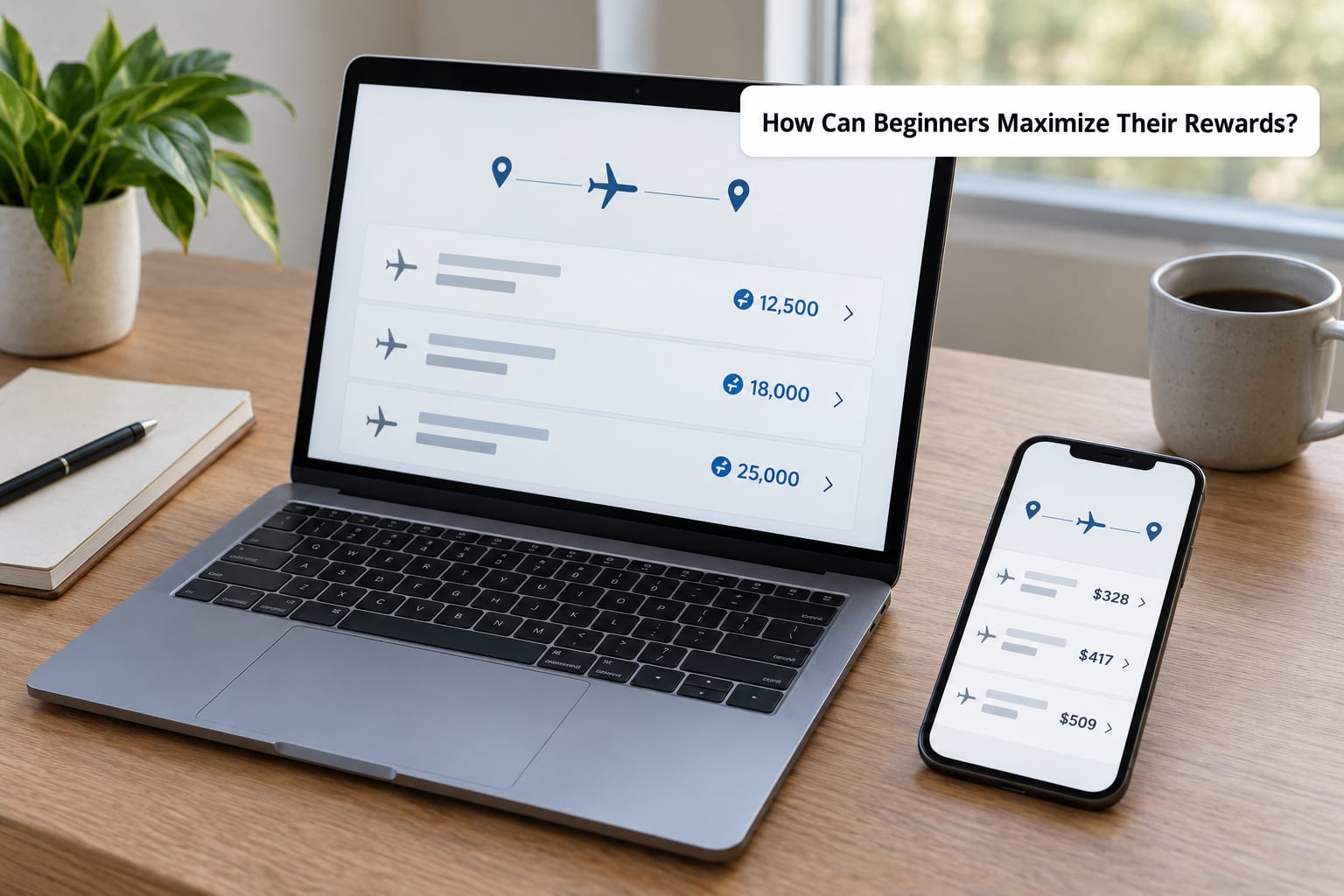
Three habits carry most of the value. Pay your card balance in full every month, so interest never eats the reward. Search before you transfer, so you know what a redemption costs before you commit. And redeem when the value is clear rather than chasing the theoretically perfect ticket that may never appear.
Credit card applications deserve their own caution. Applying affects your credit, and a card with an annual fee is a poor fit if you do not already travel. The card is a tool for spending you already do, not a way to create spending.
Elite status can wait. It mainly matters when you fly or stay enough to value priority boarding, free bags or late checkout, and chasing it early usually means paying for trips you would not otherwise take.
Common Points and Miles Mistakes to Avoid
Most wasted points come from a handful of repeated errors, and every one of them is avoidable.
- Treating a point like money. A balance has no fixed dollar amount, so redeeming at two cents when a cash sale sits at one cent is a silent loss.
- Ignoring the expiration date. A fee or a lapse wipes out a balance you had mentally filed as a future trip.
- Booking on points with no backup. Award seats thin out on popular dates. Search a range of dates, and keep a cash option in reserve.
- Chasing elite status early. Status perks rarely pay for extra flights you did not already plan.
- Transferring into a weaker program. One partner may price the same route at twice the points. Transfers cannot be reversed, so check the receiving program’s chart first.
- Spending to hit a bonus. A welcome bonus never pays for interest, late fees or a purchase you did not already plan.
- Spreading balances across a dozen accounts. A single usable balance beats many small ones you will never reach a redemption threshold with.
One more worth naming: points are simply the wrong tool for some trips. When a flight is cheap in cash, pay cash and hold the balance for a better redemption.
Frequently Asked Questions
Are airline miles and hotel points taxable?
Generally no. Loyalty rewards from airlines, hotels and card issuers are treated as rebates on spending you already did, so they are usually not taxable as income. A few oddities exist, such as rewards earned while running a business or certain employer programmes. If your situation is unusual, check with a tax professional in your country.
Do I need a travel credit card to earn points and miles?
No. Free airline and hotel loyalty tiers let you earn on flights, stays, shopping portals and partner activity with no card at all. A co-branded or bank card simply speeds things up. If you apply for one, pay the balance in full each month and never spend extra to earn rewards.
Are points and miles the same thing?
Functionally yes. Miles are the airline term, inherited from distance flown, and points are the hotel and bank term. Both are loyalty currency with no fixed cash value. The distinction matters only when you compare programs: airlines price flights in miles, hotels price nights in points, and a bank currency can move to either.
How do I find flights available for points redemption?
Search on the airline’s own website with miles or points selected as payment, then widen the date range by a few days to catch cheaper award pricing. Hotels are simpler: set your points filter on the brand’s site. Partner booking sites frequently show fewer award options than the airline itself.
Should beginners focus on airline programs or hotel programs?
Pick whichever matches your real travel. Frequent flyers gain more from an airline program, while people taking short breaks, road trips or city weekends usually find hotel points easier to redeem and less fragile to schedule changes. If you rarely travel, hotel points are a friendlier first balance, and joining both free tiers costs nothing.
Conclusion: What to Do First
Pick one program today: the airline that flies from your nearest airport, or the hotel group where you already stay. Join the free tier, add your membership number to your next booking, and check the expiration date on your rewards page before you leave. How points and miles work only becomes intuitive once one balance is yours and you can watch it move.