Duty free shopping works because the shops sit in an international zone where local sales tax, VAT and import duty are not collected. You buy after security, show an international boarding pass at the till, the retailer seals the goods in a tamper-evident bag with a duty-free receipt, and you declare anything over your customs allowance when you land. The tax you avoid is real, but so is the airport’s markup, so some shelves are a bargain and others are a trap.
I have watched enough travellers get caught out at the till and at the connecting-flight security queue to write this the way I would explain it to a friend. The mechanics take about two minutes to learn. Getting them wrong costs you a bottle of spirits or a confiscated fragrance at the gate.
Table of Contents
- 1What Is Duty Free Shopping?
- 2Why a duty-free price is not automatically a bargain
- 3How Duty Free Shopping Works at the Airport
- 4Can Everyone Buy Duty Free?
- 5How Duty Free Prices Are Calculated
- 6What You Can Buy Duty Free
- 7Do You Need to Declare Duty Free Purchases?
- 8Can You Bring Duty Free Goods on the Plane?
- 9What Happens at Your Destination?
- 10If your plans go wrong
- 11How to Shop Smart at Duty Free
- 12Frequently Asked Questions
- 13Is duty free actually cheaper than buying at home?
- 14Do you need a boarding pass to buy duty free?
- 15Can I bring duty-free liquids on a connecting flight?
- 16How many bottles of alcohol can I buy at duty-free?
- 17Can I buy duty free on a domestic flight?
- 18What happens if I lose the duty-free receipt?
- 19Conclusion
What Is Duty Free Shopping?
Duty free is a tax status, not a type of shop. The store is a normal retailer with a concession contract; what changes is that the goods leave the country with you, so the destination country’s import duty and the departure country’s sales tax or VAT are never charged.
Three words get mixed up constantly. Duty free means the tax was never applied, because you bought it in a zone outside customs territory. Tax free, and the VAT refund or tax-free shopping scheme you find in city stores, means you paid the full price and reclaim part of it later, usually by showing the goods and a stamped receipt at a refund booth before you fly home. Duty paid, shown on many receipts, means tax was included and cannot be reclaimed.
Why a duty-free price is not automatically a bargain
Removing tax is only half the equation. The airport leases floor space to the retailer and the airline, and the operator pays a percentage of its sales back to them. That concession fee gets added to the shelf price before you ever see the tag. On a bottle of spirits, the removed excise duty usually outweighs it. On a pair of sunglasses, it usually does not.
Ordinary airport retail is a different thing entirely. The newsstand, the sandwich bar and the bookshop in the departures hall pay every tax a local shop pays, so a water bottle there costs what it costs everywhere else. If a product is not marked tax free or duty free, assume the tax is still in the price.
How Duty Free Shopping Works at the Airport
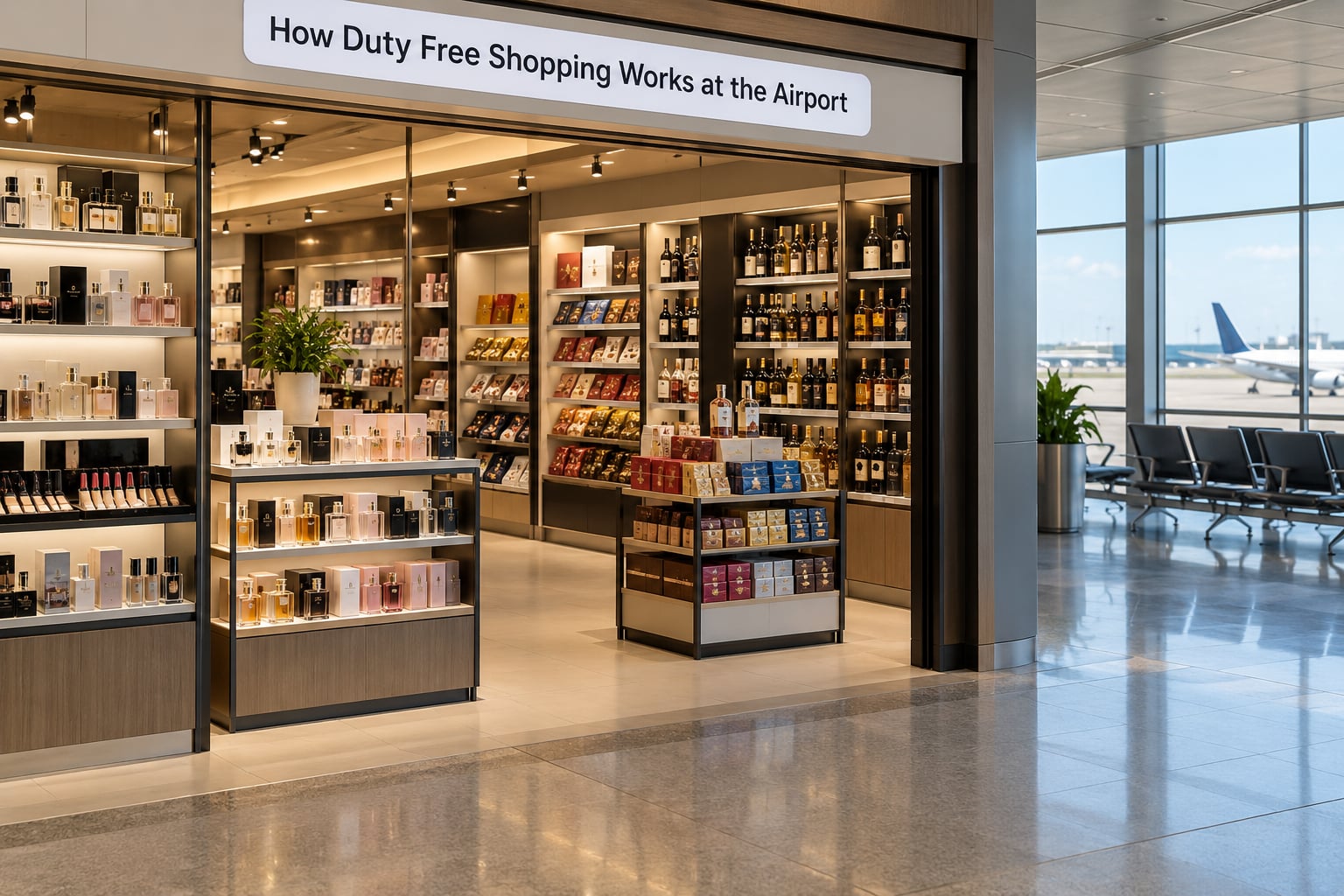
The mechanics are the same in almost every terminal, and knowing them in advance saves you from queueing at a till that will only refuse you. Here is the whole sequence.
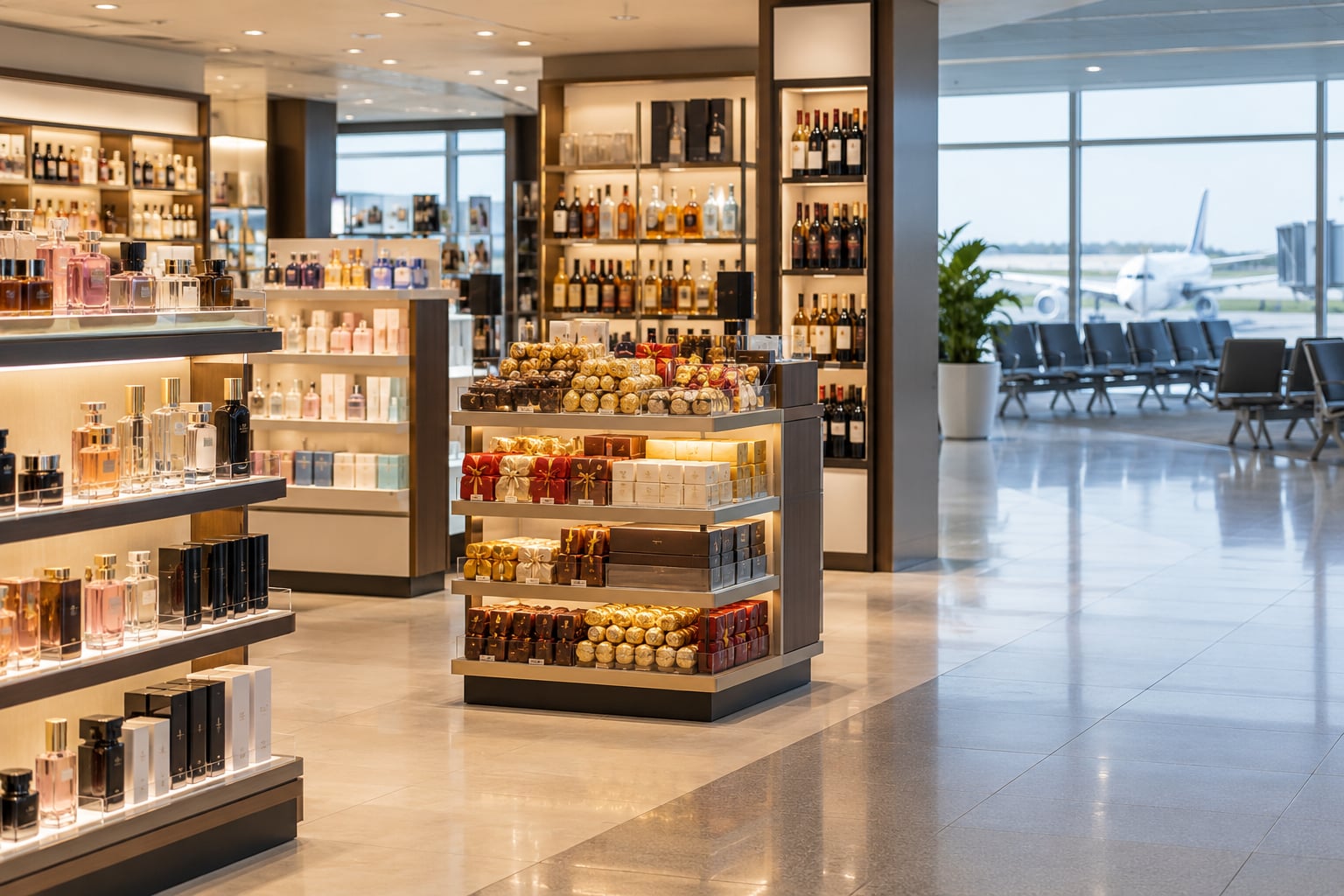
- Find the airside shop. Duty-free stores sit past security and, at most international airports, past passport control. Once you are in that stretch of terminal, no duty-free store exists on the other side of the checkpoint.
- Check the price before you commit. Not every shop in the zone is a concession. Branded boutiques often sit beside the tax-free ones and charge full local prices.
- Show your international boarding pass at the till. This is the step that surprises people. The cashier needs proof that you are leaving the country, because a resident collecting goods on someone else’s behalf is the fraud the rule prevents. A boarding pass to a domestic city will usually be refused.
- Ask for the tamper-evident bag. Duty-free purchases go into a sealed bag with a printed label, and the receipt inside or attached to it is your duty-free receipt. If you decline the bag, the tax exemption usually does not apply.
- Keep the receipt with the goods. It is your proof of what you paid, what it was worth and that it was bought tax free. Customs officers ask for it when a value looks high.
- Declare at your destination. Anything over your personal allowance has to be declared, and the sealed bag tells the officer exactly what you are carrying.
Can Everyone Buy Duty Free?
Eligibility follows the border, not the shop. The transaction only makes sense if you are leaving customs territory, which is why a domestic departure usually has no duty-free store to enter and a flight to another country almost always has one. The exceptions are worth knowing.
| Situation | Can you buy duty free? | Why |
|---|---|---|
| International flight from a large airport | Yes, after security and passport control | You are leaving the country, so the destination import duty is not collected |
| Domestic flight | Usually no | No border is crossed, so the tax status never changes |
| Transit at an international hub | Often a reduced selection | Some airports allow purchases only airside, others restrict them to passengers with onward international segments |
| Arrivals hall after landing | Yes, at a few airports | You are in the country as an arriving visitor and buy before customs clears you |
| Cruise ship shop | Yes, on port days and onboard | Works like an airport zone while the ship is outside the country; rules vary by line |
| Land border shop | Yes, before you cross | The purchase happens on the departure side of the border |
| Downtown duty-free store | Yes, with an export order | Goods are sealed and shipped to you so they are never in the country untaxed |
Even when a shop exists, the operator can set its own rules about who it serves. Staff at a transfer airport may check that your onward boarding pass leaves the country too, and some shops stop selling duty-free close to boarding time so they do not seal a bag for a missed flight.
How Duty Free Prices Are Calculated
The shelf price is the base price, minus the tax that would have applied, plus the airport’s concession cut, plus whatever the brand charges for airport distribution, converted at the store’s own exchange rate. Only the first term is a saving for you.
That gives you a working method to check any item in about fifteen seconds. Take the price you would pay at home, strip out the sales tax or VAT, and compare the result with the shelf price.
- A 20 percent sales tax or VAT: divide the home price by 1.20. A 20 percent saving is the most the tax removal can ever give you.
- Alcohol and tobacco: excise duty is charged on the volume or weight, not the shelf value, so the removal is much bigger than a percentage of the price. This is why spirits and cigarettes are the reliable bargains.
- Currency: the store converts at its own rate and the rate moves. A stronger home currency on the day can erase the saving on a big-ticket item.
- Promotions: airport stores run their own multi-buy offers and loyalty schemes. They are not always cheaper than a duty-free price elsewhere, but they occasionally are.
If the shelf price comes out above your tax-stripped home price, the airport is charging you a premium for the convenience of buying it at the gate. That happens more often than the advertising suggests.
What You Can Buy Duty Free
Availability changes by terminal, by operator and by season, so treat this as a guide to the categories that carry a genuine saving rather than a list you will definitely find. The pattern is consistent enough to plan around.
| Category | Typical saving | Why | Caveat |
|---|---|---|---|
| Alcohol, especially spirits | Large | Excise duty is charged per litre of pure alcohol and is removed | Liquor limits at your destination still apply |
| Tobacco and cigars | Large | Weight-based excise duty is a big share of the price | Many countries restrict or ban imports; Australia is strict |
| Perfume | Moderate to large | VAT removed, and brands price airport lines lower than counter lines | Concentrates over a certain size are limited |
| Cosmetics and skincare | Moderate | Tax removed on a product that is expensive per gram | Gift sets are often marked up to look generous |
| Watches and jewellery | Moderate to large | VAT or sales tax is a big share of a luxury price | Certificate and warranty paperwork can be awkward at home |
| Designer fashion and sunglasses | Small or none | Tax removal is offset by the concession fee and airport distribution | Frequently more expensive than a city boutique |
| Electronics and phones | None, often negative | Retailer margin in airports is high and models are often grey imports | Check the warranty and the plug before buying |
| Chocolate and confectionery | Small | Only the VAT comes off, not the premium on imports | Often dearer than a supermarket at home |
| Souvenirs and local goods | None | Made in the country and sold domestically, so no tax was removed | Airlines also commission high-margin gift shops |
The single exception that catches people is spirits bought for the flight itself. Carrying your own alcohol through a connecting airport is where duty-free shopping most often turns into an argument at a security queue.
Do You Need to Declare Duty Free Purchases?
Not because they are duty free, but because the tax exemption is conditional. The purchase was untaxed on the understanding that it stays with you and stays under your personal allowance until you get home. Break either condition and the tax is owed on arrival.
Declare when you are over the allowance, when customs asks you to, or when you are unsure and the goods are valuable. In most countries the channel system is simple: the green channel means you have nothing to declare, the red channel means you do. Walking through the green channel with undeclared goods turns a small oversight into a much larger problem.
Your duty-free receipt is the document that connects the two ends. It shows the purchase was made tax free and gives the officer a value to work from, rather than their own estimate. Forum travellers report the opposite problem repeatedly: no receipt, an officer’s guess at value, and a bill far higher than the goods actually cost.
Goods bought in a sealed bag are not exempt forever. The seal proves the bag has not been opened since the sale. It does not exempt the contents from your allowance, and it does not survive you spending two of the four bottles at the gate.
Can You Bring Duty Free Goods on the Plane?
Yes in cabin baggage, and this is the rule that matters: if the purchase is sealed in the tamper-evident duty-free bag with the receipt inside, it is exempt from the 100ml liquid limit at security. That exemption covers liquids over 100ml, alcohol above the normal 24 percent limit, and toiletries such as full-size cologne.
It covers a lot of ground, and it depends on the bag staying sealed. That is also the whole problem on a connecting flight.
- Keep the bag intact. If security opens it to inspect, the bag is no longer a duty-free bag and the contents face the standard liquid rules.
- Expect variation at transfers. Most major hubs honour the sealed bag without a second check. Travellers on forums report the opposite: a sealed bottle removed and refused at a second checkpoint, and one widely reported case of a duty-free bag opened at security with the traveller told to leave the item behind.
- Check the route in advance. Non-Schengen to non-Schengen connections inside the EU are usually the easiest. Extra screening at a US domestic connection is the most common place a bag gets opened.
- Know where you are going. At an arrival duty-free shop, airlines and airports in some countries post signs restricting duty-free alcohol for passengers on onward flights, sometimes while still allowing cigarettes.
Putting the bag in checked baggage defeats the purpose twice over. You lose the cabin exemption, and you will not be there to show the receipt when the bag is opened for inspection.
What Happens at Your Destination?
On arrival you pass through passport control, then customs. Duty-free goods are in your cabin baggage, sealed, with the receipt inside. Most officers glance at the bag and move on. If your purchases exceed your personal allowance, or the officer wants to value something, you pay duty on the excess at that point.
The calculation is simple enough to check in your head. Take the total value of everything you are declaring, subtract your personal exemption, and multiply the remainder by the rate that applies to those goods.
| Step | What to do |
|---|---|
| Value | Add up the duty-free goods above your allowance, using the receipt values rather than your own estimates |
| Subtract the allowance | Apply the exemption for your destination and for the specific goods, which is often a lower figure for alcohol than the general one |
| Apply the rate | Each category has its own rate, from zero for many items to a high band for spirits and tobacco |
| Pay and keep the record | Settle any duty, and do not discard the receipts until you are past the next trip |
Allowances vary widely and are set per adult, per category, by age and by length of stay. Figures move, so check your destination’s customs page rather than trusting a number from a forum post.
If your plans go wrong
A cancelled flight after a big purchase is the messiest situation, and advice on the legal forums is blunt: you can usually seek a refund at the airline’s expense or pay the duty to bring the goods in, but there is no third option. Keep the receipt and the bag, and talk to the airline before you leave the terminal.
If the receipt is lost, the sealed bag still carries the store’s label, which usually repeats the value and contents. If both are gone, officers estimate, and their estimate is not generous. A photo of the receipt on your phone before you close the bag is the cheapest insurance in this whole guide.
How to Shop Smart at Duty Free
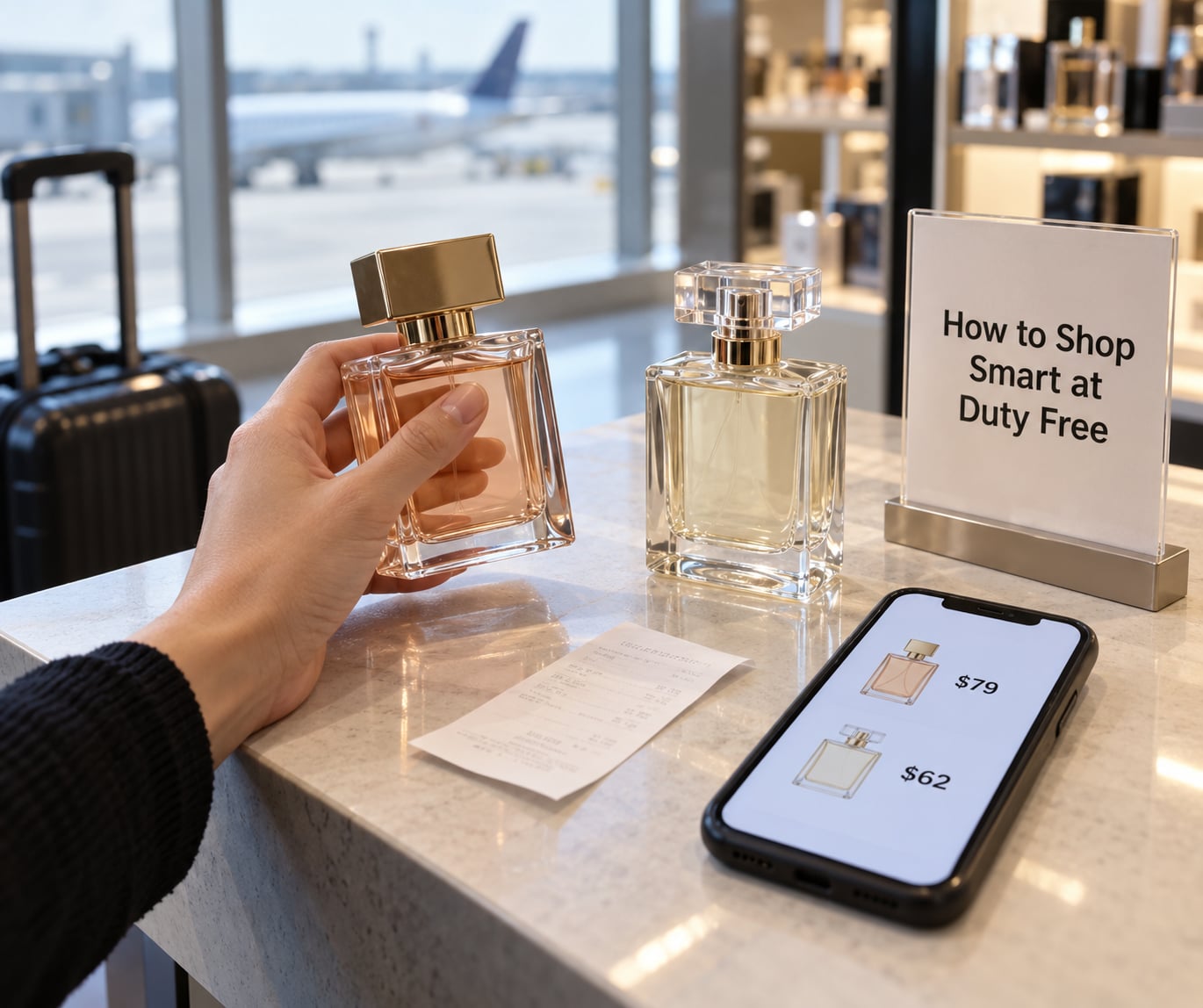
Shop early, shop once, and shop with a number in your head rather than a hope that duty free is automatically cheaper.
- Price-check before you queue. Find the home price on your phone, divide it by 1 plus the local tax rate, and compare. If the airport is above that figure, you are paying a premium.
- Know the allowance before the shop. Deciding at the till how many bottles you can carry is how people end up leaving a full bottle in a hotel bin.
- Buy early in the terminal. Duty-free desks often reduce hours or stop sealing bags near departure, and shops that are open late are the ones with the least choice left.
- Check the sealed bag before you walk away. Make sure the bag is sealed, the label matches your purchase and the receipt is inside.
- Photograph the receipt. It solves the lost-receipt problem and speeds up any declaration on arrival.
- Skip the electronics, the confectionery and the branded fashion unless you have checked the price. These are where the concession fee does the most damage.
- Consider online duty free. Several operators sell the same goods online with delivery or airport collection, and the price is often lower than the terminal shelf. The trade-off is that collection usually still needs a boarding pass.
- Read the refund terms before you buy. A duty-paid receipt allows a tax refund only if the goods stay sealed and leave the country with you, which is exactly the situation a cancelled flight breaks.
Frequently Asked Questions
Is duty free actually cheaper than buying at home?
Sometimes, and the categories matter more than the word duty free. Alcohol, tobacco, perfume and cosmetics usually save real money because the excise duty and VAT removed outweigh the airport concession fee. Electronics, confectionery, sunglasses and souvenirs frequently cost more than a local shop, because no meaningful tax was removed in the first place. Price-check before you buy by dividing the home price by one plus the local tax rate.
Do you need a boarding pass to buy duty free?
Yes, in almost every airport. The till checks that you are departing the country, and a boarding pass to a domestic destination is normally refused because no border is being crossed. If you are flying separately to meet someone, some shops will ask for both your booking references before selling. Arrive with your boarding pass already issued, ideally on your phone, because check-in desks at some airports are slow.
Can I bring duty-free liquids on a connecting flight?
Yes, while the purchase stays sealed in its tamper-evident bag with the receipt inside. That exemption carries bottles over 100ml through security. The risk is a second screening at your transfer airport, where the bag may be opened and the contents then face the standard liquid rules. Most major hubs accept sealed duty-free bags without opening them, but the practice varies by airport and by screening level.
How many bottles of alcohol can I buy at duty-free?
The shop will usually sell you as much as you pay for, but your destination decides how much you may keep. Most countries allow a personal exemption of a few litres of spirits or a handful of bottles of wine, with a much lower and often separate limit on beer. Anything above that must be declared and taxed. Check your destination’s allowance for the specific category before you buy, not after.
Can I buy duty free on a domestic flight?
Rarely, because duty-free status depends on leaving customs territory and a domestic flight never leaves it. A few airports operate duty-free counters that serve transit passengers on international itineraries, and those require an onward boarding pass out of the country. If your trip has no international segment at all, expect to pay normal prices everywhere in the terminal.
What happens if I lose the duty-free receipt?
The sealed bag usually carries a store label that repeats the value and contents, which is enough for most customs officers. If the bag is unsealed or the label is gone too, officers estimate the value themselves and the estimate tends to be high, particularly for electronics, watches and spirits. Photograph the receipt and the bag label before you close the bag. Keep both until you are home, since the duty-free receipt is also your refund document.
Conclusion
Start with your itinerary, not the shop. Confirm that your flight actually leaves the country, that your transfer airport will accept a sealed duty-free bag, and what your destination’s personal allowance is for each category. Then do the price check: home price divided by one plus the local tax rate, compared with the shelf price.
Spirits, tobacco, perfume and cosmetics are where the system works as advertised. Electronics, confectionery and branded fashion are where the concession fee wins. Buy early, keep the bag sealed, keep the receipt in your pocket, and declare honestly on arrival.