
You can earn airline miles without flying by spending money you already spend: signing up for a travel rewards credit card and clearing its welcome bonus, registering a card with an airline dining program, booking hotels and rental cars through partner portals, and moving flexible bank or hotel points into airline programs when a transfer bonus runs. The method that matters is not the biggest bonus. It is the one attached to a program you can actually fly later, because a large balance in the wrong loyalty program is close to worthless.
Most of these methods cost you nothing extra, since the purchase would have happened anyway. A few cost time, and one or two are quietly bad deals. This guide sorts the useful ones from the noise and gives you a seven-step system you can set up in a weekend.
One honest note before we start. Loyalty rules change often, and programs differ by country, so treat every rate here as a range to confirm on your own issuer’s or airline’s page. Nothing in this guide is financial advice, and no balance is guaranteed to convert into a specific flight.
Table of Contents
- 1What You Need
- 2How to Earn Airline Miles Without Flying Step by Step
- 31. How to Earn Airline Miles Without Flying: Choose the Right Program
- 42. Enroll in Useful Loyalty Programs
- 53. Use Everyday Travel Bookings and Partner Activities
- 64. Consider an Airline Credit Card for Recurring Spending
- 75. Transfer or Combine Points Strategically
- 86. Redeem Points for Trips You Would Already Take
- 97. Track Balances, Activity Windows, and Expiration Dates
- 10Common Mistakes
- 11Frequently Asked Questions
- 12Do airline points expire if I do not fly?
- 13Can I earn airline miles from hotel bookings without flying?
- 14Can airline credit-card points be transferred to another program?
- 15How long does it take to transfer airline points?
- 16What is the easiest way for beginners to start earning airline miles?
- 17Conclusion: Start With One Program and One Spending Plan
What You Need
Four things, and none of them is a plane ticket.
- An email address you actually read, for account numbers and expiration notices.
- A sense of where you will fly next. One trip on your calendar, even vague, beats pure guesswork.
- Enough recurring spending to justify a card, if you go the card route. If you would carry a balance to hit a bonus, skip it.
- A tracking method. A spreadsheet, a note on your phone, or a browser calendar is enough. Paid points trackers are optional, never required.
You do not need a paid enrollment fee, and you do not have to pick one airline forever. Programs change partners and devalue balances regularly, so anyone who tells you loyalty choice is permanent is overselling it.
You also do not need good credit. Plenty of the methods below work on a debit card, and one whole section covers readers who cannot or will not open a credit card.
Finally, decide who you are building the balance for. Banking miles for a trip you take in two years is a different exercise from banking them for a child who is not in school yet, because elite status rules and companion passes expire on their own schedules.
How to Earn Airline Miles Without Flying Step by Step
1. How to Earn Airline Miles Without Flying: Choose the Right Program
Choose the airline you can realistically use, not the one with the loudest bonus offer. Check where the airline flies from your nearest airports, whether it has a partner you would enjoy flying, and how many miles a typical one-way ticket costs in that program.
Then look at three practical things: how much a transfer bonus has run in that program, how many award seats actually open up, and whether your redemption options go beyond flights. A program whose points cover flights, hotels and gift cards gives you more ways to use a balance when plans change.
A simple comparison method: write down two programs on paper and score each on five things, one point each. Where does it fly from your home airport? Does it have a hotel or bank transfer partner? Are there recent transfer bonuses? Can you use the points for something other than a flight? Is the award price for your target trip reasonable?
The program with the higher score wins. If you cannot say which trip you are saving for, a flexible bank program that transfers into several airlines often beats an airline-specific program, because you keep the option open.
2. Enroll in Useful Loyalty Programs
Enroll in free programs first, because they cost nothing and most take two minutes: your airline’s free membership, one hotel chain, and one rental car company you have used before.
The rule for everything else is simple. Confirm that the specific activity counts before you book, not after. Dining programs usually require registering the card you intend to use, and hotel or rental bookings often need to go through a designated portal or partner booking site.
You will know enrollment worked when you can see the member number in your account dashboard or receive a welcome email with a confirmation number. For anything that pays miles for an activity, watch for that first earning event to post before you stack anything else on top.
One common mistake here: registering the same card with two airline dining programs at once. Programs detect the duplicate and can void the miles from both. Pick one program per card.
3. Use Everyday Travel Bookings and Partner Activities
Book the travel you were going to book anyway through the right channel. Hotels, rental cars, cruises, rail passes and airport parking all have partner programs that pay airline miles on bookings you would have made regardless.
Four details decide whether the miles land: the booking channel, the member rate, the payment method, and the date the booking posts. Booking the same hotel direct instead of through the portal gets you the same room and no miles.
Cruise lines are the sleeper here. Several sell through travel portals that pay airline miles or flexible points on the fare, which can beat the cruise line’s own loyalty rate for people who redeem elsewhere.
Parking and baggage services work the same way, and they are low-effort because the booking takes under a minute. Set a reminder to check for a portal before you reserve, not after.
4. Consider an Airline Credit Card for Recurring Spending
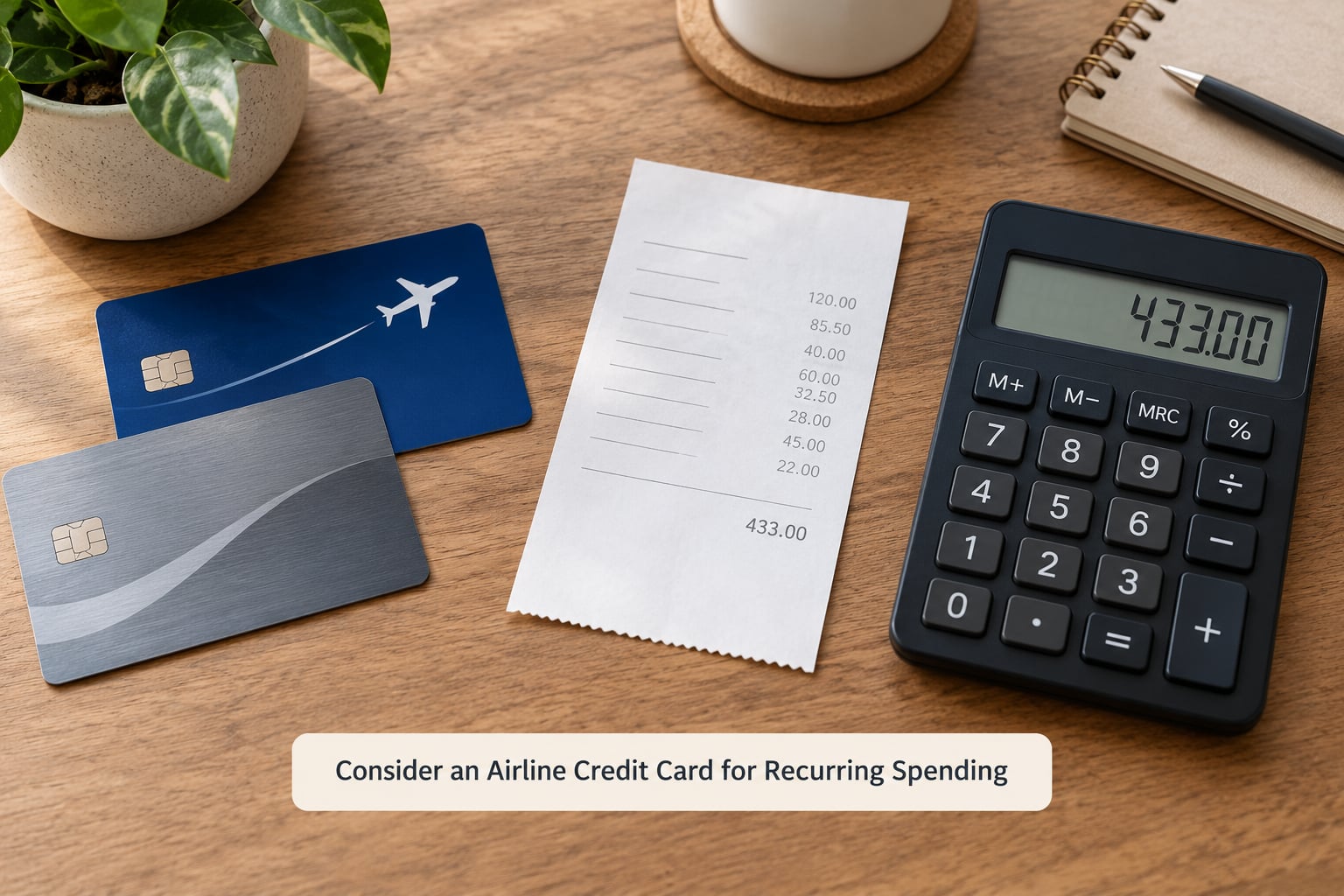
A travel rewards card is the fastest ground-based source of miles, because the welcome bonus is worth far more per dollar than everyday spending rates.
Three things decide whether it works for you. The annual fee has to be lower than the value you extract, the bonus category should match spending you genuinely make, and the points need to transfer to the airline you chose in step one. Pay the balance in full every month, or the interest will wipe out any bonus value.
General bank cards earn on everything and transfer into many airlines, so they suit someone still choosing. Flexible-travel cards price airport and travel purchases cheaply and add lounge credits, hotel transfers and sometimes a companion pass, which suits someone with occasional trips. Airline-branded cards earn directly on the carrier but usually only make sense if that airline is genuinely the one you use.
Two card-specific traps to know. Several major issuers apply a 5/24 rule, which blocks a new card approval after 24 applications in 24 months, and a subset of issuers credit welcome bonuses only to accounts opened after a set window. Check the rules before applying, not after.
Foreign transaction fees matter if you spend abroad. A no-foreign-transaction card turns everyday spending into usable miles, while a card with a fee quietly destroys that value on every purchase outside your home country.
5. Transfer or Combine Points Strategically
Transfer points when a bonus makes a move worthwhile, or when a balance is about to expire. Transfers are how hotel points and flexible bank points become airline miles.
Before you transfer, check the transfer fee, whether your card or tier is required for that partner, any minimum balance rules, and the transfer bonus percentage and end date. Then confirm the destination actually has an award seat on the dates you want.
Transfers are usually irreversible, and a few airline programs have reduced or ended them entirely. A transfer that arrives without usable award availability is the single most common expensive mistake in this whole hobby, so verify availability first.
Small balances sitting in a program you barely use are the other side of the problem. Moving them to a program you will use, even without a bonus, quietly stops them from expiring on a schedule you forgot.
6. Redeem Points for Trips You Would Already Take
Compare three numbers before booking: the cash fare, the points price plus taxes and fees, and a mixed redemption that uses points and cash together. Award prices exclude taxes, so the gap is usually smaller than it looks.
Check the redemption restrictions too. Some programs require advance booking, block companion awards, or drop award seats on popular routes weeks ahead. A points price that looks cheap is worthless if the seat is not there.
The test is simple: does redeeming save money on a trip you were already going to take? If the answer is only yes when you stretch the trip to a route with an empty award chart, the points are being spent on a worse version of your holiday.
Valuation is a planning tool, not a promise. Treat it as a rough sanity check that your balance is in the right range, then check the actual award price on your dates.
7. Track Balances, Activity Windows, and Expiration Dates
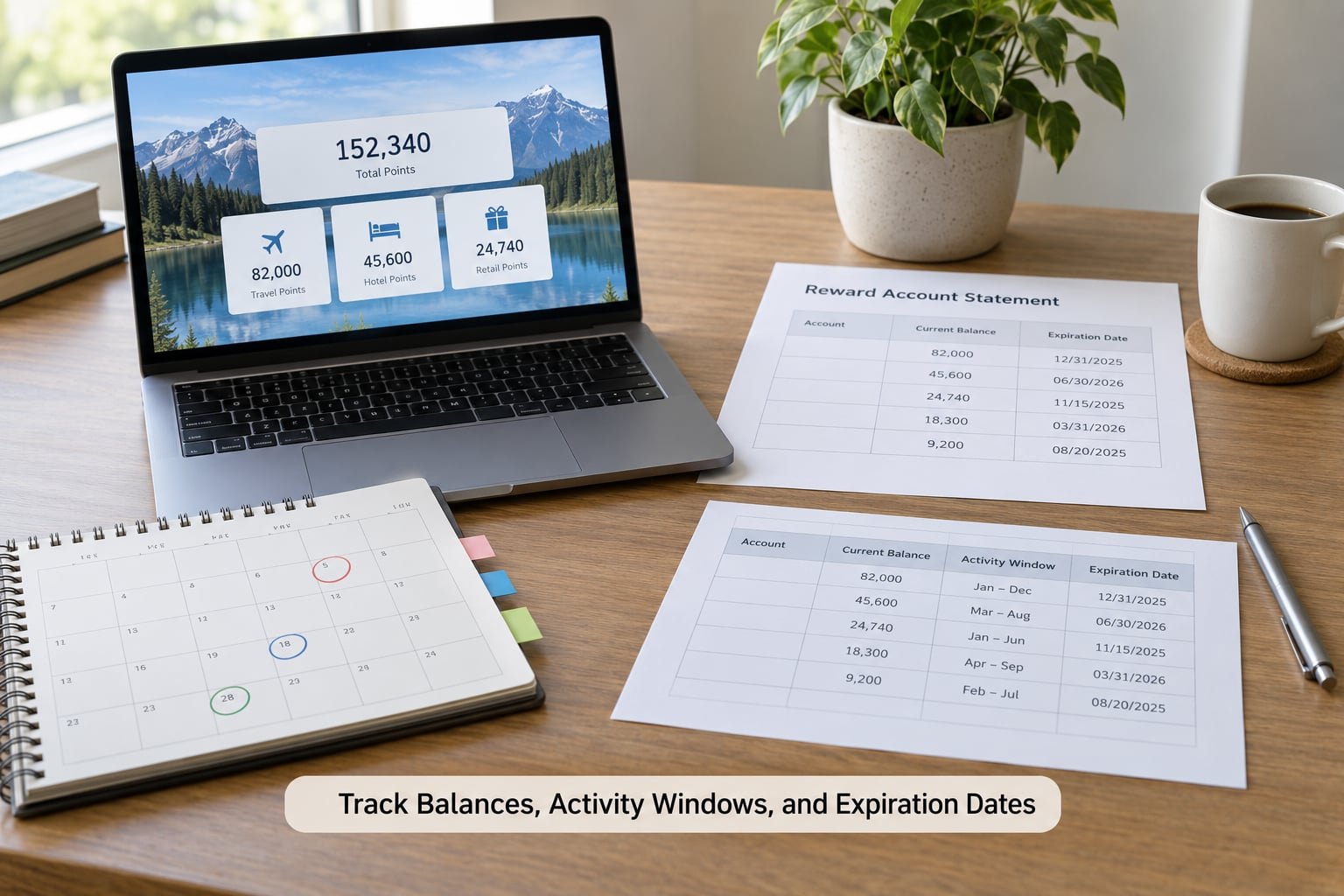
Tracking is the boring step that decides whether any of this works. A spreadsheet with four columns does the job: account, balance, last activity date, and expiration or annual fee deadline.
Confirm each transaction posted, and add a calendar reminder a month before any expiration date or annual fee charge. Most programs reset or extend your activity clock when you complete any small earning event, which is the cheapest way to keep an account alive.
Add pending items: an unredeemed bonus, a transfer still processing, a promotional window about to close. Most credit card portals also show card benefits and their deadlines, which readers forget more often than the points.
Review the spreadsheet once a quarter. That is enough to catch an expiring balance or a fee you no longer want to pay.
Common Mistakes
Most lost value comes from a handful of repeated errors.
- Spreading activity across ten programs. Fix: commit to one airline, one hotel chain and one rental company for a year, then reassess.
- Opening cards with no spending plan. Fix: only apply when you know how you will clear the balance before the fee hits.
- Carrying a balance to earn points. Fix: treat any purchase you cannot pay off in full as cash-flow debt, not a miles purchase.
- Booking outside the earning channel. Fix: check the portal link before you reserve, every time.
- Transferring before checking award seats. Fix: confirm availability first, transfer second.
- Registering one card with two dining programs. Fix: one card, one dining program, ever.
- Forgetting review deadlines. Fix: complete the short online reviews within the stated window or the bonus is forfeited automatically.
- Confusing a valuation with real savings. Fix: judge a redemption by the fare you would actually have paid.
Prioritization is simple. Card bonus first, then partner portal bookings you were already making, then dining if you eat out often, then everything else. The small methods at the bottom of this page are for readers with time to spare, not for people trying to replace income.
It is also fair to say some methods are not worth it. Survey panels and product review sites produce slow, uncertain returns, and a handful of forum readers simply conclude the time is better spent elsewhere. That is a reasonable call, especially if every hour could go toward a bonus you can plan.
Frequently Asked Questions
Do airline points expire if I do not fly?
Most airline programs expire unused miles after 18 to 36 months of account inactivity, and some credit card points expire on a fixed schedule once redeemed. Activity resets the clock, and it does not have to be a flight. A small dining registration, a shopping portal purchase or a rental car booking often counts and pushes the expiry date forward. Check each program’s terms, because inactivity rules differ by carrier and by whether your points came from a card.
Can I earn airline miles from hotel bookings without flying?
Yes. Hotel bookings often pay airline miles when made through an airline or credit card partner portal, and hotel loyalty points from major chains can usually transfer into airline programs. Transfers are free in some cases, reduced in others, and some run promotional bonuses of 20 to 50 percent for a limited window. Always confirm the transfer partner still works before you stay, and remember that award availability, not your balance, is the usual limit.
Can airline credit-card points be transferred to another program?
It depends on the card. Cards issued by airlines and by several large banks can transfer points into partner airline programs, while many airline-issued cards only earn that one carrier’s miles. Transfer partners change often, so check the current list on your card’s benefits page before you plan a trip around a transfer. You can always keep the points where they are and redeem for that airline’s own flights, gift cards or partner hotel stays.
How long does it take to transfer airline points?
Most transfers land instantly or within a few hours, and hotel chain transfers to airline programs commonly finish the same day. A minority take several business days, and promotional bonus transfers can take longer still because the bonus posts separately. Plan any redemption at least a week out, verify award availability before transferring, and save the confirmation email in case the receiving account needs a manual fix.
What is the easiest way for beginners to start earning airline miles?
Start with two free enrollments: an airline you fly from your home airport and one hotel chain, then add a credit card only if you already pay that bill in full. Register your everyday card with that airline’s dining program before your next meal out. Track balances and expiration dates in a spreadsheet from day one, and add a second earning method only after the first one has posted correctly.
Conclusion: Start With One Program and One Spending Plan
If you take one action from this guide, pick the airline you are most likely to use and open a free account today. Then identify one purchase you will make this month anyway and route it through that program’s earning channel.
Track the first completed activity in a spreadsheet so you know the system works before you build on it. Expand to a second method only after that first one has posted cleanly, and never carry a card balance to chase a bonus.