If you are returning to the United States, you must declare everything you bought, received, or had repaired abroad that you did not already own when you left, plus all food, plants, agricultural products, medication, alcohol, tobacco, and cash above the legal thresholds. Saying nothing to declare when you have declarable items is the single mistake that causes the most trouble.
Knowing what to declare at customs when returning to the US matters because undeclared goods can be confiscated on the spot and can carry fines that are far more expensive than the item itself. The good news is that most trips are uneventful. Ordinary souvenirs, cheap gifts, and clothing you already owned rarely cause a problem if you answer honestly and keep a few receipts.
Here is the short version, organized into the six categories CBP officers look for most often:
- Goods you bought or were given abroad that you did not own when you left, valued at their fair market value
- Cash and monetary instruments above 10,000 dollars, including traveler’s cheques and prepaid cards
- Food, plants, and animal products, including meat, dairy, fresh produce, seeds, and soil
- Prescription and controlled medication, including medicines in non-US formulations
- Alcohol and tobacco beyond the duty-free allowance, including anything for other people
- Repairs and alterations performed abroad on items you already owned
The rest of this guide explains each category, the exemptions that apply, and what actually happens at the counter.
Table of Contents
- 1What You Need Before You Answer Customs Questions
- 2Step-by-Step: Clearing U.S. Customs as a Returning Traveler
- 3Step 1: Check the personal exemption and your recent purchases
- 4Step 2: Identify food, plants, and animal products
- 5Step 3: Report gifts, alcohol, tobacco, and high-value goods
- 6Step 4: Disclose medicines and other regulated items
- 7Step 5: Answer Questions Clearly and Keep Your Records
- 8Common Mistakes Travelers Make at U.S. Customs
- 9Frequently Asked Questions
- 10Do I have to declare food I bought in another country?
- 11What is the personal exemption for returning to the United States?
- 12Can I bring prescription medication through U.S. customs?
- 13Do gifts from family members need to be declared?
- 14What should I do if I forgot to declare something at customs?
- 15Are alcohol and cigarettes included in the personal exemption?
- 16How to Prepare for a Smooth Customs Check
What You Need Before You Answer Customs Questions
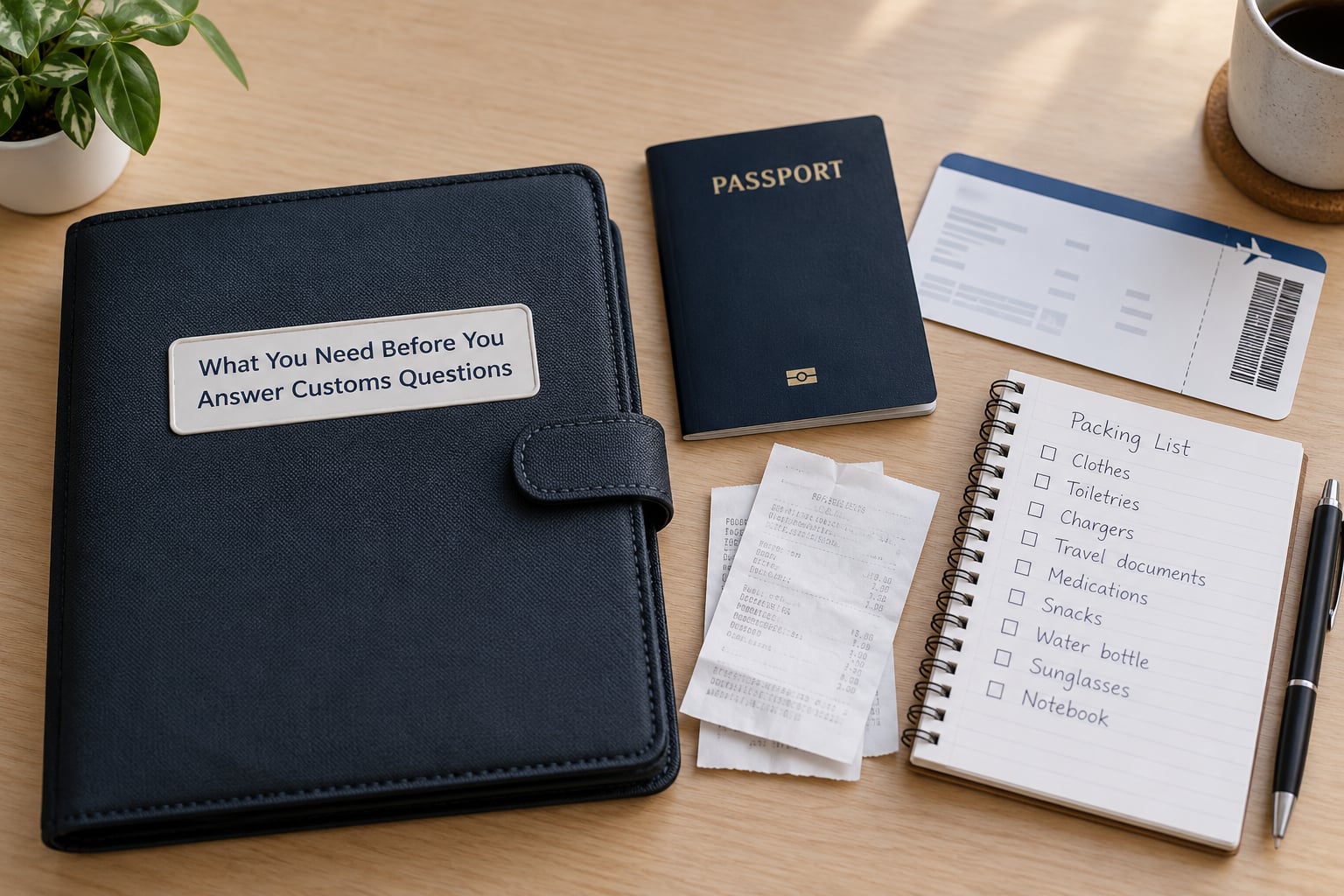
Customs questions are much easier when you can answer them without guessing. Gather these items before you land, because the officer’s questions start in the queue and you will not have time to search a suitcase at the counter.
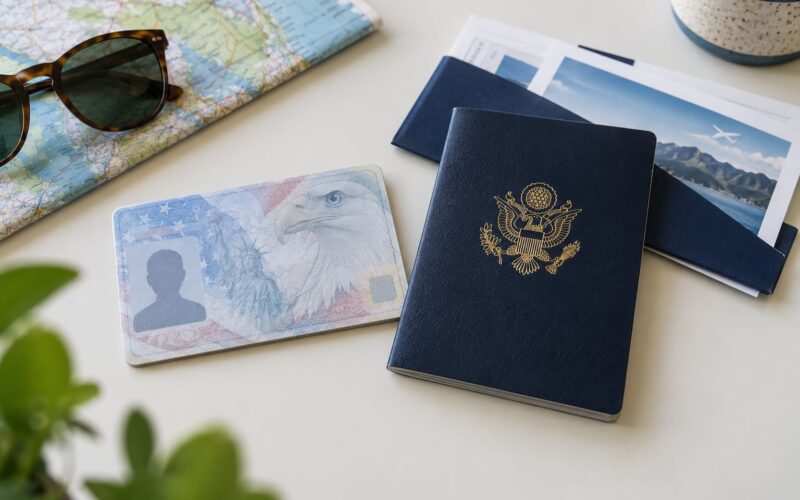
- Passport and travel documents, including your boarding pass and any connecting-flight documents
- Your US customs declaration, either CBP Form 6059B (the paper form) or the Mobile Passport Control app entry
- Receipts and invoices for the larger purchases, including the electronics, jewelry, and designer items
- A rough value for the rest, even if you kept no receipts at all
- A packing list or mental inventory of what you actually bought and where
- Medication in original labeled containers, with a copy of the prescription and the drug in its original strength and dosage form
- Notes on food and agricultural items, including whether they are commercially packaged and shelf-stable
Declare honestly even when you are genuinely unsure whether an item qualifies for an exemption. Officers deal with unclear cases every day, and an honest answer is treated very differently from a false one.
Step-by-Step: Clearing U.S. Customs as a Returning Traveler
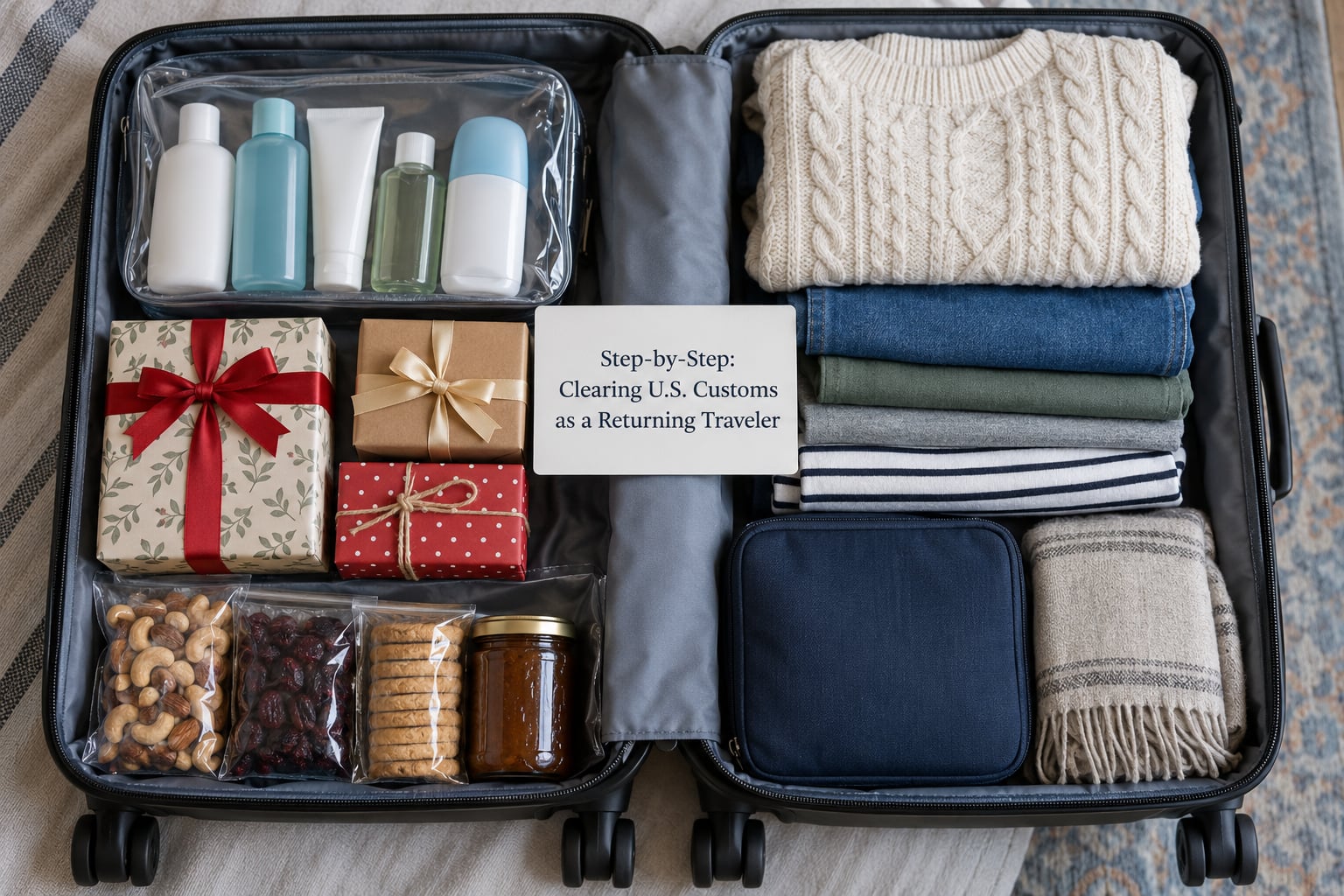
Clearing U.S. customs as a returning traveler takes four distinct steps. The sequence runs from completing your declaration before landing, through walking your bag to the appropriate channel, to answering the officer’s questions, and finally clearing secondary inspection if you are selected. Most travelers finish in ten to twenty minutes, with food items and bag searches accounting for the bulk of that time.
Step 1: Check the personal exemption and your recent purchases
The personal exemption is the amount of merchandise a returning resident can bring back without paying duty. For a U.S. resident returning from a trip longer than 48 hours, the standard personal exemption is 800 dollars of goods, and you must have spent more than 48 hours outside the country and not used the exemption during the 30 days before that trip. The exemption is per person, so two adults traveling together can bring 1,600 dollars between them.
There is a higher figure of 1,600 dollars for residents returning from the U.S. Virgin Islands, Guam, or American Samoa, and a much smaller one for residents who were away for less than 48 hours. Non-residents, meaning visitors rather than U.S. citizens or green card holders, get a different set of allowances entirely.
| Allowance item | Typical amount for a returning U.S. resident | Notes |
|---|---|---|
| Personal exemption | 800 dollars | Per person, per qualifying trip; 1,600 dollars from USVI, Guam, American Samoa |
| Alcohol | 1 liter | Must be over 21 years old; additional amounts are declared and taxed |
| Cigarettes | 200 | Prohibited entirely for anyone under 21 |
| Cigars | 100 | Hand-rolled cigars do not qualify for the exemption |
| Currency and monetary instruments | 10,000 dollars or less | Above that amount, FinCEN Form 105 is required |
| Gifts or purchases mailed from abroad | 100 dollars duty-free for non-residents | Residents treat mailed gifts the same as any other purchase |
Two details trip people up. First, the exemption covers goods you acquired abroad, not everything in your suitcase. And second, duty is normally assessed only on the value above the exemption rather than on the entire haul, which is why accurate valuation matters so much.
Step 2: Identify food, plants, and animal products
Declare every food item, plant, and animal product you bought abroad, even if it is sealed, even if it is a small snack for your kids, and even if you are sure it is fine. Food is handled by U.S. Customs and Border Protection together with the U.S. Department of Agriculture, and the rules are stricter than most travelers expect.
| Category | Examples | What happens |
|---|---|---|
| Generally prohibited or seized | Fresh meat, poultry, eggs, raw milk, bush meat, live plants, seeds, soil, dried plant material | Confiscated and destroyed; a civil penalty may also apply |
| Must be declared and inspected | Cured and dried meats, cheese and other dairy, fresh fruit and vegetables, honey, nuts | Inspected by a USDA officer who decides whether it enters or is destroyed |
| Usually fine if declared | Commercially packaged, shelf-stable items such as canned goods, crackers, chocolate, sealed tea, factory-packed condiments | Typically released without further inspection |
Do not treat a short list of banned foods as a complete rulebook. Customs rules on agricultural products change often, vary by species and packaging, and depend on whether the product is commercially prepared. If you are uncertain, ask USDA APHIS or CBP before you travel rather than after.
Forums like the Rick Steves travel forum and r/TravelHacks show that food draws far more officer attention than souvenirs do. One traveler reported having a small bottle of olive oil taken at JFK because it exceeded three ounces, with no fine attached. Another family returning from Nepal was routed through a full secondary screening with both drug dogs and USDA dogs present, while cut orchids bought at an airport were inspected and released.
Step 3: Report gifts, alcohol, tobacco, and high-value goods
Gifts received from family or friends are still goods acquired abroad, and they count toward the exemption. There is no blanket gift allowance for U.S. residents the way there is for visitors, so a birthday present from abroad is treated exactly like a purchase you made yourself.
Alcohol and tobacco have their own quantity allowances on top of the value exemption, and the age of the person carrying them matters. Extra bottles for a party or for other people must be declared. Say how many bottles, how much alcohol, and to whom the extras are intended, and have receipts for the total.
Expensive purchases need clear numbers: jewelry, watches, designer handbags, cameras, and laptops. Report the value you actually paid, not the price you expect to resell for. If you own the same category of item already, that fact is useful to state plainly.
One more trigger catches travelers out: repairs and alterations. If you had a jacket tailored, a watch serviced, or shoes repaired abroad, that is new value added while you were outside the country and it must be declared. CBP also offers a way to register valuables with the agency before you depart, so that on your return there is a record showing you already owned them.
Step 4: Disclose medicines and other regulated items
Carry your medication in the original labeled containers, with the labels intact, and bring a copy or photo of your prescription. For most medicines, a 90-day personal supply is the practical limit for a trip. The FDA governs what may be imported, and the Drug Enforcement Administration adds rules for controlled substances.
The trap for U.S. travelers is a non-US formulation or dosage strength. A medicine that is legal and familiar to you may not be approved by the FDA, and unapproved foreign versions can be confiscated at the port of entry even inside your carry-on. If someone asks whether they can carry a specific brand of pain relief or cold medicine on an international flight, the honest answer is to check with the FDA rather than to guess at the counter.
Other regulated items worth declaring include medical devices and implants, chemicals and cleaners, stun guns, and anything resembling a weapon. Kitchen knives in checked baggage are usually fine but must be declared, and state law may still restrict them after you clear customs.
Step 5: Answer Questions Clearly and Keep Your Records
When the officer asks whether you have anything to declare, the correct answer is either a plain yes followed by an honest list, or a plain no if you truly have nothing to report. Do not guess at the value or contents of your bag, and do not volunteer speculation about items you cannot remember.
If a question is unclear, ask the officer to clarify it. Officers may ask where you bought an item, who it was for, and whether you already own something similar. Items listed item by item are usually waved through quickly, and travelers who describe their purchases in detail frequently report that officers find the itemized list entertaining rather than suspicious.
Some travelers are selected for secondary inspection, which is a routine, randomly conducted search of your bags. It is not an accusation, and being sent to secondary is not a punishment. Answer it calmly, keep your receipts accessible, and expect to wait a little longer while you wait.
The final decision belongs to CBP, not to you and not to this guide. Customs rules change, so treat the figures here as the current published thresholds rather than as permanent law, and check the current CBP and USDA guidance before a trip. Keep your documentation until you have left the customs area, since the officer may want a receipt after the bag has already been closed.
Common Mistakes Travelers Make at U.S. Customs
Forgetting the food. A sealed pack of salami or a bag of dried fruit is the most common undeclared item worldwide. Correction: bring everything edible to the officer, or throw it out before you reach the inspection belt.
Undervaluing purchases. Quoting a low number because you are not sure what a souvenir was worth creates a discrepancy when the officer disagrees. Correction: give your honest best estimate, and say plainly that you no longer have the receipt.
Assuming gifts are exempt. Gifts from family abroad are goods acquired while you were away and count toward the 800 dollar exemption. Correction: include gifts in the same list as purchases.
Packing medication without labels. Unlabeled pills in a baggie look far worse than the same pills in a pharmacy bottle. Correction: original containers, prescription copy, original strength.
Failing to report cash properly. Currency above 10,000 dollars in aggregate requires FinCEN Form 105, and the limit applies across your whole traveling group rather than per person. Correction: report it in the currency section of the declaration, and bring a bank record if you have one.
Leaving items to chance in a transit country. Changing airports and re-checking bags in a third country can mean clearing that country’s customs too, with rules that have nothing to do with U.S. rules. Correction: check whether your connection re-checks bags and clears you through local customs.
Relying on unofficial advice. Forum advice to write a round number below the exemption is not a rule and does not reflect how valuation actually works. Correction: use the official CBP pages as your source.
Forgetting when you have no receipts. If you have lost the receipts for most of what you bought, tell the officer that plainly. Many travelers on FlyerTalk and Bogleheads report that a described list of purchases plus a card statement is accepted without argument. Give an honest total, describe each major item, and never invent a receipt.
Frequently Asked Questions
Do I have to declare food I bought in another country?
Yes. Declare every food item, plant, and animal product you acquired abroad, including packaged snacks, cheese, cured meat, honey, and fresh produce. Rules are set jointly by CBP and the USDA, and the list of banned items changes regularly. Even sealed, shelf-stable items are safest to declare. A USDA officer decides whether each item enters the country or is destroyed, and undeclared agricultural items can carry a civil penalty starting around 300 dollars for a first offense.
What is the personal exemption for returning to the United States?
A U.S. resident returning from a trip of more than 48 hours may bring 800 dollars of goods without paying duty, provided the exemption has not been used during the previous 30 days. The exemption is per person, so two adults can bring 1,600 dollars. Residents returning from the U.S. Virgin Islands, Guam, or American Samoa receive 1,600 dollars. Alcohol, tobacco, food, and regulated items have separate limits, and the exemption never covers them.
Can I bring prescription medication through U.S. customs?
Generally yes, if you carry it in the original labeled container and bring a copy of your prescription, with the drug in the original strength and dosage form. Most travelers should limit supplies to about 90 days for the trip. The FDA controls what may be imported and the DEA adds rules for controlled substances, so a foreign formulation of a familiar medicine can still be confiscated. Declare the medication and let the officer decide.
Do gifts from family members need to be declared?
Yes. Gifts received from family or friends abroad are goods you acquired while outside the country, and for U.S. residents they count toward the 800 dollar personal exemption. There is no separate gift allowance for residents. Visitors arriving with a gift may receive a 100 dollar duty-free gift allowance, but a U.S. citizen returning home is simply adding the present to everything else they bought.
What should I do if I forgot to declare something at customs?
Tell the officer before you leave the customs area. Voluntary disclosure at the port of entry is treated far more favorably than being discovered later. Items can still be confiscated and a civil penalty assessed, and undeclared agricultural items or undeclared currency are treated especially seriously. If you have already left the airport, contact CBP directly, because penalties can grow with delay and a record of self-reporting matters.
Are alcohol and cigarettes included in the personal exemption?
The quantity allowances sit alongside the 800 dollar value exemption rather than replacing it. For residents over 21, that means one liter of alcohol and 200 cigarettes, or 100 cigars, brought back without additional duty. Anything beyond those amounts is declared and taxed normally. Hand-rolled cigars do not qualify for the cigar allowance, and anyone under 21 may not bring tobacco into the country at all.
How to Prepare for a Smooth Customs Check
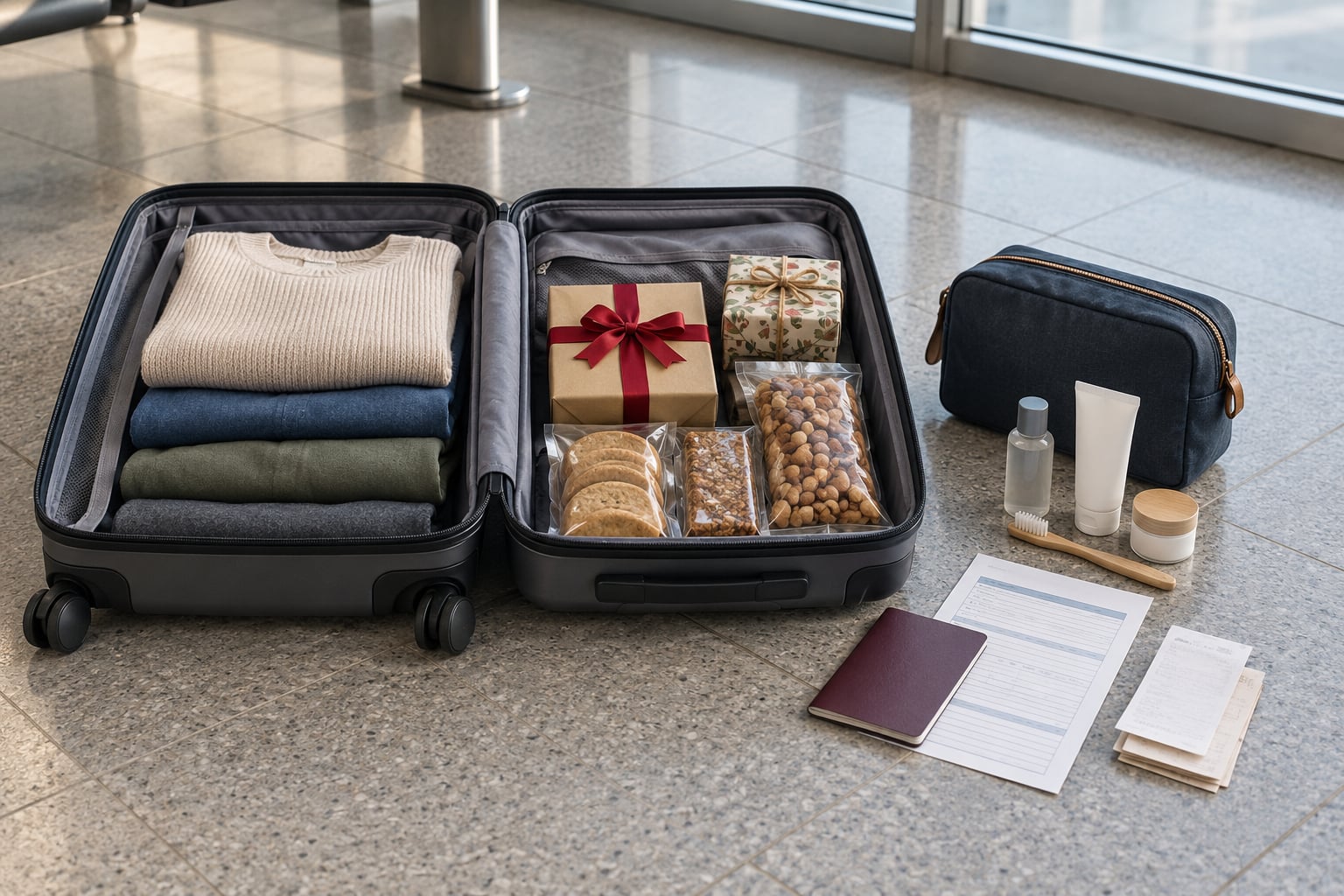
Start by walking through your own luggage the night before you fly. Pull out anything edible, anything from a plant, and anything that was repaired while you were away, and put it in one bag you can open quickly.
Next, gather your receipts for anything expensive and write down a total value for the rest. Keep your medication in original labeled bottles with a copy of the prescription.
Then complete your US customs declaration before you land, whether that is CBP Form 6059B on paper or the Mobile Passport Control app, and answer the officer’s questions honestly and specifically. If you have nothing to declare, saying so plainly is the correct answer.
U.S. customs rules change, and CBP has final say on every case. Before a trip in 2026, confirm the current thresholds and the agricultural restrictions on the official CBP and USDA pages rather than relying on a blog or a forum post, including this one.